Woww Thailand’s “high” creative standards are truly eye opening.
Stealing Myanmar cultures and hiding behind the “fantasy” and “inspiration”excuse??
@GMMTV Have some shame.
Do you know Joseon Exorcist?
#RespectMyanmarCulture#CreditOurHeritage@ScarletHeartTH
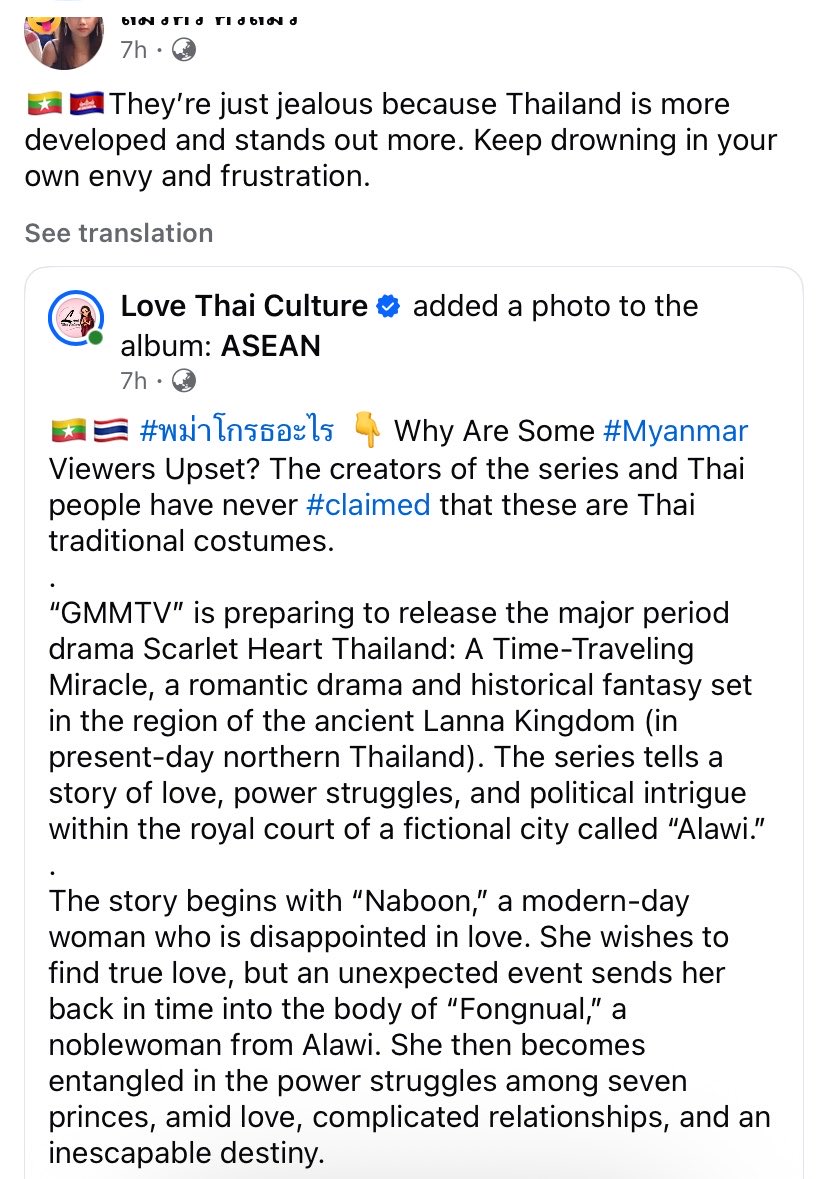
Wrong move, @GMMTV . You should have been transparent from the very beginning. You should have clearly explained that Scarlet Heart Thailand was a fictional adaptation developed through an international collaboration involving Myanmar and other cultural influences, rather than allowing the project to be presented in a way that gives the impression that everything originated from Thailand alone.
That clarification should have been made before the production began, not only after questions and criticism started coming in. Transparency matters, especially when a project draws inspiration from another country's culture, history, traditions, or artistic identity.
You cannot simply announce Scarlet Heart Thailand, establish it as a Thai version of a familiar story, and then overlook the cultural elements borrowed from or inspired by another country. Fictionalizing a story does not automatically erase the cultural origins of the elements used in it. And international collaboration should mean more than just working together behind the scenes. It should also mean acknowledging the contributions, influences, and cultural identities that helped shape the final work.
This is where the concern about cultural appropriation—or what some may perceive as cultural appropriation—comes in. The issue is not that Thailand cannot create its own adaptation or reinterpret a story through its own creative lens. Of course, it can. The issue is whether the cultural influences being used are properly acknowledged and represented, rather than being absorbed into a project that is promoted as exclusively Thai.
If Myanmar's culture, creative contributions, or other cultural influences played a meaningful role in shaping the project, then those contributions deserve recognition. No country should have to watch its cultural identity become part of another country's entertainment product without clear acknowledgment.
GMMTV, the entertainment industry is international, and audiences today are more informed and more observant than ever. People notice where stories come from, which cultural elements are being used, and whether credit is being given where it is due.
You have every right to create a Thai adaptation, but you also have a responsibility to be transparent about its influences and collaborations. Cultural exchange should build bridges between countries, not create the impression that one country's cultural identity belongs exclusively to another.
This is not about attacking Thailand or denying its creativity. It is about accountability, respect, and giving proper recognition to the cultures that contribute to a production. If the project is truly a collaboration, then let the acknowledgment reflect that from the very beginning—not only when people start asking questions.
What’s the point you’re trying to make? Isn’t that literally the same thing you said during your live? If you’re using another country’s culture, you can’t just label it as Thailand’s. Be fucking for real.