Trying to love my neighbors well. Blessed by my wife and 4 kids. Physical Therapist. Ortho Specialist. CrossFit Level 1 Trainer. @healingmotionpt #MoveHealExcel
@RyStar7_ Slow steady strength progression allowing low level of pain that won’t be worse after. Once an exercise is pain free and easy, progress to the next:
Deadbug
Deadbug with a loop band around feet
Standing March with a band or KB on foot
Single leg hip flexor sit up
@kcrehabguy Certainly don’t always avoid THA, but often can delay it and have them more mobile, strong, conditioned and fit going in for a better post op fitness trajectory. Manual is a great facilitator for better buy in for long term mobility, strength, and conditioning when done right.
@kcrehabguy I’ve been rocking the Hoeksma, et al ‘04 techniques since we did a lit review in my residency and they definitely make clear intasession improvement, and sometimes inter- depending on the OA stage and other factors. Always loading into new ranges after, of course…
Investing in Your "Fitness Retirement": The Next Steps
Yesterday, we explored the idea of fitness as a retirement account for your health—an investment in muscle mass, bone density, VO2 max, and balance to safeguard your future independence and vitality. But today, I want to dig deeper.
Let’s talk about the mechanics of this investment and how you can actively grow your "fitness portfolio."
When we think of financial planning, we consider diversification. A strong portfolio isn’t built on a single asset but on various investments that work together to achieve long-term success. The same is true for fitness. Your body thrives on diverse inputs, and a well-rounded approach will yield the best returns.
Diversify Your Fitness Portfolio
Strength Training: The cornerstone of your "401(k) for independence." Building muscle isn’t just about aesthetics; it’s about resilience. Muscle mass supports your joints, protects against falls, and fuels daily activities. Aim for at least two weekly strength training sessions, focusing on all major muscle groups. Compound movements like squats, deadlifts, and push-ups offer great returns on investment.
Aerobic Exercise is your reserve for energy and endurance. It improves cardiovascular health, boosts VO2 max, and increases energy levels. Whether you’re brisk walking, cycling, swimming, or running, aim for 150 minutes of moderate aerobic activity per week—or break it into smaller chunks if that better fits your lifestyle.
Balance Training is insurance against life’s unpredictability. Balance isn’t just for gymnasts. It’s critical for preventing falls and maintaining confidence in movement. Incorporate exercises like single-leg stands, yoga, tai chi, or even simple activities like walking on uneven surfaces. Balance training ensures you can rely on your body when the unexpected happens.
Flexibility and Mobility: Maintain your range of motion. Stretching and mobility work are the maintenance tools of your fitness account, keeping your body supple and reducing the risk of injury. Dedicate a few minutes after workouts or during your rest days to focus on flexibility exercises.
The Power of Compound Interest
Every rep, every walk, every balance drill is a deposit into your fitness account. And here’s the secret: fitness compounds over time.
The small actions you take today—a 15-minute stretch, a quick workout, or even a few extra steps—don’t just add up; they multiply. The strength and endurance you build now will compound, making it easier to stay active and resilient as you age.
Reinvest Your Gains
Financial experts recommend reinvesting your returns to grow your portfolio further. The same applies to fitness. When you notice improvements—like being able to lift heavier weights, walk longer distances, or move without pain—reinvest by challenging yourself with new goals. This keeps your routine fresh and your progress steady.
The Cost of Waiting
Just as delaying financial investments reduces the time for growth, waiting to prioritize fitness has its costs. The less you invest now, the harder it becomes to recover lost ground later. Declines in strength, balance, and endurance accelerate with age, and the gap between those who invest early and those who don’t widen significantly.
Here’s how to start building your fitness retirement today:
Take a 10-minute walk during lunch.
Perform a set of bodyweight squats or push-ups while watching TV.
Practice standing on one leg while brushing your teeth.
Stretch for five minutes before bed.
Each action is a deposit into your future self’s independence, mobility, and vitality. The beauty of this investment is that you don’t need perfection—you just need consistency.
Fitness is a lifelong journey, but it’s also a gift you give to your future self. What small deposit can you make today? Your future self is counting on it.
@hjluks Maybe, but 99% of time just need more motor control, strength, and proper load progression guidance, execution, and time. As a PT, I’ve yet to see someone take the time to apply that and then need surgery to correct. I have seen plenty that have issues b/c of a TTO or “release”
Me: Chat GPT, show me a video of a textbook pass break up.
Chat GPT: shows me the video of the #gobeavs breakup at the end of the half
Refs: call it PI
I could also reverse that for their offensive PI pushoff that wasn’t called.
These stripes are terrible.
PS #ballneverlies
When both sides hyperbolize, you motivate more. Let’s meet each other where we’re at. Weep with those who weep. Get to know each other. Find our commonalities, learn our differences, see where we can meet in the middle, disagree and move on & still treat each other with respect.
While tucking my 9 yo son in to bed, I hear my wife encouraging him to read his battle of the books and say, “you got a pet, you got a responsibility” relative to the books he’s responsible for… knew I married her for a reason. 🤣
#90skids#millennials#billymadison
@DBelardoMD Super sad. Out of curiosity, what was their age and why was the patient seeing the DC? Did they have neck or face pain or was it just a “standard adjustment” with no pain? If they had pain, had they had any trauma in sports, fall off a bike, slide, etc?
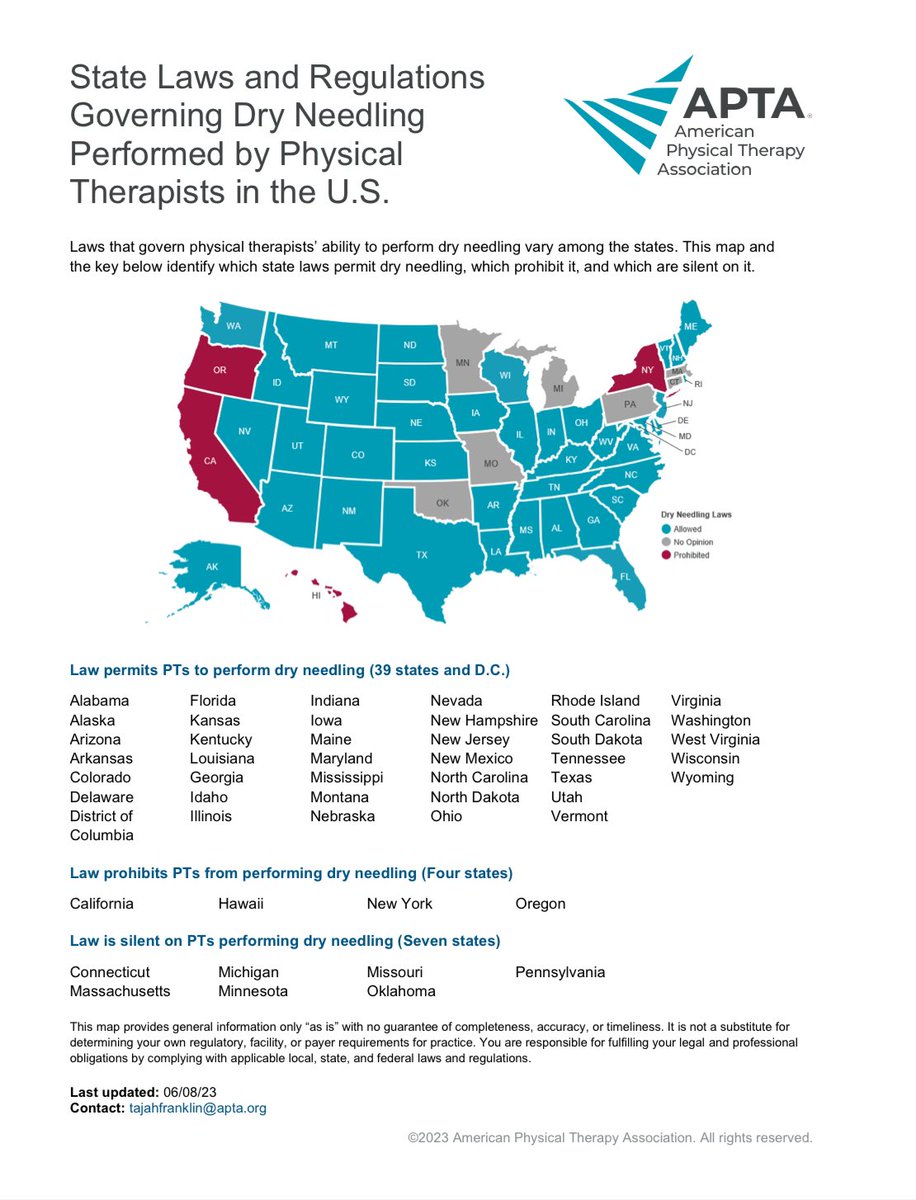
@apta_oregon @APTAtweets as healthcare providers, PTs vow to “do no harm”. Negligence, withholding care that could be helpful, can cause harm. If you look at this map, it looks like 4 states are intentionally withholding treatment that others deem helpful. 🧵
We’re surviving without it, but my own PT board whose purpose is “public protection” is forcing us to be negligent with a technique that could help our patients.