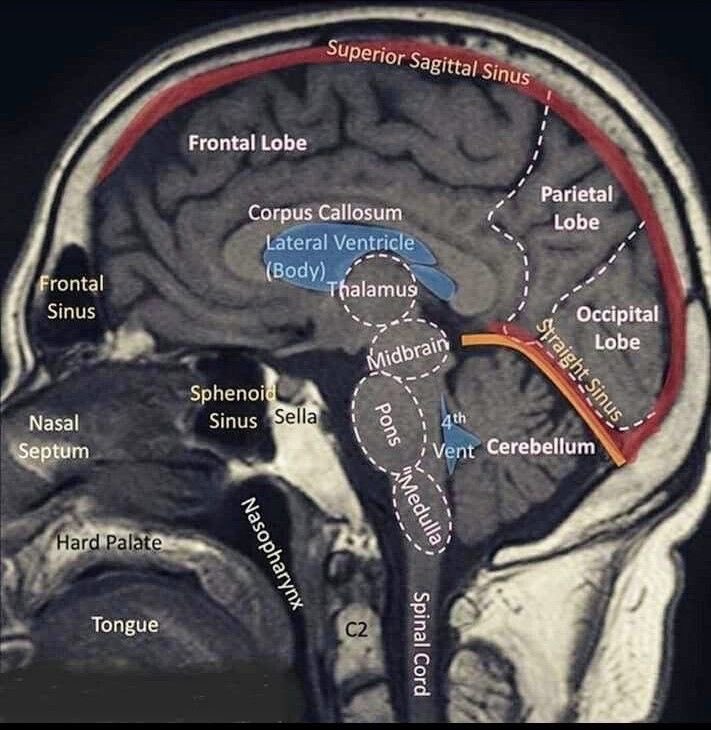
1/I always say you can tell a bad read on a spine MR if it doesn’t talk about lateral recesses.
What will I think when I see your read? Do you rate lateral recess stenosis?
Here’s a thread on lateral recess anatomy & a grading system for lateral recess stenosis
"Carpe Diem", le magnifique poème de Walt Whitman, une ode vibrante à vos rêves :
"Ne laisse pas le jour finir sans avoir grandi un peu,
Sans être heureux, sans avoir atteint tes rêves.
Ne te laisse pas vaincre par la déception.
Ne laisse personne t’enlever le droit de parler, c’est presque un devoir.
N’abandonne pas le désir de faire de ta vie quelque chose de spécial.
Crois bien que les mots et la poésie peuvent changer le monde.
Quoi qu’il advienne, notre être profond reste intact,
Nous sommes pleinement des êtres de passion.
La vie est désert et oasis.
Nous tombons, nous avons mal, nous apprenons, nous sommes les acteurs de notre histoire,
En dépit des vents contraires, ce travail puissant continue,
Tu peux en écrire une strophe.
Ne cesse jamais de rêver, parce que dans son rêve, l’homme est libre
Ne t’abandonne pas à la pire des fautes, le silence.
La plupart des hommes vivent dans le silence. Echappe-toi !
Apprécie la beauté des choses simples.
Tu peux écrire des poèmes sur des choses simples
Mais on ne peut voguer contre soi-même
Cela fait de la vie un enfer.
Aime la peur qui te fait aller de l’avant
Vis intensément, sans médiocrité
N’oublie pas que tu es le futur et aborde cette tâche avec fierté, sans crainte,
Apprends de ceux qui peuvent t’instruire
Ne laisse pas la vie s’écouler sans vivre cela."
12. Pare de esperar se sentir jovem de novo e comece a se sentir útil. A busca pela juventude perdida não tem fim. Utilidade só cresce com a idade. Aos 40 sua experiência e seu julgamento valem algo. Oriente, construa. Quem segue vibrante não se agarra aos 25, achou algo maior.
6. Entre numa comunidade presencial toda semana onde ninguém te conhece. Caminhada, voluntariado, uma aula: qualquer lugar onde te vejam como é hoje. Aos 40, ambiente novo reconstrói identidade mais rápido que diário. O isolamento deixa sua versão antiga rodar sem contestação.
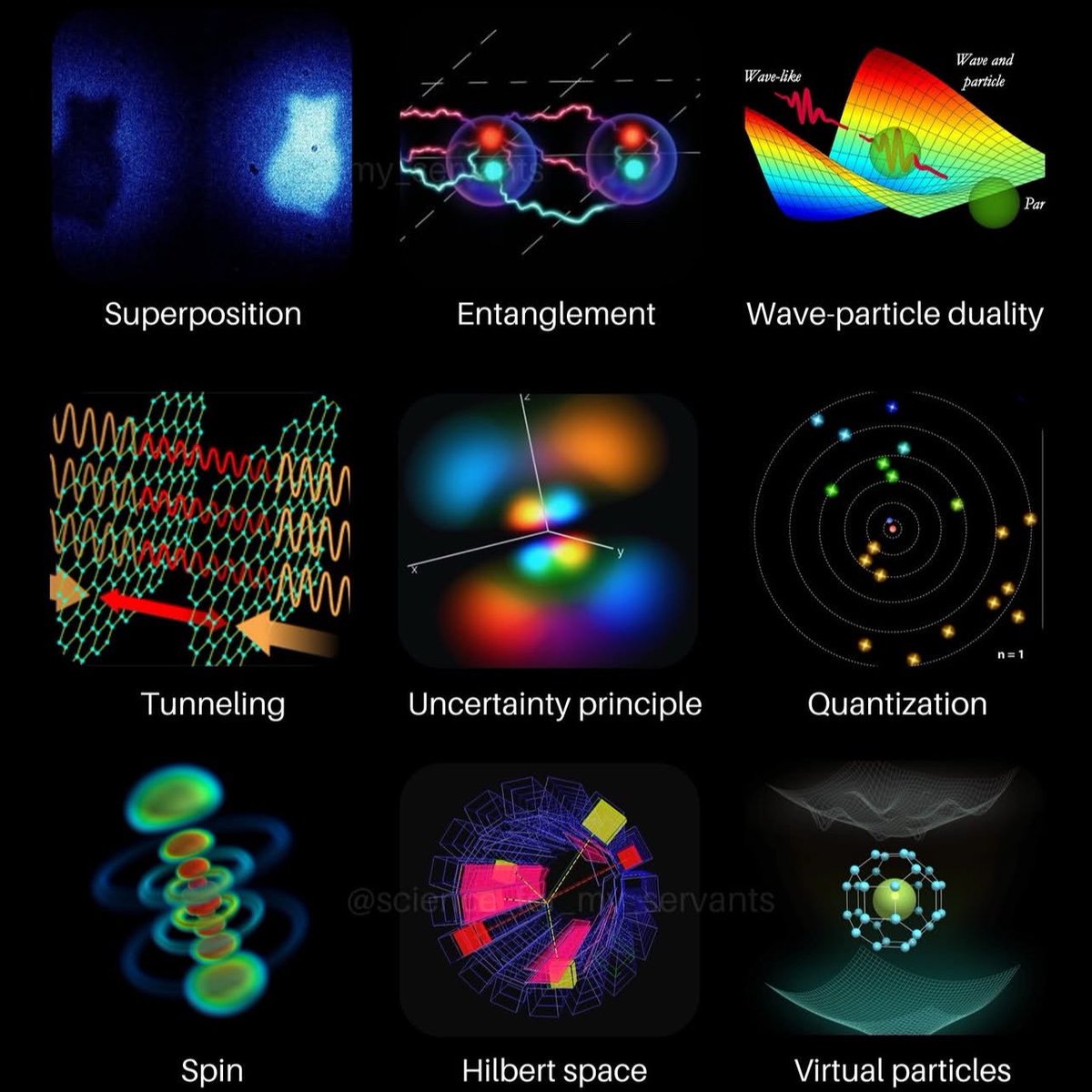
Ask a physicist what quantum mechanics means and watch the room fall apart.
Bohr: "There is no reality until you measure it."
Einstein: "Something is missing. God doesn't play dice."
Heisenberg: "You can't know everything about a particle. Not because your tools are bad. Because nature won't let you."
Everett: "Everything happens. The universe splits every time."
Bohm: "The particle always had a position. You just can't see the hidden layer."
They all use the same math. Get the same predictions. And completely disagree on what's actually going on.
90 years later, nobody's won the argument.
One day, we will be able to simulate a complete human brain inside a computer.
When that day comes, the question of 'life' and 'consciousness' will have to be redefined from scratch.
— Henry Markram
how to become a modern polymath
not by randomly learning everything.
that’s just intellectual hoarding.
a modern polymath needs structure.
what actually matters:
• build a strong spine → math, physics, computer science, writing. these fields compound into everything else
• go deep in one domain → you need one hard skill where you can actually produce real work
• go wide around it → biology, economics, history, design, psychology, philosophy. breadth gives you pattern recognition
• connect fields aggressively → innovation usually happens between domains, not inside clean academic boxes
• build artifacts → apps, essays, robots, diagrams, simulations, systems. knowledge must leave your head
• teach what you learn → if you can’t explain it simply, you don’t own it yet
• study reality, not just books → markets, machines, people, nature, institutions. the world is the real textbook
the goal is not to look smart.
the goal is to become useful across problems.
a polymath is not someone who knows random facts.
it’s someone who can move between domains,
extract principles,
connect patterns,
and build something real from the synthesis.
En lugar de ver una hora de Netflix, mira esta conferencia de 2 horas de Stanford que te enseñará más sobre cómo se construyen los LLMs como ChatGPT y Claude que lo que la mayoría de personas trabajando en las mejores empresas de IA aprenden en toda su carrera.
Our brains doesn’t care how old you are, it cares about what thoughts you repeat.
scientists used to believe your brain was fixed, like your height!
that after a certain age, it stopped developing.
but in the 1990s, with tools like MRI and fMRI, we could finally observe the living brain in real time and everything changed.
research showed that the brain is constantly adapting.
repeated thoughts and behaviors strengthen neural connections, increasing efficiency in pathways that are used often.
> this is neuroplasticity
areas like the basal ganglia become more active as habits are formed, while the prefrontal cortex becomes less involved as behaviors turn automatic.
this is based on hebb’s law: neurons that fire together, wire together.
so your brain isn’t changing based on what you want.
it’s changing based on what you repeat.
what you practice, you become!
Having some mild cognitive impairment trying to remember dementia patterns on imaging?
Is looking at dementia PET scans one of your PET peeves?
Have short-term memory loss when you read about dementia imaging?
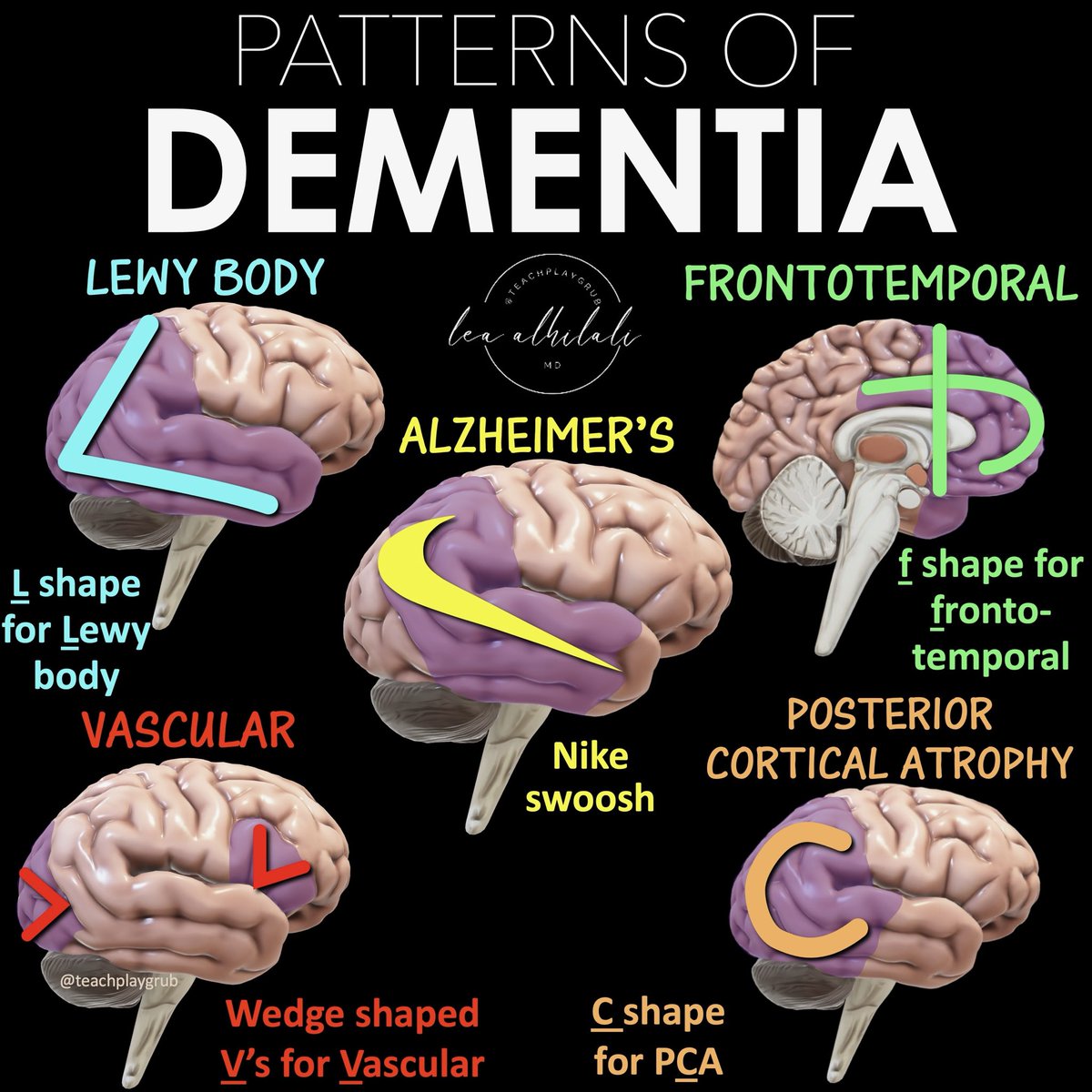
Here’s a way to remember dementia patterns so you will never forget!
Major dementia imaging patterns:
Alzheimer’s disease (AD)
🔸AD has a Nike swoosh pattern—w/decreased metabolism in parietal & temporal regions
🔸Remember if you see a Nike swoosh, just call it!
Dementia w/Lewy Bodies (DLB)
🔸Temporoparietal hypometabolism like AD but also occipital cortex, specific for DLB. DLB also extends farther to the ant. temporal cortex.
🔸Remember, regions of hypometabolism look more like an L. Lewy starts w/an L
Frontotemporal Dementia (FTD)
🔸Frontal & temporal hypometabolism as expected, but extends along anterior cingulate gyrus
🔸Anterior cingulate involvement makes hypometabolism looks like a lowercase letter f—& frontotemporal starts w/f
Posterior cerebral atrophy
🔸Can be from AD or DLB & has hypometabolism in the occipital & post. temporal lobe, sparing ant temporal lobe
🔸Sparing the ant temporal lobe makes the involvement look like a C instead of an L like DLB.
So remember pCa
Vascular dementia
🔸Vascular dementia is variable, depending on the regions infarcted (V is both for Vascular & Variable)
🔸Wedged shaped regions of hypometabolism corresponding to cortical infarcts—looks like an inverted V
This list isn’t all inclusive & there can be variations or even mixed dementias
But hopefully this gives you a starting point you won’t soon forget!
Understand the fist-in-a-balloon concept, and you’ll never be confused with body lining cavities and the embryology of how organs are covered by double-layered sacs yet lie outside the sac.
The lungs lie inside and outside the pleura at the same time; so does the heart, etc.
Joe Rogan says that if you're gonna claim that the election was stolen, you have to have rock solid evidence.
"This is crazy that it's 4 years later, and people are still saying that."