Historian and bestselling author of 'Sapiens', 'Homo Deus', '21 Lessons for the 21st Century', 'Nexus', 'Unstoppable Us' and 'Sapiens: A Graphic History'.
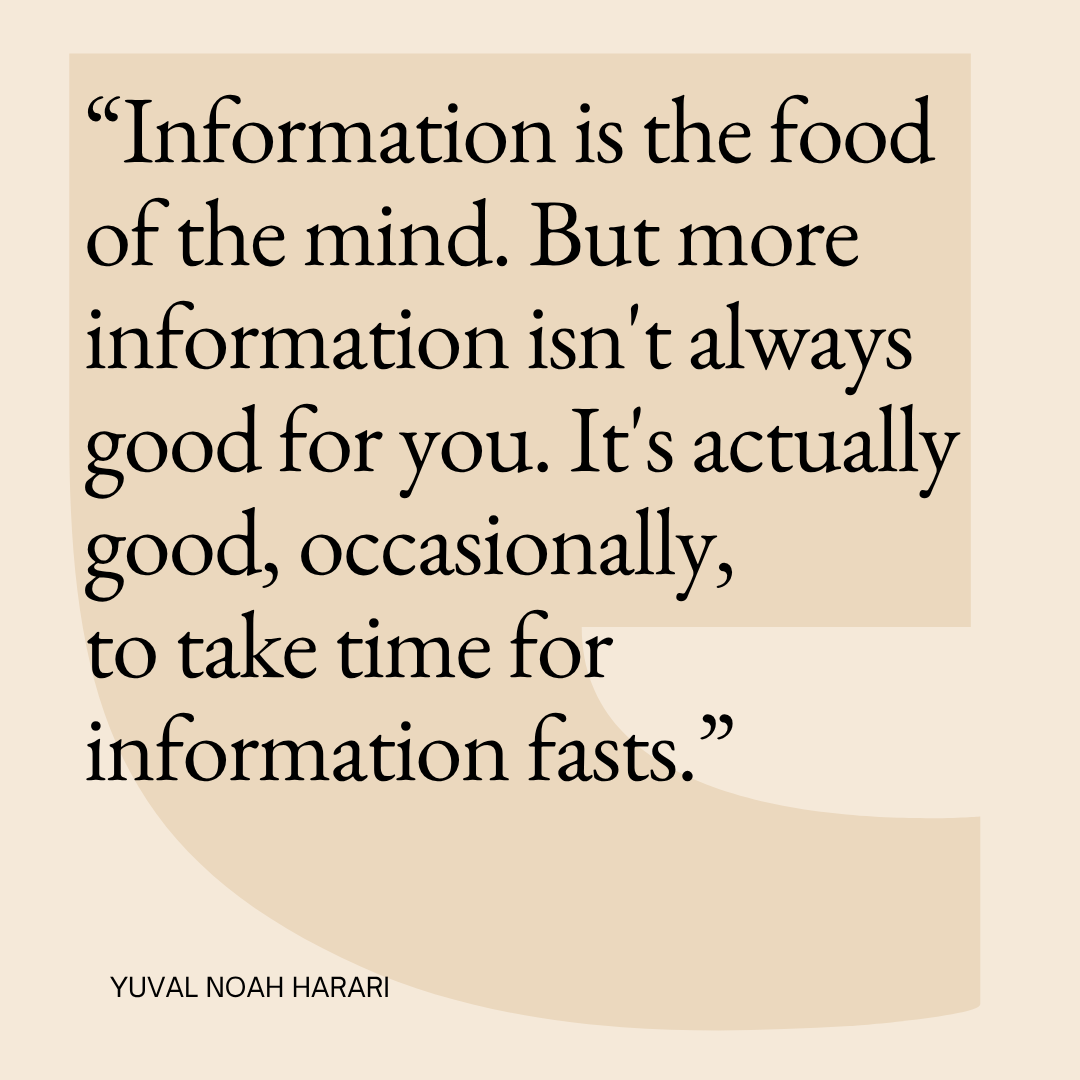
When we stop force-feeding our minds, we have the opportunity to digest and detoxify. We should also be careful about the quality of information we consume. A bad diet is bad for you in more ways than one.
Humanity's unique intelligence comes with unique delusions. We should keep this in mind when facing the rise of artificial intelligence. Watch the whole session here: https://t.co/xpCfZRM5d0
As long as everyone believes in money, you can take a dollar and buy a loaf of bread. Our greatest superpower is the ability to tell stories, which allows us to cooperate in huge numbers.
From the @nytopinion podcast with @ezraklein, May 2026. Watch the whole episode: https://t.co/vezfpz5PjP
Critics argue that AI is helpless outside narrow human-constructed environments. But all intelligence relies on a specific ecosystem; a human dropped on Mars would die just as quickly as a chess AI without electricity. From the 2026 Tanner Lecture on Human Values at @LinacreCollege, @UniofOxford.
Watch the full lecture - https://t.co/1kZ8Cgp0Mq
With all the talk of protecting jobs from AI, it's easy to forget that what we must actually protect isn't jobs – it's humans. If we protect humans, if we can be adaptable and resilient and flexible, it becomes less important what jobs will exist.
The basic liberal story says that by cooperating we can build a world that is better for everyone. Is this vision of the world failing? And what might replace it? From the @nytopinion podcast with @ezraklein. Watch the whole thing: https://t.co/1rafYpVCGi
Yesterday I had the privilege of attending Marc Bloch's reburial ceremony at the Panthéon – Paris' monument to the most outstanding citizens of France. Bloch was honored not only as one of the greatest French historians, but also as a man who chose resistance over safety when his country fell into darkness.
Bloch fought in two World Wars, and received multiple awards for bravery. By the time the pro-Nazi Vichy regime came to power in 1940, Bloch was already recognized as perhaps the preeminent historian of medieval France. He continued to teach history, and during that time wrote 'Strange Defeat', a book explaining the French defeat in 1940, and 'The Historian’s Craft', a meditation on history and historiography. Bloch also joined the Résistance and became one of its leaders.
On March 8, 1944 Bloch was captured during a crackdown on the Résistance by the Nazis and their French collaborators. At the time, collaborationist French newspapers celebrated Bloch’s capture. They highlighted his Jewish identity, and referred to the historian as a traitor to France, describing the Résistance as a Jewish-Bolshevik terrorist organization. Bloch was imprisoned and tortured at the Gestapo headquarters in Lyon, and was executed on June 16, 1944, ten days after the Allied landing in Normandy.
I am a medievalist by training, and have been deeply influenced by Bloch. What moved me most about Bloch is his uncompromising commitment to truth. For him, history was never nostalgia or mythmaking, but a discipline of honesty – a way of resisting propaganda, prejudice, and the comfort of convenient fictions. For Bloch, truth was not just an intellectual position, but a spiritual practice. Anticipating his death at the hands of the Gestapo and the Vichy regime, the Jewish historian and freedom fighter left behind detailed instructions for his burial. He wrote:
“I have not asked to have read above my body those Jewish prayers to the cadence of which so many of my ancestors, including my father, were laid to rest. All my life I have striven to achieve complete sincerity in word and thought. I hold that any compromise with untruth, no matter what the pretext, is the mark of a human soul’s ultimate corruption. […] That is why I find it impossible, at this moment of my last farewell, when, if ever, a man should be true to himself, to authorize any use of those formulae of an orthodoxy to the beliefs of which I have ever refused to subscribe.
But I should hate to think that anyone might read into this statement of personal integrity even the remotest approximation to a coward’s denial. I am prepared, therefore, if necessary, to affirm here, in the face of death, that I was born a Jew: that I have never denied it, nor ever been tempted to do so. […] A stranger to all credal dogmas, as to all pretended community of life and spirit based on race, I have, through life, felt that I was above all, and quite simply, a Frenchman. A family tradition, already of long date, has bound me firmly to my country. I have found nourishment in her spiritual heritage and in her history. I can, indeed, think of no other land whose air I could have breathed with such a sense of ease and freedom. I have loved her greatly, and served her with all my strength. I have never found that the fact of being a Jew has at all hindered these sentiments. Though I have fought in two wars, it has not fallen to my lot to die for France. But I can, at least, in all sincerity, declare that I die now, as I have lived, a good Frenchman.”
By his request, a Latin epitaph was carved on Bloch’s grave: dilexi veritatem (“I have loved the truth”).
Watching Bloch's memory honored at the Panthéon yesterday did not feel like a tribute to the past as much as a challenge to the present. As dark clouds gather once again, how many of us today can demonstrate Bloch's level of integrity and fearlessness?
In the 21st century, good nationalists must also be globalists. Globalism doesn’t mean establishing a global government, abandoning all national traditions, or opening the border to unlimited immigration. Rather, globalism means a commitment to some global rules. Rules that don’t deny the uniqueness of each nation, but only regulate the relations between nations.
A good model for this is the Football World Cup. The World Cup is a competition between nations, where people often show fierce loyalty to their national team. But the World Cup is also an amazing display of global harmony. Brazil can't play football against Morocco unless the Brazilians and the Moroccans agree on the same rules for the game. And that’s global cooperation in action. If you like the World Cup, you're already a globalist.
Hopefully, nations can agree on global rules not just for football, but also for how to prevent ecological collapse, how to regulate dangerous technologies, and how to reduce global inequality. Global problems require global solutions.
#YuvalNoahHarari #WorldCup2026 #Globalism #Cooperation #Quotes
Liberté, Égalité, Fraternité: did the French Revolution come up with the most successful political formula in modern times? Since then, every political system that has tried to abandon one of these has failed. From the @nytopinion podcast with @ezraklein. Watch the whole thing: https://t.co/vezfpz5PjP
It is important to look beyond the flood of information to understand what is important, and what we should be paying attention to. We may feel we cannot afford the luxury of joining the global debate, but history gives no concessions. If the future of humanity is decided in your absence, you will not be exempt from the consequences.
In a small tribe, you know everybody. Everything is based on personal relationships and trust between individuals. How does a society function when you do not know 99.99% of the people in your nation? Nationalism is essential for extending trust and mutual responsibility.
From the @nytopinion podcast with @ezraklein, May 2026. Watch the whole thing: https://t.co/vezfpz5PjP
There are more portraits of Jesus than of any other person in history. How many of them are truthful or authentic? 0%. Has this stopped the face of Jesus from successfully uniting billions of people? No.
Full discussion with @richroll on https://t.co/j1yHK1rp3k
Countries that grant AIs legal personhood risk becoming something for which the historical record offers no analogy: not a company state, but an AI state, writes Yuval Noah Harari. https://t.co/jCG6F3lxKq
Last week, Argentina’s President Milei announced a new legal category for non-human corporations – companies run by #AI agents or robots. Like traditional corporations, they would be granted legal personhood. This could generate enormous new wealth, but very worryingly, it would also hand AIs an all-purpose key that grants access to our financial, economic and political systems. Full op-ed in today's @FT: https://t.co/w6DzOwByiq
We simply do not know what will be required by the job market in the coming decades. What matters most is the capacity to remain flexible, and to have a wide range of skills – intellectual, physical and social.
Nationalism is what enables us to build roads and railways that we might never use, and schools and hospitals that we might never visit. It is what allows society to function beyond families and tribes. From the @nytopinion podcast with @ezraklein.
Watch the whole thing: https://t.co/vezfpz5PjP
Lots of interesting stuff in this interview, including why AI may be a force for truth. Yuval Noah Harari on the Mistake Strongmen Keep Making https://t.co/Q8jGmCDxbF






![harari_yuval's tweet photo. Yesterday I had the privilege of attending Marc Bloch's reburial ceremony at the Panthéon – Paris' monument to the most outstanding citizens of France. Bloch was honored not only as one of the greatest French historians, but also as a man who chose resistance over safety when his country fell into darkness.
Bloch fought in two World Wars, and received multiple awards for bravery. By the time the pro-Nazi Vichy regime came to power in 1940, Bloch was already recognized as perhaps the preeminent historian of medieval France. He continued to teach history, and during that time wrote 'Strange Defeat', a book explaining the French defeat in 1940, and 'The Historian’s Craft', a meditation on history and historiography. Bloch also joined the Résistance and became one of its leaders.
On March 8, 1944 Bloch was captured during a crackdown on the Résistance by the Nazis and their French collaborators. At the time, collaborationist French newspapers celebrated Bloch’s capture. They highlighted his Jewish identity, and referred to the historian as a traitor to France, describing the Résistance as a Jewish-Bolshevik terrorist organization. Bloch was imprisoned and tortured at the Gestapo headquarters in Lyon, and was executed on June 16, 1944, ten days after the Allied landing in Normandy.
I am a medievalist by training, and have been deeply influenced by Bloch. What moved me most about Bloch is his uncompromising commitment to truth. For him, history was never nostalgia or mythmaking, but a discipline of honesty – a way of resisting propaganda, prejudice, and the comfort of convenient fictions. For Bloch, truth was not just an intellectual position, but a spiritual practice. Anticipating his death at the hands of the Gestapo and the Vichy regime, the Jewish historian and freedom fighter left behind detailed instructions for his burial. He wrote:
“I have not asked to have read above my body those Jewish prayers to the cadence of which so many of my ancestors, including my father, were laid to rest. All my life I have striven to achieve complete sincerity in word and thought. I hold that any compromise with untruth, no matter what the pretext, is the mark of a human soul’s ultimate corruption. […] That is why I find it impossible, at this moment of my last farewell, when, if ever, a man should be true to himself, to authorize any use of those formulae of an orthodoxy to the beliefs of which I have ever refused to subscribe.
But I should hate to think that anyone might read into this statement of personal integrity even the remotest approximation to a coward’s denial. I am prepared, therefore, if necessary, to affirm here, in the face of death, that I was born a Jew: that I have never denied it, nor ever been tempted to do so. […] A stranger to all credal dogmas, as to all pretended community of life and spirit based on race, I have, through life, felt that I was above all, and quite simply, a Frenchman. A family tradition, already of long date, has bound me firmly to my country. I have found nourishment in her spiritual heritage and in her history. I can, indeed, think of no other land whose air I could have breathed with such a sense of ease and freedom. I have loved her greatly, and served her with all my strength. I have never found that the fact of being a Jew has at all hindered these sentiments. Though I have fought in two wars, it has not fallen to my lot to die for France. But I can, at least, in all sincerity, declare that I die now, as I have lived, a good Frenchman.”
By his request, a Latin epitaph was carved on Bloch’s grave: dilexi veritatem (“I have loved the truth”).
Watching Bloch's memory honored at the Panthéon yesterday did not feel like a tribute to the past as much as a challenge to the present. As dark clouds gather once again, how many of us today can demonstrate Bloch's level of integrity and fearlessness?](https://pbs.twimg.com/media/HLliH6MWUAAvbZS.jpg)


