🚨 ROBOTS CAN NOW HELP WITH SURGERY — AND THEY’RE ACTUALLY GOOD AT IT
Medtronic tested its Hugo robot in 137 real surgeries — fixing prostates, kidneys, and bladders — and the results were better than doctors expected.
Complication rates were super low: just 3.7% for prostate surgeries, 1.9% for kidney surgeries, and 17.9% for bladder surgeries, all beating safety goals from years of research.
The robot got a 98.5% success rate, way above the 85% goal — meaning it didn’t just pass the test, it basically set the curve.
Out of 137 surgeries, only 2 needed to switch back to regular surgery — 1 because of a robot glitch, and 1 because of a tricky patient case.
This doesn’t mean robots are replacing surgeons tomorrow, but it does mean your next doctor might have a very expensive metal sidekick.
Source: RTTNews
The Medtronic $MDT HUGO surgical robot is HERE
Medtronic is now the only company with an open, laparoscopic, and robotic platform.
I was encouraging investors to buy this stock in the 80’s (you can find those receipts on my page)
For the rest of the space-that means for the first time $ISRG will have pressure on the monopoly they’ve had. With that being said-their robot is still superior with the running start they’ve had
Johnson and Johnson’s surgical unit, ethicon will feel the most pressure as aggressive bundling tactics will be deployed against them
A massive milestone in surgery! Congrats @Medtronic
stop pretending software alone will save you.
real engineering means touching the physical world.
hardware forces correctness.
forces constraintts.
forces contact with reality
no abstractions to hide behind
no infinite retries.
no patch notes to fix physics..
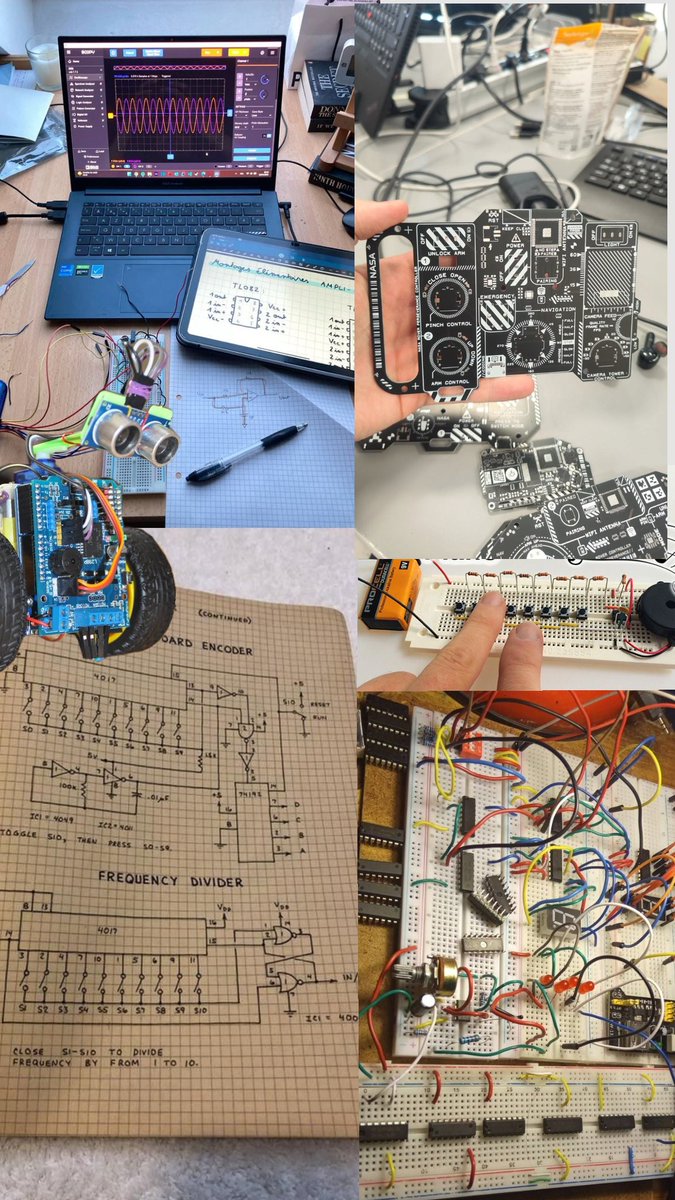
when you build hardware, you solve actual problems:
> moving mass
> managing heat
> dealing with noise
> handling failure
> designing under cost
> manufacturing at scale
> surviving the environment
> buttoninterfacing with real humans
that’s where leverage is shifting again.
robotics, energy, materials, sensing, power electronics. the bottlenecks aren’t in code anymore; they’re in the world.
the next decade belongs to people who build atoms, not just apps. reach into the physical layer and you become non-replaceable.
the demand curve is already screaming: factories, grids, logistics, infrastructure, defense, mobility; everything is starving for real engineers.
stop building only things that live in RAM.
build things that live in the world.
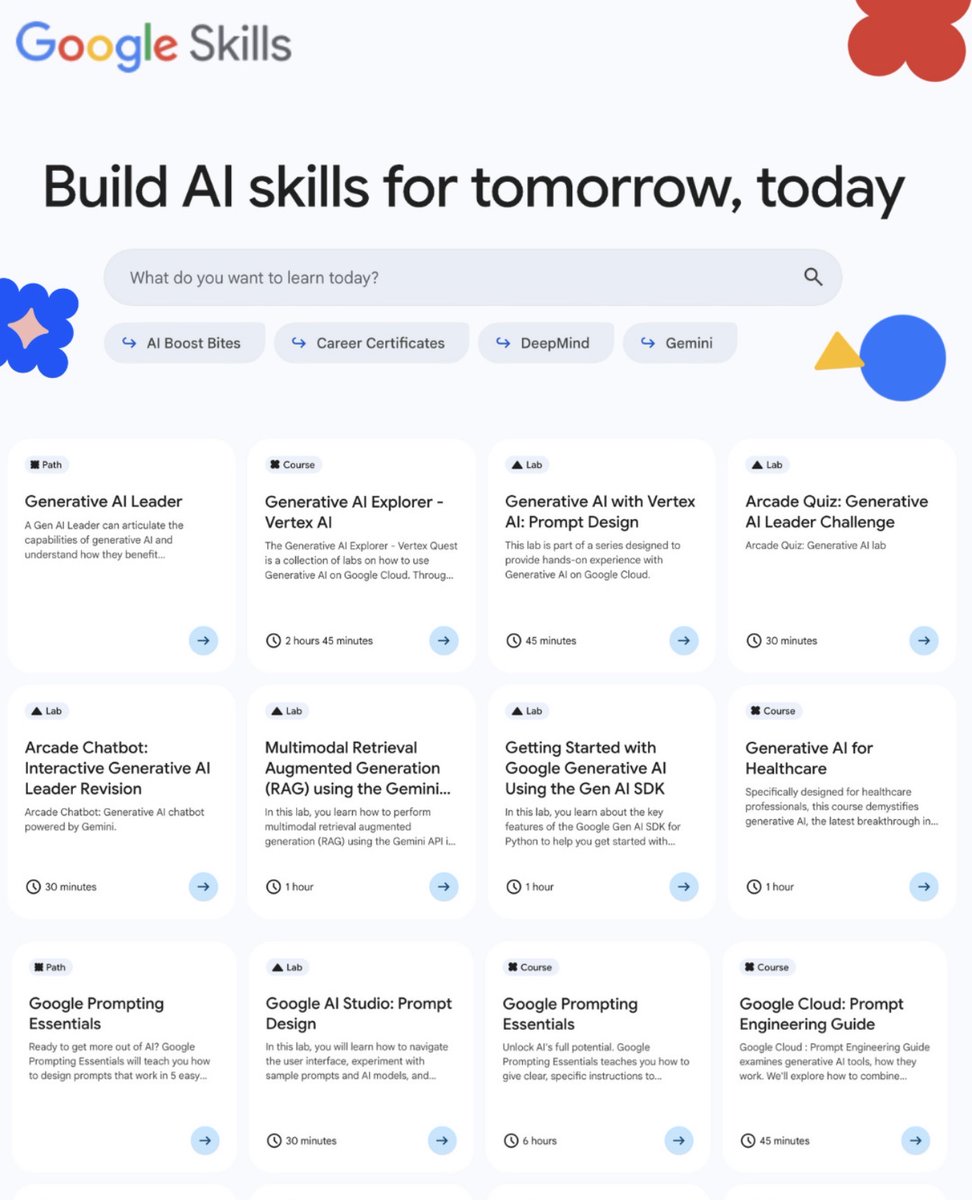
I still can't believe Google has released a complete catalog of AI courses and learning paths. Completely for free!
Prompt engineering, retrieval, model design, healthcare, product thinking, all in one place ✨
If you want to upgrade your AI skills, you should start here.