CryptoQuant verifier through on-chain data. Thank you for your cooperation at all time. #CQ I am proud of this.
Even in 2026, I will put my heart into it and do my very best.
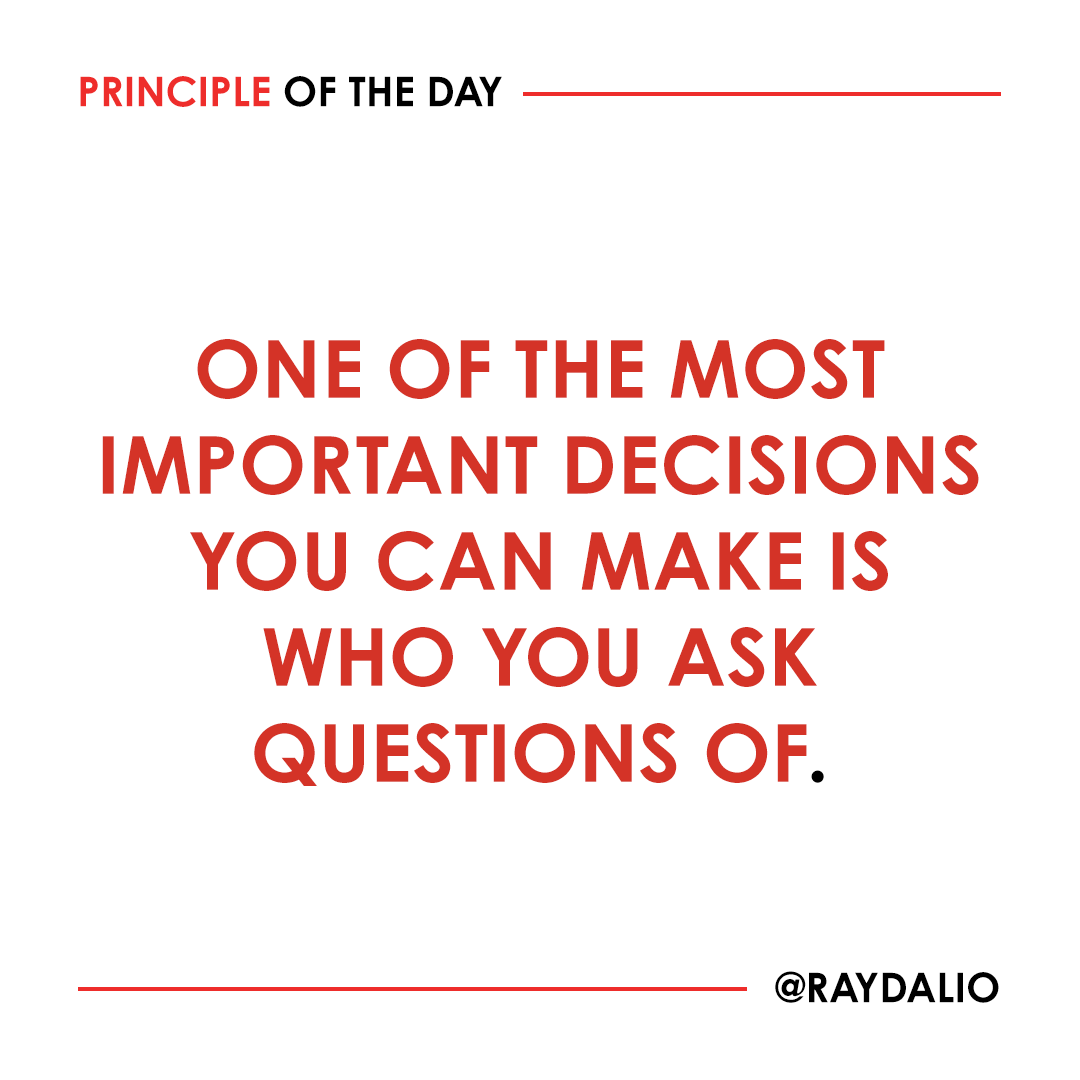
Make sure they're fully informed and believable. Find out who is responsible for whatever you are seeking to understand and then ask them. Listening to uninformed people is worse than having no answers at all.
#principleoftheday
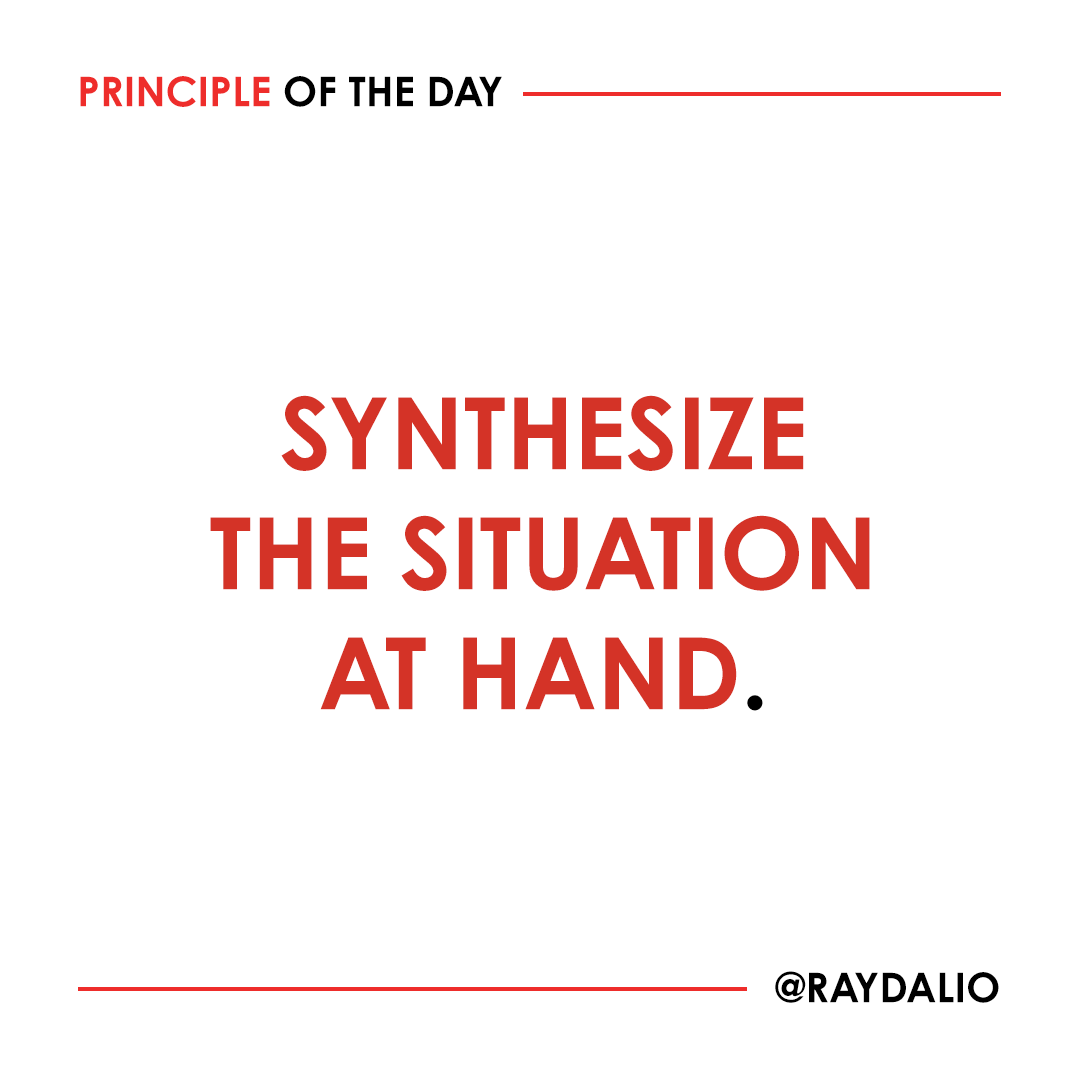
Every day you are faced with an infinite number of things that come at you. Let’s call them “dots.” To be effective, you need to be able to tell which dots are important and which dots are not. Some people go through life collecting all kinds of observations and opinions like pocket lint, instead of just keeping what they need. They have “detail anxiety,” worrying about unimportant things.
Sometimes small things can be important—for example, that little rattle in your car’s engine could just be a loose piece of plastic or it could be a sign your timing belt is about to snap. The key is having the higher-level perspective to make fast and accurate judgments on what the real risks are without getting bogged down in details. #principleoftheday
Own your life and take responsibility to make it great. When life doesn't give you what you want, don't be angry—learn how reality works and develop principles to get you where you want to be. Be radically open-minded, and recognize that if you want to be really successful, you have to work really hard.
Continue the graduation conversation with my AI Twin, Digital Ray in Beta: https://t.co/xMZkYAoepY
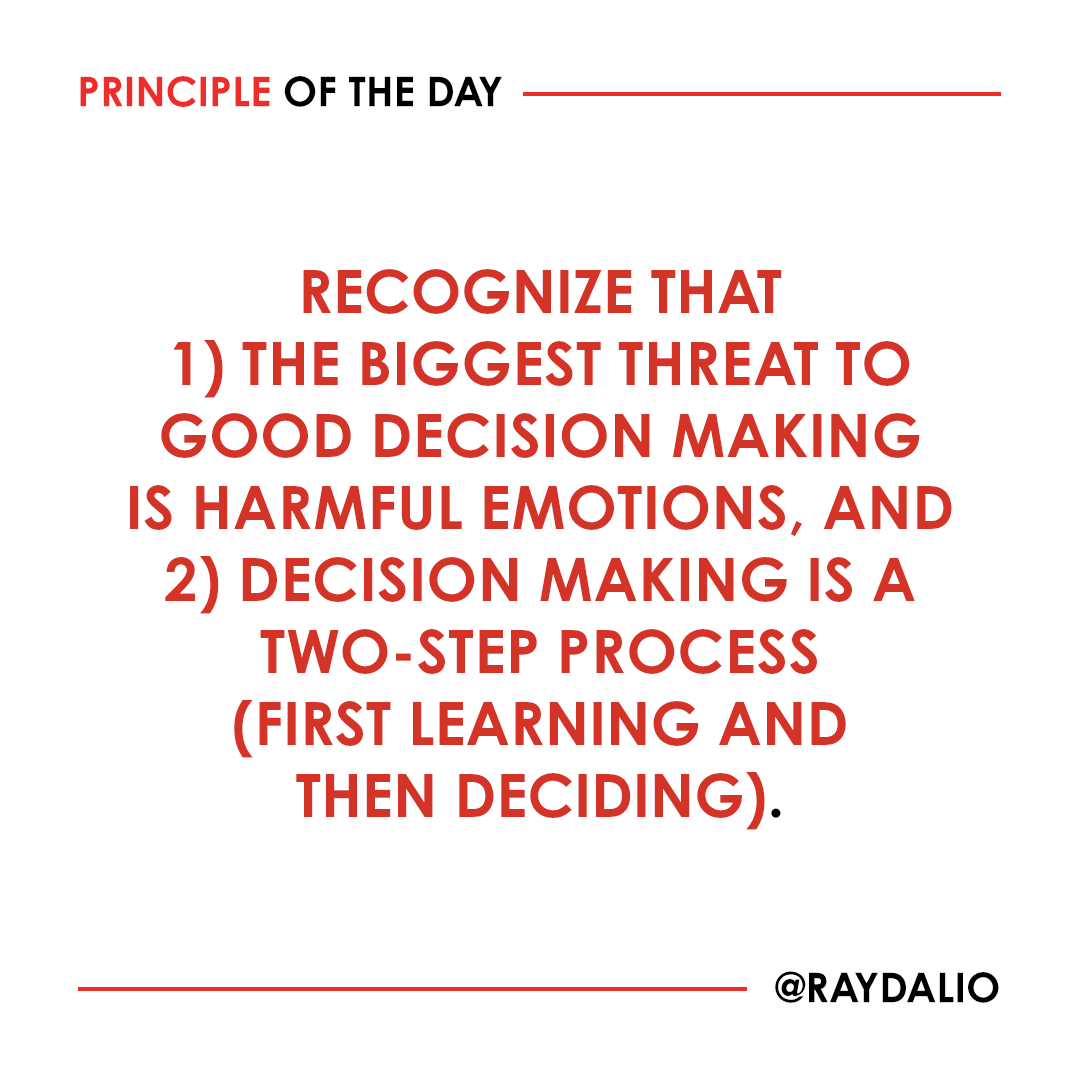
Learning must come before deciding. As explained in Chapter One, your brain stores different types of learning in your subconscious, your rote memory bank, and your habits. But no matter how you acquire your knowledge or where you store it, what’s most important is that what you know paints a true and rich picture of the realities that will affect your decision. That’s why it always pays to be radically openminded and seek out believable others as you do your learning. Many people have emotional trouble doing this and block the learning that could help them make better decisions. Remind yourself that it’s never harmful to at least hear an opposing point of view.
Deciding is the process of choosing which knowledge should be drawn upon—both the facts of this particular “what is” and your broader understanding of the cause-effect machinery that underlies it—and then weighing them to determine a course of action, the “what to do about it.” This involves playing different scenarios through time to visualize how to get an outcome consistent with what you want. To do this well, you need to weigh first-order consequences against second- and third-order consequences, and base your decisions not just on near-term results but on results over time.
Failing to consider second- and third-order consequences is the cause of a lot of painfully bad decisions, and it is especially deadly when the first inferior option confirms your own biases. Never seize on the first available option, no matter how good it seems, before you’ve asked questions and explored. To prevent myself from falling into this trap, I used to literally ask myself questions: Am I learning? Have I learned enough yet that it’s time for deciding? After a while, you will just naturally and open-mindedly gather all the relevant info, but in doing so you will have avoided the first pitfall of bad decision making, which is to subconsciously make the decision first and then cherry-pick the data that supports it.
But how does one learn well? #principleoftheday
반도체로 부유해진 대만 경제의 그림자,
그리고 점점 닮아가는 대한민국
1. 인공지능(AI)과 반도체 열풍을 타고 세계에서 가장 빠르게 성장하는 나라는 바로 대만임
2. 주식시장 시가총액과 1인당 GDP(국내총생산) 같은 지표에서도 대만은 이미 한국을 추월했음
3. 그런데 이상함
나라가 이렇게 부유한데, 먹고살기가 팍팍하다는 대만 국민은 늘어만 가고 있음
4. 소득과 자산의 불평등이 갈수록 심화하고 있기 때문임
그리고 이는 수출 기업 중심의 왜곡된 정책 탓이란 전문가 분석이 나오고 있음
5. 대만은 TSMC를 필두로 한 반도체 산업의 초호황 덕분에 1인당 GDP가 한국을 추월하는 등 겉으로는 엄청난 경제 성장을 이룬 것처럼 보임
6. 그렇지만 그 내부를 들여다보면 반도체 및 IT 업종과 비(非) IT 업종 간의 자산 및 소득 양극화가 극심해지는 이른바 '대만병'을 앓고 있음
7. 반도체 대기업 종사자들은 막대한 보너스와 높은 연봉을 받으며 부동산 시장의 큰손으로 떠오름
8. 반면, 내수 서비스업이나 전통 제조업에 종사하는 대다수 일반 노동자들의 임금은 수년째 제자리걸음을 면치 못해 상대적 박탈���이 극에 달한 상태임
9. 반도체 호황이 만들어낸 막대한 자금이 부동산 시장으로만 흘러 들어가면서 타이베이를 비롯한 주요 도시의 집값은 평범한 직장인이 평생 월급을 모아도 살 수 없는 수준으로 폭등했음
10. 이는 대다수 국민을 ' 부동산 난민'으로 내몰며 빈부격차를 더욱 심화시키는 주범이 되었음
11. 우리나라 역시 현재는 특정 메모리 반도체 대기업이나 일부 IT 산업에 국가 경제의 수출과 성장이 과도하게 의존하고 있다는 점에서 대만의 상황과 소름 돋을 정도로 유사함
12. 한국도 반도체 호황기마다 해당 업계는 수천만 원, 또는 억대의 성과급 잔치를 벌이지만 내수 경기나 중소기업, 서비스업은 만성적인 침체에 빠져 있어 소득 양극화가 고착화되고 있음
13. 수도권 중심의 부동산 가격 폭등과 이로 인한 청년층의 결혼·출산 포기 현상까지 대만의 경로를 그대로 밟아가고 있는 상황임
14. 삼전이나 하이닉스가 수십조씩 벌어오니까 국가 경제가 탄탄해 보이는가?
대만도 TSMC가 전 세계를 호령하니까 지표상으로는 그 어느 선진국들 보다 좋아보이는 상황임
15. 근데 현실은 반도체 대기업이랑 거기 납품하는 극소수 생태계만 돈을 쓸어 담고, 나머지 80%가 넘는 내수 서비스업이나 일반 자영업자들은 돈이 안 돌아서 굶어 죽기 직전임
16. 국가 전체 GDP는 올라가는데 내 주머니는 텅 비는 '풍요 속의 빈곤'이 고착화되는 중이라는것.
17. 반도체 초과 이익 분배라는 말이 정치인들에게서 계속 나오는 이유.
그리고 정말로 현실화 될 수도 있다는 것.
18. 진짜 문제는 대기업들이 인프라 투자를 해외로 돌려버릴 수도 있다는 점임
과연 황금알을 낳는 거위의 배를 가를 것인가.
Overall demand for Bitcoin (speculative + spot) is contracting at a monthly pace of 232K Bitcoin.
The ongoing price correction is completely related to Bitcoin demand conditions and has nothing to do with stocks (all-time highs), oil or macro (e.g. manufacturing activity is growing faster).
It's better to pay attention to data directly related to Bitcoin.
Trainees must be open-minded; the process requires them to suspend their egos while they discover what they are doing well and what they are doing poorly and decide what to do about it. The trainer must be open-minded as well, and it's best if at least two believable trainers work with each trainee in order to triangulate their views about what the trainee is like. This training is an apprentice relationship; it occurs as the trainer and trainee share experiences, much like when a ski instructor skis alongside his student. The process promotes growth, development, and transparency around where people stand, why they stand where they stand, and what they can do about improving it. It hastens not just their own personal evolution but the evolution of the organization. #principleoftheday
If both parties are peers, it's appropriate to argue. But if one person is clearly more knowledgeable than the other, it is preferable for the less knowledgeable person to approach the more knowledgeable one as a student and for the more knowledgeable one to act as a teacher. Doing this well requires you to understand the concept of believability. I define believable people as those who have repeatedly and successfully accomplished the thing in question--who have a strong track record with at least three successes--and have great explanations of their approach when probed.
If you have a different view than someone who is believable on the topic at hand--or at least more believable than you are (if, say, you are in a discussion with your doctor about your health)--you should make it clear that you are asking questions because you are seeking to understand their perspective. Conversely, if you are clearly the more believable person, you might politely remind the other of that and suggest that they ask you questions.
All these strategies come together in two practices that, if you seek to become radically open-minded, you must master. #principleoftheday
Some ways of thinking will serve you well for some purposes and serve you poorly for others. It is highly desirable to understand one's own and others' ways of thinking and their best applications. Some qualities are more suitable for some jobs. For example, you might not want to hire a highly introverted person as a salesman. That's not to say an introvert can't do that job; it's just that a gregarious person is likely to be more satisfied in the role and do a better job.
If you're not naturally good at one type of thinking, it doesn't mean you're precluded from paths that require it. It does, however, require that you either work with someone who has that required way of thinking (which works best) or learn to think differently (which is difficult or even impossible). #principleoftheday
The answer doesn't have to be in your head; you can look outside yourself. If you're truly looking at things objectively, you must recognize that the probability of you always having the best answer is small and that, even if you have it, you can't be confident that you do before others test you. So it is invaluable to know what you don't know. Ask yourself: Am I seeing this just through my own eyes? If so, then you should know that you're terribly handicapped. #principleoftheday