Another interesting development is that, following Covid 19, the peak demand period for all of India has shifted from the Winter (August/September) months to the Summer season. This might be a result of the country's overall rising temperatures. 3/3
The country's typical evening peak has been replaced by a daytime high around 2.55 PM. This may be a result of the demand response program's effort to shift the load to the daytime in order to use more renewable energy sources, particularly solar electricity. 2/3
Only 6% of India’s wind potential is being utilised by onshore windfarms installation and the wind sector is increasing its investments in offshore wind technologies. Here is our opinion on the offshore wind in India.
A through transmission network planning is needed to integrate higher RE because it serves as a backbone in the power system. Here is our view about the analysis of the transmission network to incorporate more renewable energy in Uttar Pradesh. @page 46 https://t.co/FK2Lr2R0Nl
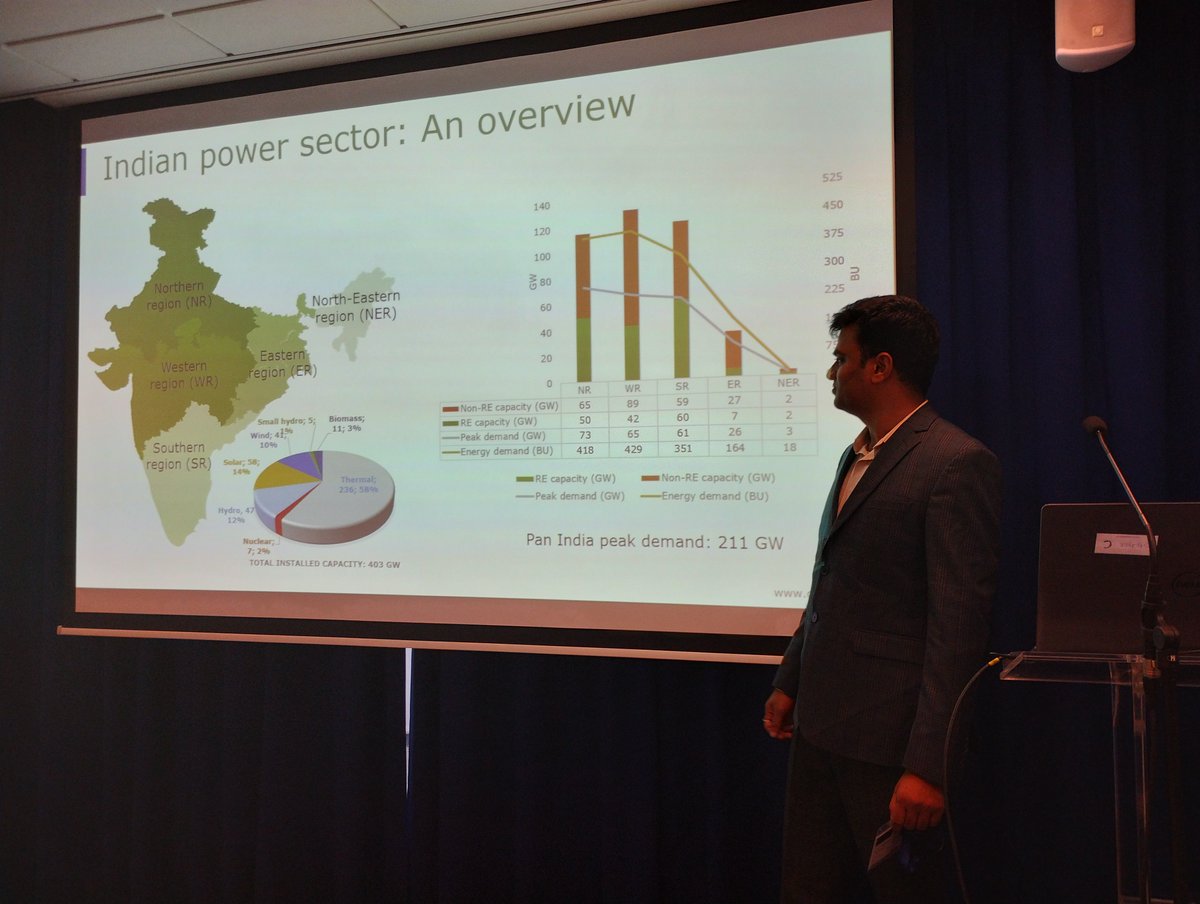
I along with my colleague @GArora_Rishu discussed about the opportunities and challenges in the transmission and distribution sector for the green energy transition.
@175GW_IndiaRenw@PosocoIndia@sksoonee Since power generation and transmission/distribution are separate entities owned by numerous agencies, sufficient transmission corridors can be established to draw adequate energy from neighbouring states/regions even when own generation is low.
How an International Power Grid Will Help Optimise Our Solar Power Use?
For details, read our op-ed published on Science The Wire https://t.co/aO60C3MqVK