In John 14:1–3 Jesus promises to come and take believers away to the Father’s house in heaven so they can be with Him there, while Zechariah 14:4 shows the Lord returning to the earth with His feet standing on the Mount of Olives.
This difference in destination and purpose—upward gathering to heaven versus downward arrival to reign on earth—supports viewing them as distinct events.
I’ve been seeing a lot of posts from people who don’t believe the Bible, claiming it’s oppressive to women—especially around marriage, bride price, and the laws about rape or virginity. Those comments have been frustrating, and this is one example of how I try to respond. I’m not trying to pick a fight; I’m just laying out how I understand these passages in their ancient context, based on biological differences and complementary roles. Here’s the short version of my thinking (AI assisted):
The Bible does not treat women as possessions or as less valuable. It starts from the reality that men and women are equal in worth (both made in God’s image) but different in body and typical strengths, so they complement each other to keep a household alive and thriving.
In Genesis, God made the woman as a suitable helper for the man—not a lesser servant, but a counterpart whose strengths fill what he lacks, and vice versa. Together they rule the earth and raise the next generation. After the fall, work becomes hard for both, but in different ways: men face toil in the fields and heavy outdoor tasks; women face pain in childbirth and the ongoing demands of nursing and household production.
That difference shows up in daily life. Professional fishing, like what Peter and the others did, meant working through the night hauling nets on a boat. That kind of continuous heavy labor is harder for women, especially during menstruation, pregnancy, or while nursing, when they lack modern protections. Women instead carried the intensive daily work of grinding grain, preparing and preserving food, spinning and weaving, and caring for children—tasks that were essential and exhausting in their own way. Men and women did not do identical jobs; their different bodies let the family cover every necessary task without one person being crushed by work that mismatched their strengths.
The marriage laws fit this same pattern of protecting the household. The bride price was payment to the woman’s family for the economic value she brought and for securing the marriage contract—standard across ancient societies, not “buying a person.” If a man slept with an unmarried virgin, he had to pay that price and marry her without the right to divorce her later. That put the lifelong cost of support on him so she would not be left without a husband and provision after her marriage prospects were reduced. If a husband falsely accused his wife of not being a virgin, he was punished and could not divorce her; only if the charge was true (fraud against the marriage agreement) was she punished. These rules were costly to the man and aimed at keeping women economically secure inside a family, not at harming them.
In short: the Bible recognizes real biological differences, assigns complementary roles so each supplements the other’s weaknesses, and uses its marriage rules to protect the resulting household rather than treat women as disposable goods. That is how the texts read in their own ancient setting.
Animal sequential hermaphroditism is a natural, evolved process of gonadal and gamete switching under social control. Human “transition” is a set of medical interventions (hormones ± surgery) that modify secondary characteristics and remove or suppress natal gonads; it does not produce the opposite reproductive cells. The two phenomena are not equivalent.
Therefore, natural animal sex change is not a solid argument for transformationirism (you know what I mean).
“GOD IS DONE WITH ISRAEL.”
IS HE?
You cannot understand Israel biblically without understanding covenant.
God did not choose Israel because Israel was stronger, wiser, or more righteous than the nations.
He chose Israel according to His sovereign purpose.
Then He attached His own name to promises He made to Abraham, Isaac, Jacob, David, and the nation of Israel.
And that changes everything.
Because Israel’s ultimate restoration will not prove that Israel never failed.
It will prove that God never did.
🌿 1. THE ABRAHAMIC COVENANT
God promised Abraham:
• A nation
• Descendants
• A land
• Blessing
• Blessing to the nations through his seed
Genesis 12:1–3
Genesis 15:18–21
Genesis 17:7–8
In Genesis 15, Abraham did not walk between the covenant pieces.
God did.
Abraham was asleep.
The covenant rested ultimately upon the faithfulness of God.
Israel could fail.
God could not.
🗺️ 2. THE LAND COVENANT
God foretold Israel’s rebellion and scattering before they even entered the land.
Yet He also promised something beyond the scattering:
regathering.
Deuteronomy 30:1–5 describes Israel returning from dispersion and being brought again into the land promised to their fathers.
Judgment did not cancel the promise.
Exile did not erase the covenant.
Scattering was real.
So is restoration.
👑 3. THE DAVIDIC COVENANT
God promised David an enduring house, throne, and kingdom.
2 Samuel 7:12–16
Psalm 89:3–4
Psalm 89:34–37
That promise ultimately points to David’s greater Son, the Messiah.
Isaiah says He will reign upon the throne of David.
Isaiah 9:6–7
Jeremiah speaks of a righteous Branch arising for David who will reign as King.
Jeremiah 23:5–6
The story does not end with David’s throne forgotten.
It ends with David’s Son reigning.
📜 4. THE MOSAIC COVENANT
This covenant was different.
It was conditional.
Israel’s enjoyment of blessing under the Law depended upon obedience.
Exodus 19:5
Deuteronomy 28
Israel failed repeatedly.
But the Mosaic Covenant did not erase the unconditional promises God had already made to Abraham.
Paul makes that principle explicit in Galatians 3:17.
The Law came later.
It did not annul the promise.
Instead, Israel’s failure under the Law demonstrated humanity’s need for more than commandments.
We need transformed hearts.
❤️ 5. THE NEW COVENANT
Notice who God names:
“the people of Israel and the people of Judah.”
Jeremiah 31:31
God promises:
• Forgiveness
• Cleansing
• A new heart
• His Spirit within
• His law written upon the heart
• Restored fellowship
Jeremiah 31:31–34
Ezekiel 36:24–28
Ezekiel 37:21–28
Gentile believers wonderfully share in New Covenant blessings through Messiah.
But sharing in Israel’s blessings does not require erasing Israel.
Romans 11 gives us the picture.
Gentiles are wild olive branches grafted in.
We do not replace the natural branches.
And Paul warns Gentile believers:
Do not boast over them.
Romans 11:17–18
❓ “BUT GOD IS FINISHED WITH ISRAEL.”
Paul anticipated that argument.
His answer could hardly be stronger.
“Did God reject his people? By no means!”
Romans 11:1
Then Paul asks whether Israel stumbled beyond recovery.
Again
By no means.
Romans 11:11
Israel’s present condition is not permanent rejection.
Paul calls it a partial hardening.
And he gives it an expiration point:
“until the full number of the Gentiles has come in.”
Romans 11:25
Then comes the stunning declaration:
“And in this way all Israel will be saved.”
Romans 11:26
Why does Israel still matter in God’s purposes?
Paul tells us:
They remain beloved because of the patriarchs.
Romans 11:28
And then:
“for God’s gifts and his call are irrevocable.”
Romans 11:29
Irrevocable means something.
✨ FOR HIS NAME’S SAKE
Here is one of the most important truths in the entire discussion.
God does not restore Israel because Israel deserves restoration.
Ezekiel says God acts for His holy name.
Ezekiel 36:22–23
Then God says He will gather Israel from the nations, bring them into their own land, cleanse them, give them a new heart, and put His Spirit within them.
Ezekiel 36:24–28
Why?
Because God’s name is attached to His promises.
Israel’s restoration becomes a public vindication of God’s covenant faithfulness.
Not Israel’s greatness.
God’s greatness.
Not Israel’s faithfulness.
God’s faithfulness.
☀️ CAN GOD SIMPLY CANCEL ISRAEL?
Jeremiah gives an astonishing answer.
God points to the sun, moon, and stars.
Then He says that only if this fixed order disappears will Israel cease to be a nation before Him.
Jeremiah 31:35–37
Look outside tonight.
The witnesses are still there.
Sun.
Moon.
Stars.
And the covenant-keeping God who placed them there has not changed.
⚠️ WHAT ABOUT THOSE WHO HATE ZION?
Scripture does not say Israel is above judgment.
Far from it.
God disciplines Israel severely throughout Scripture.
But there is a vast difference between God disciplining His covenant people and the nations imagining that Israel’s discipline gives them permission to despise Zion.
The Psalmist says:
“May all who hate Zion be turned back in shame.”
Psalm 129:5
Zechariah looks toward a day when Jerusalem becomes a heavy stone for the nations gathered against her.
Zechariah 12:3
And later, Israel looks upon the One they pierced and mourns.
Zechariah 12:10
Judgment.
Deliverance.
Repentance.
Restoration.
The prophets repeatedly place them together.
🔥 THE BIBLICAL PATTERN
The biblical pattern is not:
Israel sinned.
Therefore Israel was replaced.
It is:
Israel sinned.
Israel was disciplined.
Israel was scattered.
Israel experiences partial hardening.
Israel will be regathered.
Israel will be cleansed.
Israel will turn to her Messiah.
Israel will be restored.
Why?
Because God made covenants.
The Abrahamic Covenant promised the nation.
The Land Covenant promised restoration.
The Davidic Covenant promised the King.
The Mosaic Covenant demonstrated humanity’s need for transformation.
The New Covenant promises cleansing and a new heart.
Put them together:
A restored people.
In their promised land.
Under their promised King.
With transformed hearts.
Blessing the nations.
That is not replacement.
That is fulfillment.
And ultimately, it is not about Israel proving worthy.
It is about God proving faithful.
Israel’s restoration will not prove that Israel never failed.
It will prove that God never did.
We are getting closer.
"No wonder, for even Satan disguises himself as an angel of light." (2 Cor. 11:14)
To Calm AI Fears, Tech Firms Use Cuddly Mascots
"AI companies are trying a new charm offensive: using characters that look like cuddly stuffed animals to potentially make their technology feel a little less scary.
OpenAI’s new AI agents are embodied by colorful characters with bow ties and glasses, while the mascot for Meta Platforms’ Muse assistant is a rosy-cheeked, egg-shaped character. And Anthropic has its friendly pixelated orange crab, Clawd.
As public anxiety mounts over job losses and existential risks to humanity from AI, tech firms are taking a page from the marketing playbooks of consumer product companies and pharmaceutical firms by rolling out a series of adorable mascots.
'Fear of AI grows every day and it’s hard to be scared of something cute,' said branding consultant veteran Allen Adamson. 'It’s easier to trust something friendly.'
A recent Morning Consult online poll of 1,300 consumers conducted for The Wall Street Journal found that more than half of respondents agreed that AI poses an existential threat to society.
Early last week, OpenAI announced it was scrapping the release of its next-generation AI model over safety concerns. It introduced Dots, its new AI agents, a day later.
OpenAI showcased the cast of pink, blue, green, yellow and purple characters with names including Iggy, Felipe, Jojo, Todd and Alfred, at an event in San Francisco.
'People don’t fear what they name; they adopt it,' Adamson said.
Mascots have helped sell consumers on other potentially unappealing or dangerous products before. Cartoon character Joe Camel added a cool factor to cigarettes for decades."
By Suzanne Vranica
Today's WSJ, p. A1
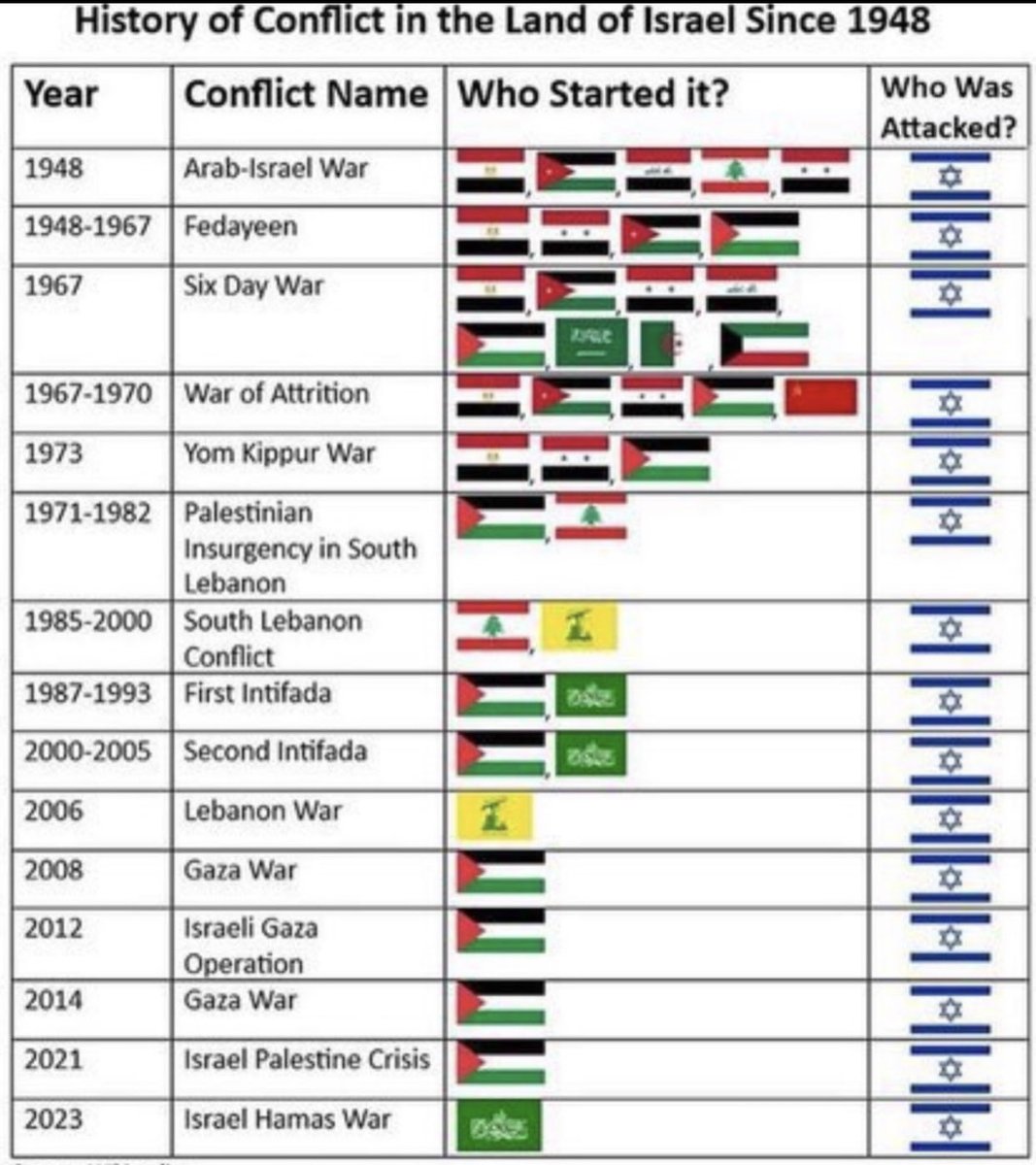
I honestly will never understand how anyone can watch the scenes from October 7th and still think that Israel is not justified in what they're doing in Gaza