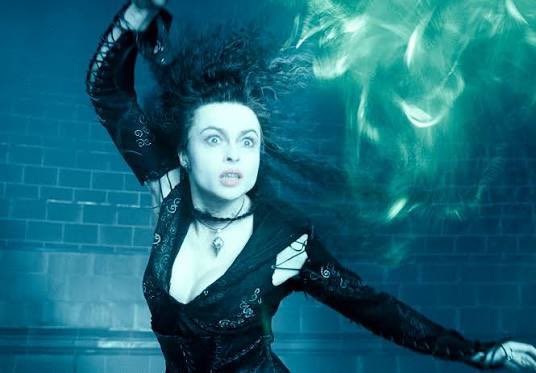
If protective spells can’t block Avada Kedavra, why don’t Death Eaters use it in every duel instead of wasting time with spells like Stupefy?
What’s stopping them from winning almost every fight?
Why didn’t Harry use the two way mirror Sirius gave him to check whether Sirius was safe at Grimmauld Place before rushing to the Ministry of Magic in Order of the Phoenix?
One of the coolest Harry Potter theories I’ve come across is that Dumbledore represents Death in “The Tale of the Three Brothers.” Think about it: Voldemort resembles the eldest Peverell brother because he seeks mastery over death through the Elder Wand; Snape resembles the second brother because he spends his life longing for Lily, the woman he has lost; and Harry resembles the youngest brother because he accepts death when the time comes and eventually meets it like an old friend. Dumbledore is the one who guides all three stories in different ways, and he is waiting for Harry at King’s Cross after Voldemort destroys the fragment of his soul inside him. J.K. Rowling herself called this theory “beautiful” and said it fits, although it remains a symbolic interpretation rather than literal canon.
What makes the theory even more fascinating is how it changes the way you see Dumbledore. He isn’t literally Death, but he understands the three brothers’ weaknesses better than anyone: the hunger for power, the inability to let go of the dead, and the fear of dying. Harry ultimately survives because he does what Voldemort never could he accepts death rather than trying to conquer it. That idea connects directly to the books’ central contrast between Harry and Voldemort, and it gives the King’s Cross chapter a deeper meaning: Dumbledore’s role is not simply to prepare Harry to defeat Voldemort, but to help him understand why death itself is not the enemy. The most powerful wizard in the story may not be the one who conquers death, but the one who finally learns not to fear it.
Voldemort’s return to Hogwarts wasn’t simply a former student hoping to become a professor. By the time he approached Dumbledore, roughly in the late 1960s, Tom Riddle had transformed himself into Lord Voldemort and spent years exploring the Dark Arts. He had originally asked Headmaster Armando Dippet for the Defence Against the Dark Arts position after graduating, but Dippet considered him too young. When he returned years later, Dumbledore was headmaster and understood that Voldemort had ulterior motives. In Half-Blood Prince, Dumbledore suggests two possibilities: Voldemort wanted access to Hogwarts’ secrets and an opportunity to recruit impressionable students into his cause. Hogwarts was the one place Voldemort had considered home, but his attachment to it was also deeply possessive he wanted to master its secrets, not merely teach there.
The biggest reason we can identify in hindsight is that Voldemort wanted to hide Ravenclaw’s diadem, one of his Horcruxes, inside Hogwarts. He believed the Room of Requirement was a secret only he had truly understood, making it an ideal hiding place for an object he wanted to keep safe. When Dumbledore refused to hire him, Voldemort left furious and apparently cursed the Defence Against the Dark Arts position; Dumbledore later connected the refusal to the fact that no teacher held the job for more than a year. The books don’t prove that hiding the diadem was his only motive recruiting followers and gaining access to Hogwarts may also have mattered. That’s what makes the visit so revealing: Voldemort tried to turn his old school into both a recruitment ground and a vault for his immortality, while assuming he understood Hogwarts better than anyone else. That arrogance ultimately helped Harry discover where the diadem was hidden.
Very simple, really: Hermione was going to end up with Ron. The greenhouse scene made it pretty obvious that something was developing between them. Ginny complicated things when she told Ron that Hermione had kissed Viktor Krum, leading both Ron and Hermione to retaliate out of jealousy.
But Harry knew how Ron felt about Hermione. If anything, Harry is one of the biggest pieces of evidence for Romione because he recognised Ron’s feelings and, despite his flaws, respected the Bro Code: thou shalt not date thy best friend’s crush, Article 2, Section 1. 😂
As for why Harry never explained Ron’s jealousy to Hermione, it wasn't his place to interfere in their relationship. Besides, the incident had happened two years earlier, and Harry himself admits he didn't know how to explain it without Hermione thinking he was making excuses for Ron or talking nonsense.
One of the coolest Harry Potter theories is that Dumbledore suspected Harry might survive Voldemort’s final attack long before Harry understood why. When Voldemort used Harry’s blood to resurrect himself in Goblet of Fire, he unknowingly carried Lily’s protection inside his own body. In Deathly Hallows, Dumbledore explains that this gave Harry a chance to survive, because as long as Voldemort lived, Lily’s protection lived within him too. It makes Dumbledore’s choices throughout the final books look different: he wasn’t certain Harry would survive, but he had a reason to hope that Voldemort’s attempt to kill him wouldn’t end the way either of them expected.
Another theory I love is that Dumbledore represents Death in “The Tale of the Three Brothers.” Voldemort resembles the first brother, obsessed with mastering death through the Elder Wand; Snape resembles the second, unable to let go of the woman he loved; and Harry resembles the youngest brother, who accepts death rather than spend his life running from it. Dumbledore is the figure who ultimately meets Harry at the boundary between life and death, and he is also the person who once sought to unite all three Hallows. J.K. Rowling herself called this theory “beautiful” and said it fits. It isn’t literal canon, but it works remarkably well as a reading of the story’s themes: Voldemort spends his life trying to defeat death, while Harry survives by finally accepting it.
In Chamber of Secrets, after Ron starts coughing up slugs, Harry and Hermione take him to Hagrid instead of the hospital wing. Why skip Madam Pomfrey when she’s the obvious choice for something like that?
@Kamalfalilat Hagrid had a good heart, but his judgement with dangerous creatures was terrible
Dumbledore trusted his intentions, even when his decisions put students at risk.
Hagrid should honestly have been fired in Year 2! This man brought a giant, man-eating spider into Hogwarts and later kept a DRAGON egg in his wooden hut beside a school full of children. And somehow, he still got to keep his job!
I love Hagrid, but his judgement when it comes to dangerous creatures was absolutely questionable. Norbert was illegal, Aragog was terrifying, and poor Harry and Ron kept getting dragged into the consequences of his decisions.
How did Dumbledore keep trusting this man with students’ safety?
I think people underestimate how well Salazar Slytherin hid the Chamber of Secrets. Dumbledore was one of the greatest wizards alive, but even he couldn’t investigate a secret he had no solid reason to believe was real. The entrance was hidden inside a girls’ bathroom, and opening it required speaking Parseltongue, a rare ability Dumbledore didn’t possess. For centuries, the Chamber was treated as a legend, so there wasn’t necessarily an obvious place to start looking.
Harry, Ron, and Hermione had something the previous generations didn’t: a series of fresh clues. Students were being petrified, Harry could hear a mysterious voice in the walls, Hermione discovered the basilisk connection, and the messages on the walls pointed directly to the Chamber. Harry’s ability to speak Parseltongue ultimately allowed him to open the entrance. The trio didn’t outsmart Dumbledore in a straight contest of magical ability; they followed evidence that only emerged when the Chamber was active again. Sometimes, being brilliant isn’t enough when you don’t have the clues that lead to the answer.
How did the Chamber of Secrets remain undiscovered for centuries when Dumbledore was considered one of the greatest wizards of all time, yet Harry, Ron, and Hermione managed to uncover it in their second year?
How did the Chamber of Secrets remain undiscovered for centuries when Dumbledore was considered one of the greatest wizards of all time, yet Harry, Ron, and Hermione managed to uncover it in their second year?
Harry using Lumos Maxima at the beginning of Harry Potter and the Prisoner of Azkaban has always been one of the strangest decisions in the movies. Harry was still underage, living with the Dursleys, and technically forbidden from performing magic outside Hogwarts. In Chamber of Secrets, the Ministry sent him a warning after Dobby performed magic in the house, even though Harry wasn’t responsible. So why would Harry deliberately practise a spell beneath his bedsheets when he knew underage magic could get him into trouble?
The interesting part is that the movie never properly explains it. In the books, Harry uses a torch to read A History of Magic beneath his bedsheets in Prisoner of Azkaban, carefully avoiding detection by the Dursleys. The filmmakers replaced this with Lumos Maxima, creating a memorable opening but contradicting the established rules of the wizarding world. It’s a perfect example of a cinematic decision taking priority over the source material.
However, there’s a technical distinction worth noting: the Trace detects underage magic performed in the presence of underage witches and wizards, but it doesn’t reliably identify who performed the magic. Harry could potentially have argued that an adult wizard was responsible, although the Ministry had already shown how easily it could blame him. The real question isn’t whether Harry could get away with it. It’s why the filmmakers chose to open the movie with a spell that the books had already given them a perfectly good reason to avoid.
Harry Potter didn’t actually know the Basilisk fang would destroy the diary, he was just a dying 12-year-old acting on pure, unhinged spite.
It was a stab in the dark, quite frankly, no pun intended. Harry apparently remembered his textbook reading for once.
“Of the many fearsome beasts and monsters that roam our land, there is none more curious or more deadly than the Basilisk, known also as the King of Serpents. This snake, which may reach gigantic size and live many hundreds of years, is born from a chicken’s egg, hatched beneath a toad….” (From the page torn out of an old library book, pulled from petrified Hermione’s hand by Harry Potter in the Hogwarts infirmary.)
Harry Potter and the Chamber of Secrets
At the end of the year in the Chamber of Secrets, a quick-thinking Harry figured if anything was going to destroy that diary, a Basilisk was as good as it was going to get. Ginny was dying and Harry was soon to follow, and there just wasn’t a lot of options to choose from at that particular moment anyway.
I suppose the Sword of Gryffindor would have worked too, but, given that there happened to be a handy-dandy dead Basilisk’s fang sticking out of Harry’s arm at the moment, he figured, “What the hell! Let’s give it go!”
The honest answer is that it was a continuity error in the film adaptation, not a special exception to the rules. At the beginning of Harry Potter and the Prisoner of Azkaban, Harry repeatedly casts Lumos Maxima under his blankets while studying at Privet Drive. However, the books establish that underage wizards are forbidden from performing magic outside school. In Harry Potter and the Chamber of Secrets, Harry is worried about being expelled after Dobby’s Hover Charm is mistakenly attributed to him, and in Prisoner of Azkaban, he knows he could face punishment for accidentally inflating Aunt Marge. Crucially, the opening scene with Lumos Maxima does not happen in the book: Harry uses a torch to work on his homework instead. The filmmakers changed the scene to create a magical opening and establish Harry practising spells, but the change contradicts the rules the story later reinforces.
There is a possible explanation for why Harry wasn’t punished, but it doesn’t fully resolve the inconsistency. The Ministry uses the Trace to detect underage magic, yet it cannot reliably identify which wizard performed a spell when underage and adult wizards live together as Dobby’s incident demonstrates. It is also possible that the Ministry overlooked a relatively harmless lighting charm, but the books never establish that Lumos is exempt from the underage-magic restrictions. In the film, when Harry accidentally inflates Aunt Marge, Cornelius Fudge even acknowledges the law but chooses not to punish him, showing that enforcement can be selective. Still, that later decision does not explain why Harry could practise magic repeatedly at Privet Drive without consequences. The most credible conclusion is that Alfonso Cuarón’s film introduced a memorable opening at the expense of continuity. Harry wasn’t allowed to use magic at home; the movie simply broke its own rules before the story had properly begun.
Slytherins hated Muggle-borns but worshipped Snape, a half-blood with a literal Muggle last name.
Did his blatant favoritism make them overlook his blood status, or did Voldemort set the precedent that powerful half-bloods get a pass?
I think the biggest reason Death Eaters don’t use Avada Kedavra in every duel is that a killing curse is only useful if you can actually land it. It’s not an instant-win button. The caster has to aim and successfully cast it, giving an opponent a chance to dodge, take cover, or interrupt them. We see this in Order of the Phoenix, when Dumbledore and Voldemort duel in the Ministry: Dumbledore uses statues, barriers, and clever magic to protect Harry and counter Voldemort rather than simply trading killing curses with him.
There’s also a difference between killing someone and defeating them. Death Eaters sometimes need information, hostages, or prisoners, and spells like Stupefy can incapacitate someone without killing them. Plus, Avada Kedavra is an Unforgivable Curse, and using it carries serious consequences under wizarding law. Of course, Death Eaters are willing to kill, so that legal threat won’t stop all of them. But the real limitation is that the curse has no special power to make its target helpless; it can still be dodged or avoided. That’s why skilled duelists rely on timing, deception, and a variety of spells rather than betting everything on one curse.
If protective spells can’t block Avada Kedavra, why don’t Death Eaters use it in every duel instead of wasting time with spells like Stupefy?
What’s stopping them from winning almost every fight?
@Teslimatttt Dumbledore wanted the Elder Wand’s power to die with him, but Draco disarming him ruined that plan.He intended Snape to kill him, but because it was arranged, Snape wouldn’t become the wand’s true master. He never expected Draco to disarm him first.
What was Dumbledore's actual plan for the Elder Wand? If he wanted to keep it out of Voldemort's hands, why not leave it to Harry or Snape for safekeeping?