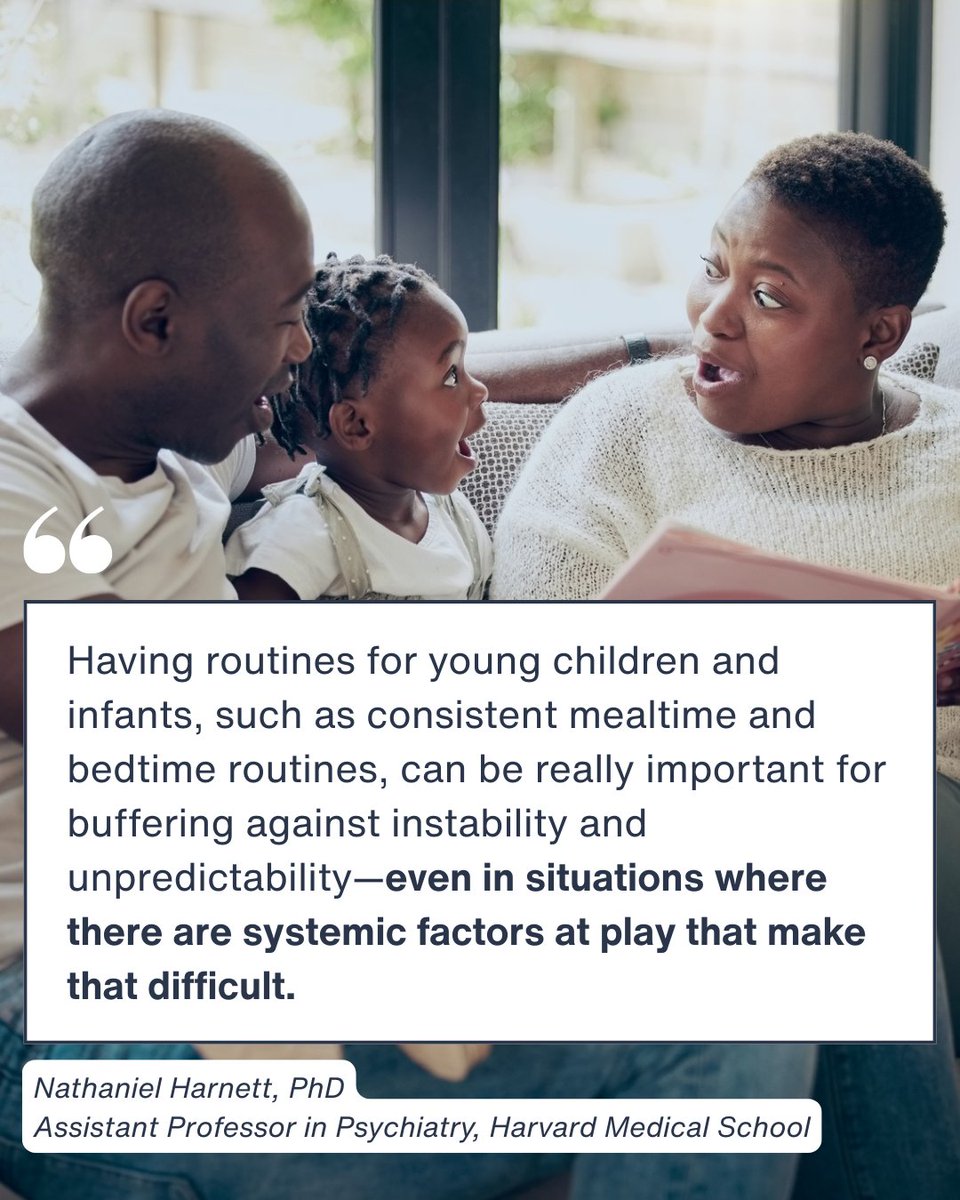
Promoting stability during pregnancy and early childhood offers a vital opportunity to support development and lifelong health.
Find practical strategies for increasing stability here: https://t.co/KkvR7NA4jq
🥰 Stable, interactive relationships with a broad range of caring adults help young children feel like they matter, which supports their lifelong health and well-being.
Learn more: https://t.co/XI1GexjMbp
This video was originally posted by dayandwhit on Instagram.
Influences from a child's developmental environment shape their developing biological systems, with implications for lifelong health and well-being. This includes everything from air quality to stable access to nutritious foods.
Learn more here: https://t.co/m3fVzz0G2E
By designing and implementing policies that promote secure, consistent access to nutritious foods early in life, we can support children's physical and mental health—now and across the lifespan.
Learn more: https://t.co/vhjXbeBPy8
Read a note from our Faculty Director, Dr. Stephanie Jones, in our new newsletter: https://t.co/8Ujqfx1gbQ
Dr. Jones reflects on what she’s learned since joining the Center and marks Mental Health Awareness Month by discussing the importance of mental health in early childhood.
During early childhood, the brain develops rapidly, and early experiences shape the architecture of the developing brain—laying the foundation for all future learning, behavior, and health.
Learn more: https://t.co/etebzml6x1
Children learn about the world through serve and return interactions with caregivers—just like this! Learn more here: https://t.co/6pvMdD6EKI
This video was originally shared by kuuipodawn on TikTok.
Policies and programs that support caregivers and minimize stressors—from paid family leave to housing subsidies—can play an important role in helping all our children to thrive.
Learn more here: https://t.co/XI1GexjMbp
Listen to the latest episode of The Brain Architects: https://t.co/XXTQq1nouw
In this episode, learn how stability across children’s developmental environments shapes their well-being and find strategies for promoting stability for young children and their caregivers.
When we work across sectors to ensure children are surrounded by positive experiences and opportunities, such as safe, stable housing and responsive relationships with caring adults, we can support their life-long mental health.
#earlychildhood#mentalhealth
Young children thrive in predictable settings with consistently available, supportive caregivers. However, caregivers cannot do it alone—policies and programs need to help create stable environments for young children and caregivers: https://t.co/vhjXbeBPy8
Childcare stability is associated with more secure attachment to the caregiver as well as improvements in language, literacy, and cognitive skills. This speaks to the importance of designing childcare policies and programs with stability in mind: https://t.co/8KDOXBfKuL
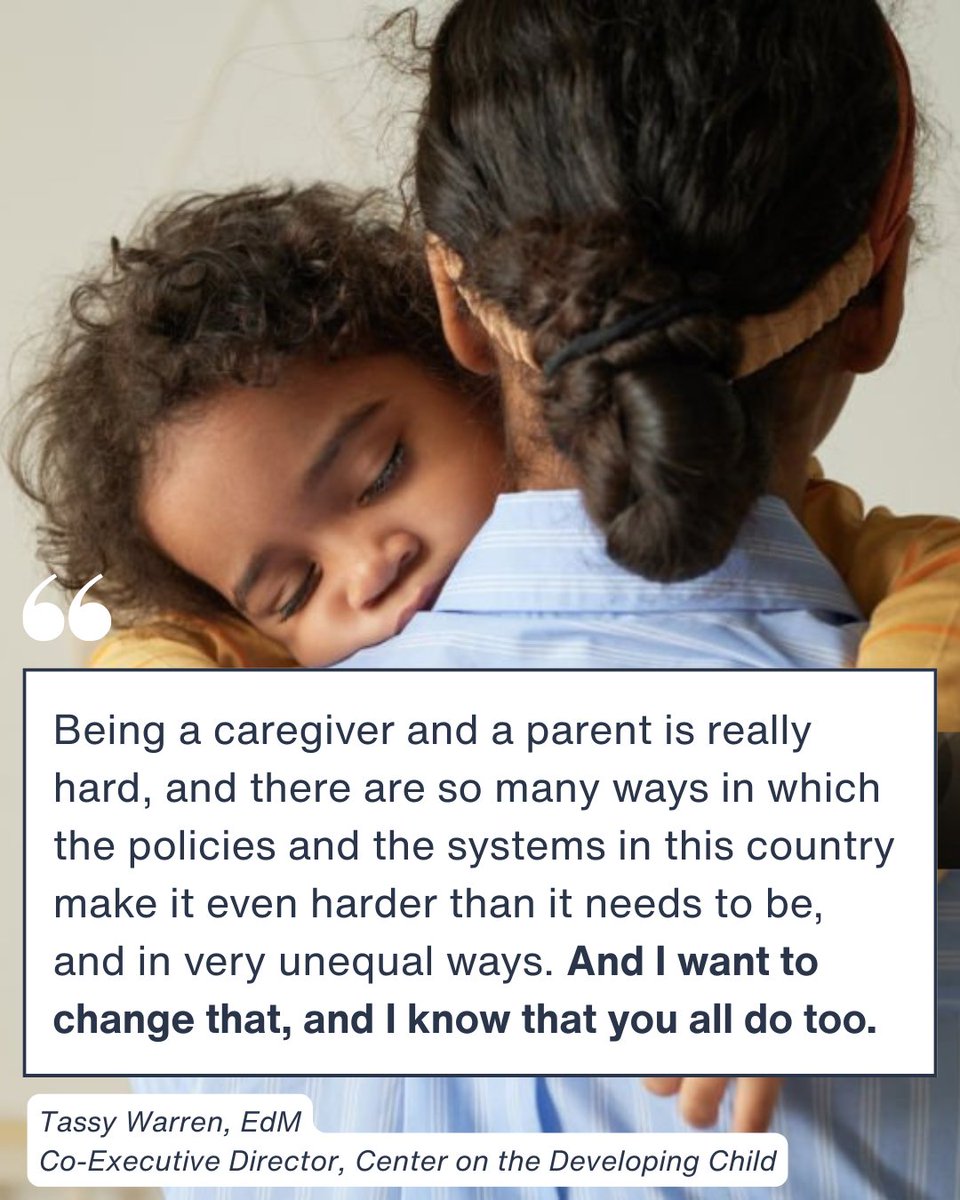
Our Co-Executive Director and Chief Strategy Officer, Tassy Warren, EdM, recently spoke at the State of the Child Summit, hosted by NC Child and the North Carolina Institute of Medicine.
Read more of what she said here: https://t.co/zN805AwRre
🏠 Policies and programs that promote housing stability – such as increasing access to safe, affordable housing – offer a tremendous opportunity to help children thrive.
Learn more here: https://t.co/8KDOXBfKuL
🤣 Play is such an important part of early childhood development! Learn more and find playful activities for children of all ages here: https://t.co/tIWXqwDZNX
Children’s development is shaped by a range of influences from their developmental environment. By working across a broad array of sectors, we can help ensure every child grows up in a developmental environment where they have what they need to thrive: https://t.co/vUHhwe4ctt
Fluctuations in family income are common—but when income is unpredictable, it can disrupt children’s environments. Income changes can contribute to housing instability & impact access to nutritious food, healthcare, and high-quality childcare. Learn more: https://t.co/vhjXbeBPy8
ICYMI: Watch the recording of our recent webinar on stability in early childhood: https://t.co/JhcgvzkNTD
This conversation examined how stability—or the lack of it—in children’s developmental environments can affect their well-being in the moment and throughout their lives.
Stability is an essential part of a healthy developmental environment, and promoting stability across the web of influences in children’s lives offers a vital opportunity to support early development and lifelong health. Learn more here: https://t.co/vhjXbeBPy8
Introducing a new working paper from the National Scientific Council on the Developing Child – Finding the Balance: Transforming How We Think About the Body’s Response to Stress in Early Childhood.
📚 You can read the paper here: https://t.co/Ycnw9E8cnk