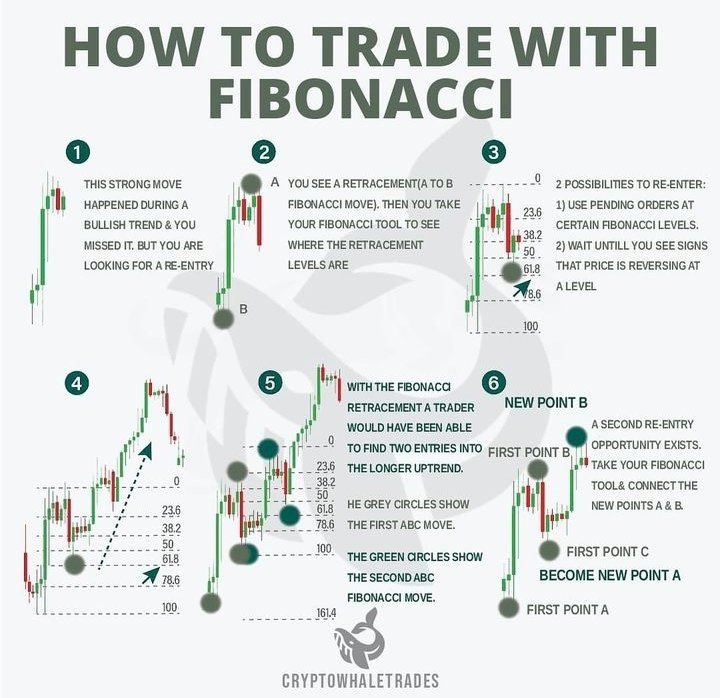
HOW TO TRADE WITH FIBONACCI RETRACEMENTS:
Trading using Fibonacci levels: is a popular technique in technical analysis that involves identifying potential support and resistance levels based on the Fibonacci sequence.
Here’s a step-by-step guide on how to trade Fibonacci retracements and extensions effectively.
1. Understand Fibonacci Basics
Fibonacci trading relies on key ratios derived from the Fibonacci sequence (e.g., 0.236, 0.382, 0.50, 0.618, and 0.786). These ratios help identify levels where price corrections (retracements) or extensions may occur.
2. Identify a Strong Trend
Before applying Fibonacci tools, identify whether the market is in an uptrend or downtrend. This is critical since Fibonacci levels are most effective in trending markets.
Uptrend: Look for higher highs and higher lows.
Downtrend: Look for lower highs and lower lows.
3. Use the Fibonacci Retracement Tool
The Fibonacci retracement tool is used to identify levels where the price may pull back (correct) before resuming the trend.
Steps:
1. Select a Swing High and Swing Low:
For an uptrend: Draw the Fibonacci retracement tool from the swing low (start of the trend) to the swing high (end of the trend).
For a downtrend: Draw from the swing high to the swing low.
2. Observe Retracement Levels: Key levels to watch: 0.382 (38.2%), 0.50 (50%), 0.618 (61.8%), and 0.786 (78.6%).
3. Wait for Price Action Confirmation: Monitor how the price reacts at these levels. If the price shows a reversal pattern (e.g., candlestick patterns like doji, engulfing, or pin bar), it may indicate the continuation of the trend.
4. Plan Your Trade
Entry:
Buy in an Uptrend: Enter near a Fibonacci support level (e.g., 61.8%) when price shows signs of reversal.
Sell in a Downtrend: Enter near a Fibonacci resistance level.
Stop-Loss:
Place a stop-loss slightly below the Fibonacci level you’re trading from (e.g., below the 61.8% retracement).
Take-Profit:
Use Fibonacci extension levels (1.272, 1.618) to set profit targets.
5. Use Fibonacci Extensions for Targets
Fibonacci extensions project potential profit levels when a trend resumes.
Steps:
1. Select a swing high and swing low (for
My Best Liquidity Strategies
0:01 - Break of Structure
0:16 - Supply and Demand Zones
0:56 - Finding a Liquidity Level
1:51 - Entering a Trade
2:22 - Trade Example
3:36 - Advanced Setup
🤖 I’ve opened my Telegram group.
If you’re a builder, developer, or productive community member who wants to follow our progress at Ice Open Network, share ideas, suggest improvements, report issues, and be part of the journey, join us here:
https://t.co/55QLM5chc7
I want to build a strong community of people who actually contribute, not just watch from the sidelines.
See you inside. 🔥
If you haven’t watched “Trading in the Zone” by Mark Douglas, you’re missing the real foundation of trading.
Just 22 minutes.👇📊
But it can change how you think about the market forever.
Because your real advantage isn’t on the screen, it’s in your psychology.
🎉 Ice Open Network is bringing triple rewards to #KuCoin!
🔹 Activity 1: ION GemSlot Carnival – Share a 10,000,000 ION Prize Pool
🔹 Activity 2: KuCoin Affiliates Exclusive – Share a 7,000,000 ION Prize Pool
🔹 Activity 3: @KuCoin_Web3 x ION Joint Campaign – Share a 6,000,000 ION Prize Pool
Don’t miss your chance to earn more as $ION goes live on #KuCoinSpotMarket!
https://t.co/DXR9QEhSki
👉Follow @ice_blockchain and @kucoincom on X or join our Discord to stay updated.
This is insanely bullish!
$ION Launches its Second utility + Kucoin listing + one more top exchange listing + first batch of $ION supply Burns + this bullish chart breakout all happening this week & much bigger things coming next week.
Show me another project that has as much potential
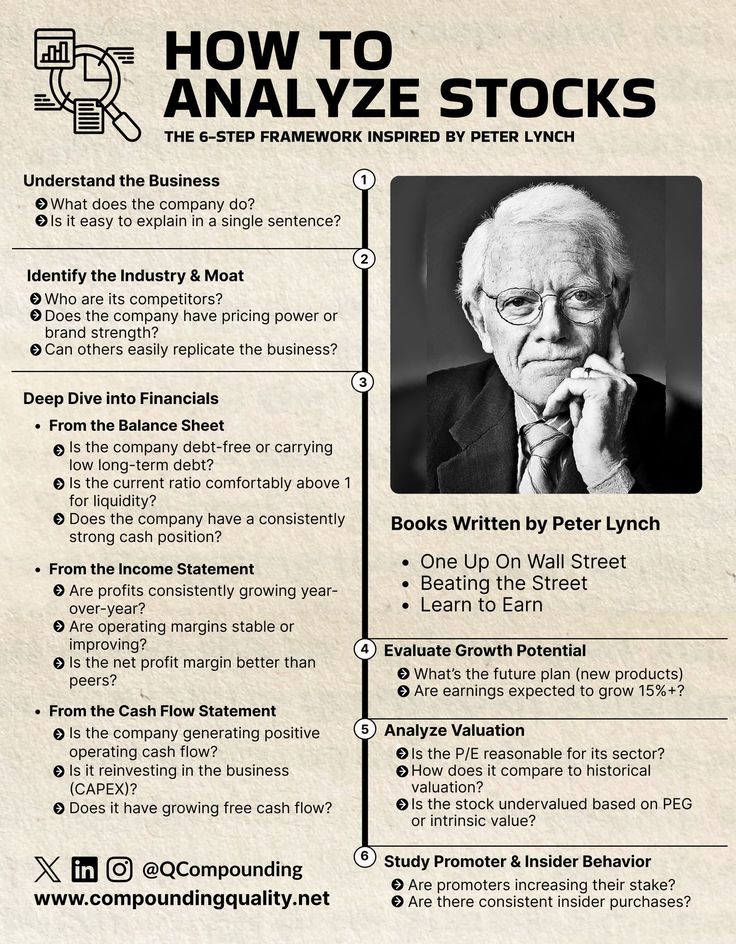
How to Analyze Stocks – 6-Step Framework (Inspired by Peter Lynch):
1️⃣ Understand the Business – What do they do? Simple explanation?
2️⃣ Industry & Moat – Competitors? Pricing power? Can it be copied?
3️⃣ Financials Deep Dive – Debt? Liquidity? Profit growth? Cash flow?
4️⃣ Growth Potential – Future plans? Earnings growth 15%+?
5️⃣ Valuation – P/E reasonable? PEG? Undervalued?
6️⃣ Insider Behavior – Promoters buying? Insider purchases?