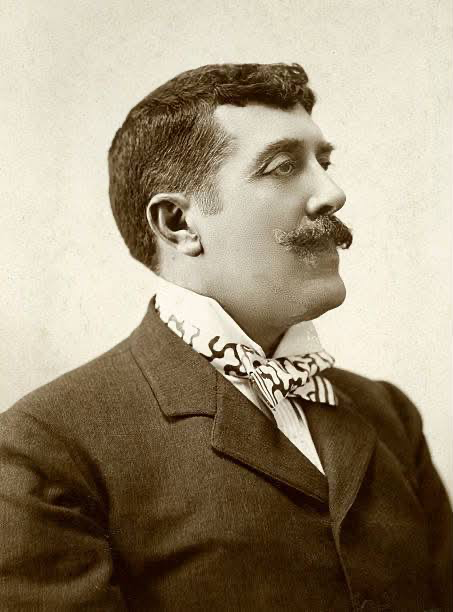
My readers," he writes, "would not be 'my' readers but the readers of their own selves, my book being merely a sort of magnifying glass like those which the optician at Combray used to ofer his customers-it would be my book, but with its help I would furnish them
"Pleasures and Days by M. Marcel Proust contains sweet melancholies, elegiac spinelessness, trifles of elegance and subtlety, vain affections, and empty flirtations—all rendered in a style both precious and pretentious."
— Jean Lorrain, Pall-Mall Semaine, Le Journal, Feb. 3 1897
in my novella in a profound manner. But why would any human being ask ChatGPT to manufacture such an experience by writing a prompt? Our errors, imperfections, and weaknesses are what make us so beautiful
My protagonist has to meet an old friend in the novella I am writing. Yet I find myself asking God to let me bump into an old friend of my own my next-door neighbour, whom I haven't met in years so that some magical memories might resurface and inspire me to write the next cont..
Don't be fooled by the hype. This is THREE THOUSAND PAGES of turgid, lugubrious prose of unpleasant, unattractive, clinically depressed rich people ineptly manipulating each another.
@jonathanbfine I read it three years ago, and I’m still thinking of reading it again. The past is never truly dead; it waits for some external stimulus to awaken it, to transform our perspective on what we thought we had left behind.
@jonathanbfine Before this novel, everything in my life seemed certain, until I experienced the mystery of involuntary memory through its pages. It changed the way I understand the past, memory, and the mystery we are constantly living without even realizing it.
principles upon which ethical systems are constructed—such as utility, justice, fairness, and human flourishing—derive their intelligibility from the goodness of Being itself.
Is Ethics Possible Without God? Or have we been asking the question the wrong way?
I was invited by Religions Journal to contribute to a Special Issue addressing this classic question.
I argue that the familiar “yes or no” debate may obscure a more fundamental issue. Instead of simply taking another side, try to reframe the question itself and offer a different—and, I believe, novel—way of thinking about the relationship between God and moral life.
The article is open access and freely downloadable: https://t.co/N9HyPwUp5d
Heidegger built an extremely dense system based on premises many consider limited.
He starts from Dasein (the human “being-there”) as the privileged entity that questions Being. Man would be the only one with authentic access to Being because he is thrown(Geworfenheit) into a world he did not choose, in finite time, oriented by the anxiety of death and temporality (past-present-future).
The criticism is that this creates an existential anthropocentrism: the rest of the universe becomes inert background, and man becomes the dramatic center of the question of Being.
A broader view , already defended by thinkers like Alfred North Whitehead , is that reality is a living and creative process, composed of “occasions of experience.”
Whitehead saw the universe not as a dead machine, but as an organism in constant creation, where even the most basic events possess an experiential character.
In this perspective, Being is not something the anguished man needs to discover against an indifferent cosmos.
Being is feeling oneself be. Man is not an exception thrown into the void ,he is a refined expression of this cosmic order .
Heidegger produced a phenomenology of human existence. But by isolating Dasein and turning finitude and anguish into the center, he ended up trapping the question of Being within a frame that is all too human.
It is possible to go beyond this without falling into cheap mysticism. Being is not merely what man projects or anguishes over ,it is the very foundation that makes any projection, any anguish, and any existence possible.
Whitehead understood this when he described reality as a continuous creative process, where experience is not a human privilege, but a fundamental trait of the real.
The most attractive thing a person can do is isolate for a long time and emerge with something impressive. Music, writing, sculpture, whatever it is: shows competence, passing the marshmallow test, inner dialogue, patience, commitment, bravery in the face of potential failure