The F.A. Hayek Program for Advanced Study in PPE at @mercatus encourages research on the institutional arrangements that support free & prosperous societies.
On the second episode of The Hayekian Triangle, @vstorr, @PeterBoettke, and @ccoyne1 place James Buchanan’s essays “Natural and Artifactual Man” and “Afraid to Be Free” in conversation, exploring the tension between human beings’ capacity for self-creation and their desire for protection from uncertainty.
🎧 Tune in to the Hayek Program Podcast
https://t.co/gmac2HZhMe
Our fifth annual Markets & Society meeting will begin in a couple of hours! We begin tonight with Dr. Virgil Storr’s keynote.
See you all tonight!!
@vstorr
📢 Vol. 2, Issue 1 of Markets & Society is out!
As America marks 250 years of independence, scholars examine the achievements, shortcomings, and future of liberal democracy.
Read the full issue, available open access! 👇
https://t.co/n56NO23v3M
Our 2026-2027 Mercatus Fellowships are in full swing! 🎉
We've welcomed new and returning fellows, kicked off our first colloquia, and begun another exciting year of conversations about markets, liberty, and the ideas and institutions that shape our society.
Here's to a great year! 📚
Alexander Schaefer joined the Adam Smith Fellowship while pursuing his PhD in economics at the University of Arizona. The fellowship shaped his research agenda, providing ideas for papers and influencing the way he approaches economics and the world.
Smith Alum Alexander Schaefer shares his Mercatus Fellowship Story.
https://t.co/3IeDEyhbK2
Lillian Foos discovered the Exploring Complex Solutions fellowship as a high school student after her father, an economics teacher, encouraged her to apply. The experience deepened her interest in economics and education policy and gave her the confidence to pursue a career in education and make a difference.
Mercatus Alum Lillian Foos shares her story.
https://t.co/5UzDBGN7en
Is AI's rise a constitutional moment for governance? Paul Dragos Aligica with @HayekProgram and @mercatus argues classical liberals must help design AI's rules, not just react to them, drawing on Buchanan and Ostrom's constitutional political economy. https://t.co/UkATNzHrAy
Congratulations to Hayek Program scholar @KristenRoseC, who was selected as a 2026-2027 AIDC Community Fellow with Georgetown University's Initiative on Artificial Intelligence and Democratic Citizenship!
The inaugural cohort will take on a big question: What does it mean to exercise democratic judgment in the age of generative artificial intelligence?
https://t.co/1cbjs3DszQ
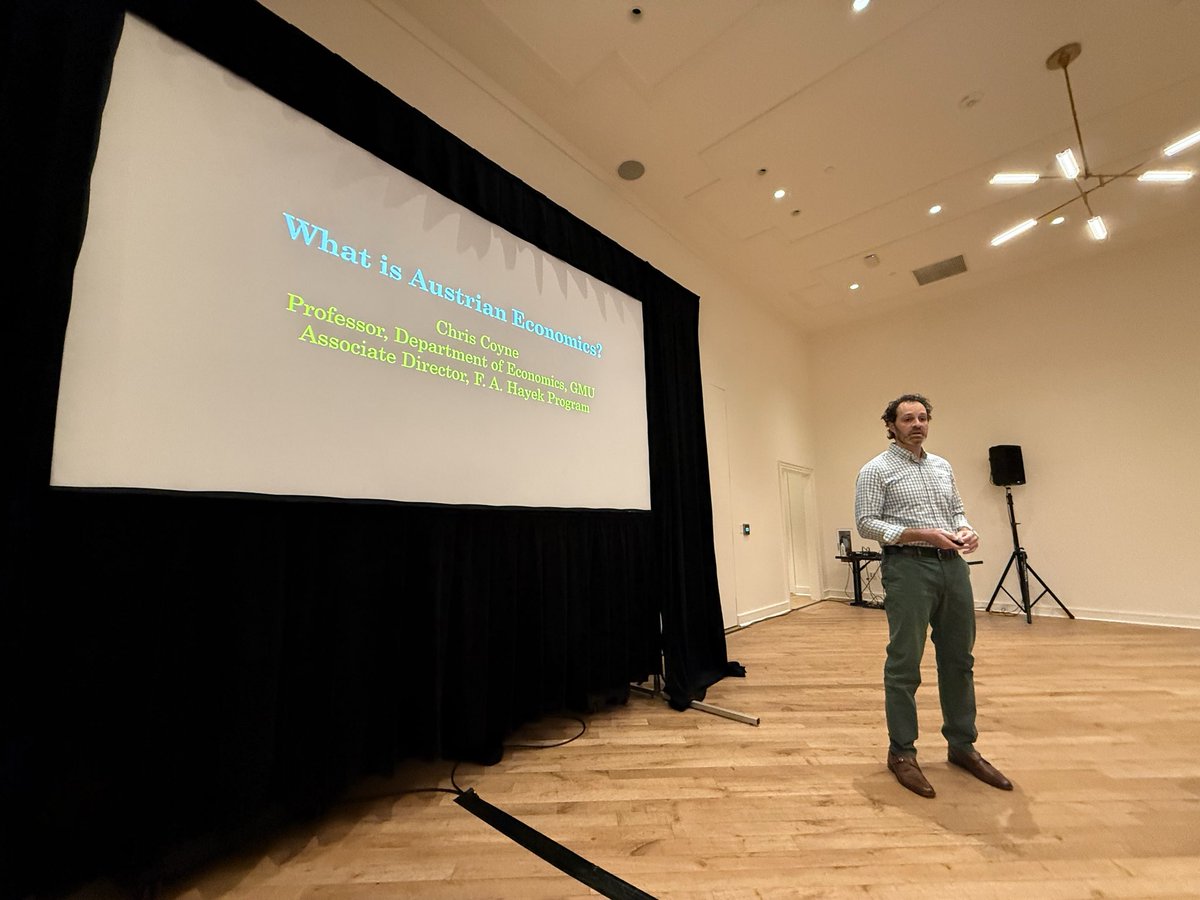
Grateful to the great @ccoyne1 for kicking off our @tfas Austrian Economics Seminar this weekend. One theme of his talk was the marvel of the market as a process for peaceful cooperation and creative problem solving 🎉💡
The dinner may be over, but the conversation continues. CEI CEO Kent Lassman sat down with 2026 Julian L. Simon Awardee Donald J. Boudreaux for the full interview. Now on YouTube: https://t.co/mEq1AMGSub
Hayek wrote across economics, political philosophy, social theory, and more. What ties it all together?
In Friedrich Hayek: A Very Short Introduction, @PeterBoettke, director of the F. A. @HayekProgram at Mercatus, and M. Scott King offer a unifying idea: how social coordination is possible without central command.
Learn more: https://t.co/5gYRmJZEGn
How can Public Choice renew political economy?
In the second-part of his essay on the past, present, and future of Public Choice, @PeterBoettke calls for an economics attentive to institutions, processes, and cultures of peace, drawing on Buchanan, Hayek, Ostrom, and Smith.
Read more here.
https://t.co/phBTUL7ZPg
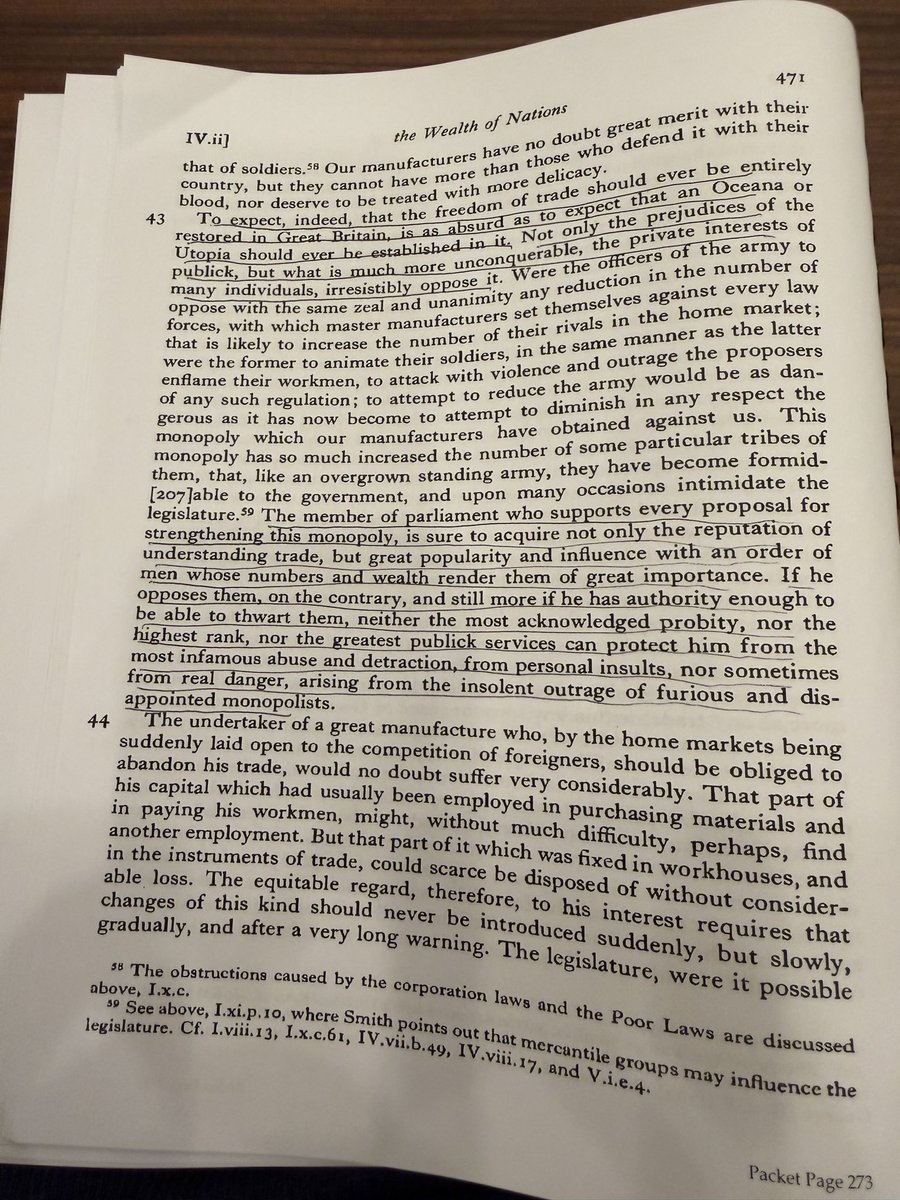
What made standing armies politically advantageous in an age of commercial society?
In this article, @KristenRoseC examines Adam Smith’s account of technology, warfare, and liberty. Smith argued that modern weaponry diminished the importance of individual dexterity and courage while increasing the value of discipline, regularity, and obedience. Yet his defense of professional armies rested not only on military necessity, but also on their potential to expand independence and liberty through commercial relations.
https://t.co/tqHiTNuS7U
On this episode, our panel of discussants talk about Erwin Dekker's book, "Jan Tinbergen (1903-1994) and the Rise of Economic Expertise."
Dekker argues that Tinbergen's crucial contribution is the theory of economic policy and the legitimation of economic expertise in service of the state. It traces his youthful socialist ideals which found political direction in the Plan-socialist movement of the 1930s for which he developed new economic models to combat the Great Depression. The book then turns to an examination of his attempt to repeat this achievement in the development projects in the Global South and at the international level for the United Nations.
Peter Boettke moderates the panel, with contributions from Sandra Peart and Michele Alacevich.
🎧 Tune in to the Hayek Program Podcast
https://t.co/wKuVHXSq0E
What is the future of public choice?
In the first of a two-part essay, @PeterBoettke reflects on the intellectual legacy of James Buchanan and Gordon Tullock, the development of the Virginia School of Political Economy, and the continuing importance of studying how ideas, interests, and institutions shape political outcomes. He argues that future research should focus not only on state capacity, but also on self-governance and the institutional pathways that make liberty and prosperity possible.
https://t.co/tZlbaLa0Cf
You can now pre-order a copy of Rainbow Liberty, which is edited by @NathanPGoodman, @NovakMikayla, and me. If you’re interested in classical liberalism and the flourishing of minority communities, please check out this volume.
https://t.co/8t8Gk1uyug