Supporting Healthcare Education with My Visit to Ibadan’s Nursing Institution.
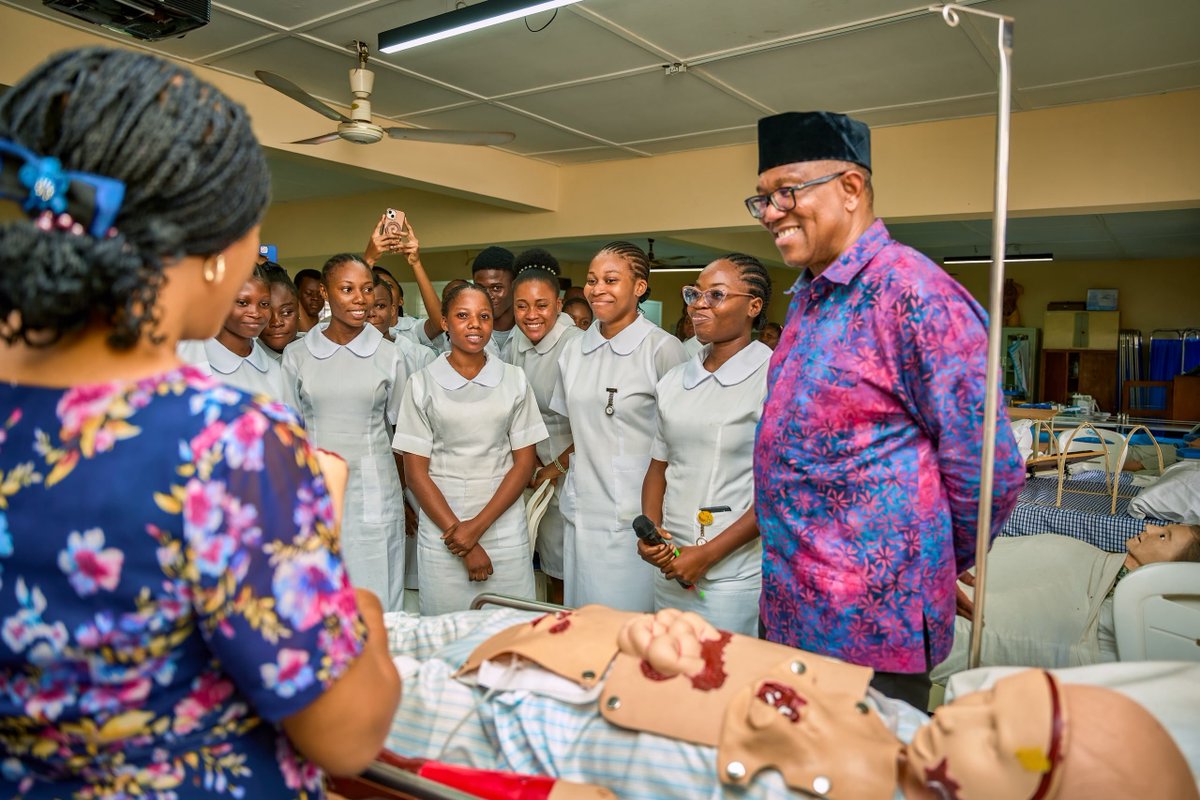
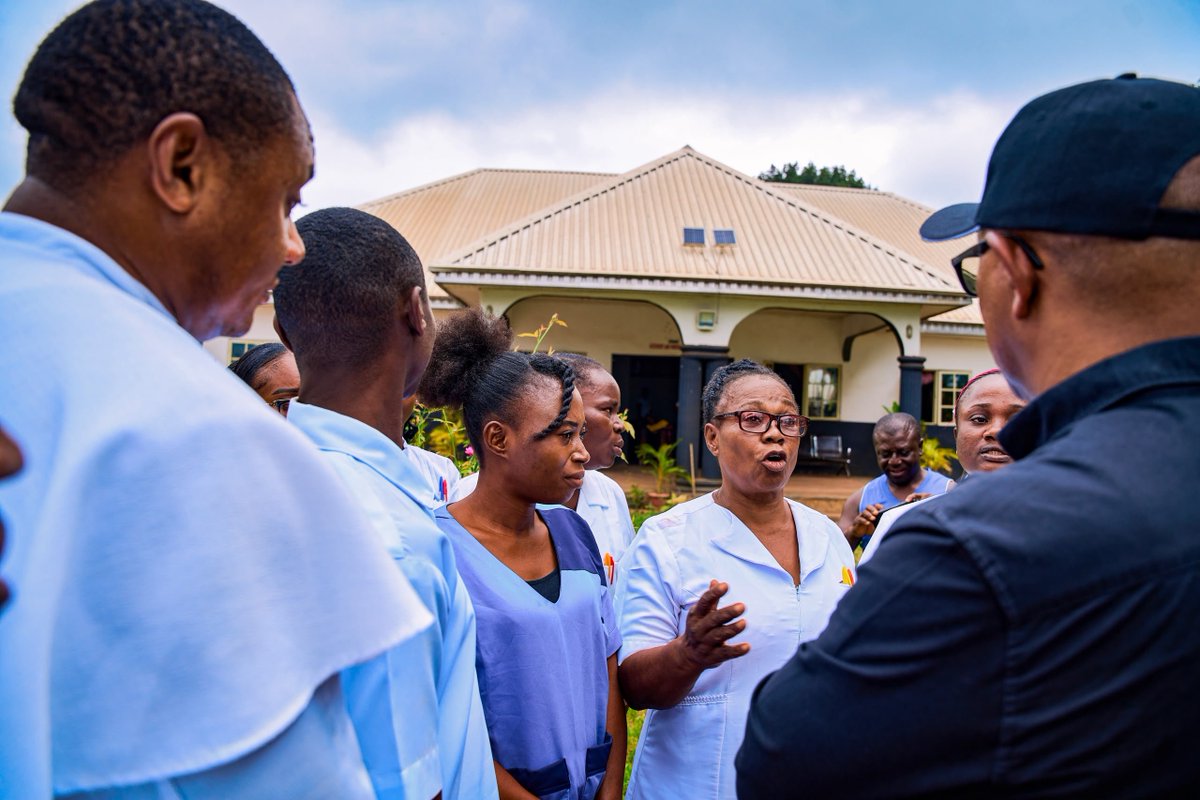
After attending the 50th/15th Biennial Conference of the Methodist Church, I proceeded to the College of Nursing Sciences, Oluyoro, Ibadan, where I interacted with the management and students of the institution.
I reiterated my belief that education remains one of the strongest foundations for building a better nation, especially in critical sectors such as healthcare. The training of competent healthcare professionals is essential to improving the quality of care and strengthening our national development.
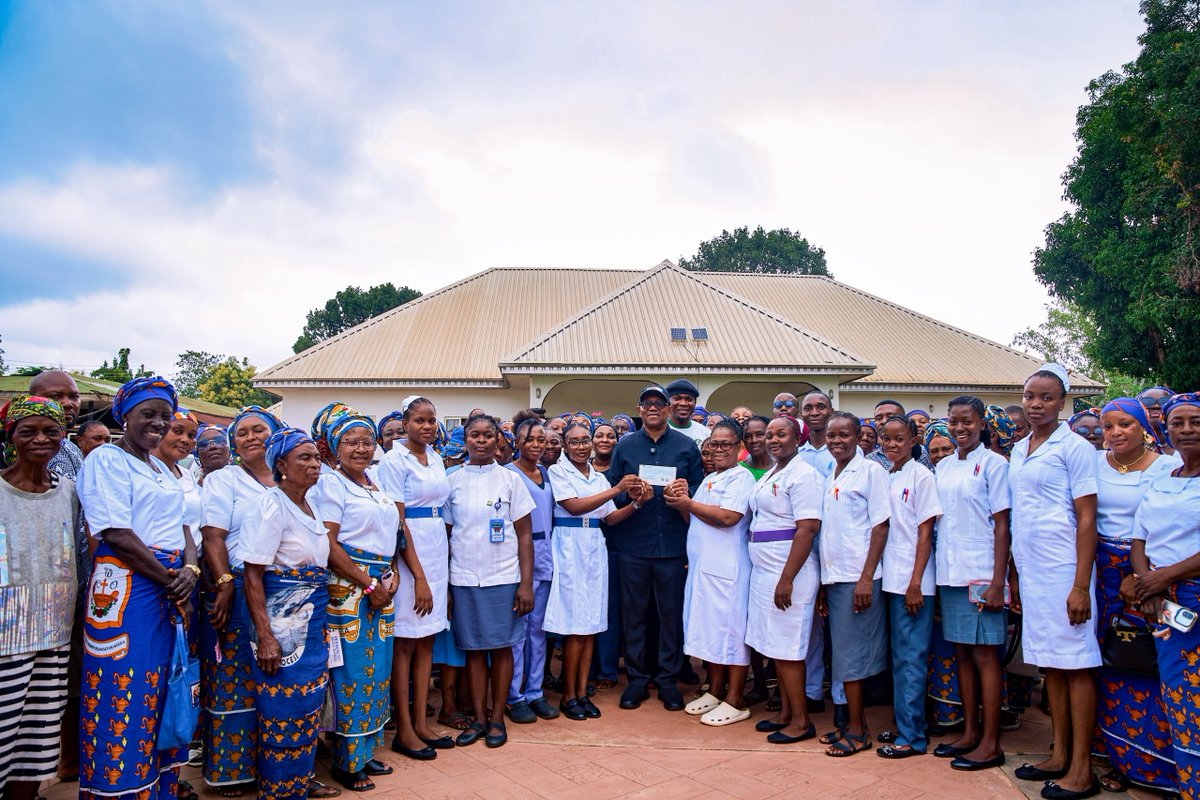
In keeping with my earlier commitment to continually support the institution, I donated another ₦10 million to assist the College in its important work of training future nurses and healthcare professionals. This is part of my continued commitment to investing in education and supporting initiatives that contribute to Nigeria’s future.
I also encouraged the students to take their studies seriously, reminding them that nurses occupy a vital place in the healthcare system. Their skills, compassion, and dedication are needed not only in Nigeria but across the world. I urged them to pursue excellence, uphold the highest standards of professionalism, and become worthy ambassadors of our country.
A new Nigeria is POssible. -PO
I commend the Catholic Bishops' Conference of Nigeria (CBCN) for demonstrating courage and patriotism by drawing attention to the realities confronting our nation.
Their concerns regarding the rising cost of living, worsening insecurity, declining public confidence, and the hardship faced by millions of Nigerians are neither partisan nor isolated; they reflect the daily experiences of ordinary citizens across every region of our country.
Nigeria is blessed with abundant human and natural resources, yet millions of our people continue to struggle under the weight of economic hardship, unemployment, insecurity, poor access to quality education and healthcare, and diminishing opportunities. These challenges demand urgent, sincere, and people-centred responses from those entrusted with leadership.
I encourage all well-meaning Nigerians to continue constructively engaging the Federal Government and other leaders at all levels whenever the opportunity arises, advocating for good governance, accountability, and policies that prioritise the security, welfare, and prosperity of our people.
It is through such collective commitment and responsible leadership that we can build a more peaceful, united, and prosperous Nigeria.
May Almighty Allah continue to bless the Federal Republic of Nigeria. - RMK
Rehabilitate Existing Infrastructure Before Embarking on New Projects
I have consistently advised governments at all levels to prioritise rehabilitating existing infrastructure before embarking on new projects that may also end up abandoned or left unfinished. For expressing this position, I have often been criticised and called all sorts of names. Yet, it remains the most responsible approach to governance.
It is therefore noteworthy that President Bola Tinubu has now cautioned state governors against committing scarce public resources to constructing unnecessary flyovers in areas with little traffic while neglecting more pressing developmental needs.
The President is, in essence, saying what I have always maintained: government must prioritise projects that directly address the immediate needs of the people. I hope those ministers, officials, and supporters who have consistently attacked this position will now direct the same criticism at him.
However, this admonition must also apply to the Federal Government. There are several unrealistic and white-elephant projects being pursued by the current administration, even as much of our critical infrastructure remains in a state of disrepair. Given our present fiscal realities, priority should be given to rehabilitating and completing existing infrastructure rather than embarking on expensive new projects with limited immediate impact.
Across Nigeria, many of our major highways linking commercial centres and food-producing communities have deteriorated into death traps. Neglecting these critical roads while pursuing prestige projects is neither economically prudent nor people-centred.
This philosophy guided my administration as Governor of Anambra State. I prioritised completing viable projects initiated by my predecessors before embarking on new ones. Government is a continuum, and development should never be measured by who starts a project, but by whether it is completed and serves the people.
Leadership is about making the right choices: fixing what is broken, completing what has already been started, and investing limited public resources where they will have the greatest impact on the greatest number of people.
A New Nigeria is POssible. -PO
Seun: "When politicians come on my programme and keep mentioning your name, how does that make you feel?"
Peter Obi: "Calling me names doesn't make me feel anything. They are abandoning the issues we are supposed to discuss and discussing what I think is irrelevant. Instead of discussing the problems of the country, people come before you to discuss Peter Obi.
#SundayPolitics
The Fulfilment of Investing in Education
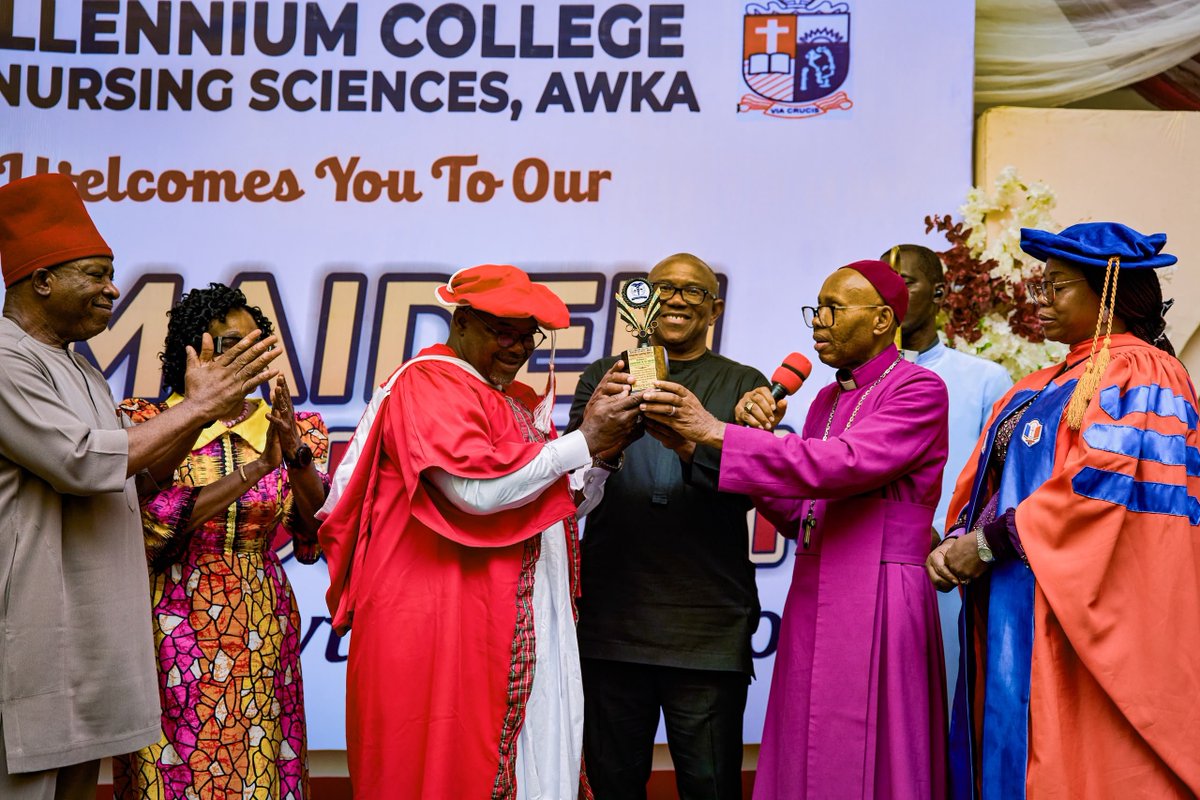
I was delighted to attend the maiden graduation ceremony of Millennium College of Nursing Sciences, Awka, an achievement that reflects the power of vision, commitment, and investment in human capital.
What gave me the greatest joy and fulfilment was learning from the Provost, Mrs Chisom C. Ezulike, that the initial support I provided served as the seed funding enabling the institution to commence operations seamlessly.
I was equally pleased to learn that my subsequent interventions significantly contributed to making today’s historic graduation possible. There is no greater satisfaction than seeing a small act of support blossom into an institution that is transforming lives and strengthening our healthcare system.
Nothing is more fulfilling than witnessing a modest investment in education grow into a thriving institution. Today, that same institution has graduated 116 pioneer students, who achieved a remarkable 100% success rate in the Nursing and Midwifery Council of Nigeria Professional Examination. This serves as yet another reminder that investments in education and healthcare are the most reliable investments in our nation's future.
I commend the pioneer graduating Class of 2025 and extend my congratulations to the Proprietor, management, faculty, benefactors, and everyone whose dedication and sacrifices have made this notable milestone possible.
Let us continue to invest in education, healthcare, and human capital development, for they remain the most assured paths to national progress and sustainable development.
A New Nigeria is POssible. -PO
Strengthening Democracy Through Inclusive Voter Registration
Yesterday, after attending the graduation ceremony of the Millennium College of Nursing Sciences in Awka, I visited an INEC Continuous Voter Registration (CVR) Centre in Enugu.
I was pleased to witness an orderly and well-organised registration process. I also met a number of people patiently queuing to register, demonstrating their commitment to participating in our democracy. I commend the INEC staff for their dedication and professionalism.
I, however, urge INEC to extend the Continuous Voter Registration exercise to at least 90 days before the General Elections to give more eligible Nigerians the opportunity to register and participate in the electoral process.
A New Nigeria is POssible. -PO
The Mission Hospital That Keeps Hope Alive
I left Enugu early this morning for Ogoja/Yala Local Government Area of Cross River State.
My first stop was the Catholic Maternity Hospital, Moniaya, Ogoja.
This decades-old facility remains virtually the only maternity hospital serving the entire Ogoja area.
Despite its age and the enormous responsibility it bears, it continues to provide care for thousands of women and newborns with limited resources.
Nigeria still ranks among the countries with the highest maternal and infant mortality rates in the world, despite having overtaken countries such as China and India, whose populations are several times larger than ours. This is not just a statistic; it represents mothers, babies, and families whose lives are forever changed by preventable tragedies.
The hospital also operates a Tuberculosis and Leprosy Centre, providing vital healthcare services that are becoming increasingly rare.
To support their commendable work, I made a token donation of ₦10 million and assured them of my continued partnership.
I urge governments at all levels, the private sector, and well-meaning Nigerians to support institutions like this, run by voluntary and faith-based organisations. Investing in healthcare and education is investing in our future. -PO
My Visit to Ogoja
After visiting the Catholic Maternity Hospital in Ogoja, where I supported the hospital and its School of Midwifery, I stopped at the INEC Continuous Voter Registration Centre at St. Ben’s Demonstration Primary School, Ogoja. I observed the voter registration exercise and the orderly conduct of the citizens who came out to register.
Thereafter, I honoured the invitation of the Missionary Diocese of Ogoja, Church of Nigeria (Anglican Communion), where the newly installed Bishop held his first Synod and unveiled a vision centred on expanding access to education and healthcare through the establishment of a school and a hospital.
In support of this noble mission, I made an initial contribution of ₦5 million. Investing in education, healthcare, and the welfare of the less privileged remains one of the most meaningful ways to build a productive, compassionate, and prosperous society.
I sincerely thank the Bishop and the Diocese for their commitment to serving humanity.
We thereafter proceeded through Okuku, Yala LGA where we greeted the people.
Together, through purposeful investments in people and institutions, we can build a better Nigeria.
A New Nigeria is POssible. -PO
Strengthening Development Through Partnership
Yesterday, I met with the Swiss Ambassador to Nigeria, Mr. Patrick Egloff, and we had a productive and engaging discussion on our country’s developmental journey, with particular emphasis on the critical sectors that drive development: education, healthcare, and lifting people out of poverty.
I expressed my gratitude for the invaluable contributions of the Swiss Confederation to Nigeria’s development, especially its support for critical economic, cultural, humanitarian, and peace-building initiatives, particularly in the North-East.
Building stronger partnerships founded on shared values and a commitment to human development remains essential to creating a more prosperous and inclusive Nigeria.
A New Nigeria is POssible. -PO
A Birthday Made Brighter by the Bravery of Our Troops at FGGC Monguno, Borno
I wish to extend my profound appreciation and highest commendation to the gallant members of our Armed Forces who successfully thwarted a grave kidnapping attempt at the Federal Government Girls College (FGGC), Monguno, Borno State, in the early hours of today, July 19, 2026, at about 1:30 a.m.
Their prompt, decisive, and courageous intervention prevented what could have been a devastating national tragedy and saved many innocent students from the trauma of abduction. This act of bravery underscores the remarkable capability, resilience, and patriotism that our security personnel demonstrate when properly supported and equipped.
Educational institutions must remain safe havens for learning and development, not targets for criminal elements. Every Nigerian child deserves the opportunity to pursue education without the fear of abduction or violence.
While we celebrate this successful operation, it also reminds us of the urgent need to move beyond a reactive security posture towards a more proactive, intelligence-driven approach. Our security agencies must be provided with the necessary resources, motivation, and modern technology to detect and prevent threats before they occur.
My sincere gratitude goes to our troops for their dedication, courage, and sacrifice. My thoughts are with the students, their families, and the entire FGGC Monguno community.
As I mark my birthday today, this successful rescue effort is a gift that gladdens my heart — a reminder that, despite our challenges, there are still men and women who stand daily in defence of our nation and its future.
We must continue to support them and remain united in our collective pursuit of a safer and more secure Nigeria. -PO
Reflections on My 65th Birthday
Today, July 19, 2026, marks my 65th birthday. At sixty-five, birthdays should naturally become moments of deep reflection - moments to look back with gratitude to Almighty God for His abundant graces, examine the journey so far, and ask how the remaining years can be devoted more meaningfully to the service of God and humanity.
Perhaps in countries where basic human needs have largely been met, where institutions function effectively, and where citizens enjoy a greater measure of security and dignity, such attainments may rightly call for elaborate celebrations. In Nigeria, however, our reality compels a different kind of reflection.
Our nation is blessed with enormous human and natural resources, yet millions of our people continue to struggle with challenges that demand our collective attention. We cannot afford to celebrate ourselves excessively while many around us are burdened by poverty, ill health, unemployment, and limited opportunities. Rather, occasions such as this should remind us of our responsibility to contribute towards building a nation where future generations can genuinely celebrate.
This is why I have always seen birthdays not merely as occasions for personal celebration, but as opportunities for sober reflection, thanksgiving, and a renewed commitment to service.
As I reflected today, I came to a simple conclusion: the greatest celebration of life is not what we receive from others, but the lives we can touch positively.
This conviction has guided my approach throughout my years in business, in the corporate world, and as Governor of Anambra State. In each of these roles, I have tried to see every privilege not as a personal entitlement but as an opportunity to improve the lives of others.
Whenever people or institutions sought to celebrate me with expensive gifts or elaborate ceremonies, I encouraged them instead to redirect those resources towards projects that would have a lasting impact. Over the years, this philosophy has resulted in the building of schools, hostel blocks, support to schools, and other facilities that continue to benefit the less privileged. I have always believed that resources meant for personal comfort can often be transformed into instruments of hope for many.
The greatest honour anyone can receive is not found in gifts, ceremonies, or public admiration, but in knowing that one’s life has contributed, however modestly, to making another person’s life better.
Today, therefore, I give thanks to Almighty God for the gift of life and for bringing me to this important milestone of 65 years. I began the day with a Mass of Thanksgiving in Onitsha, thanking God for His grace, protection, guidance, and the countless blessings He has bestowed upon me over the years.
After the Mass, I proceeded to St. Raphael’s Hospital, Umueri, a small rural hospital in Anambra East Local Government Area. In furtherance of my belief that birthdays should be occasions for service rather than self-indulgence, I donated the sum of ₦10 million to support the hospital’s work of providing quality healthcare to the people.
As I was conducted around the hospital and saw patients in their moments of vulnerability, I was reminded again of our shared humanity. Some of those receiving care may not even have the financial means to settle their hospital bills, yet they deserve compassion, dignity, and access to quality healthcare. Their condition was a reminder that leadership, in its truest form, is about caring for people, especially those who cannot repay our kindness.
Hospitals and schools remain two of the greatest investments any society can make. A hospital preserves life; a school shapes the future. Supporting both is, therefore, not just an act of charity - it is an investment in humanity and in the future of our nation.
Roadmap to a New Nigeria That Is Possible – Part II
Education and Healthcare: The Foundation of a Renewed Nigeria
Recall that on July 1st, in Part 1 of "My Vision for a Productive and Prosperous Nigeria," I outlined the broad framework of my proposed roadmap for national renewal. In it, I emphasised that the transformation of Nigeria must begin with rebuilding our human capital through quality education and healthcare, supported by reforms in Technical and Vocational Education and Training (TVET), character and civic education, and strategic investments that will move our nation from a consumption-driven economy to a production-driven one. I promised to follow up with other parts in the coming weeks and months.
Today, July 16th, in the middle of July, I wish to expand on these two critical pillars - education and healthcare - because they are the bedrock upon which every prosperous nation is built. They are the cornerstones of the foundation that will ensure that a son of nobody can become somebody and remove many from the ranks of the disaffected who often become tools in the insecurity challenges confronting us.
Evidence from around the world shows that quality education and accessible healthcare are among the clearest distinctions between thriving nations and lagging ones. Princeton University Nobel Prize-winning economist Angus Deaton highlights this reality in his book, “The Great Escape: Health, Wealth, and the Origins of Inequality.”
Nothing, therefore, could be further from the truth than the claim by some young people that “education is a scam.” Education, when combined with good health, provides the ladder for individual upward mobility and drives economic growth for the nation.
We must become more intentional about aligning education with our national priorities, as Singapore did, and challenge our country to value education in the same way Deng Xiaoping repeatedly urged China to do from 1978 onwards, with the remarkable transformation we see today.
We will work through commissions that strengthen collaboration among the tiers of government, ensuring that primary education is domiciled at the community and local government levels, with strong parental involvement and curricula that are sensitive to local economic factor endowments and the value chains derived from them.
State governments will be supported to expand high-quality Technical and Vocational Education and Training (TVET), as well as general secondary education, through targeted grants and incentives.
We are also developing schemes that will enable universities to focus more deliberately on specialised areas of teaching and research, making them globally competitive while producing a workforce equipped for the demands of the future.
A NEW Nigeria is POssible. -PO
Nigeria in Focus at the ECFR Berlin Roundtable.
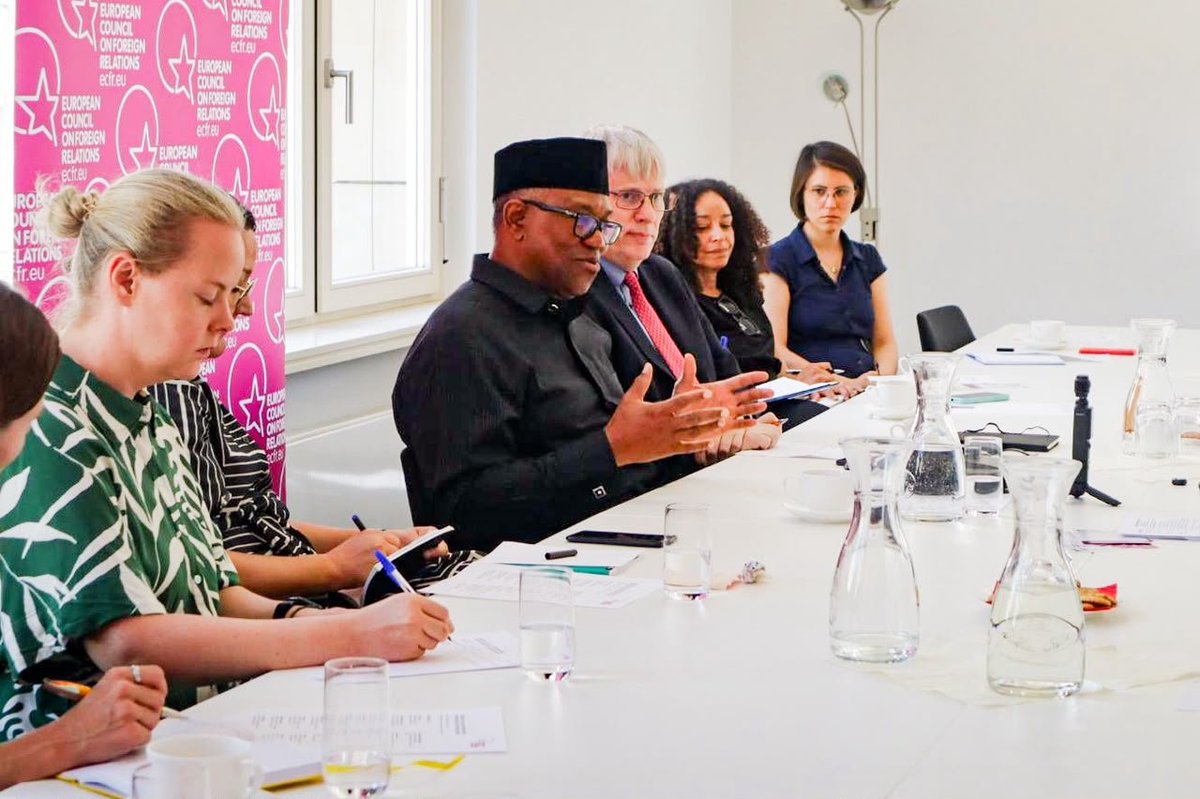
Yesterday, at the invitation of the European Council on Foreign Relations (ECFR), I had the honour of participating in a high-level roundtable discussion titled “Nigeria in 2027 and Beyond,” held at the ECFR office in Berlin, Germany.
The dialogue brought together policymakers, diplomats, development experts, business leaders, representatives of international organisations, and members of the international media to discuss Nigeria’s future and its role in an increasingly interconnected global landscape.
Our discussions centred on Nigeria’s democratic journey beyond 2027, international affairs, development cooperation, and the need to strengthen bilateral partnerships that can accelerate economic growth and improve the lives of our people. A key focus of the engagement was how Nigeria can deepen collaboration with international partners to support Small and Medium-sized Enterprises (SMEs), recognising that they remain the backbone of every productive economy and are indispensable to job creation, innovation, wealth creation, and sustainable national development.
We also exchanged views on strengthening democratic institutions, expanding trade and investment opportunities, promoting regional stability, improving governance, and creating an enabling environment that inspires confidence among citizens, investors, and Nigeria’s international partners.
I was encouraged by the thoughtful contributions and genuine interest demonstrated by participants in Nigeria’s future. The presence of senior representatives from the German Federal Government, development agencies, business associations, policy institutes, foundations, international organisations, and respected global media organisations underscores the strategic importance of Nigeria and the shared desire to see our nation realise its enormous potential.
During the discussions, I reiterated my unwavering belief that Nigeria possesses all the human and natural resources required to become a prosperous, secure, and globally competitive nation. What is required is competent, accountable, and compassionate leadership that prioritises investment in people, education, healthcare, productive enterprise, the rule of law, and strong institutions over politics of consumption.
Nigeria’s future is bright, but only if we make the deliberate choices that will move our country from consumption to production, from poverty to prosperity, and from division to unity. By embracing good governance, fiscal responsibility, and productive partnerships with the international community, we can build an economy that works for all Nigerians and restores our nation’s standing among the comity of nations.
I sincerely thank the European Council on Foreign Relations for the invitation and all participants for a frank, engaging, and constructive exchange of ideas. Conversations such as these remain vital in fostering mutual understanding, strengthening international cooperation, and building enduring partnerships for the benefit of Nigeria, Africa, and the global community.
A New Nigeria Is POssible. - PO
The Role of the Diaspora African in Sustainable Development
On Friday, July 10, 2026, I had the honour of delivering the keynote address at Mandela Hall, African Union Permanent Observer Mission to the United Nations in New York, on _The Role of the Diaspora African in Sustainable Development across Africa.
Africa is a continent of immense riches. Indeed, it is the richest continent in the world, not only because of its vast mineral resources but also because of its greatest asset, its people. It is the second largest continent by landmass, after Asia, covering more than 30 million square kilometres. It is also the second most populous continent, with over 1.5 billion people. Significantly, more than one billion of these are young people in their productive years, making Africa home to the largest youthful workforce in the world.
When this demographic advantage is combined with nearly one billion hectares of arable land, about 60% of which remains uncultivated, it becomes clear that Africa possesses everything required not only to feed itself but also to become the food capital of the world.
Regrettably, despite this enormous potential, Africa remains home to the largest concentration of the world’s poorest people. Of the approximately 800 million people living in extreme poverty globally, nearly 60% are in Africa. That is about 480 million people, with Nigeria and the Democratic Republic of the Congo among the countries most affected. In other words, nearly one in every three Africans lives in extreme poverty. Likewise, in multidimensional poverty, Africa continues to bear the greatest burden.
The question, therefore, is simple. With all these advantages, why has Africa not been able to lift its people out of poverty?
It means there is a missing link. That missing link is Competent Leadership with Capacity, Compassion, Character, and Commitment to good governance.
What Africa needs is leadership that will rise to the challenge and drive the continent in the right direction. This means competent leadership with character, capacity, compassion and commitment to begin turning the continent around. When we get leadership right, everything else begins to change. We start realising our true potential.
So, what is the role of the Diaspora African in this journey?
You have an enormous role to play.
Because you live in societies where institutions largely work, where democracy is strengthened by accountability and where systems function more effectively, you have both an opportunity and a responsibility to help build Africa. It is time to become stronger advocates for good governance. Even where you cannot vote, your voices matter. They should be heard both at home and abroad whenever things are going wrong on our continent. Stand firmly for what is right. Speak truth to the leaders who visit you. Let them know where they are getting it wrong. That is what some of us have continued to do.
The contribution of the African diaspora extends far beyond advocacy. History teaches us that many of the world’s great economic transformations were driven, in part, by their diaspora communities.
Japan offers one example. Following the Meiji Restoration of 1868, the country embraced modernisation and benefited immensely from Japanese scholars, professionals and citizens who studied and worked abroad, especially in Germany, before returning home to drive the technological transformation for which Japan is admired today.
China presents another remarkable example. It was under Deng Xiaoping’s reforms, beginning in 1978, that China embraced education, innovation and global engagement. These reforms created opportunities for the Chinese diaspora to contribute significantly to the country’s extraordinary economic transformation. In 1980, China had more people living in poverty than Africa. Today, China has reduced extreme poverty dramatically, while Africa continues to struggle with the challenge.
The Unending Killings in Benue and Plateau- Worrisome.
The tragic news of yet another round of killings in Benue and Plateau States is both painful and deeply disturbing. The reported murder of at least sixteen innocent Nigerians in the Otukpo-Nobi community of Benue State, alongside the horrific killing of nine members of the same family, a two-month-old baby, in Riyom Local Government Area of Plateau State, once again reminds us that the relentless cycle of bloodshed in parts of our country has persisted for far too long.
For years, families in Benue, Plateau and other communities across Nigeria have lived under the constant shadow of fear, violence and displacement. Mothers have buried their children, children have become orphans overnight, farmers have abandoned their lands, and entire communities have been left devastated. We cannot continue to accept this tragic cycle as though it were normal. It is not.
The primary responsibility of any government is the protection of lives and property. Every Nigerian life is sacred, and every life lost is one too many. These are not mere statistics; they are fathers, mothers, children, breadwinners and future leaders whose dreams have been violently cut short.
The time has come to move beyond routine condemnations after every attack. Nigerians deserve a security architecture that is proactive rather than reactive, driven by intelligence, rapid response and accountability. Those responsible for these atrocities must be identified, arrested and prosecuted. The culture of impunity must end.
I extend my heartfelt condolences to the bereaved families and to the governments and people of Benue and Plateau States. I pray that God grants comfort to all who mourn, healing to the injured, and strength to every community struggling to rebuild after these repeated tragedies.
This is not about politics; it is about humanity. We must summon the collective will to secure our nation and restore hope to our people. No country can develop when its citizens live in fear, and no society can prosper when innocent blood continues to flow unchecked.
A New Nigeria is POssible. -PO
Suspension of Examination Fees: A Victory for the People
I received the welcome news of the suspension of the newly introduced examination fees with relief. This is a victory for the Nigerian people.
While I commend the authorities for listening to the widespread public outcry and suspending the policy, it must be said that the fee was an unnecessary burden that should never have been introduced at this time of great hardship, when we should be doing everything possible to invest in basic education and reduce the millions of out-of-school children in Nigeria.
At a time when many families are struggling to make ends meet, access to education should be expanded, not restricted. Education is a fundamental right and a public good, not a source of government revenue.
Imposing multiple fees at the basic education level risks denying many children their right to education. At that stage, the State has a duty to invest in educating and preparing its citizens for productive lives, not to erect financial barriers that keep them out of school.
True leadership is demonstrated not only by making decisions but also by having the humility to reverse policies that impose unnecessary hardship on the people. Many other anti-people policies deserve similar reconsideration.
I thank the citizens, parents, and advocacy groups whose voices made this reversal possible.
A New Nigeria is Possible. -PO