Some hard truths about Israeli electoral politics, which you won't read in English-language analyses, and which are rarely said in Hebrew-language writings either - some people don't know them, and many try very hard not to know them.
1) Political parties are like guns that jerk leftward, and which you need to aim to the right of the target to actually shoot the target. Which is to say, every single political party's rhetoric is two standard deviations to the left of the policies that it will actually promote when in government.
The reasons for this are many, but the main one is that Israel's international environment and its unelected officials exert leftward pressure on policy. Without active interference by the elected government, in autopilot mode, between any two options the more passive and the more dovish one will be implemented. Constant friction and rightward push is required even to just keep things as they are.
2) Party platforms are irrelevant and not worth reading. Almost every party, with the exception of the Democrats, has a center-right to right-wing written platform. These platforms are meaningless and largely unrelated to the party's actual policies. For this reason it's also extremely midwit to complain that a party has no published platform. These are unnecessary for understanding the party's actual policies.
3) The most important thing about a party is not what it wants, but what it's willing to sacrifice a lot for. On paper, 80% of political actors want the same thing: no Palestinian state; free market economy; most Haredim should enlist in the army; no "coercion"; improve diplomatic relations with Europe, the US, and really everyone; expand the Abraham Accords; go tough on Iran. In reality, nobody will do all of these things, and you're lucky if your elected MKs will promite half of them.
If you want to know what a party will promote, ask not what it wants, but what it wants to avoid at virtually any cost - even avoiding it will hurt a lot diplomatically/economically/socially, etc. A party's true platform is not what it wants, but the place where it refuses to get dragged even if the skies fall.
4) The party's slate of candidates, except for its leader, is also an unreliable guide to its expectable policies. Tokenism is rampant in Israel. Most politicians think that if they cram their slate with people with a certain background, then people with that background will vote for them. They are wrong, but they keep assuming that. Eisenkot's Yashar is full of knitted kippahs, but the party's support among the national-religious is miniscule. Ben Gvir's Otzma Yehudit has both religious and secular candidates, but few seculars vote for the party. And so on.
5) The correct way to determine a party's probable policy is opinion polls among its voters, and the base's socioeconomic and ethnoreligious composition. As I said, on paper almost everyone is right-wing about security, capitalist about the economy, and wants peace and good relations with our neighbors and trade partners. But as I also said, it doesn't matter what people want; the real question is where they refuse to be dragged - by coalition partners, by inertia, by international pressure, and so on.
So as a rule of thumb, look at who the voters are, and you can figure out policy. A nominally right-wing party won't dig in its heels about building E1 even in the face of sanctions, if its core base consists of upper-middle class hilonim in Gush Dan who cannot bear the thought of losing visa-free travel to Europe. A nominally capitalist party is unlikely to lower taxes or increase competition by letting in Uber if 70% of taxi drivers vote for it and if the average socioeconomic score of its strongholds is 5.7/10. And so on and so forth.
6) Finally, just my sense personally. I strongly believe that most Israelis know these things. They go through the moves, they argue, they insist "but the party I'm voting for also wants X!!", but deep down they know all the things I wrote above. These arguments are an exercise in trying to make cognitive dissonance go away. It's hard to be a well-informed, intelligent voter in Israel because if you're honest with yourself, you know that however you vote, you'll give up things very dear to you. That's difficult to accept, so most most voters bargain before they resign themselves to the foul-tasting compromises they inevitably have to make. It looks like they are argueing with you, but really they are bargaining with themselves.
לפי סקר שראיתי, 60% מתומכי הקואליציה בטוחים בניצחון. רק 4% (!) מצפים לניצחון הגוש השני. מצביעי האופוזיציה פחות אופטימים.
בי, מתחזקת תחושה רעה שתוצאות הבחירות מחר יהיו סטירה חזקה בפרצוף מהמציאות להרבה בוחרים במחנה ביבי, והימין הישראלי עומד לפני תבוסה ברוטלית. ההשלכות יהיו נוראיות, נחטוף ממשלת אוסלו 2.0. אם הממשלה שתקום עדיין תהיה בשלטון כשהדמוקרטים יחזרו לבית הלבן ��2029 - אוי לנו.
התחזית למטה עוד יחסית אופטימית: היא מבוססת על התבנית החוזרת שסוקרי המיינסטרים בדרך כלל נותנים תת הערכה *קלה* לימין.
הלוואי שאני טועה.
Time for my prediction for the Knesset elections. My prediction is based on the latest polls and on informed prejudice. Don't take it too seriously.
Coalition parties (total: 53):
Likud: 23
Otzma Yehudit: 9
Shas: 8
UTJ: 8
RZP: 5
Opposition parties (total: 53):
Yashar: 21
Together: 13
Democrats: 9
Yisrael Beytenu: 6
Hendel-Zelicha: 4
Arab parties (total: 14):
Ra'am: 5
Joint List: 9
Under threshold:
People of Israel (2%)
Haredi Community Party (under 0.5%)
🇮🇱 Tomorrow's the big day!
We'll be tracking the numbers - and the stories behind them - live:
🗳️7 AM–10 PM: Turnout, with a focus on each party's strongholds
📊 10 PM: Exit polls
📈 Midnight onward: Results and voting shifts
We're also partnering with @CBNNews & Regent's Israel Institute for a special election-night broadcast (9:30–10:30 PM).
Stay tuned.
@kobyz21 כל הוויכיח הזה לא רלוונטי בהקשר הנוכחי. גוש ביבי מקבל 49-52 מדנטים בסקרים הרציניים (פילבר לא אחד מהם). וינטר נדרש לא כדי להשלים לביבי 61 מנדטים, שהוא מאוד רחוק ממנו, אלא רק כדי להשיג תיקו בין הגושים.
למי אצביע: לציונות הדתית או לוינטר? התשובה: 30%. אסביר.
המתרה שלי בהצבעה לכנסת אינה לבטא את עצמי, או להביע מחאה, או להצביע למי שהכי מייצג אותי, או להעניש או להטיב. היא דבר אחד בלבד: למקסם תועלת - למקסם את הסיכוי לממשלה שסבירה בעיניי ולהוריד את הסיכוי לממשלה שאינה סבירה.
החיסרון של וינטר הוא שיש לו סיכוי הרבה יותר נמוך להיכנס לכנסת מאשר לסמוטריץ'. באופן פרדוקסלי, מבחינת הבוחר זה גם היתרון שלו: כל קול נוסף שתורם למנדט הרביעי (כלומר למספר המינימלי הנדרש) של וינטר שווה הרבה יותר מכל קול נוסף שתורם למנדט השישי או השביעי של סמוטריץ'. כלומר: ההסתברות שהקול שלך יוסיף ערך נמוך יותר אם תצביע לוינטר, אבל אם בסוף הוא עובר, אז הקול שלך יתרום הרבה יותר ערך. בלשון הכלכלה ושל תורת ההחלטות, שני הפקטורים חשובים לערך המוסף השולי הצפוי של הקול שלך.
ביקשתי מקלוד את השאלה הבאה: מה ההסתברות שהציונות הדתית תיכנס לכנסת, ובהינתן שאין לי עדיפות בין סמוטריץ' לוינטר, מה צריכה להיות ההסתברות שוינטר יעבור כדי שהערך המוסף השולי הצפוי של קול אליו יהיה גבוה יותר מהערך המוסף השולי הצפוי של קול לסמוטריץ'?
קלוד העריך את הסיכוי של סמוטריץ' להיכנס כ90%, ועל בסיס הזה חישב שההסתברות שוינטר ייכנס צריכה להיות 29% כדי "לשבור שוויון". באופן שמרני אעגל את זה ל30%. (צ'ט ג'יפיטי ��תן מספר נמוך יותר. כשהראתי לו את התגובה של קלוד, הוא תיקן את עצמו, וכאשר הראתי את התגובה שלו לקלוד, קלוד התעקש. קלוד כנראה צודק.)
הופתעתי מהתשובה הזו, האינסטינקט שלי היה להצביע לוינטר רק אם יש לו לפחות 40% סיכוי לעבור. ביום הבחירות אבקש מהבינה לחשב את הסיכויים מחדש ואצביע בהתאם, אבל כרגע הבייסליין שלי הוא שלוינטר צריך להיות 30% סיכוי או מעל כדי שאצביע לו.
נ.ב.: אל תהיו אהבלים, אל תענו לי בתגובות "וינטר בוודאות לא יעבור". אין פה וודאות, יש הסתברויות. יכול להיות שההסתברות שהוא יעבור נמוכה. השאלה כמה היא נמוכה - במונחים כלכלים ההסתברות לא צריכה להיות גבוהה כדי שיהיה רציונלי להצביע לו.
@RecoverRepub I’m not sure. I can’t decide if they really believe Filber’s polls or only pretend to in order to raise morale. Probably both are going on.
Tomorrow is the great day, a day of celebration for Israeli democracy.
Please use your democratic right, and whoever you support, go out and cast your vote tomorrow.
Unless, unless you are going to vote like crap. If you’re going to vote like crap, just stay home and please don’t.
@michgold1@steve_zivin This is a slippery slope. I might as well say, I don’t count the hostage protesters to a public moral majority because they demanded capitulation in an existential war.
Here's one electoral prediction I'm fairly confident about: whatever is the outcome, the Likud-aligned bloc will win the Jewish vote.
Few people who aren't election buffs know this, but it has only happened once since 1977 that this wasn't the case: in 2006, when Olmert's Kadima formed the government. This was the only time when Likud and since Begin's upset that Likud and its natural allies didn't get the majority of votes from Jews.
There were other occasions when center-left parties were able to form government, but it was always due to some lucky stars that compensated for losing the Jewish vote.
1992: the right-wing Tehiya party missed the (at the time 1.5%) electoral threshold. Rabin was able to form a narrow 62-seat coalition with Meretz and Shas.
1999: right-leaning parties narrowly won the Jewish popular vote. However, this was one of three elections in which the Prime Minister was elected separately from the Knesset. Very high Arab turnout and many USSR immigrants splitting their vote between right-leaning sectorial parties and Ehud Barak resulted in his landslide victory. He assembled an unwieldy coalition that also included Shas, UTJ, the National Religious Party, and Yisrael B'Aliya.
2021: Netanyahu's bloc wins 59 seats in the Knesset, vs. 51 for the Lapid-left opposition bloc. But with Bennett's defection (6 seats, out of the 7 he won) and by adding Ra'am (4 seats), Lapid was able to assemble a razor thin 61-seat coalition.
Eisenkot may yet succeed at assembling some kind of coalition, but his bloc will almost certainly lose the Jewish popular vote - as every time since 1977, except for 2006.
Time for my prediction for the Knesset elections. My prediction is based on the latest polls and on informed prejudice. Don't take it too seriously.
Coalition parties (total: 53):
Likud: 23
Otzma Yehudit: 9
Shas: 8
UTJ: 8
RZP: 5
Opposition parties (total: 53):
Yashar: 21
Together: 13
Democrats: 9
Yisrael Beytenu: 6
Hendel-Zelicha: 4
Arab parties (total: 14):
Ra'am: 5
Joint List: 9
Under threshold:
People of Israel (2%)
Haredi Community Party (under 0.5%)
I posted all the time about why Haredi parties shouldn’t sit in the coalition.
This is independent of the question of a Jewish majority, which is, yes, important for political legitimacy in Israel.
I want a government that *both* represents the majority of Jews *and* doesn’t rely on Haredi parties.
@davidshor Historically the shares are so small as to make little difference, and if they do they’ll tilt the balance even more in the right’s favor because non-Jews eho vote for Jewish parties overwhelmingly vote for the center-left.
I wrote a ton against including the Haredi parties in the government. I don’t need to explain myself.
I wrote a historical post about the Jewish vote, which is an important concept, has some legitimacy role in the Israeli collective consciousness, and is independently interesting for election buffs.
You’re just ranting now. As a rule of thumb, the higher your anger level when writing a post, the less thought-provoking it will be.
@michgold1@steve_zivin The country has changed, its demography has changed. Secular Jews are around 40% of Israeli Jews today. (I’ll just whisper this: secular Jews changed too. They don’t make them as in the ‘50s anymore.)
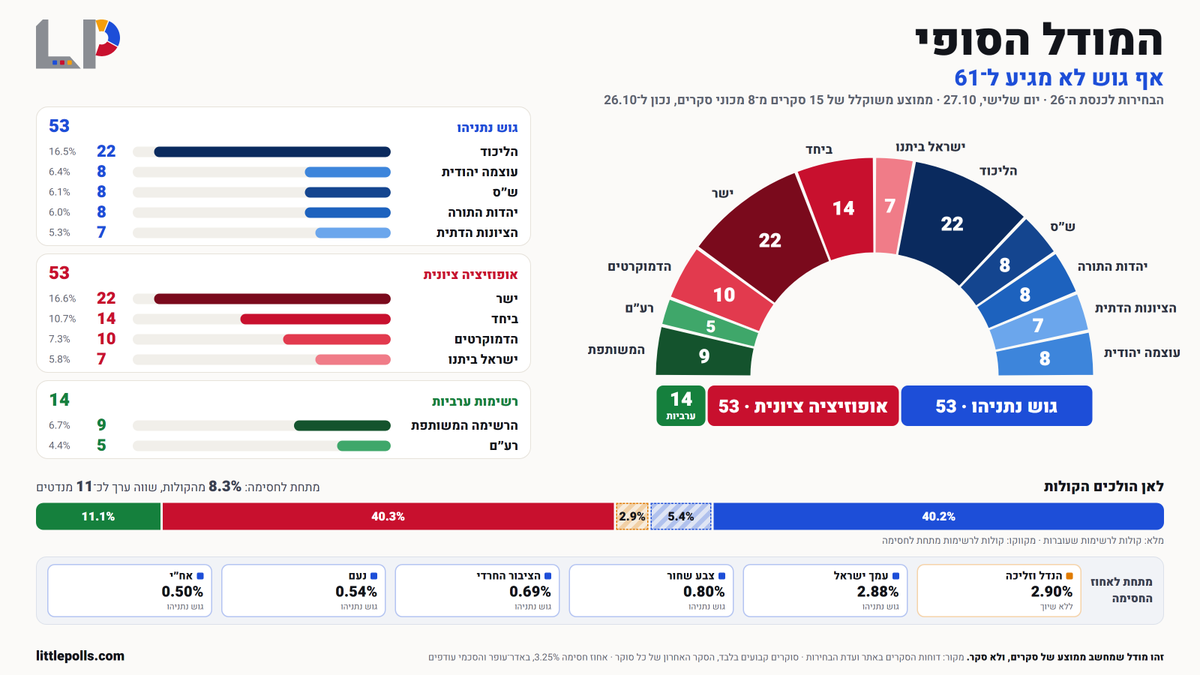
המודל הסופי של LittlePolls
גוש נתניהו 53 | אופוזיציה ציונית 53 | ערבים 14
למי שלא יודע,
בקצרה: לבחירות האלה בניתי מודל שמשקלל את הסקרים לפי איכות הסוקרים והרקורד שלהם.
הוא לוקח את האחוזים שהסוקרים מדווחים לוועדת הבחירות, לא את המנדטים, ומחלק מנדטים כמו הוועדה: אחוז חסימה, הסכמי עודפים, באדר-עופר.
פירוט מלא באתר.
אציין שאלה תוצאות המודל ולא ההימור שלי.
את שלי אפרסם בערב, והוא שונה במקצת.
דברים ששווה לשים לב אליהם:
1. בסוף זה ממוצע של הסקרים, עם עדיפות לסוקרים עם מוניטין טוב. אם הוא נותן לערבים 14, זה מה שהסוקרים חשבו בגדול.
2. 8.3% מהקולות נשרפים מתחת לחסימה, שווה ערך ל־11 מנדטים. 5.4% מהם קולות של גוש נתניהו: וינטר, הנדל-זליכה ושאר הקטנות לא עוברים. אף אחת מהן לא מזוהה עם גוש האופוזיציה הציונית - זה הכי חשוב וזה גם מאד רלוונטי לתוצאות האמת!
3. כלל אצבע: אם וינטר עובר, גוש נתניהו עולה ב־2 על חשבון האופוזיציה הציונית (55/51). אם הנדל-זליכה עוברים, הם לוקחים 2 מנדטים מכל אחד מהגושים (51/51 ו־4 להם).
4. עוצמה יהודית, עמך ישראל והנדל-זליכה ללא הסכמי עודפים.
היה נחמד לשחק בזה.
אחרי פרסום התוצאות נהייה חכמים יותר ונעשה לו כיול לפעם הבאה.
עד כאן להפעם.
Social surveys about voters show an interesting asymmetry between the two blocs.
In the opposition bloc, Democrats voters are both the most left-wing in terms of policy and the most politically polarized: the most hostile to Netanyahu, the most opposed to a unity coalition, the most pessimistic of the consequences of losing the election.
But on the right bloc, things are different. Both Religious Zionism and Otzma Yehudit voters are to Likud’s right, but they are *less* politically polarized than Likud voters. Likud voters are the most hostile to Eisenkot and the most opposed to the other side.
Likud isn’t the most right-wing party, but in one sense its voters form the most extreme voting bloc on the right.
I don’t vote for platforms. Platforms are worthless. I vote for likely outcomes. The next Knesset will be much more left-wing than the present one. Smotrich will be a counterweight to this, and a more desirable sidekick in a potential unity coalition than the Haredi parties. If I believed Filber’s polls, I’d vote for Hendel.
אני לא יודע האם יהיה לי זמן לצייץ מחר, אז ככה: הגיע הרגע לendorsements ולדירוגים. אתן עצה לכל בוחר, לא רק לבוחרי קואליציה אלא גם לבוחרי האופוזיציה ולתומכי הגוש השלישי.
��וחרי אופוזיציה, אל תדאגו: לא אנסה לשכנע אותכם לעבור צד. אנסה להתייחס לאינטרסים המשותפים שלנו. /1