AI-powered OS for RPM & CCM—equipping providers & payers with the integrated infrastructure to scale care, improve outcomes, & maximize reimbursements.
The BP cuff isn't the hard part. Everything after the reading is.
Missing readings, scattered data, manual review, alert fatigue, EMR notes, care-team handoffs.
RPM's value isn't collecting more data. It's turning it into timely action.
What's your biggest RPM bottleneck?
The proposed CMS 2027 PFS could be the biggest change to #RPM since 2019.
If finalized, it may reshape how Remote Patient Monitoring programs are delivered—accelerating the shift toward provider-led, AI-powered care.
The future of RPM is evolving. 🚀
#CMS#DigitalHealth
Healthcare doesn't need more software. It needs better integration.
Connect EHRs, RPM, AI, and care management to reduce clinician burden and improve patient outcomes.
#HealthIT#FHIR#Interoperability#DigitalHealth
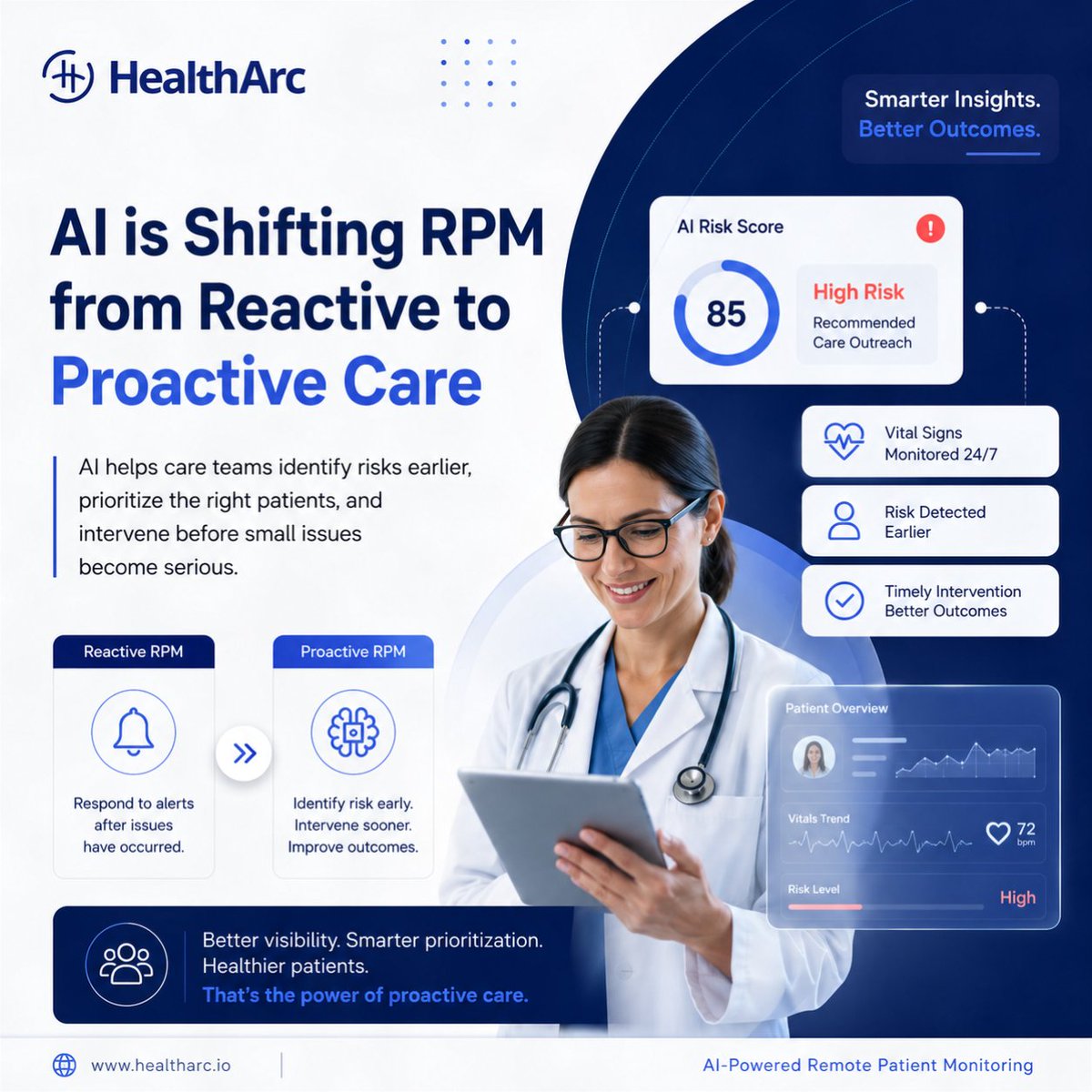
AI is helping care teams move beyond monitoring to meaningful action.
Instead of reacting after an alert, providers can identify at-risk patients sooner, prioritize care, and intervene before conditions worsen.
That's the future of Remote Patient Monitoring.
#HealthTech
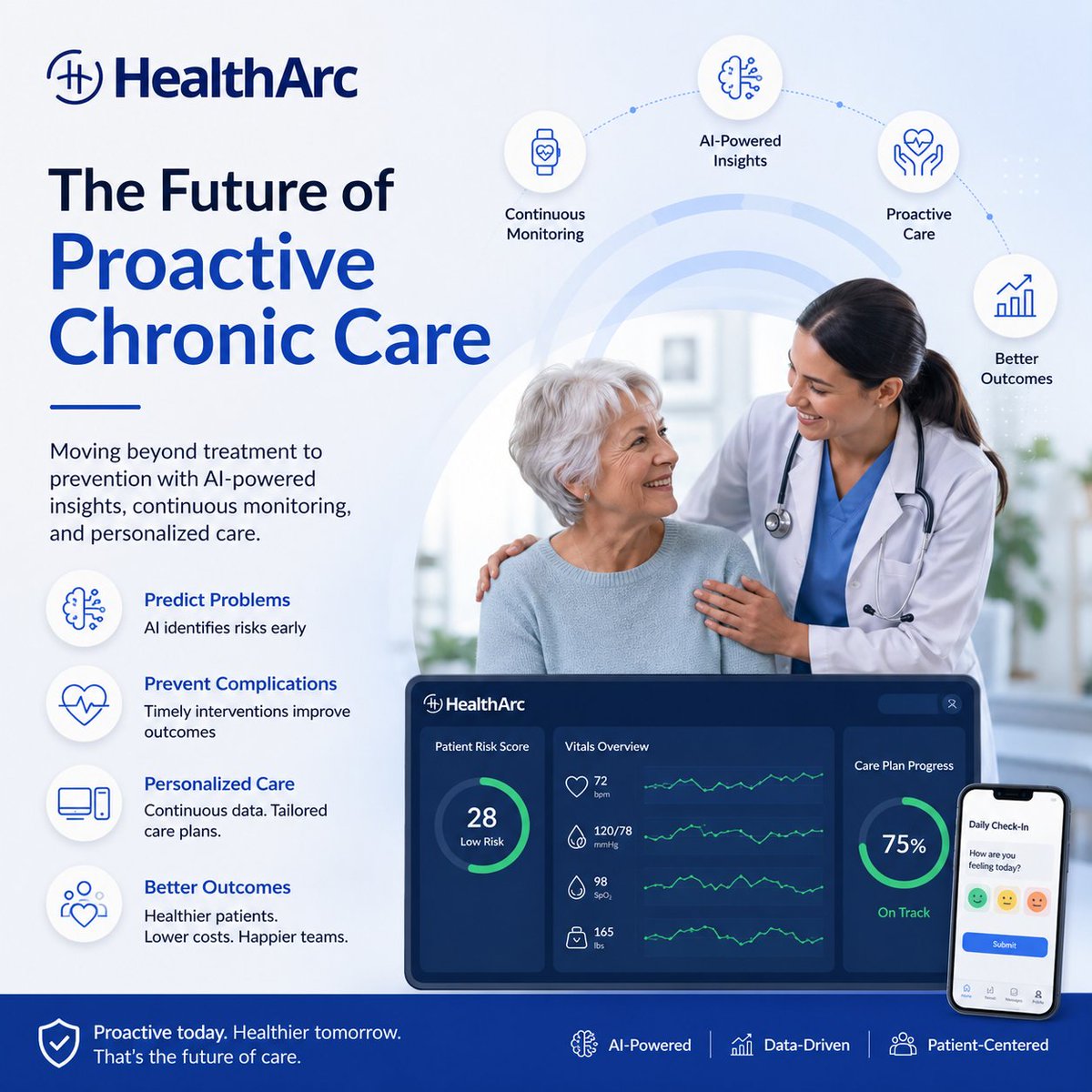
The future of healthcare isn’t reactive—it’s proactive. Continuous monitoring, early intervention, and AI-driven insights are redefining how chronic conditions are managed.
Transforming Chronic Care Through Connected Clinical Tracks
Healthcare today demands more than isolated treatment—it requires an integrated, patient-centric approach.
Learn more:
https://t.co/AlvhNg4H6w
#HealthArc#ChronicCare#RemotePatientMonitoring#CareCoordination
Healthcare is evolving with new policy changes. The CMS 2026 Medicare Proposed Rules could reshape how telehealth and Remote Patient Monitoring (RPM) programs are delivered, documented, and reimbursed.
Learn more:
https://t.co/CdUwAEiaFB
#Telehealth#RemotePatientMonitoring
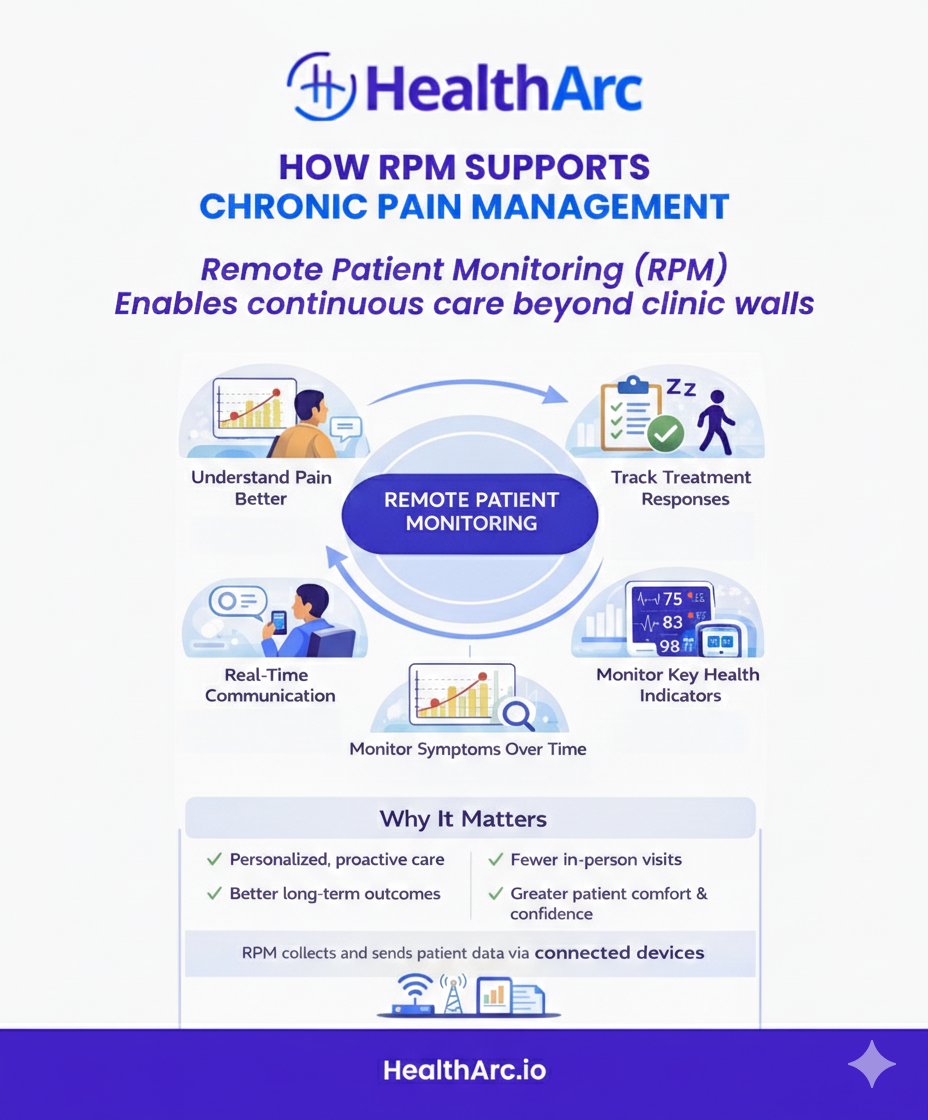
How Remote Patient Monitoring (RPM) Enhances Chronic Pain Management
Chronic pain isn’t just about discomfort — it impacts daily life, mobility, sleep, and overall quality of life.
#health#RPM#healthcare#healtharc
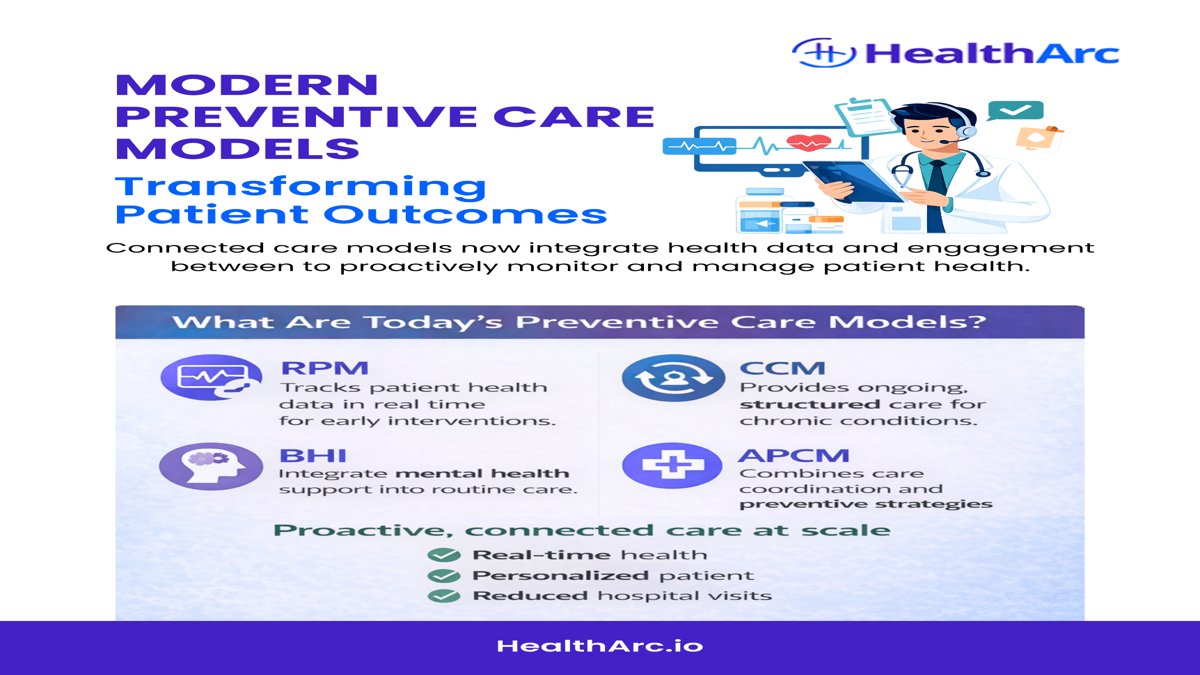
Preventive care is no longer episodic — it’s continuous, connected, and data-driven.
Modern care models like RPM, CCM, BHI, and APCM are transforming how providers engage patients between visits.
#RPM#CCM#BHI#APCM
Chronic care doesn’t fail because of a lack of effort — it fails because of fragmented systems.
For too long, chronic disease management has relied on delayed data, disconnected workflows, and reactive interventions.
#health#healtharc#chroniccare
Hospital care is evolving. Hospital-at-Home programs deliver hospital-level care safely in the patient’s home—reducing costs, easing capacity constraints, and improving outcomes through remote monitoring and coordinated care teams.
#HospitalAtHome#ValueBasedCare