We provide hydroponic microbiome identification and plant pathogen detection and monitoring to ensure healthy crops + food safety. We are part of @MetagenomBio.
More targets, better identification!
We are expanding our services to target:
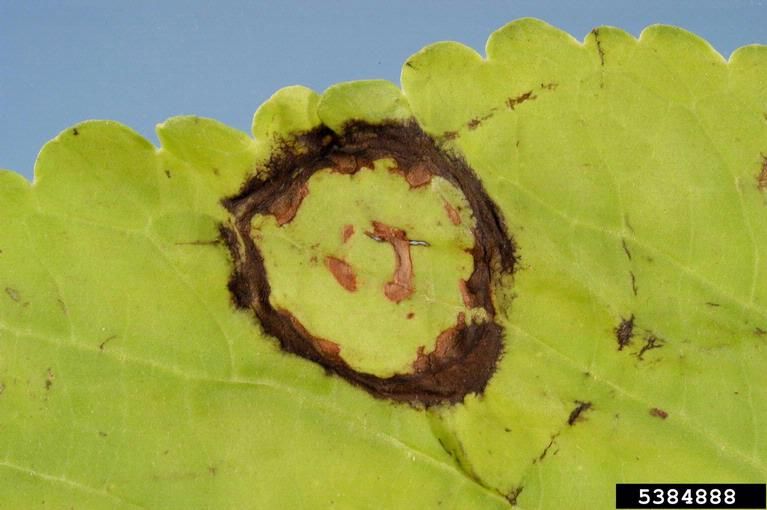
🟢 Impatiens necrotic spot virus (INSV)
🟢 Grapevine Red Blotch Virus (GRBV)
🟢 Impatiens necrotic spot virus (INSV)
Image by Jeffrey W. Lotz, Florida Department of Agriculture and Consumer Services.
OMAFA Research in Action Webinar on June 12th.
Featuring Dr. Trevor Charles (University of Waterloo) with Healthy Hydroponics and Earth Microbial, and Dr. Keith Warriner (University of Guelph) with Clean Works.
DM us if you want an invitation code 👈
Our co-founder, Trevor Charles, will be co-presenting at the OMAFRA Research In-Action Webinar alongside Dr. Keith Warriner from the University of Guelph and Clean Works.
Save the date (June 12, 2025, 1:30–3:00 PM EDT)
Dr. Mariangela Hungria received the 2025 World Food Prize for her research in biological nitrogen fixation. Her work over the past 40 years has focused on developing microbial inoculants, which played a vital role in Brazil's transformation into a global agricultural leader. 🌱
Did you know the 2024 greenhouse pepper season in Ontario ended early (October–November) because of Fusarium disease pressure? We summarized what is happening into a yearly timeline to track how this threat has progressed—and how research and management efforts have ramped up.
@OMAFA recently spotted something strange in a cucumber greenhouse infected with TSV (Tobacco Streak Virus): bean leaf beetles!
They’re known vectors of bean pod mottle virus (BPMV) in soybeans—could they be spreading TSV in cucumbers?
“During high humidity, white cottony growth may be visible on the underside of the leaf, where sporangia form. Spots are visible on both sides of the leaves.”
— Tomato Late Blight, NC State Extension
What if a root disease could predictably follow your plant’s growth rhythm, rising and falling like clockwork? A 2000 study by @AAFC showed that root growth, slimy root secretions, and early symptoms of root rot all surged together, right around 3–5 weeks after transplanting.
💧 “Subjecting plants to a mist chamber environment where relative humidity was greater than 95% for 24 h significantly increased final powdery mildew disease severity in the pepper cultivars.”
Yes, it is true that powdery mildew can remain hidden (asymptomatic) for 18–21 days on certain host plants.
🔎
For powdery mildew affecting nightshades (such as eggplant, tomato, and pepper), the disease cycle includes an incubation period of 18–21 days.
🦠 A 2025 study in BMC Plant Biology shows that while reused peat supports sustainability, it can also lead to fungal pathogen buildup over time unless carefully managed.
Manage it right! Here’s where you can start: https://t.co/7K1EdXnepY
💡 Peat moss, can help reduce transplant shock by providing a stable and moist environment for roots, minimizing disturbance during transplanting, and promoting healthy root development.
👉 Want to see how to track all of these in your system https://t.co/7K1EdXnepY
In March, we hosted a thinkAG Career Competition at Cornwall Collegiate and Vocational School in Cornwall, Ontario.
This two-day event welcomed nearly 550 students from grades 6 to 12, providing them with an insight into Ontario's vibrant agriculture and food sector. The students engaged in hands-on activities, connected with industry experts, and discovered the diverse career opportunities available in agriculture and food.
Thank you to Cornwall Collegiate and Vocational School for partnering with us to host this event. We are incredibly grateful to our amazing volunteers from @OntarioDairy, @ZipGrowInc, Harbers Greenhouses, @DesjardinsGroup, @BeefFarmersON, @OntarioFarms, @INEngineeringCa, and St. Lawrence College for their support. Together, we are building the foundation for the next generation to thrive in agriculture and food in Ontario!
#thinkAG #CALM25 @AITCCanada@ccvsraiders@UCDSB
TLDR; Scientists found that water in tomato greenhouses is full of tiny microbes, and the way the water is stored or filtered changes which good or bad microbes are in it! 🧪🍅💧
💐 Peat is a common ingredient in African violet potting mixes, providing excellent moisture retention and aeration.
Peat's unique properties require thoughtful water management, as water retention doesn't work when dry.
https://t.co/10QAraAstq