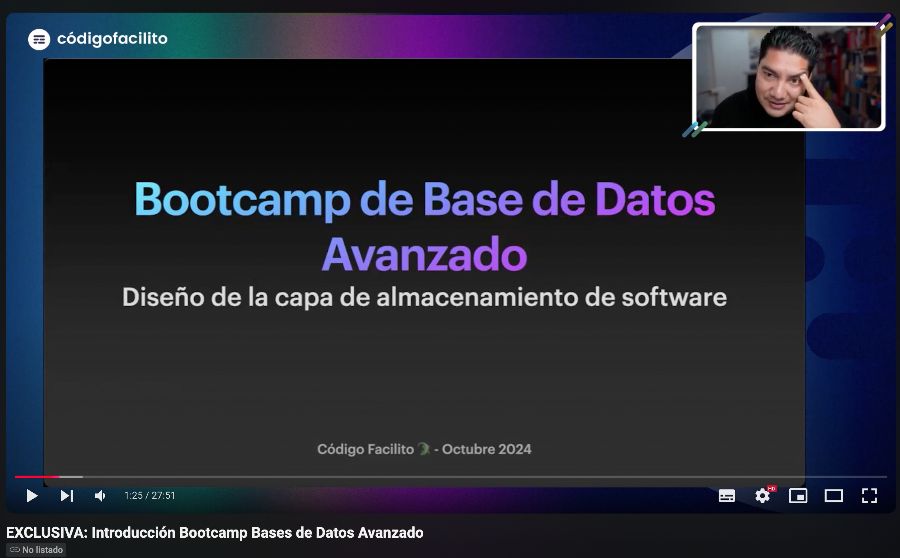
Este bootcamp nos costó mucho trabajo prepararlo, pero @haro_ca_ y yo estamos muy orgullosos de cómo quedó.
Pueden pensarlo como un curso de diseño de sistemas centrado en la capa de datos de las aplicaciones, que normalmente son las bases de datos.
💥 ¿Te perdiste el inicio del Bootcamp de Bases de Datos Avanzado? Tenemos algo que contarte.
🔎 ¡Publicamos los primeros 27 minutos en un video no-listado! 🚀 Héctor Patricio, Tech Lead en Autómata, comparte todo lo que puedes esperar del programa.
💬 Comenta si quieres el link 👀
¡Aún puedes unirte! Dejamos abiertas las inscripciones semana más. Solo hemos cursado la sesión de inauguración (que ya puedes ver grabada) y quedan el resto de los 6 meses de sesiones sabatinas de 3 hrs.
¿Listo para sumarte? https://t.co/waB2q29YyT
Llevamos décadas construyendo software con código mediocre, bugs ancestrales, hacks sobre hacks, tests a medias, TODOs olvidados, parches temporales que se volvieron permanentes y código que nadie se atreve a tocar.
Y ahora resulta que nos preocupa confiar en código que no entendemos porque lo escribió una IA.
Como si lleváramos décadas entendiendo perfectamente el código que escribimos nosotros.
@anibal Estoy de acuerdo en lo que dices de la intención, no es que activamente buscaremos hacer porquerías, pero nuestro cerebro no nos da para mucho cuando se trata de cosas tan complejas y con tanto constraints. Así que el resultado es el mismo o peor: Human slop everywhere.
I've been reviewing a lot of code written by Opus 5.5, and it still seems to make a lot of bad software engineering decisions. The kind that will accumulate/calcify into unmaintainable software over time. IMO even the agents will struggle to maintain vibecoded software.
@timoreilly The only way to test this is sharing without mentioning it wasn’t written by a human. A lot of people bias immediately after hearing it was written by an AI. I feel the writing great in general. Would you be so kind to share your recipe?
Amazing how quickly we went from "oh no LLMs are going to flood the Internet with insecure code" to "oh no LLMs have discovered the internet was already flooded with insecure code"
The funny thing is everyone was saying AI slop code will cause a cyber crisis but it’s actually all the old human slop causing it and the AI is just cleaning it up
Lo malo es que seguro así están todos los sistemas, solo que no lo sabemos. Era demasiado lindo pensar que los humanos pudiéramos mantener una red tan compleja segura.