If you want to understand the universe, you can't just look at what's there.
You have to imagine what isn't, but was.
This is a picture of an arch. It's a marvel of primitive architecture. In fact, the similarity of those two words is not a coincidence.
All of those stones are slightly wedge-shaped, and when they are put together like that, gravity alone holds them in place. And the more you load them from above, the more firmly wedged together they become.
But... how do you build it?
It isn't stable until the last stone is in place. If you try to add one stone at a time, they'll just fall down. And it's not like you have as many hands as stones.
If you look at an arch, and see only what is there, it looks like it can't be built.
So you have to look at it and see what is no longer there.
You need to see, in your imagination, the support that held the stones in place, and was taken away when it was no longer needed. In the simplest form, it could be just a pile of rocks in the shape of that doorway.
When I wrote my first novel, tens of thousands of words flowed out of my keyboard which never made it onto the pages of what I published.
And you can read it and say, "how brilliant!"
"Look at all these wonderful ideas, and how they fit together, like stones in an arch!"
But it's easy to look brilliant, as an author. You can make mistake after mistake, throw them all away, keep the good ideas that came in between the mistakes, and release a version that is every good idea you had in a year, with all the mistakes missing. Then someone reads it in two days.
The point here is, if you see an achievement, any achievement, which seems so genius, or so far-fetched, or so complicated, that you can't imagine how someone came up with it all at once, the answer is probably that he didn't.
It emerged step by step, with intermediate forms, or scaffolding that's no longer there, or a lot of mistakes that now lie on the cutting room floor.
And if you learn to think like this, you will learn not to know to understand the universe better, but how to create your own work.
Bringing new things into the world, art or engineering, or whatever, requires courage. You have to say to yourself, "I believe in this, even though no one asked for it, even though no one could even ask for it, because right now, I'm the only one who understands what it will be."
And you must have that courage, that persistence, even when your work is crude, and primitive, and shabby compared to the beautiful finished things that are already in the world.
So you have to understand that everything which is sophisticated started out crude.
Everything that is complex started out simple.
Everything that is polished and complete started out rough and shabby.
The art of creation is not the art of envisioning the beautiful thing in every detail of its complete form. It is the art of guessing at what might be, and finding one step, one single step, to make what you have right now slightly, just slightly, less terrible.
Over and over again.
Pop culture peaked sometime around 2006 to 2008. It's been collapsing ever since. Today it no longer exists. Here's what happened, why it happened, and what will happen next.
1. In the 1st century, Jesus Christ commissioned the 12 Apostles to deliver his gospel to the world. They ordained bishops everywhere, wrote letters and narratives, and taught the traditions of all they had learned from Christ.
2. In the 4th century, after more than two centuries of persecutions, Christianity gradually became the official religion of the Roman Empire, and the writings of the Apostles were canonized with the Septuagint into one Bible with 73 books. The Nicene Creed encapsulated the teachings of the Apostles and Christianity is crystallized within the Catholic Church.
3. In the 7th century, one man (Mohammed) said the Apostles and bishops got it all wrong, and he alone would reinterpret the life and teachings of Jesus Christ with nothing but his own “visions.”
4. In the 16th century, a handful of men in Northern Europe (Protestant Reformers) said the bishops of antiquity lost the true faith and they alone would restore it with their academics. The only problem was they couldn’t agree with each other as to how that should be done.
5. In the 19th century, a man in upstate New York (Joseph Smith) said all the Christians of the world got it all wrong and that he alone would revive the faith taught by Jesus Christ with nothing more than his “visions.”
6. Also in the 19th century, another man (Charles Taze Russell) and two women (Ellen G. White & Mary Baker Eddy) would say the same thing in their own ways. None of them agreed with each other as to how that should be done.
7. In the 20th century, countless new communities and religious sects were formed, each claiming the true Christian Faith was lost and they alone understood how to restore it. None of them agreed with each other as to how that should be done.
Are we starting to see a pattern yet? Islam (Mohammedeanism), Protestantism, Mormonism, Watchtowerism, Adventism and countless other sects all claim the “true” Faith, as thought by Jesus, was lost and they alone know how to restore it. None of them could agree with each other as to how that should be done, but we’re all supposed to believe they uncovered the “secret knowledge” (in different ways) and we should blindly trust their guidance. Most of these movements were started by individuals who each suggested, in one way or another, that they had inspiration from God.
This is a scam folks. It’s a racket. This is how good people get roped into bad religions. Come out of them, and return home to the Catholic Church.
Whats up people,
Im not one for vanity numbers, but I realized recently that I passed over $2 million in sales on gumroad
Thats a LOT of people that have invested in training and trusted me with their health, strength, and results.
As a gesture of goodwill, Im doing a sale Ive never done
50% off Everything
the code is 50ff at checkout
The sale will run the rest of the week, use it in great health
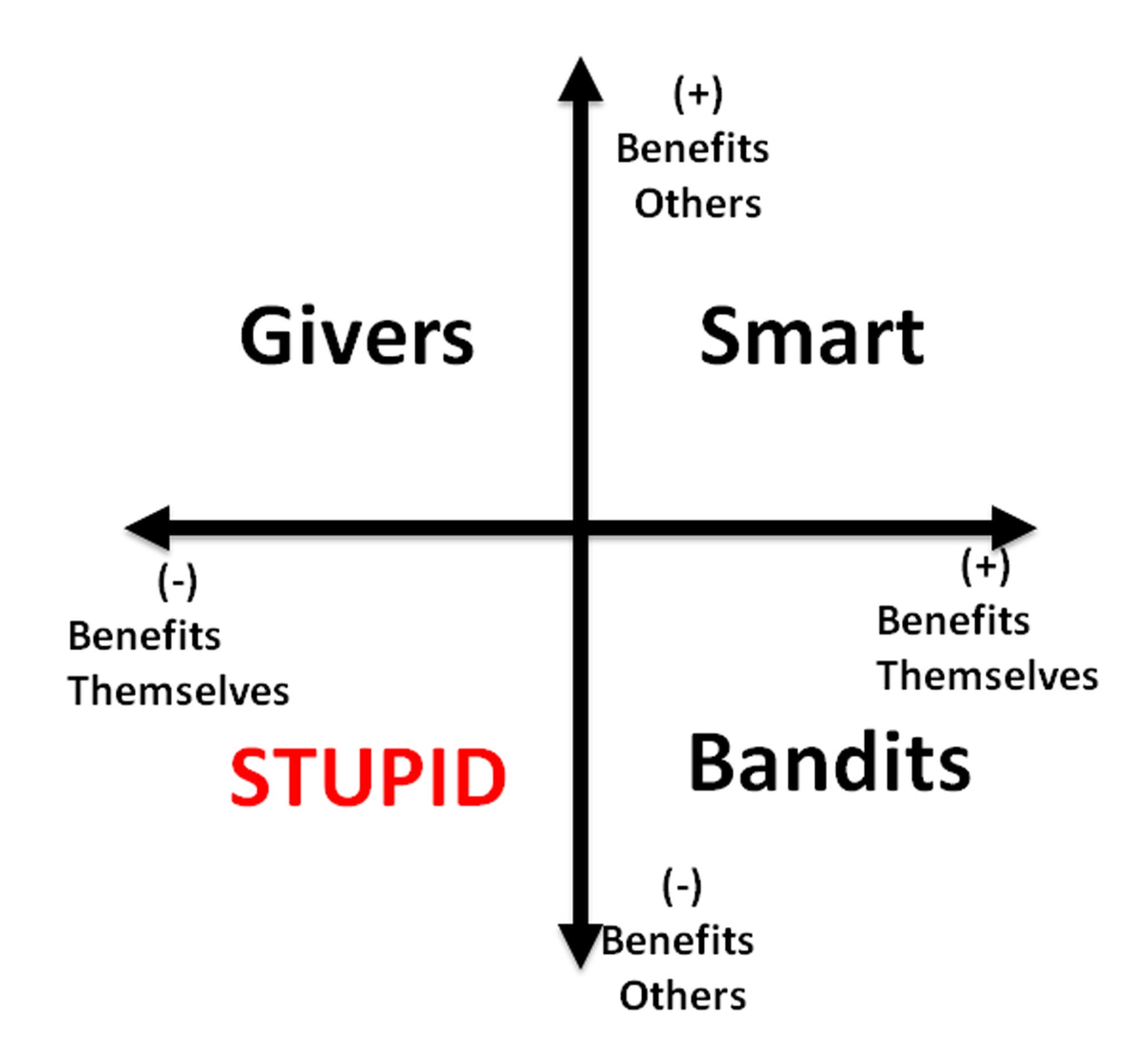
Are you stupid?
"The 5 Laws of Stupidity" was developed because an Italian economic historian asked that too often.
Here's what it is (and how to avoid stupidity):
I’ve been thinking about negative interest activities. These are all the small habits, behaviors, and actions that feel inconsequential in the moment but add up to result in a major detraction from our quality of life, health, and fitness levels over the long term.
And the thing is that the older you are, the larger an impact these activities have on us. Here are some of the ones that I am thinking about and making sure to avoid as of late.
Using my hands to stand up from chairs: We’ve all done it—getting up from the sofa and giving yourself a little boost off your knuckles to stand up. Maybe you’re just getting up from the dinner table and kind of push off. This is most pronounced in the end stage of this habit: the old guy in the nursing home, who uses his arms for everything that his legs normally would. He leans on a walker and stands up entirely using the armrest. Once or twice, hell, even a few months of this probably doesn’t really matter, but it’s the lifelong repeated performance of this minor action that leads to the end stage of being unable to use your legs. Every time you stand up from a chair or even sitting on the ground, use only your legs.
Nose breathing when stressed: I’m not a mouth breather, but I may have picked up a few bad habits in intense concentration or stress. I’m pretty sure this is a result of me engaging in intense endurance athletics for so long, where even the best of us end up mouth-breathing at the most intense portion of the race or training. I will occasionally find myself, when locked into research or focus, breathing through my mouth. I can tell that this is only increasing the stress of the situation, traveling a familiar pathway in the brain that I associate with stressful situations. So lately I’ve been catching myself before it happens and making sure to breathe through my nose, especially when I’m under stress or focusing.
Leaning on counters and tables with your elbows: The urge to lean on the counter while standing is tough to overcome, but it places a lot of stress on the shoulder joint. To combat this tendency, I make sure to just stay moving. If I feel compelled to lean over and rest, I’ll just go for a little walk.
Fixing issues immediately: I’m a Type A individual, someone who likes to be in control and take the reins to get things done, but I’ve also always been a thinker. Some would say an overthinker. If you have this problem, here’s what you do: do not let problems linger. Thinking must precede action, but thinking only begets more thinking, and an endless loop that’s pointless and counterproductive. Every minute you waste thinking about something for the 30th time is training your nervous system not to take action. It’s convincing your nervous system that the act of thinking is the solution and your only recourse to a problem. You need to break that cycle before it begins, before it winds its way around and gets you mired in overthinking.
What negative interest activities and habits should you be kicking?
@jasonrantz Maybe because you work there and have a profile there. For a regular user (I visit the website often and click the links from the KIRO Radio App All the time), it is super slow, plus the cookie notice. Try it from someone else's computer or phone. I often give up.
If you're tired of being fooled by media bias in news stories, I've got three wonderful websites for you.
I visit these sites whenever I see a story that has an obviously inflammatory headline, and I can't spot the bias.
They've made me better at catching it on my own as well.