Hi! 👋
Let's talk about timeframes.
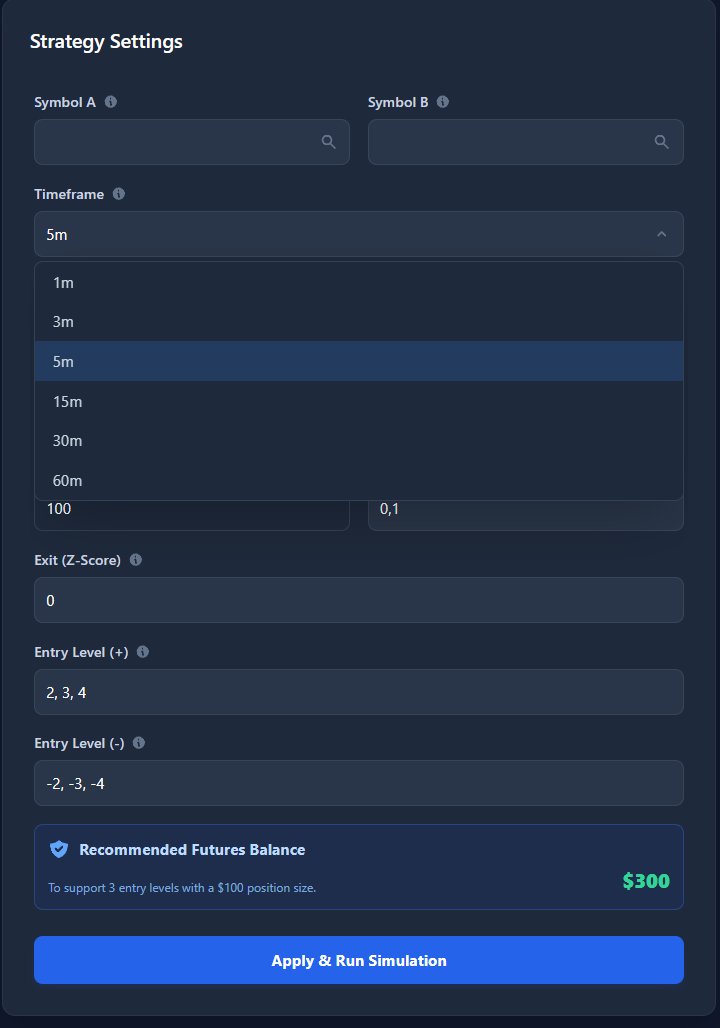
Our tool supports all the popular timeframes, and here’s what we’ve observed:
> 1m-3m – High number of trades, but the issue is that fees eat up almost all the profit, which is why we haven’t found an optimal use for them.
> 5m – We’re currently focusing on finding strategies using this timeframe. Average return: 10–30% per month. The downside is that you need to monitor the performance chart regularly, making it suitable for medium-term trading.
> 15m – Lower returns due to longer trade duration, around 5–15% per month. The main advantage is that it’s suitable for long-term trading and requires less monitoring compared to the 5m timeframe.
>> Due to the significant gap between the 5m and 15m charts, we’ll be working on implementing the 10m timeframe. We believe this could become the "sweet spot."
#Hedger #Update
Hi everyone!👋
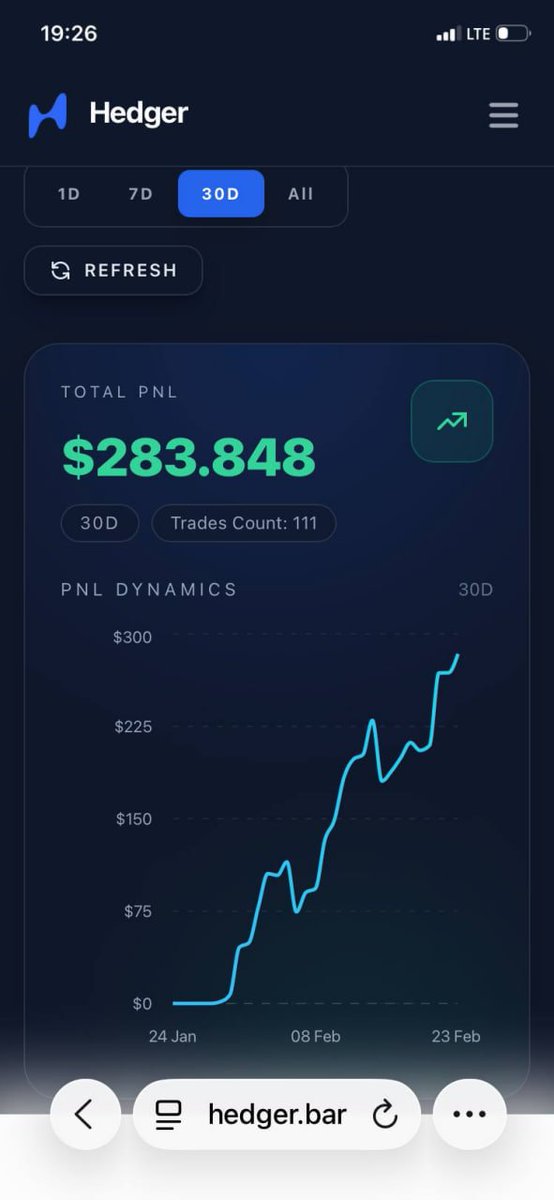
Check out the trading results shared by some of our community members.
We're thrilled to see that our strategy is delivering consistent and solid returns for everyone. It confirms we're on the right track and definitely motivates us to keep pushing forward.
#Hedger #Crypto #community
Hi everyone! 👋
We've decided it's time to give our project a fresh new look. 🎨 We're updating the website design.
Why?
1️⃣ For the aesthetics (pure visual vibes). ✨
2️⃣ For better usability (find what you need, fast).
3️⃣ For clarity (all the key info, front and center).
Stay tuned for the reveal! 📡
#Development #Hedger #Crypto #Web3
Greetings! ⚡️
The automated trading stress test is currently complete, and the strategy has shown good results.
Automatic trading will be available to all users soon!
What we're currently working on:
- Comprehensive project documentation.
- Developing portfolio diversification for your peace of mind.
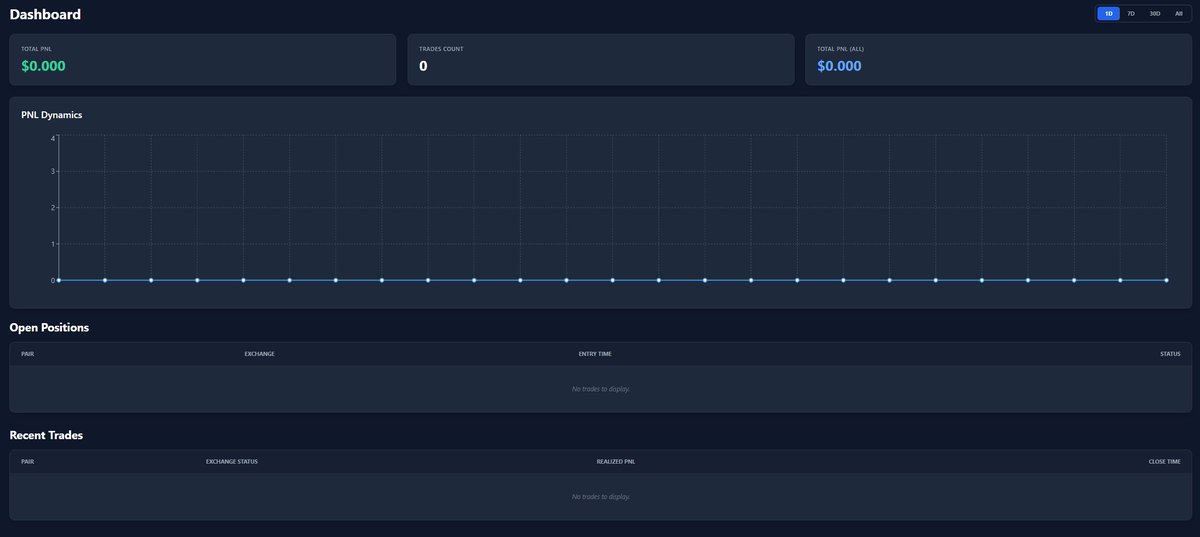
- Developing a dashboard to show portfolio results using our strategy.
#Hedger #Update
Strategy Logic
1. Basics: What are Correlation?
Correlation is a statistical relation whereby two cryptocurrency pairs (e.g., BTC/USDT and ETH/USDT) generally mirror each other's movements.
2. Profiting from Temporary "Divergences".
We don't trade on the overall up or down movement of the market. Instead, we track moments when the correlation is temporarily disrupted.
For example, if BTC rises while ETH falls or remains stagnant, this is a divergence (deviation from the norm). At this point, we open two opposing positions: a long position on the pair that has lagged (e.g., ETH) and a short position on the pair that has moved ahead (e.g., BTC).
Profits are taken during the convergence phase, when the pairs return to their normal correlation and the divergence between them decreases.
3. Risk Protection: Why Losses Are Limited?
If the divergence doesn't begin to narrow, but continues to widen, the hedging principle comes into play. A loss on one position (for example, a short on BTC) will be offset by a profit on the opposite position (a long on ETH), since both assets will soon begin moving in sync again after the divergence.
This doesn't result in large profits, but it significantly limits potential losses.
The #Hedger Team
Welcome to Hedger!
We are developing an automated trading platform that will work with CEX (currently Bybit). Our goal is to make efficient automated trading accessible and simple.
Here's what we already have:
1. Already-made trading logic. The strategy is based on hedging two correlated pairs. This allows managing risks and strive for stability.
2. Automated trading. The system works via the exchange API and executes trades automatically, without a constant intervention.
What we're currently working on:
1. We're finalizing the auto-trading feature and actively testing its reliability.
2. We're preparing new features for quick strategy setup.
3. We are developing the possibility of creating our own strategy using Python and JavaScript.
We'll be gradually introducing you to our platform through publications.
The #Hedger Team