Good last week: more season tickets sold in first 5 days than in first eight weeks last year! Great first signing with Lewis. This week, serious work on review and improvement of infrastructure, customer fronting efforts, and further development of the squad. Thank you and please join us today because We Won’t Back Down! Up the Ding!
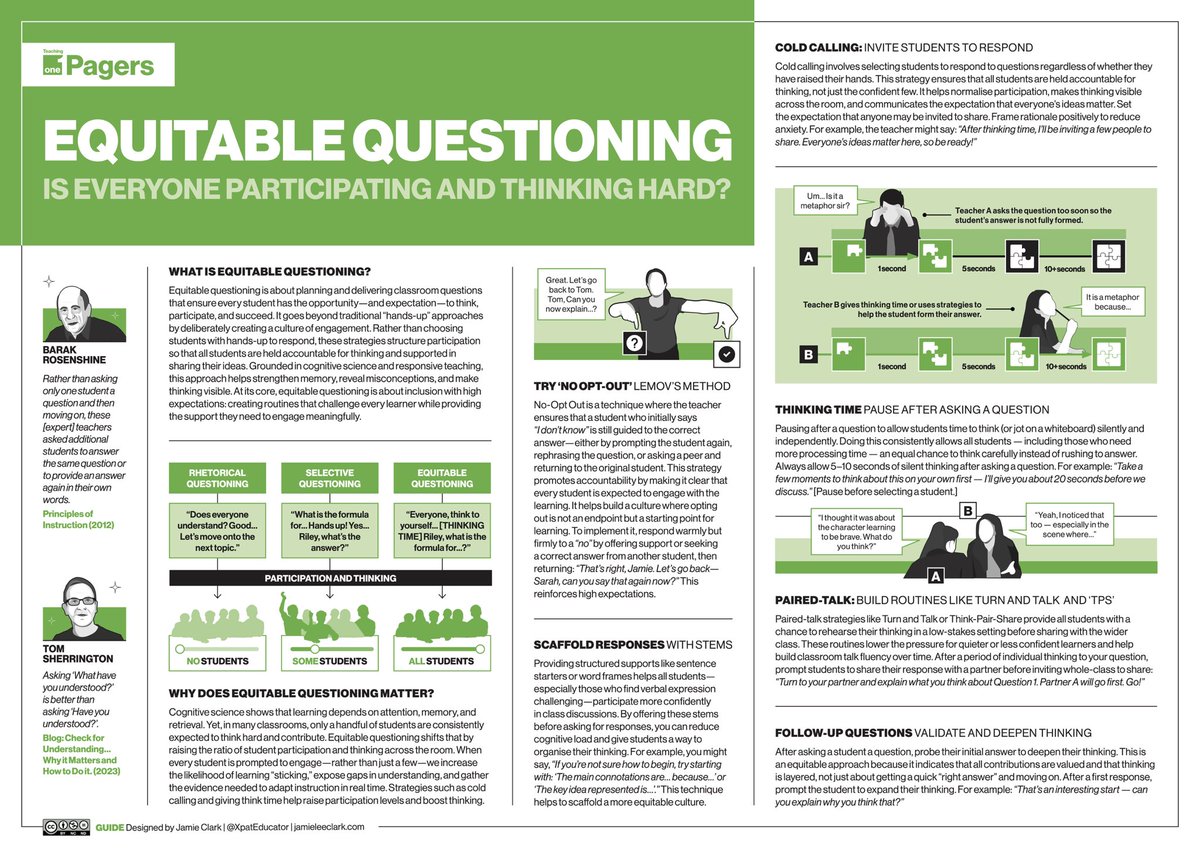
ESSENTIAL GUIDES! Check out this powerhouse quartet for effective evidence-informed teaching:
📡 Checking for understanding
◽️ Mini-whiteboards
🏗️ Scaffolding learning
🫵 Accountable questioning
REPOST and grab all 4 FREE guides via my website or the ⚗️DistillED newsletter.
https://t.co/TiPSYeVC45
https://t.co/yHBoZf9Op6
World’s worst advice klaxon. If you let a kid opt out, they learn that you’re ok with them opting out. You’ll never guess what that does to their habit of opting out.
Low effort/ opting out *is* misbehaviour, because it’s behaviour that inhibits their success. Our job is to replace that behaviour with better habits. At first that won’t be easy. But it starts with *us* refusing to accept the misbehaviour, not reinforcing it.
If SLT think it’s ok for kids to do badly, maybe they should be in a different job, one where their abysmal aspirations for children won’t harm anyone’s life opportunities.
When I set a detention, when I hold a student to account for their choices, that is grounded in empathy and is a way of supporting that student to succeed. To allow a student to do the wrong thing with no consequence is not supportive and teaches a young person they can do what they want if they have a 'good' enough excuse.
@HughJRichards@jonniegrande@sehartsmith Love this, but my concern is that it looks very ‘wordy’ when literacy is already such a massive barrier to success in history assessment
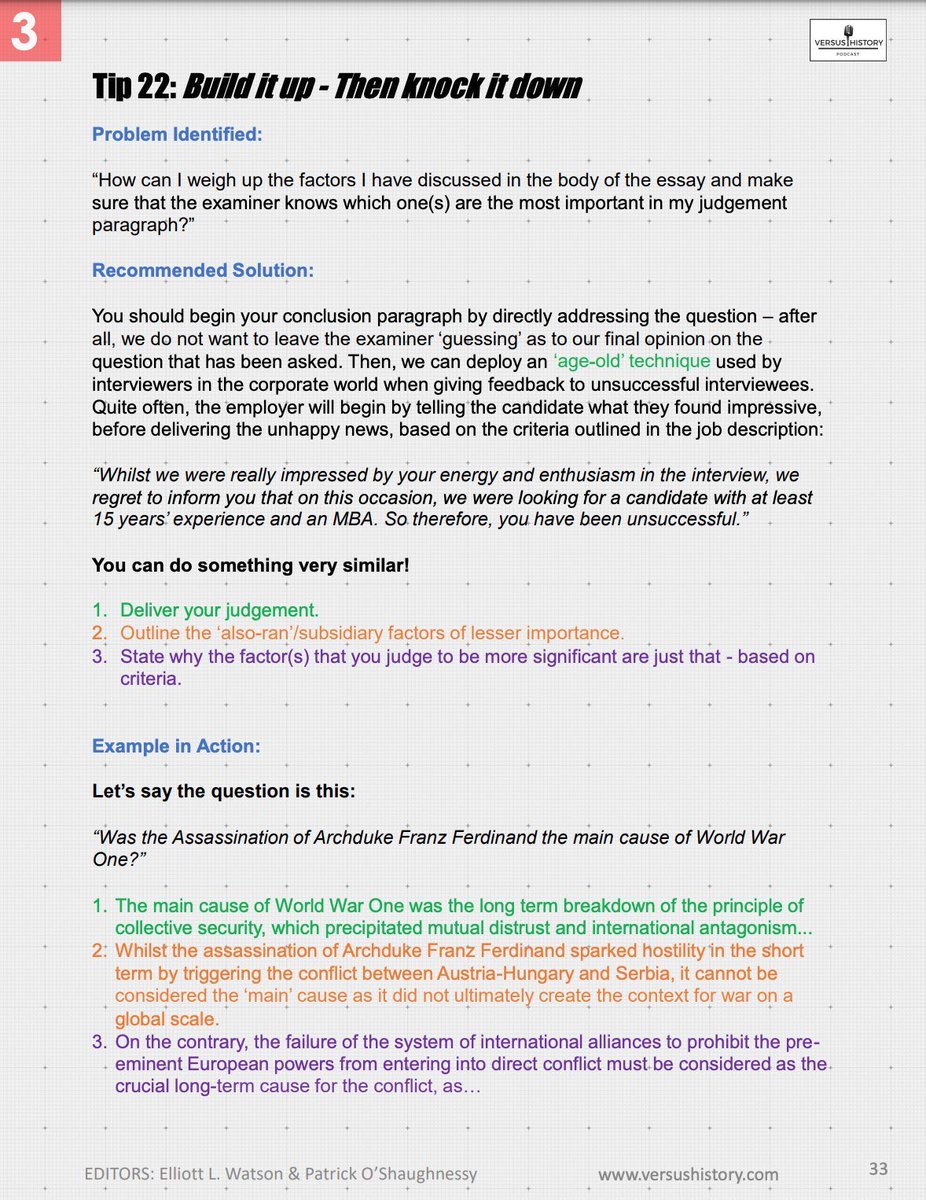
Judgement Paragraphs in History Essays.
One of our favourite tips from the book by @DrElliottWatson & @historychappy for @VersusHistory.
All 33 tips can be found therein: https://t.co/fVx7ZTKwMB
Final page of our booklet teaching pupils about cognitive science. After seeing some recent blogs I realised before delving deeper into the cogsci I should start with giving the pupils a better understanding of habits and motivation to set out to set the tone of the lessons
I've never met a child who behaved worse when the rules were clear and consistent. It doesn't matter how many times people characterise clear and consistent rules as "high control", "authoritarian" or "zero tolerance". Clear and consistent rules help all kids to behave and learn.
The reposts and likes have motivated me to push on especially from the authors themselves thanks @C_Hendrick and @P_A_Kirschner, Also a shout out to @MrMetacognition and @AlexJQuigley whose recent books helped me turn the research into practice for the metacognition page