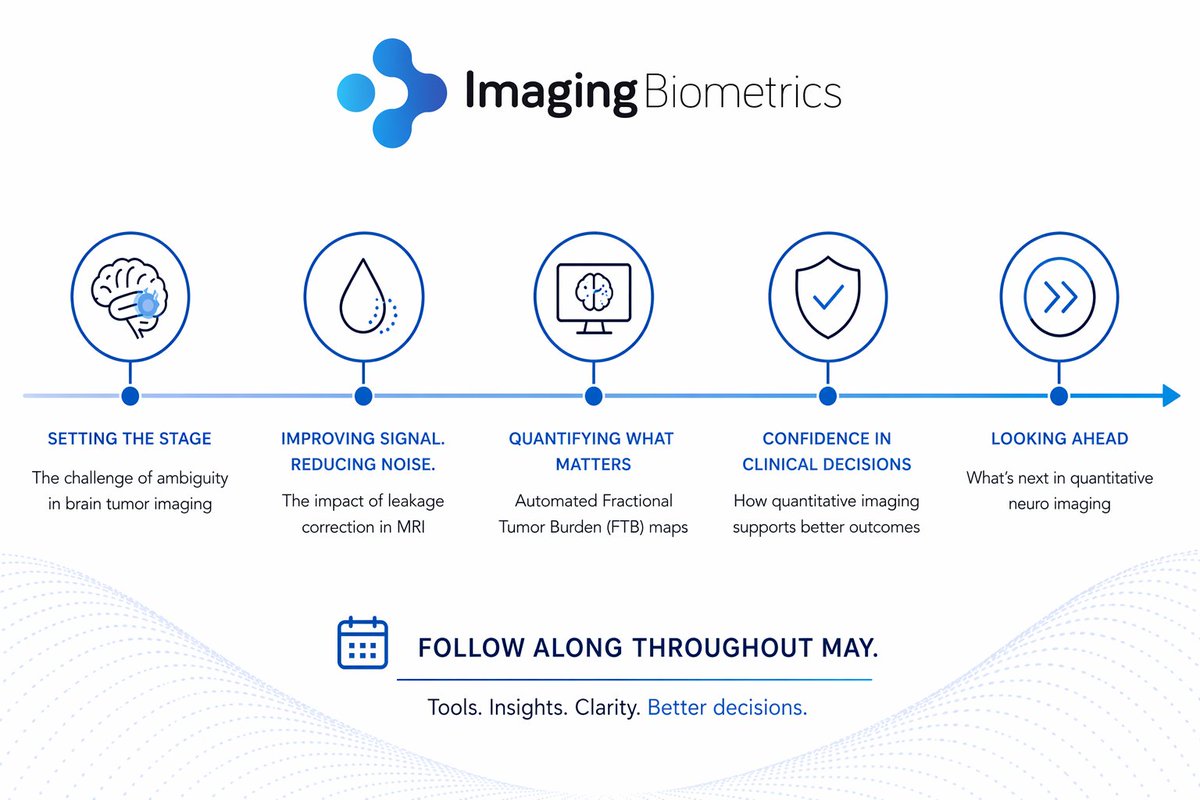
Fractional Tumor Burden (FTB) – From Imaging to Insight
What if imaging could distinguish high-grade tumor from treatment effect—voxel by voxel?
Even with advanced imaging, a key question remains:
➡️ Is this tumor progression—or treatment effect?
Fractional Tumor Burden (FTB) maps provide a voxel-wise classification within enhancing regions:
🔴 High probability of high-grade tumor
🔵 Treatment effect
🟡 Lower probability of Tumor
Derived from standardized perfusion metrics, FTB transforms imaging into actionable insight. Clinical impact includes, improved biopsy targeting, and more confident treatment assessment.
This is where quantitative imaging moves beyond detection—to confident treatment management decisions!
Delta T1 Maps – Seeing and Quantifying True Enhancement
Post-surgical and post-treatment imaging often includes blood products that can mimic contrast enhancement.
This creates a critical challenge to:
➡️ Identify true tumor enhancement
➡️ Objectively monitor disease according to RANO criteria
Delta T1 maps isolate true contrast enhancement, removing confounding signal from hemorrhage and surgical changes.
This enables:
➡️ More accurate lesion characterization
➡️ Improved assessment of treatment response
➡️ Better targeting for intervention
Clarity at this stage can directly influence patient management.
Standardized rCBV – Consistency Across Sites
Not all rCBV maps are created equal.
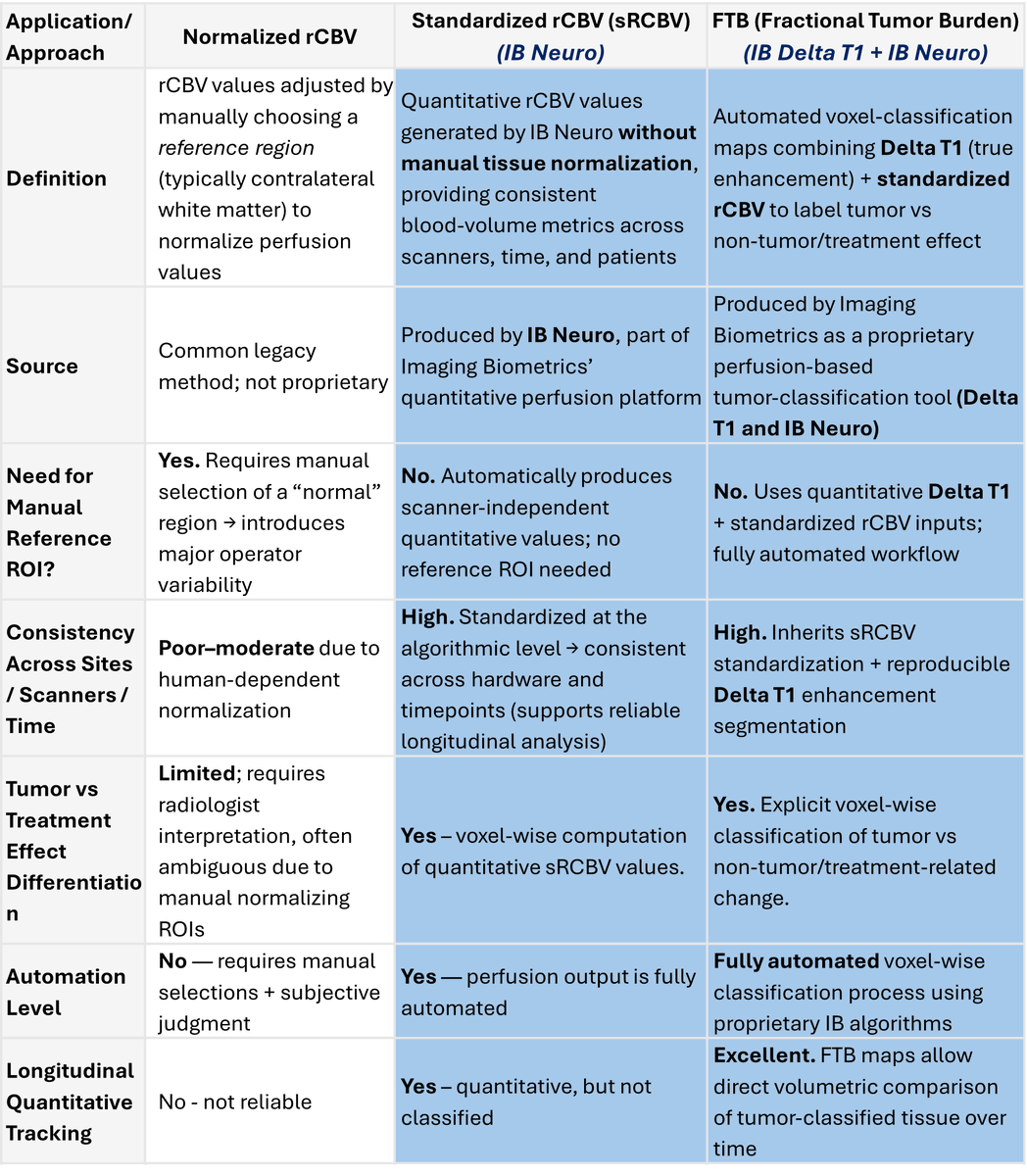
Traditional rCBV relies on manual normalization—making it time consuming and less reliable across:
• Patients
• Scanners
• Protocols
• Institutions
This creates challenges when comparing imaging longitudinally or across sites.
IB Neuro addresses this with standardized rCBV (sRCBV):
✔️ Quantitative
✔️ Reproducible
✔️ Comparable across platforms
The result:
An automated biomarker you can trust—whether monitoring therapy response, planning intervention, or participating in multi-center trials.
#NeuroOncology #MRI #BrainTumor #Radiology #MedicalImaging #QuantitativeMRI #Glioblastoma #AIinHealthcare
Leakage Correction – Why It Matters
In DSC perfusion MRI, contrast leakage can significantly distort measurements.
Without correction, processing of the DSC signal may not accurately measure blood volume—It can be underestimated or overestimated depending on the combination of acquisition settings, extent of leakage and contrast dosing protocol.
IB Neuro incorporates robust leakage correction, helping ensure that perfusion metrics reflect true physiology—not artifact.
Because when it comes to treatment decisions, accuracy & reliability matter.
#Glioblastoma #NeuroOncology #DSCMRI #QuantitativeMRI
It may be that we cannot 'understand' our consciousness by using only our consciousness 'tool'. We have been able to fly by using technology, but we don't actually fly, the machine does. Also since we don't understand our own consciousness how could we know whether AI consciousness is happening?
The Problem with Conventional MRI.
There's up to a 40% disagreement in post-treatment MRI interpretation—why?
Conventional MRI remains the foundation of brain tumor imaging—but it has limitations.
Post-treatment changes, inflammation, and blood products can all mimic tumor progression.
This leads to variability in interpretation and uncertainty in clinical decision-making.
Advanced imaging isn’t about replacing MRI—it’s about making it more reliable, quantitative, and actionable.
At Imaging Biometrics, our focus is simple:
➡️ Reduce ambiguity
➡️ Standardize results
➡️ Support confident clinical decisions
Professor Kathleen Schmainda will present to the NCI Quantitative Imaging Network (QIN) on advanced perfusion imaging on March 30.
The presentation is titled: “Innovation to Impact: How IB [@ImgBiometrics] Brought Perfusion MRI Tools to Clinical and Trial Deployment.”
The Quantitative Imaging Network (QIN) is a major program of the National Institutes of Health (NIH/NCI) designed to accelerate the development, validation, and clinical translation of quantitative imaging tools for cancer diagnosis, treatment planning, and therapeutic response assessment.
IB is a long-standing QIN contributor.
#QIN #NIH #QuantitativeImaging #PerfusionMRI #DeltaT1 #FTBmaps #IBNeuro #BrainTumors #NeuroOncology #Radiology #Neurosurgery #ClinicalTrials #MedicalImaging
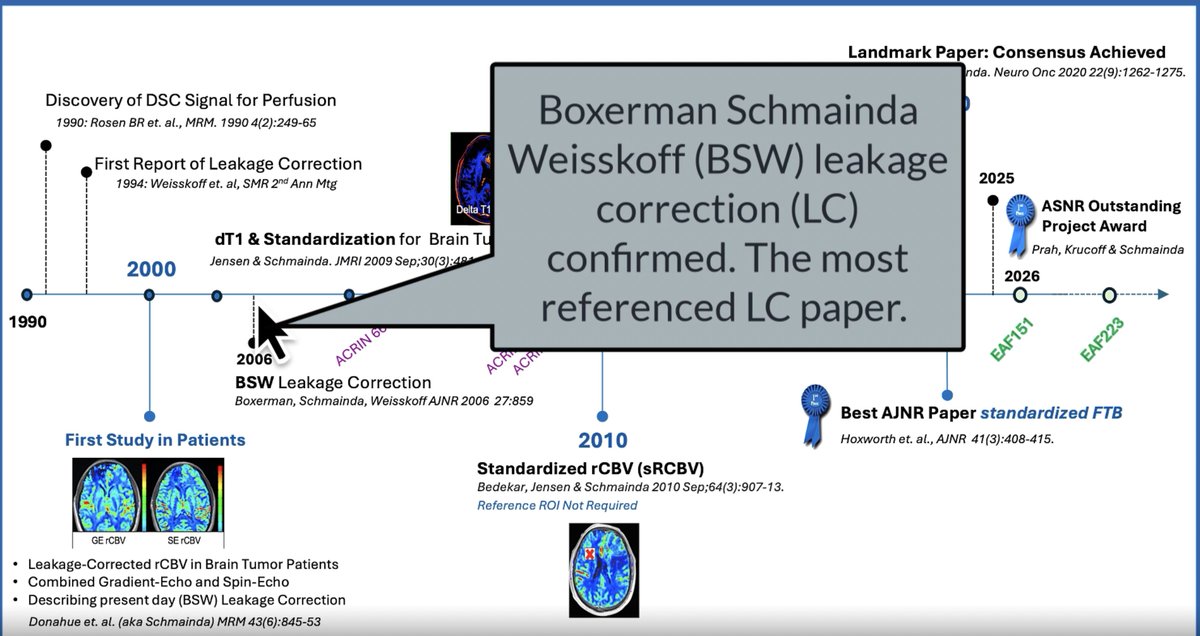
A comparative analysis between normalized rCBV, and @ImgBiometrics standardized rCBV (IB Neuro), and FTB (IB Delta T1 Maps & IB Neuro) - and why the choice matters for brain tumor imaging.
Contact IB for more information including references.
@TheASNR@AlMusella@theABTA@NBTStweets
AIM Directors often attribute positive outcomes to their judgment and blame negative ones on external factors, but are small company shareholders complicit with their focus and demand for news-flow over real performance?
Conventional analysis of small quoted companies fails to capture the reality, that most events which drive share price out-performance are the consequence of chance and are un-anticipatable.
Luck or judgement. She won the lottery (luck) but as a result of a decision (judgement) to buy a ticket. Are posts on LSE ending with "GLA", written by investors or gamblers?
Rapid setup. No animal testing.
The Kirkstall equipment makes complex in vitro research fast, reproducible, and easy to implement for drug discovery and research.
Watch how quickly it’s up and running.
#DrugDiscovery#InVitro#AnimalFreeResearch#OrganOnChip