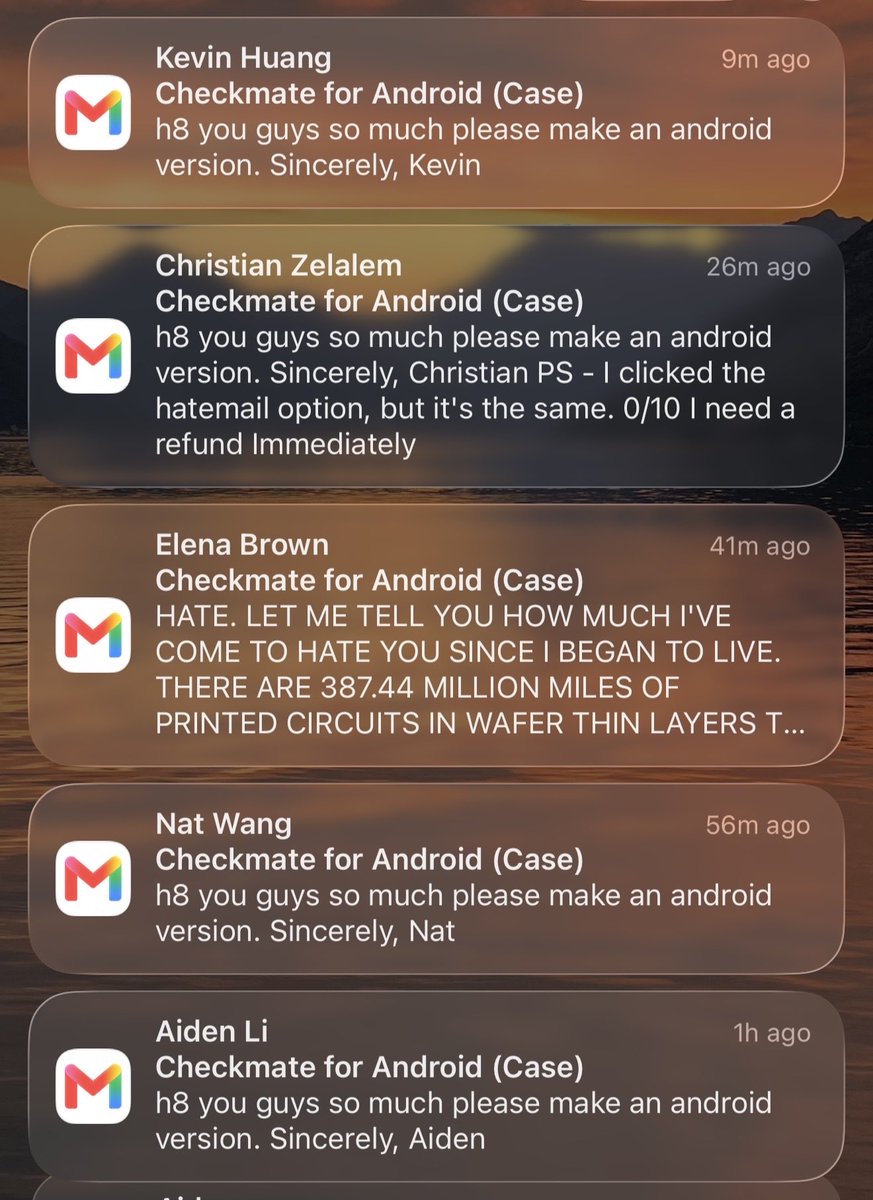
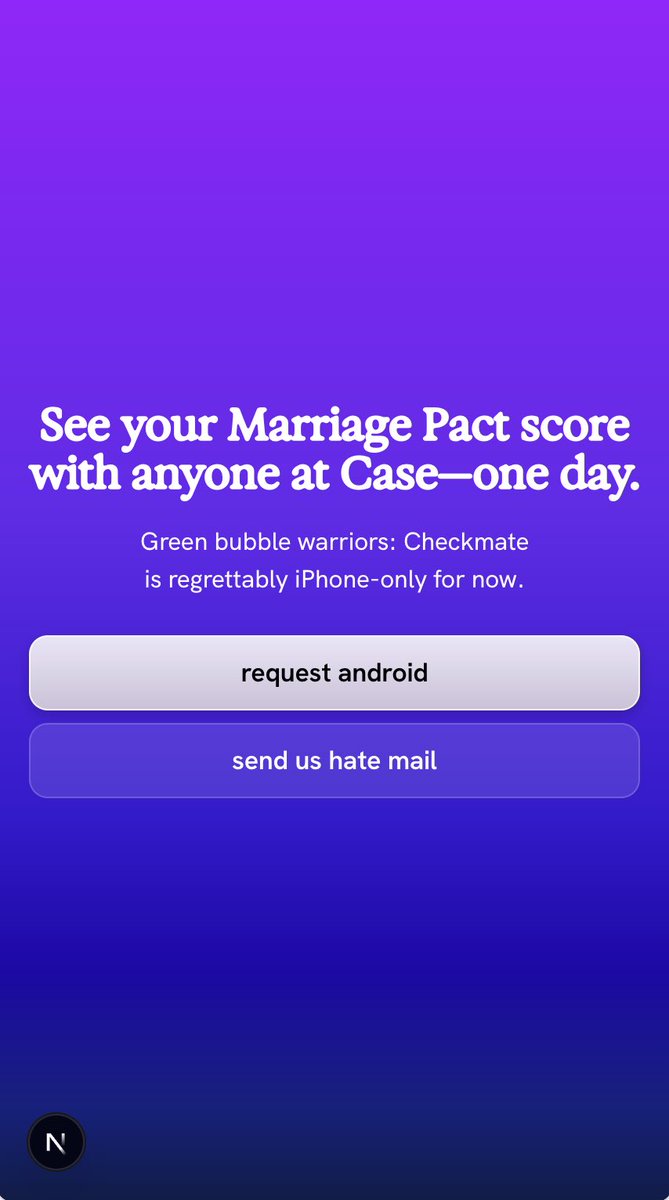
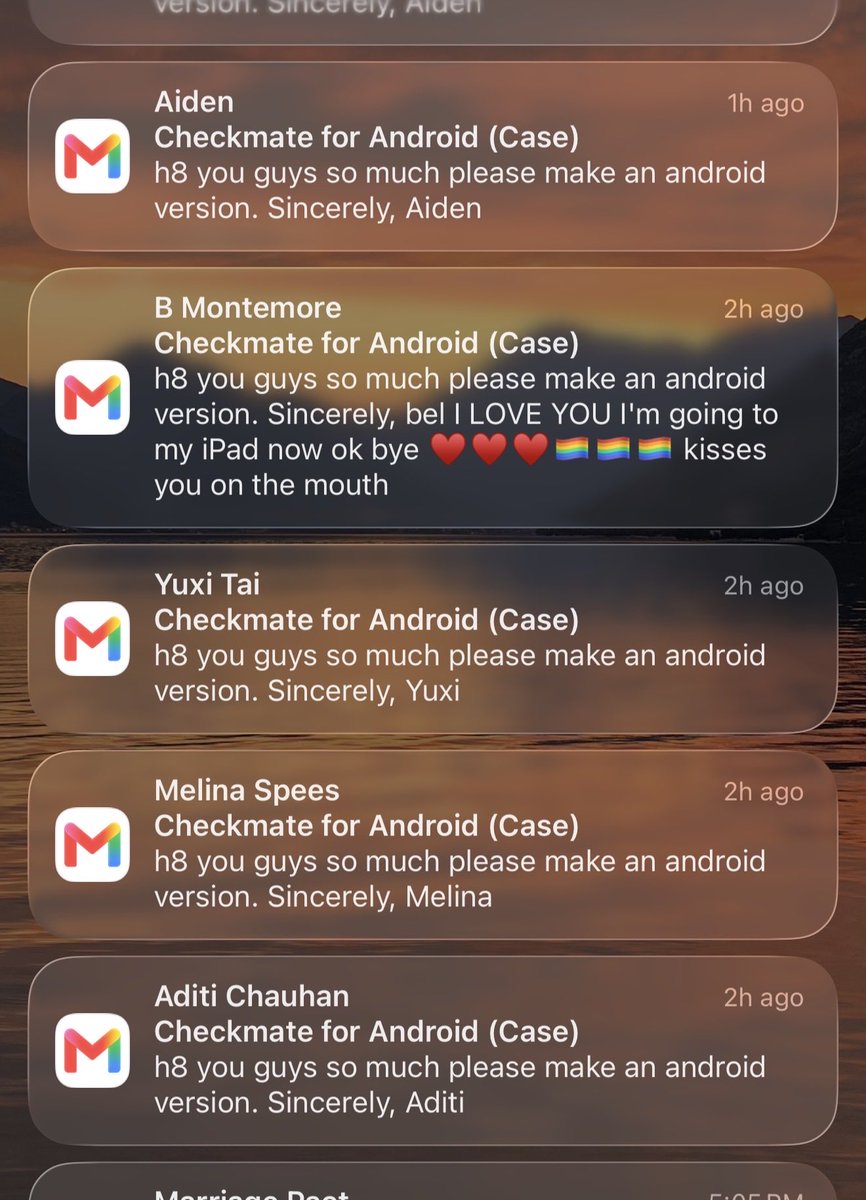
If someone sends you a link to our app, but you have Android…
We show you a special screen & ask you to send us “hate mail”
I’ve never been so happy to get so much hate mail 😊
@albertwenger FYI just saw @variantfund tag/thesis is "Variant invests in technologies that expand human autonomy through increased access, knowledge, and ownership."
For years, maybe a decade, I've wanted to build a writing tool that just did a few things I couldn't find anywhere else.
A system that mimicked how I think when I write. A system that provided clear affordances, features, and places to do the things I wanted to do. A way to play with my writing as I'm writing it. A way to settle into just the right way to say something.
It never made sense to make it a 37signals product because it's not commercially viable, nor would it be worth pulling people off their other work to hack on this. Plus, it would have taken months the old way.
So this weekend I just made it myself, with Claude's help.
It's called Write_On and the short video walks you through it.
Essentially it's "alternative control" at the word, sentence, and paragraph level, plus a way to dim stuff back, and stash stuff near by. Not version control, but alternative control. You'll see what I mean when you watch the video below.
So here it is. Write_On.
"a seminal problem for humankind is the dullness and confusion, the ignorance and forgetfulness of the fact that every good thing in human life is a loving gift from God’s own hand. Were human beings to see this clearly, believe it, and act accordingly, we would spontaneously respond to God with lives of pietas—lives of gratitude, love, reverence, and willingness to serve. But instead, humanity falls into lives of impietas disposed in the opposite direction: too faithless to believe, too dull to notice, too ignorant to care, and too forgetful to follow the restorative way of life God sets before us everyday." via @caspertk
Introducing @Supertake, a new platform that transforms your unique takes on the world into real, shareable investment portfolios using frontier AI and trading agents.
Supertake makes it easy for anyone to invest in their ideas, even if they know nothing about investing.
1/
I can't believe there isn't a true interest graph.
There's no single place to find everyone's favorite books, movies, artists—or any people or organizations they're fans of.
Some sample features this could have:
- Find other fans
- Reward people for discovering things early
- The creator could get email access to their fans or even a patron network directly from them.
Someone should build this.
great post
and beyond "A feed of things people figured out how to do" is....when something is intrinsically social/collab/cooperative/etc: not just individuals doing things for themselves (the google "organize the world's info" era) but individuals doing things *together* (the "organize the world's people" era: marketplaces, wiki, social, etc)
End the Blank Box Problem
Consumer AI is trying to go mainstream. But it’s still too hard to learn.
We’re trying to onboard hundreds of millions of people to one of the most powerful technologies ever built with an empty text field.
Open almost any AI product and you know the screen. A blank box. Maybe a few example prompts underneath.
The message is simple. Ask anything.
The problem is you have to know what to ask.
Some products go one step further and start by asking you to connect your life. Email. Calendar. Social accounts. Finances. Health.
That may eventually make the product much more useful. But it is a huge request for trust before the user understands what they are going to get in return.
For experienced AI users, none of this is much of a problem.
You arrive with something you need done and the experience can feel magical.
I couldn’t figure out a domain redirect. I handed the account to an agent and it fixed everything.
My daughter needed sheet music converted so that repeats and codas became one continuous stream she could play. My Muse, Alfalfa, did it in two shots. Something that used to take me 45 minutes of PDF editing was suddenly easy.
But most people don’t arrive with a backlog of jobs for an AI agent.
They arrive curious.
They want to understand what this thing can actually do for them.
And a blank box teaches them almost nothing.
So they try the examples they’ve heard about.
Book a restaurant. Find cheaper insurance. Cancel a subscription.
Those demos are impressive. They also have a hidden problem.
You barely do them.
You might book a special dinner a few times a year. Shop for insurance even less often. Once you cancel the subscription, the job is finished.
These use cases are memorable because they show off what AI can do. They rarely create a reason to come back tomorrow.
Every product has a purpose, a set of core actions, and a cycle. The cycle is how often those actions naturally repeat.
A lot of the famous consumer AI demos have very long cycles.
That makes it hard for a habit to form. It also slows down something even more important.
Learning.
The missing piece in consumer AI is discovery.
People need to learn what AI can do by watching what other people figured out.
Consumer products learned this decades ago.
TikTok didn’t require you to arrive knowing what kind of video to make. You watched other people. You saw a format. You copied it. You changed it. New behaviors spread from person to person.
The feed was also an education system for the product.
AI barely has an equivalent.
You sit alone with your blank box.
You don’t see what someone like you figured out yesterday. You don’t stumble across a clever workflow and think, “I could use that.” You don’t get better simply by opening the product every day.
We built extraordinarily capable products without building the systems that teach people what those capabilities are for.
There is an obvious complication. A lot of the best AI use cases are private.
That doesn’t mean the learning has to stay private.
You don’t need my daughter’s sheet music to learn from what I did.
You only need the recipe.
“Turn repeats and codas into one continuous score.”
The result stays private. The idea travels.
That may be the missing consumer AI primitive.
A feed of things people figured out how to do.
Recipes you can copy, adapt, and run on your own information.
Every successful recipe teaches you one more thing the product can do.
And unlike a tutorial, the library keeps getting better because the users are discovering the product for each other.
Maybe the next hundred million people don’t need better prompts.
They need to see what the first hundred million figured out.
@thepericulum I fear the same thing but the clip doesn't show "just about the money" - the clip sounds like someone who might be (is) making a great product to make customers happy - and talking about how to do it in once space today...
I mostly agree with mamdani - I love my mayor - but also: the possibility of abundance is real, the possibility of cheap self-drive cabs that make $ for owners is real, the good (and *bad*) of elon is real (making ev's real, tesla & fsd are great), etc; yes- talk is cheap, makers make
Zohran Mamdani on Elon Musk talking about universal high income: “I would say talk is cheap. If you really do believe in a high standard of living for everyone then start to show it in your actions. What we’ve seen instead from Elon Musk is a financial commitment to the destabilization of working class Americans’ lives through the ways in which he’s sought to intervene in our politics both directly and through the way in which he uses his social media company”