$ABVX
Received some questions on how FDA will see this? My views below, some of which some of you have already articulated:
FDA doesn’t issue Black Box label like they are issuing bagels. Lot of thinking and negotiations goes into it. BB decisions are based on totality of evidence. Non-clinical, clinical, safety, CMC all reviewers have to come to an agreement that what they are seeing is absolutely triggered by the drug and nothing else.
If they conclude it’s the drug, then next step is whether efficacy outweighs potential safety risk?
Is this something that can be ignored for now and be asked to monitor in post market safety assessment and reevaluate labeling in 3-5 years if BB is needed at that point?
If no conclusion can be reached, Advisory Committee is the last option.
If I use Abivax current situations as an example, following will play the role:
1) If high 50mg dose for 52 weeks caused breast and prostate cancer, why didn’t even higher dose and longer duration of total 100mg for 16 weeks + 2 year 50mg + 3 years of 25mg cause those cancers in phase 2 OLM? No drug changes have been made between the trials hence Phase 2 safety data are representative of potential commercial safety as well. Longer the safety data the better. FDA likes it.
- Individual patient history: High refractory patients compared to other arms and overall entire study in more severe and prior ~5-6 drug exposure patients. Also use of concomitants and steroids in the trial as standard practice. Is this just carry over from previous drugs? prostate cancer was flagged early during induction and breast cancer appropriate for age. Too early for cancer to trigger.
- Robust animal tox studies, pharmacology data, external literatures with no sign of toxicity
- No CMC impurities in ~25+ batches of 50mg dose manufactured so far and assessed for any impurity above allowed limit and well characterized new impurities with supportive tox evaluation
Based on what we know today, this is heavily tilted toward no BB in my opinion. There should also be pre-NDA meeting with FDA in next 3-4 months.
*Not a financial advice. Opinion only!
I keep hearing people referring to "7" cases of cancer in the high dose arm for $ABVX. I get it - that's what they technically showed in the table, but in observing a lot of conversation about this I gather that people don't actually realize what really matters there. I am strongly of the opinion that there are really only 2 malignancy cases that matter for adjudication - the prostate cancer and breast cancer cases.
I initially started talking about these cases as "the 2" cases from the very beginning because I assumed that everyone would be on the same page that these were the only 2 that mattered...but I've found that people really are considering this as a case of *7* full blown malignancies in the 50mg arm...This is just not correct.
Let's break this down.
First of all, they're counting "colonic dysplasia" in this table as one of the "malignancies". I cannot stress this enough: Colonic dysplasia is, by definition, LITERALLY not cancer. This is actually an unequivocal point that I don't understand how it could even be up for debate.
"Dysplasia" is a "precancerous" lesion. Cervical dysplasia, colonic dysplasia, melanocyte dysplasia. Terms exist for these PREcancerous findings because they are, by definition NOT CANCER (otherwise, if they were cancer, we'd call them cervical cancer, colon cancer, and melanoma)...
Dysplastic lesions, not being cancer, often regress on their own or simply never evolve into cancer, staying in the "dysplastic" state until death. However, if they *do* become cancer, they do so through a process that is called "malignant transformation". Literally, something that is NOT malignant TRANSFORMS into something that is.
Why did the ABVX management team include this in the list of "malignancies"? Honestly, I don't know. I think it is an evident mistake, and a strong piece of evidence that they didn't think they'd actually have to explain away a "cancer signal" in this dataset because their analysis of the data told them that there isn't one. If they were worried that the market was going to interpret these data as a catastrophic malignancy risk (which, make no mistake, is what the current low $70s price tag is assuming), they would've likely adjudicated this more thoroughly and left the "malignancy" that is by definition NOT malignancy off of the "malignancy" table...
So that is tossed out easily IMO. 6 cases left now. 4 of those are NMSC (non-melanoma skin cancer). I gather that people are dramatically overestimating what a diagnosis of NMSC means. Far be it from me to minimize NMSC (since it is what I treat for a living as a dermatologist), but guys....this is NOT in the same category as ANY other malignancies. NMSC is a milder category of its own, and I don't mean that as a matter of opinion. Literally, "non-NMSC malignancies" is a distinct endpoint used to gauge risk of "serious" malignancies in clinical trials. NMSCs are left out of that category because they almost never are "serious" - certainly almost never life threatening.
Here's an exercise anyone can do to drive this point home. Google, or ask an LLM "what are the 10 most common cancers in the United States?". They are all going to give you the same answer: Breast & prostate will be the top 2 at slightly >300,000 cases/year.
So breast and prostate are the #1 and #2 most common cancers according to every source...except, those sources either ignore completely or footnote at the bottom that there is a type of cancer 15x more common...NMSC!!!
The point? Ubiquitously, NMSC isn't even included on the list of "most common cancers" because they're frankly in a separate category altogether from cancers like breast and prostate. It actually is controversial whether or not it is even possible for basal cell carcinoma to metastasize, and (aside from transplant patients), CSCC is almost never fatal unless left ignored/untreated for years (people ignoring a giant bleeding skin cancer is perhaps more common than you'd think, but not happening in any clinical trial patients).
These 4 50mg NMSC cases (vs 1 in the placebo group) are a not representative of serious malignancy risk even if the market is acting as if they are...they are absolutely in milder a category all their own, and lumping these all together is a mistake.
Again, if people think these 4 NMSC cases are some scary life threatening event, they're just flat out wrong. There are >15x more cases of NMSC than breast cancer in the US/year, yet >10x more breast cancer deaths occur in the US per year.
Again, not to minimize my own career too greatly, but almost *always* NMSC are removed by VERY simple, ~10 minute procedures under local anesthesia. Cutting out (or scraping away) the lesion typically takes me around 60 seconds, and the bulk of the procedure is actually spent stitching the patient back up. Drive yourself to the office, drive yourself home, local anesthesia, under an hour, you're cured. Hell, in many places in Europe it is actually standard practice to not even "treat" a basal cell carcinoma! On many body locations they are simply biopsied, and once diagnosed they are considered cured by the biopsy itself!
It has become very clear to me that people are thinking that these NMSC cases are highly relevant cases of severe, potentially fatal cancer. They simply are not. There are *millions* of these in the US per year and most are treated with <15 minute procedures. These are in a TOTALLY different, far less serious category of "cancer".
So again, why wasn't $ABVX prepared to discuss/explain this? I legitimately think they did not expect to need to. They may have overestimated the market's knowledge here and underestimated its potential for a knee-jerk reaction to the "C-Word". It's a mistake, yes, but it ultimately doesn't change the profile of the drug.
So, I think we have compelling cases to write off the colonic dysplasia (literally not cancer) and NMSC cases, as I have usually found to be standard in these situations.
That leaves the breast and prostate cancer cases. Again, the otherwise #1 and #2 most common cancer types...funny how that worked out! I sincerely do not believe that these two cases alone represent a signal against 0 in the placebo arm. This is textbook small sample statistical noise, ESPECIALLY for a drug with no mutagenic risk AND no immunosuppression (literally, HOW would this drug even be causing cancer then???).
However, clearly the market will want more info here on these two cases.
Hopefully the market will wake up to the points above (that $ABVX and I mistakenly thought were obvious) highlighting that the colonic dysplasia and NMSC cases can be almost completely written off. After that, hopefully $ABVX can give us more info on these two "legit" cancer cases (breast and prostate).
Yes, they should've been ready to do so on the call. they messed up, but let's see what the details show. Some are saying we will see updates sooner than the October conference like they initially guided for on the call (at which point they clearly did not expect the market to be freaking out at all).
After that, we also need to see the data from the 50mg "escape/placebo" arm that was not part of the primary efficacy analysis. That's is own topic of conversation, but that could significantly rewrite the narrative (now that $ABVX is aware a narrative needs to be rewritten after it got away from them).
I think the market thinks they are hiding these "escape/placebo" arm 50mg patients' data. I believe they were just totally caught off guard by the market's reaction to the "cancer signal" here and didn't think they'd need to have that dataset ready to prove there's no cancer risk (they thought the initial dataset spoke for itself...I agree, but so far the market clearly doesn't).
There should be several hundred patients worth of extra 50mg patients in that group. Ideally they can move up the release of that dataset to help qualm the market's fears and try to prove they aren't trying to hide anything there. Depending on the sample size there, we should very likely expect a few "cases" there too, but if the rate comes in lower than the original 50mg data we got, this narrative could snap back rapidly. Let's hope!
$LQDA clearly lost the trial if you couldn't tell. Some people have insider ⚾️, $UTHR call was cancer and then some. If nothing makes sense just ask yourself what the obvious answer is. Why else would $UTHR be up a multiple of what $LQDA Is down. Assume bad royalties at the least
🚨 CD VENTURES BUYS SIALKOT STALLIONZ 🚨
- Gohar Shah of CD Ventures has acquired 98% shares of Sialkot Stallionz.
- With new ownership in place, the franchise name may be changed, or retained, in the coming days. [Qadir Khawaja]
Seedy Exclusive - 2025 net returns for biotech hedge funds.
Note:
- for awareness purposes only
- verified to the best extent, data may have discrepancies as it’s historically been a very secretive space
- list bigger and more comprehensive compared to last year
- funds with much smaller AUMs included so before forming any opinions take some timeout to learn about all these names below
- $xbi +35.88%
🫡 🌱
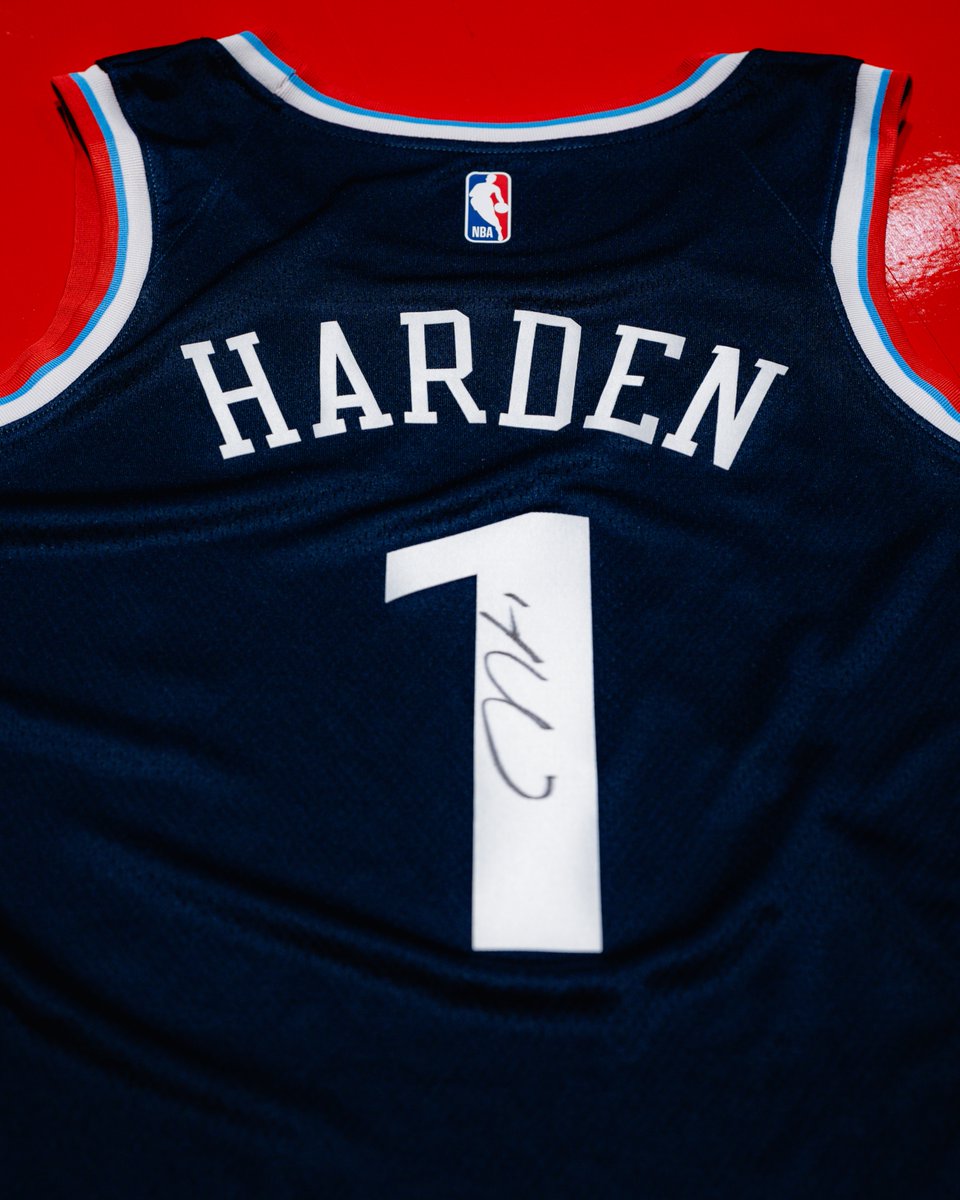
Celebrating 1⃣ re-signing with a giveaway!
Follow us, share this post, and tag a friend in the replies for a chance to win a signed James Harden jersey! One winner will be selected and DMed on Saturday, July 12 👀🖊️
If #natgas is not above $5 by end of July, I will give my account to one person who likes, shares and comments “#natgas bottom in” to this post.
Mark my words
@dragonheart_kh@TedHZhang "Enterprise security and risk management" have nothing to do with an understanding of quantum computing. And their product isn't even a quantum computer. Do some research buddy.
@dragonheart_kh@TedHZhang Also note he has nothing to do with Quantum Computing at all! No significant papers published and hasn't attended any of the major conferences which at least the other quantum companies go to. That together with $39k quarterly revenue and a p/s of 7000!





![TsMeSalman1_'s tweet photo. 🚨 CD VENTURES BUYS SIALKOT STALLIONZ 🚨
- Gohar Shah of CD Ventures has acquired 98% shares of Sialkot Stallionz.
- With new ownership in place, the franchise name may be changed, or retained, in the coming days. [Qadir Khawaja] https://t.co/3vEpbreFIH](https://pbs.twimg.com/media/HBvsYWAbgAQFDc-.jpg)