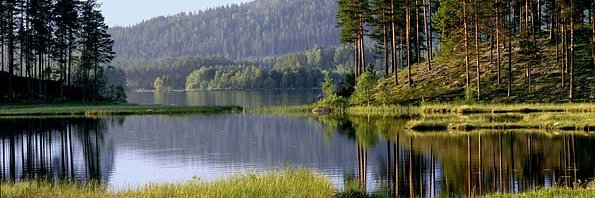
@KingVelesI Are you at all worried about big farming/forestry companies buying the land around you and making it impossible to herd there? When you in the future acquire more land, will you let other people herd there?
@KingVelesI I don't understand how there can be so much public land in your country to graze on? Does the state not use it for anything? In my country herding is sadly unheard of nowadays since all land is either used for intensive forestry or farming.
@bayesianboy Very well put. Do you have any reforms in mind? Hard for me to imagine a good way of ascribing credit in academia. Only competent people can judge competence in complex domains, but that gives no ground for a system of accreditation.
––Peter Werkhoven: How would you define the notion of understanding?
@DavidDeutschOxf: Well, understanding to me is very closely related to explanation. So an explanation of something is a statement of how invisible things affect the visible things, how the things that we don't know about affect the things that we do know about. So in chess, for example, the invisible things are abstract things, they are things like that knight is dangerous there, it's better to restrict its movement.
Now, there's no such thing as dangerous or restrict its movement in the rules of chess. Chess playing computers don't know about such concepts, they don't use them. So what this means from the point of view of what an explanation is, the human chess player has conjectured that there is an underlying structure beneath the rules of chess and this particular chess game, and has decided to think in terms of this underlying structure.
So the explanation, which may be in words, like I just said, it may be, you know, that knight is dangerous and therefore, but it may not be in words, it may be an inexplicit understanding, which is also an explanation, though, you know, some explanations are not expressed in words, they are expressed in mental constructs that haven't been verbalized. And a combination of those two is used by humans for all sorts of things.
We literally live on the most beautiful paradise of a planet with trees and thousands of species of birds singing and colourful coral reefs… all which could be protected by billionaires… instead they want to go to a literal lifeless rock 🙄🙄🙄
@AgnesCallard I dont agree that you are weird. I feel like this is a common phenomenon, take me for example - i am one of the most normal people i know.
Welcome to psychology. Your choices are Buddhism books filled with brilliant insight into qualia, attention, well-being, and self, sprinkled with casual ridiculous metaphysics about past lives, or papers about how 10 Harvard students recognize red colors faster than blue colors
@veryonthenozick Interesting! For me it seems unlikely that people will be able to stop looking for attention though. And with that this kind of competition and comparison comes if you want it or not. If we stop basing the comparison on aestetics don't you think we will just replace it?
@AgnesCallard Amazing text, thank you for writing this! I still feel like their could be a point to the pretending, just in order to put yourself in positions were other people have the oportunity to change your mind.
@AgnesCallard But this is a completely insane test. Trying to measure "emotional intelligence" by letting people choose from motionless pictures. I am skeptical about defining emotions acording to so few signs.
@OlaSoderholm Jag tycker att det finns egenvärde i naturens bevarande som opåverkad av människan. Eftersom den till skillnad från människan inte känner till godhet/ondska utan bara existerar.
When I’ve looked up a topic in Wikipedia that I know something about, I’ve always been very impressed. This gives me confidence when it comes to topics about which I’m ignorant. I’ve just donated to Wikipedia. Please donate too.
https://t.co/bXuCDNB3Jy