I'm close to having score results to begin sharing for this year's AP Exams. Here's a quick overview of how this will unfold.
The scoring of AP essays and free-response questions by ~30,000 professors and teachers - this year's AP Readers - runs throughout the first three weeks of June, with some make-up exam scoring continuing thereafter.
Once scoring is complete, the psychometric work begins. These annual processes ensure that this year's students are neither disadvantaged by tougher questions or stricter grading, nor advantaged by easier questions or easier grading.
Statistical analysis identifies the precise difficulty and scoring stringency of each question in comparison to prior years. If a given exam version proves to be easier, a higher number of points is required to earn scores of 5, 4, 3, or 2 on that version; if harder, a lower number is required. This work is led for the AP Program by the current president of the National Council on Measurement in Education.
After Readers have finished scoring and psychometricians have set the specific "cut scores" (points required) for each exam version, I'll be able to start sharing key findings as we collectively wait for this work to be completed across all 40+ AP subjects so that scores can be sent to colleges, students, and educators in early July.
Here's what I'll be covering as results come in:
• The focus areas of the free-response questions. (This year's exam questions were crafted by educators from virtually every state and DC; each question is worked on by a minimum of 15 professors and teachers before appearing on the test. I'll use this opportunity to pay tribute to their superb work.)
• Any statistically significant increases or decreases in the difficulty of this year's questions or scoring rigor.
• Particular content areas within the multiple-choice section where students scored especially well, or particularly struggled.
• Specific components of the free-response questions where students scored especially well, or particularly struggled.
All of this is very much an attempt to share in real time the data I'm receiving, to tide us all over until scores are released in a few weeks.
A few reminders:
• I'll report each subject as it's completed, and that timing will depend on how long it takes to score this year’s questions, so I can’t publish a schedule for sharing these updates. But I will have this info for all subjects no later than June 30.
• Because these score distributions include all students worldwide, individual classrooms will often have score distributions that are either higher or lower than this aggregation.
• AP Exams aren't scored on a curve. Rather, as many students as earn the points necessary for college credit receive a score of 3 or higher.
• If you're an AP student, here's information about how to make sure you're able to view your AP scores starting July 6: https://t.co/u2bTSrgujK
• You have until June 20 to indicate which college should receive your free score send: https://t.co/XL9cPGLw7f
• If you're an AP educator, here's information about how to view your students' AP scores starting July 6: https://t.co/oO5ufXWaVe
Right now, many AP Exam subjects are being scored:
📚 An AP Seminar essay is being carefully analyzed.
🎨 An AP 3D Art and Design portfolio is being thoughtfully reviewed.
🏛️ An AP U.S. History free response is being evaluated.
And the people doing it?
More than 36,000 AP teachers and college faculty who care deeply about student learning.
That’s the AP Reading.
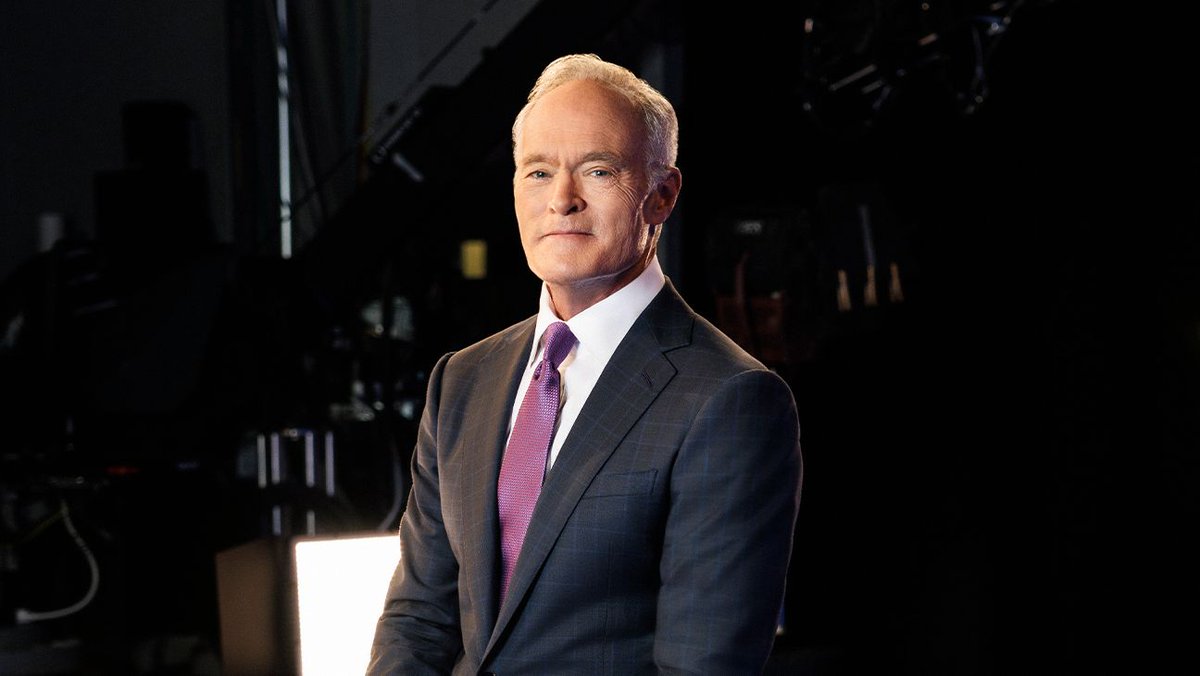
Scott Pelley issues new statement after being fired by CBS for opposing their pro-MAGA bias:
“New management has instructed me to inject falsehoods and bias into a politically sensitive story. I’ve been told to include assertions that are unverified. To date, in every case, I have managed to ignore these instructions or refuse them.
Recently, politicians have been invited to choose correspondents for interviews on the broadcast. Giving politicians control over 60 Minutes interviews is not how this is done.
Finally, incompetence and unprofessionalism in the new management have wreaked havoc. In a case involving one of my stories, the entire program came within 19 minutes of not getting on the air at all.”
The AP Reading begins today. More than 36,000 educators — AP teachers and college faculty from across the country and around the world — will score the free-response work of millions of students who took AP Exams in May. AP Readers will evaluate more than 25 million essays and free response questions.
Teachers who serve as AP Readers consistently describe it as among the most valuable professional learning experiences of their careers — and I believe them.
The AP Readings take place over the course of a month, with a different group of subjects scored each week. In the span of a week, Readers fine tune their judgement of student work in ways that enhance their classroom practice, gain insight into how students think and write across the country, and learn alongside colleagues who teach the same content in a hundred different ways.
To every Reader — whether this is your first AP Reading or your 20th — thank you. The students whose work lands on your table are fortunate to have someone who cares this much.
The work you do this week matters more than you know.
Portland High School has announced Academic Achievement Awards for the Class of 2026!
Congratulations to:
Camden Bean, Valedictorian
Hunter Whittemore, Salutatorian
It’s a wrap on the 2026 clandestine Pig Project in Coach Pascarella’s Advanced Criminal Justice classes! Check out these photos on this deep dive into law enforcement, investigations, forensics and the court systems! Such an amazing project!
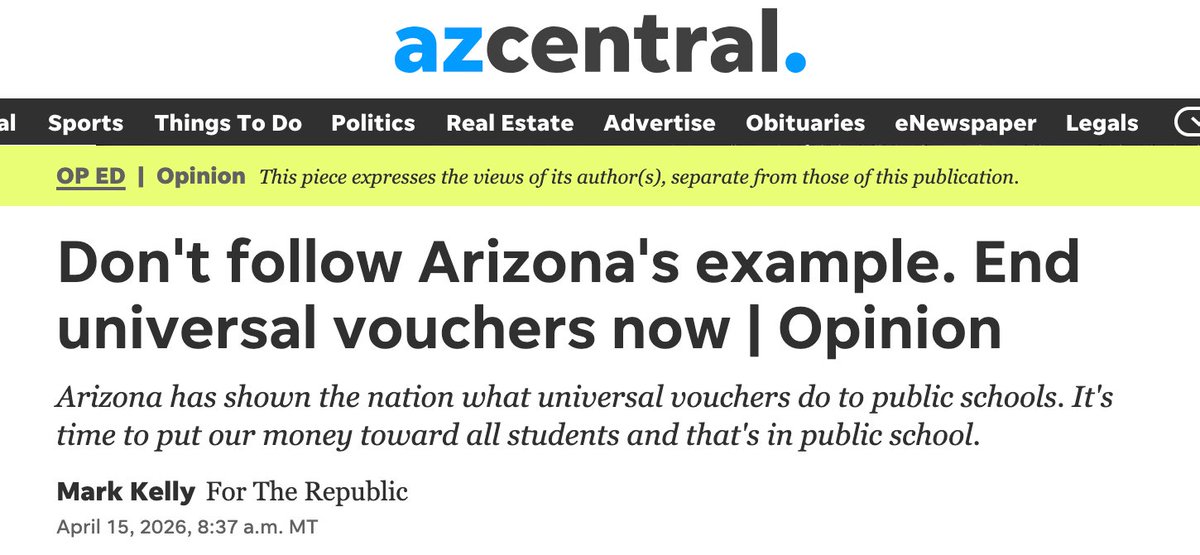
Every child, in every zip code, deserves a fair shot at a good education.
That's why I’m introducing legislation to repeal federal vouchers and keep public funds in public schools — so schools have the resources they need to do right by our kids.
Este es el rostro de felicidad de 4 seres humanos que han regresado a la Tierra, poniendo fin a un viaje de casi 10 días alrededor de la Luna. Histórico.