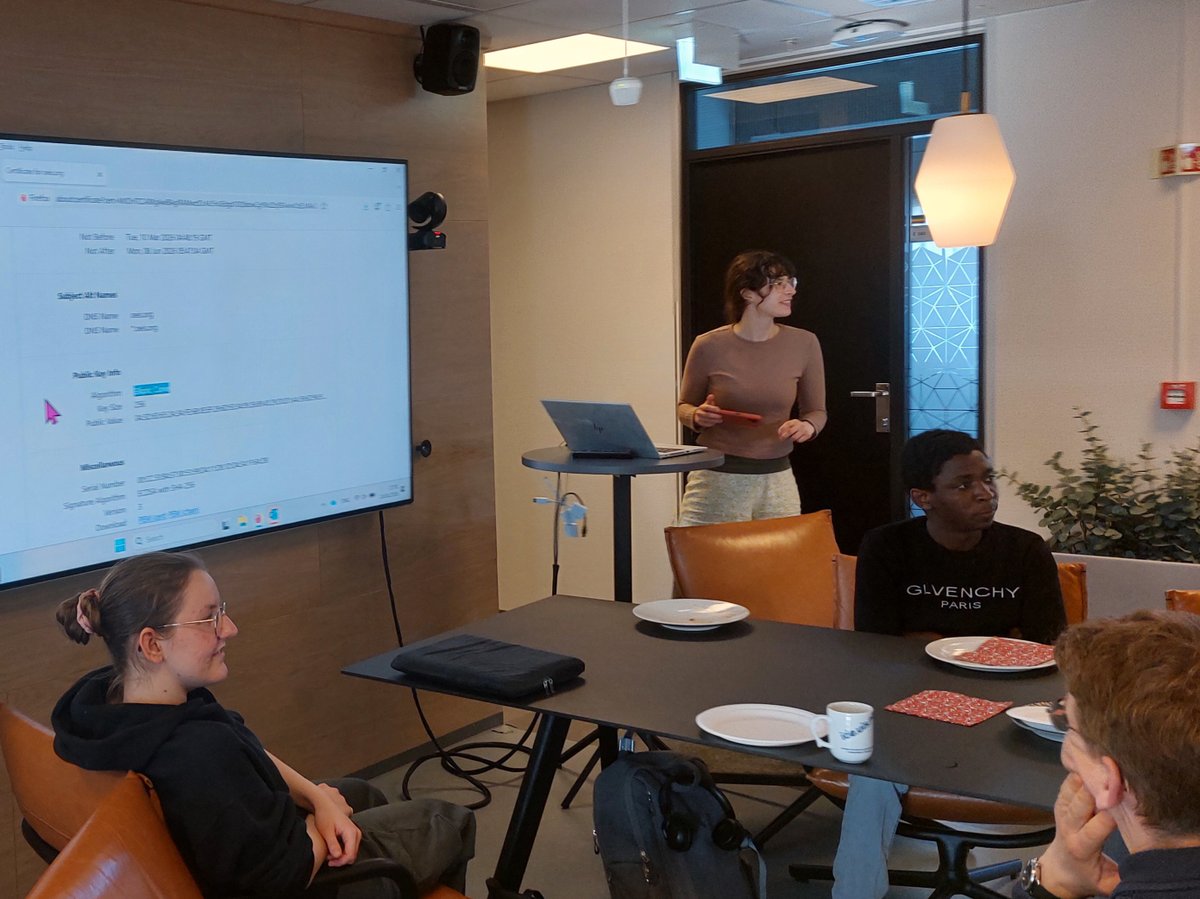
Professor Helge Ruddat represented the University of Stavanger at Institut Mittag-Leffler in Sweden this week with his presentation “Lagrangian torus fibrations of Calabi-Yau hypersurfaces”
https://t.co/wdFkFo03Pz
The collision that formed the Moon. A visualization by Dr Robin Canup of the giant-impact hypothesis which suggests the Moon was formed by a collision between Earth and an object the size of Mars 4.5 billion years ago.
Yes, the physics is very basic. Everyone who paid attention in school knows what will happen. But putting yourself in the line to demonstrate it is still pretty badass.
Our IMF colleague and neutron star leading expert Aleksi Kurkela was awarded with an NFR Fripro grant, senior category, ~1mio EUR, congratulations ! 👏💯🎉
https://t.co/VTISFBRZtr
Lively exchange at sushi lunch at IMF after introducing four new visiting scholars in material science, computational engineering, statistics and physics.😍🥳👍👩🎓🧑🎓👨🎓👨🏫
David Ploog is sharing his expert knowledge about elliptic curve cryptography in an understandable way to master and PhD students as well as many curious colleagues; and there is yummy pizza ! 😃
A MIT professor taught the same lecture every January for 40 years, and every single time it was standing room only.
I watched it at 2am and it completely rewired how I think about communication.
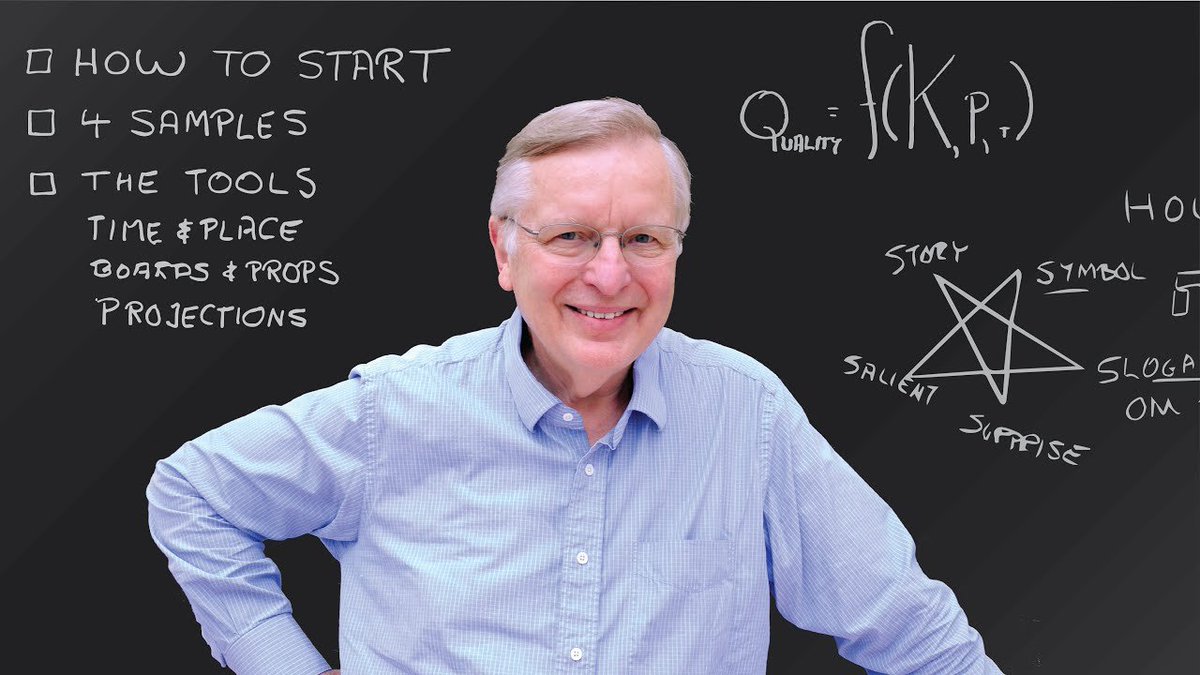
His name was Patrick Winston. The lecture is called "How to Speak."
His opening line hit like a truck: your success in life will be determined largely by your ability to speak, your ability to write, and the quality of your ideas in that order.
Not your GPA. Not your pedigree. Not your IQ. How you speak is what separates people who get heard from people who get ignored.
Here's the framework he drilled into MIT students for four decades.
He said never start with a joke. Start by telling people exactly what they're going to learn. Prime the pump before you pour anything in. He called it the "empowerment promise" give people a reason to stay in their seats within the first 60 seconds.
Then he broke down the 5S rule for making ideas stick: Symbol, Slogan, Surprise, Salient, and Story. Every idea worth remembering hits at least three of these.
The part that floored me was his "near miss" technique. Don't just show what's right show what almost looks right but isn't. That contrast is when the brain actually locks something in permanently.
His final rule before any big talk: end with a contribution, not a summary. Don't recap what you said. Tell people what you gave them that they didn't have before they walked in.
I've used this framework in pitches, interviews, and presentations ever since watching it, and the results are not subtle.
Patrick Winston passed away in 2019, but this lecture is still free on MIT OpenCourseWare. One hour, watched by millions, and it costs absolutely nothing.
The most important class MIT ever put on the internet isn't about code or math. It's about how to make people actually listen to you.