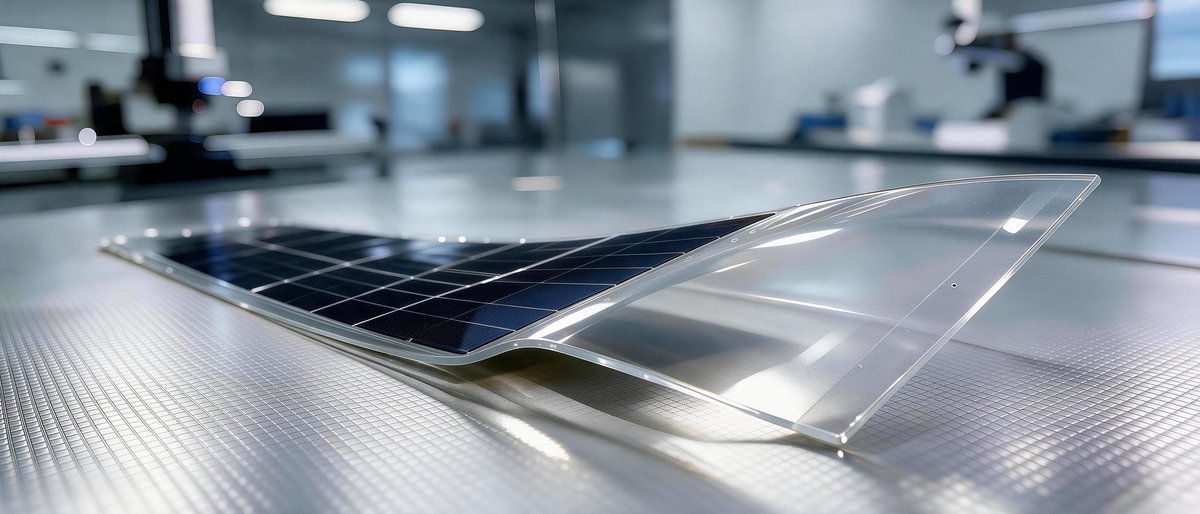
Space-grade UTG cover glass for solar arrays, down to 50µm. Plus SCPI film, HJT cells & adhesives for LEO deployment. Lighter. More compact. Built to last.
Power is the main constraint for in-space compute. Orbital data centers require multi-kilowatt power arrays that directly benefit from Heliofold’s double-sided flexible solar blanket to maximize energy density.
https://t.co/RdMTPXcwcM #SpaceTech
Every gram to orbit costs money. The real metric is power per gram.
Heliofold US is at the European Space Power Conference, Estoril, Portugal.
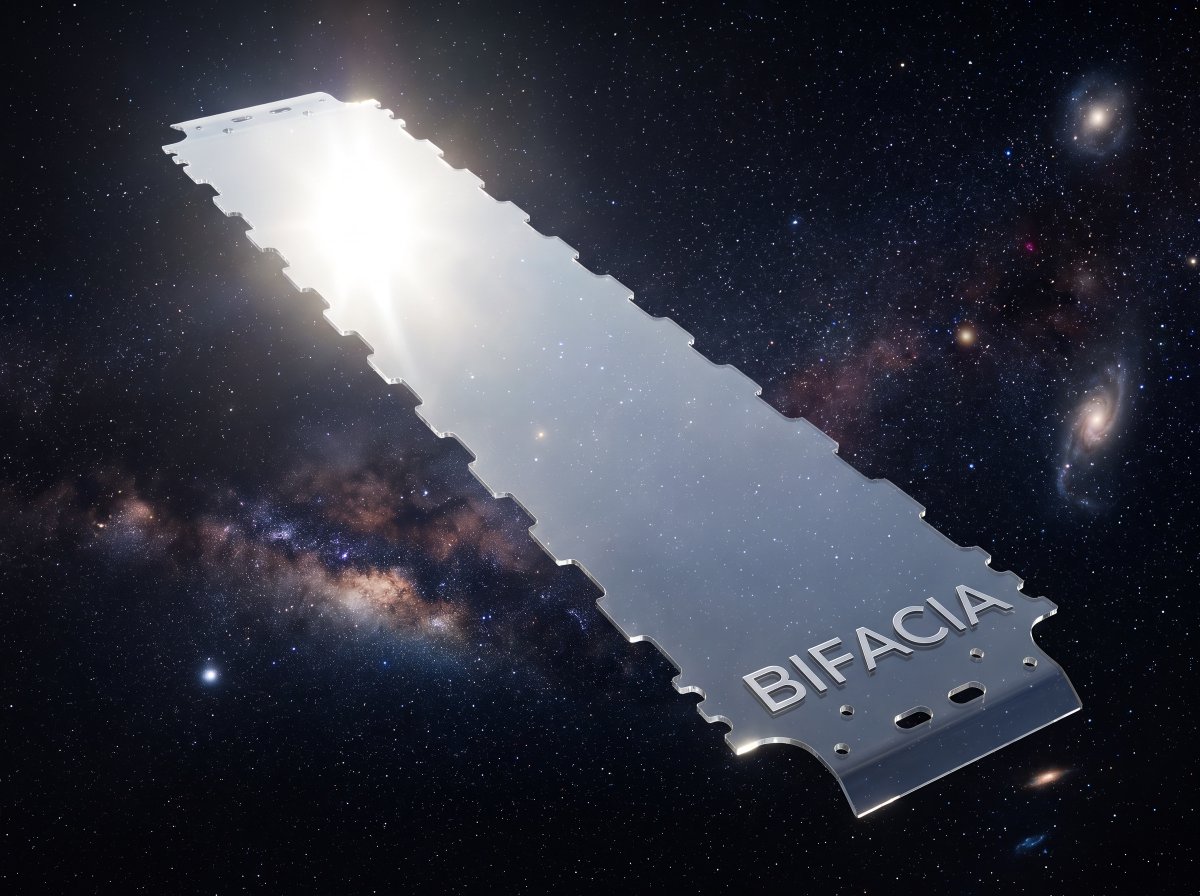
Bifacia, our colorless polyimide film for space solar arrays: Absorbing light from both side while being flexible.
Find us at the conference or DM to meet.
#SpaceSolar #ESPC
Every gram to orbit costs money. The real metric is power per gram.
Heliofold US is at the European Space Power Conference, Estoril, Portugal.
Bifacia, our colorless polyimide film for space solar arrays: Absorbing light from both side while being flexible.
Find us at the conference or DM to meet.
#SpaceSolar #ESPC
Space-based power platforms require massive, double-sided flexible solar blankets featuring P-type HJT cells and SCPI polyimide films to feed orbital transmission beacons. https://t.co/HlEFjrLr32 #SpaceSolar
@STARSHIPent Flight 14 deployed 26 Starlink V3 satellites to orbit. This V3 array expansion demands large quantities of transparent SCPI film and P-type HJT cells for space-grade power.
https://t.co/bk9a3He7eB #SpaceX#Starlink
@SpaceX Starship Flight 14's orbital attempt unlocks unprecedented payload capacity, dramatically lowering the mass constraint for large-scale space solar blanket demonstrations.
https://t.co/Ue1TfWnC6N #SpaceX#SpaceSolar
LEO Satellite folks how would you like to get 25% more peak power and a reduction of 10% in solar stack temperature by harvesting albedo effect reflected photons.
Check out our start up https://t.co/kR4BUPTgpo to view our two test satellite real time flight data panels at 560km LEO. NB Bifacia solar substrate only works with Bifacial cells such as PERC /HJT ( if you can get the HJT to work in LEO please let us know)
#satellite #space #solar
Rising satellite power demands are dictating mission architectures. Heliofold answers with Bifacia—a clear flexible substrate delivering high-efficiency, radiation-hardened power density for next-gen constellations.
https://t.co/j1pFelM7a2 #SpaceTech
European NewSpace crossed €1B in funding this September, led by EnduroSat's $205M raise.
More satellite buses means one bottleneck: optical components that don't trade power for radiation tolerance.
Heliofold's Ce-UTG cover glass fixes that for bifacial cells. Send your cell stack dims for a quote.
#NewSpace #BifacialSolar
Starship’s massive payload capacity enables unprecedented array deployments. Pairing this launch volume with Heliofold's flexible solar blankets maximizes power-to-weight ratios for orbital power at scale.
https://t.co/RAMc1oh6Lx #Starship#SpaceTech
The story everyone knows that became an urban myth!
NASA, so the legend goes, spent a fortune in the 1960s inventing a pen that would write in zero gravity.
The Soviet Union handed their cosmonauts a pencil and got on with the mission for much less $$$
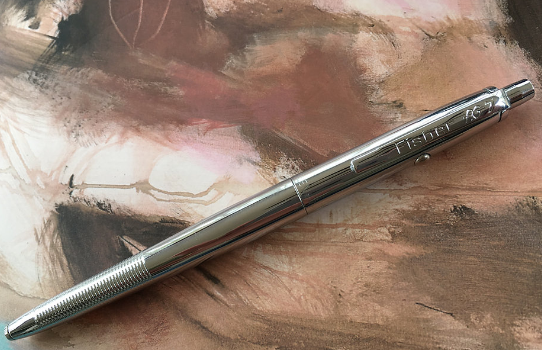
The urban myth version is mostly wrong. NASA did not fund development of the Fisher Space Pen.
Paul C. Fisher of the Fisher Pen Company spent his own money—commonly cited as about $1 million in the mid-1960s—on a pressurised, thixotropic-ink cartridge that works upside down, underwater, in vacuum, and across extreme temperatures.
That private outlay is roughly $10 million in 2026 dollars.
What NASA actually spent was far smaller and more embarrassing.
Early on, both Americans and Soviets used pencils.
In 1965 NASA ordered 34 specially housed mechanical pencils for $4,382.50, or about $129 each.
That modest line item caused a public stir.
Adjusted for inflation it is on the order of $45,000 today.
After the Apollo 1 fire, flammable wood and floating graphite chips looked like a bad idea.
Fisher offered the AG-7. NASA tested it, then bought roughly 400 pens at a few dollars each—on the order of $2–$6 apiece depending on the source and the discount.
The Soviet Union bought the same pens a couple of years later. Simple graphite was never the last word.
The parable still has a point. Complexity is expensive.
A writing tool that already existed, or a privately developed cartridge sold at bulk price, beat a mythical government megaproject.
Heliofold US applies the same instinct to solar arrays. Traditional amber polyimide solar array substrates block the light that Earth and its atmosphere reflect back toward a satellite’s solar array.
Bifacia™ made by HeliofoldUS is a space-grade colourless polyimide substrate that stays mechanically familiar as a drop-in layer while transmitting that albedo—Earth-reflected sunlight—to the rear face of the satellites bifacial solar cell.
Under favourable LEO attitude and lighting, peak power can rise by about 25 per cent. Modelled energy per orbit is lower, around 13 per cent, because albedo light is not available the whole way around.
The array can also run up to 10% cooler because the film absorbs less heat as most photons are not absorbed and pass through the Bifacia substrate.
No exotic photon harvester. No extra boom, tracker, or second array. Just let the Earths reflected photons through a transparent substrate that was already going to be there as structure. Keep it simple.
The pencil was never magic. Neither is albedo. Both work because someone stopped overbuilding the obvious.
MDA's new Aurora Black MILSATCOM bus needs hardened power in contested space. Bifacia's colorless polyimide substrate, paired with radiation-hardened Ce-UTG cover glass, is built for exactly that.
https://t.co/s8TX8Ajikd
#MILSATCOM#Bifacia