Quattro giorni fa @TernaSpA ha pubblicato il rapporto mensile di settembre 2026. Con i dettagli di produzione da ciascuna tecnologia.
Vorrei sottolineare alcuni aspetti che chiariscono, direi definitivamente, alcune "anomalie" (non godendo di immunità parlamentare mi tengo basso 😉) del mercato elettrico.
A Settembre 2026, il 45% della domanda elettrica è stata coperta da centrali a gas: una quota simile a quella di settembre 2025, quando era il 43%.
Invece, la produzione idroelettrica è calata dal 14,5 al 9,5% (l'anno idrologico 2026 è peggiore del 2025). E il contributo dei pompaggi si è mantenuto identico allo 0,4%.
Ma in borsa elettrica com'è andata?: i dati #GME (grazie, @ominodellaluce) mostrano che a settembre 2025 gli impianti a gas determinarono il prezzo marginale per il 53% delle ore, fissandolo in media a circa 110 €/MWh, e gli impianti idroelettrici per un po' meno del 20%, fissandolo a circa 100 €/MWh nel caso degli impianti ad acqua fluente (giustamente meno del prezzo a gas) e a circa 110 €/MWh (stesso prezzo dell'elettricità a gas) per quelli a bacino. Mentre i pompaggi fissarono il prezzo marginale per il 4,5% delle ore, a circa 120 €/MWh.
Invece, a settembre 2026, nonostante il calo notevole della produzione idroelettrica e l'aumento di quella a gas rispetto al 2025, gli impianti a gas hanno fissato il prezzo marginale solo per il 28% delle ore (quasi la metà del 2025) a circa 200 €/MWh (quasi il doppio del 2025); mentre gli impianti idroelettrici l'hanno fissato ancora per circa il 20% delle ore (e i pompaggi per oltre il 5% delle ore).
Verrebbe da dire "meno male": visto il raddoppio del prezzo dell'elettricità a gas, dovuto all'aumento della quotazione del gas e dei diritti di emissione ETS, dobbiamo ringraziare i "maghi" delle offerte in borsa, che, dimezzando le ore in cui il prezzo l'ha fissato il gas, son riusciti a ridurre io PUN!
E invece no: i "maghi" sono riusciti a farlo aumentare, giustamente (dal loro punto di vista) a loro vantaggio. Infatti, a settembre 2026, nel 72% delle ore in cui il prezzo marginale l'hanno fissato tecnologie diverse dal gas, esso NON È MAI STATO INFERIORE AL PREZZO DELL'ELETTRICITÀ A GAS!
E nel caso dell'idroelettrico, il prezzo fissato dagli impianti ad acqua fluente è stato in media pari a 205 €/MWh; 220 €/MWh per quelli a bacino e 245 €/MWh per i pompaggi. Con picchi orari sino a circa 300 €/MWh.
Oltre il doppio del 2025, nonostante nel 2026 come nel 2025 i costi operativi fossero gli stessi, bassi come nel quinquennio pre-covid, quando il prezzo di borsa era tra 55 e 60 €/MWh e pure remunerava quegli impianti.
Ma non viene anche a voi di chiedervi come mai un gestore di un impianto idroelettrico ad acqua fluente, a settembre 2026 (ma anche ad agosto, luglio, giugno... come ha finalmente notato la stessa @ARERA_it) abbia offerto la sua energia a un prezzo più alto di quella a gas, sapendo che, se tutta la capacità a gas fosse stata messa sul mercao al prezzo giusto, non sarebbe riuscito a vendere un solo kWh, perdendoli tutti in quell'ora, essendo l'acqua appunto fluente? Come mai non l'ha offerta a pochi euro in meno dell'elettricità a gas, come faceva a settembre 2025 (quando inoltre l'elettricità a gas costava la metà), avendo così la certezza di venderla con guadagni doppi dell'anno prima? Non è che per caso "s'aspettava" ogni volta -e un'aspettativa sistematica un po' puzza di certezza, non trovate?- che una certa capacità a gas sarebbe stata "trattenuta", in modo da far "entrare" il suo impianto? E tutto questo a fronte di un vistoso calo della produzione idroelettrica...
La soluzione? Eccola: le concessioni idroelettriche, che siano messe a gara o riassegnate agli attuali gestori, vanno remunerate con contratti a due vie (questo dobbiamo negoziare a Brxl), con strike price determinato con asta al ribasso, nel primo caso, o fissato in base alla remunerazione pre-covid, nel secondo.
NON C'È ALTRA SOLUZIONE A DIFESA DEI CONSUMATORI!
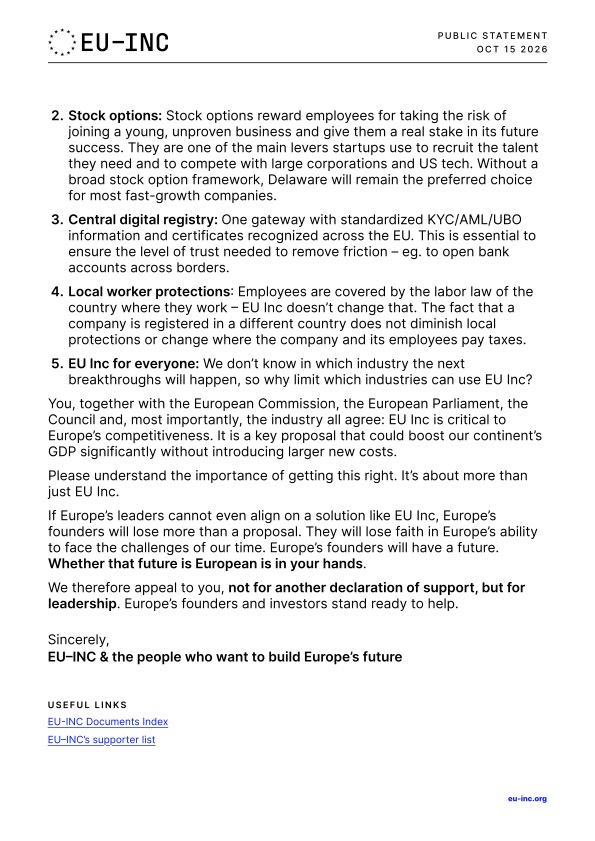
Europe’s founders need a European standard to compete globally from day one.
Europe’s leaders committed to delivering one. But their teams are negotiating away the very things that make it one.
There is still time to change course if Europe's Heads of State step in now.
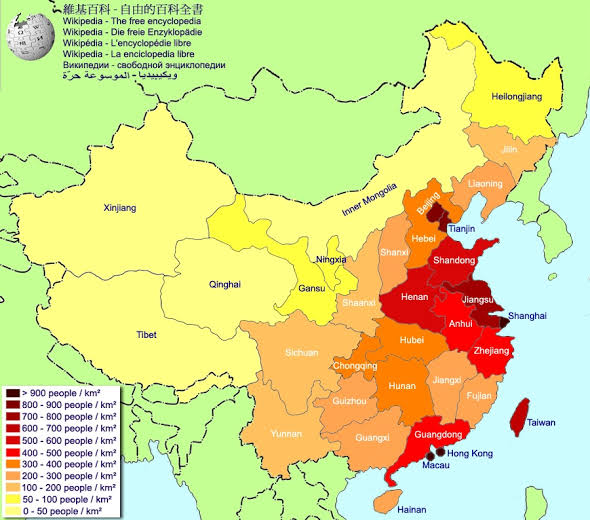
one can criticize HSR for having unprofitable lines and generally being an expensive AF project, but I think it's an incredible experiment. ≈the entire densely inhabited part of China can be traversed within 8 hours, without air travel. Destruction of distance.
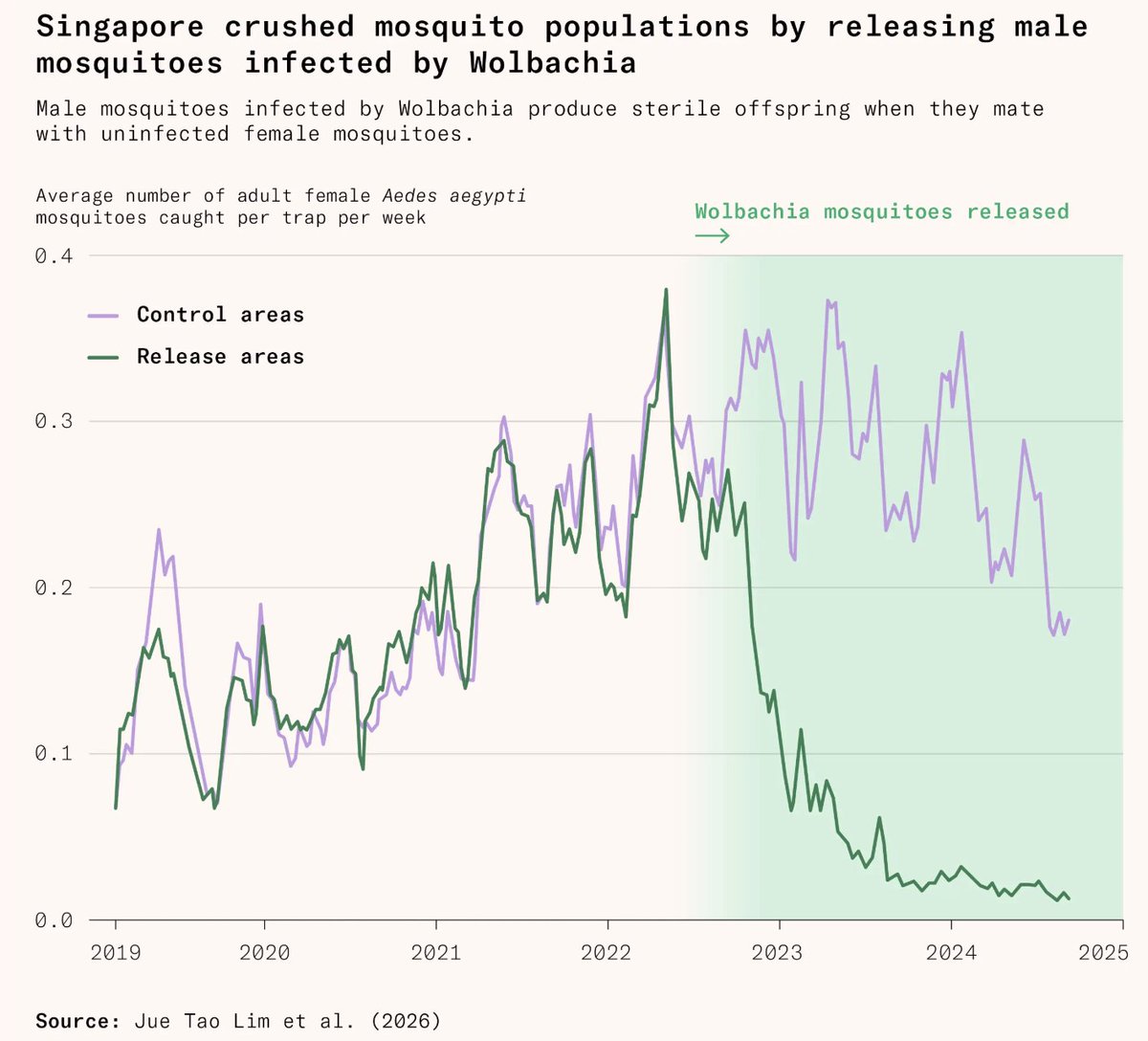
When I stilled worked on biosecurity, I first learned about Debug, a Google project to reduce mosquito populations.
Results from their Singapore pilot are now out.
They crushed mosquito populations, reducing dengue infections by 70% in the process:
@melkon88 I think game theory here tells us that it won't hold. The incentives for them to continue in secret (or for the us govt) are higher than to pace
@JarneApril@lucxsronald School hasn't started yet in Croatia, Romania, Austria, Cyprus, Spain, Italy, Greece, Portugal and other countries yet. Some next week and some in a couple of weeks. So i doubt it
Being pro European is exhausting.
It means being insulted for trying to protect what we love. It means being accused of wanting to destroy our nations when all we want is to prevent them from becoming powerless. We are accused of wanting to erase national identities when we want to protect them. We are accused of wanting open borders when we want Europe to finally control its borders. We are accused of destroying our economies when we want our industries, jobs, capital and companies to remain in Europe.
We are accused of every failure, when so often what we are fighting for is precisely the opposite.
We want Europeans to afford homes, pay their energy bills and build a future here. We want European startups to grow in Europe instead of having to turn to America for capital. We want our industries to compete instead of disappearing. We want secure borders and controlled immigration. We want affordable energy. We want the ability to defend ourselves.
We see a Russia willing to use military force. We see a China capable of overwhelming our industries. We see an America increasingly willing to use its economic, financial and technological power in its own interests.
And we refuse to accept that Europeans should simply watch while others shape the world around us.
We do not want Europe because we despise our nations. We want Europe because we love them too much to watch them become powerless.
We want France to remain France, Germany to remain Germany, Italy to remain Italy, Poland to remain Poland. But we also understand that sovereignty means very little if, individually, we no longer have the power to exercise it.
That is perhaps the tragedy of being pro European today. We have to fight outside to defend Europe from those who can weaken it, while fighting inside against the idea that European unity is somehow the enemy of our nations.
We are not trying to erase Europe’s nations.
We are trying to make sure they still have a future.
@quellaLia Super ragione sugli automobilisti, è così. Ma nella gara in Portogallo mi pare di aver letto che è stato proprio l'addetto a farlo passare dicendo "vai vai sono passati tutti"
@knowledgeiswatt Something interesting i always wondered about hb. I have mild microcytosis but a normal overall hb level (smaller rbc but more of them). Does it affect endurance?