Three SpaceXAI employees are building a company in 3 days with Grok Bot. This is Day 1.
Matt Palmer (@mattyp), Lauren Tan (@poteto), and Roshan Sadanani (@roshan_s) start with research, a plan, and a product.
Live now, plus sessions for engineering, product, and founders.
https://t.co/eV3Tfd5Bf2
UPDATE:
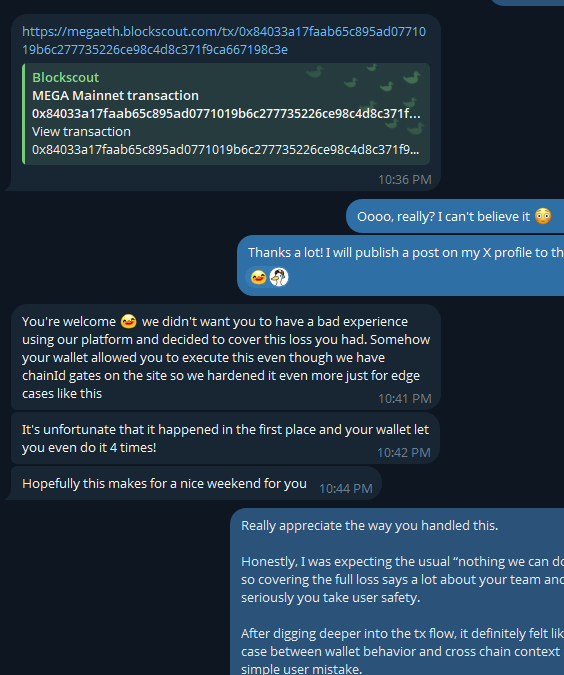
The @kumbaya_xyz team fully covered my 4 ETH loss.
Huge respect for the way they handled this situation.
After investigating, they confirmed the site already had chainId protections in place, but an edge case allowed execution through my wallet anyway. They also hardened the validation further to prevent similar scenarios in the future.
This turned out to be far more complex than a simple “user mistake”.
In an industry where most teams would ignore the issue, they stepped up and resolved it professionally.
Respect to the team 🙏
⚠️ Be VERY careful using https://t.co/2rK0uE7Ggj (@megaeth UI)
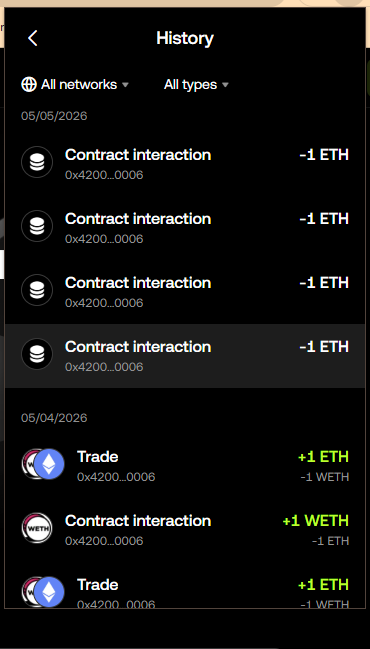
I just lost 4 ETH due to a critical UX / network mismatch issue.
What happened:
I was swapping ETH to WETH on what the UI showed as “MegaETH”
Transactions appeared as pending / not executed
I retried multiple times
Reality:
Every time I signed, the tx was executed on Ethereum Mainnet, sending ETH directly to:
0x4200000000000000000000000000000000000006
No WETH received. No valid tx shown in their UI.
Issues:
No chain validation
No warning wallet was on mainnet
Fake / invalid pending tx hashes
Same contract address behaves differently across chains
Result: irreversible loss.
This is extremely dangerous UX.
If you're testing “new chains” or dApps:
👉 ALWAYS double check your wallet network before signing.
@kumbaya_xyz — this needs urgent investigation.
Most AI agent demos show the agent taking action.
I wanted to show something more important:
an agent refusing to act.
For @ARC, I built Signal-to-Settlement — a market-intelligence settlement agent on Arc Testnet.
It reads structured macro/crypto signals, detects regime, applies deterministic treasury policy, then:
risk-off → hold, no tx
neutral → small settlement
risk-on → normal settlement
Every run creates an audit report with rationale, risk controls, tx hash/block/explorer reference when applicable.
Not a trading bot.
Not a prediction engine.
Just one loop:
market signal → deterministic decision → Arc settlement or hold → audit trail
Accountable agents must justify both action and inaction.
Demo:
https://t.co/aFgF8PsQWT
⚠️ Be VERY careful using https://t.co/2rK0uE7Ggj (@megaeth UI)
I just lost 4 ETH due to a critical UX / network mismatch issue.
What happened:
I was swapping ETH to WETH on what the UI showed as “MegaETH”
Transactions appeared as pending / not executed
I retried multiple times
Reality:
Every time I signed, the tx was executed on Ethereum Mainnet, sending ETH directly to:
0x4200000000000000000000000000000000000006
No WETH received. No valid tx shown in their UI.
Issues:
No chain validation
No warning wallet was on mainnet
Fake / invalid pending tx hashes
Same contract address behaves differently across chains
Result: irreversible loss.
This is extremely dangerous UX.
If you're testing “new chains” or dApps:
👉 ALWAYS double check your wallet network before signing.
@kumbaya_xyz — this needs urgent investigation.
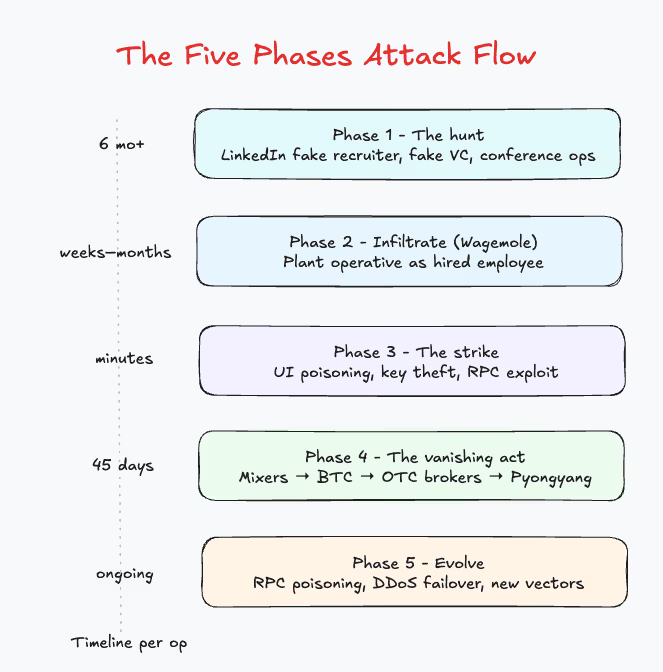
North Korea didn’t hack crypto.
They hacked people, hiring funnels, signing flows, and trust.
Security in 2026 = wallets, UI, RPC, ops, and human training.
Everyone should study THIS playbook.
S/O to @QuillAudits_AI for the visual
In my opinion, this should be shared EVERYWHERE.
20 random westerners sat down to watch what Palestinian kids are taught in UNRWA schools.
It may shock you, it may not, either way there are people that have no clue about what is actually going on - so it’s worth sharing.
✨🇨🇳China has deployed more than 10,000 driverless delivery vehicles across the country. Deliveries within a 30‑kilometer radius cost only 9.9 RMB (approximately $1.38), and customers can collect their packages simply by scanning the QR code on the vehicle.
Since Kraken is planning an IPO eventually, why not let the @inkonchain community participate in the IPO (pre IPO allocation or special access for active users) and tokenize Kraken shares as RWA directly on Ink?
That would be a massive moat turning Ink into the onchain home for Kraken equity and DeFi. Real ownership + yield + trading all in one ecosystem.
InkyPump and Tydro are good starts, but this kind of CEX to RWA bridge could make Ink the go to chain for millions of Kraken users.
Low fees aren't enough anymore. Real utility + exclusive access wins long term
My honest take: Ink has a strong foundation (Kraken backing, Superchain, 1s blocks, near-zero fees), but most L2s die after the airdrop hype because they lack real long-term utility.
The product that could make users stay forever:
A Kraken-powered Perps DEX (Hyperliquid-style but easier for CEX users) + yield-bearing stables with actual real yield (from lending + Kraken treasury).
♧ Seamless Kraken wallet integration
♧ Deep liquidity from day one
♧ Auto-compounding yield that keeps capital sticky
Combine that with real ongoing incentives for active users and builders (not just one big airdrop).
InkyPump and Tydro are solid starts, but a killer perps + yield product would turn Ink into “the DeFi home for CEX natives.”
Low fees alone aren’t enough anymore. Real utility + moat is what wins long-term.
By @grok maybe you have more ideas
White House just admitted something big:
Banning stablecoin yield DOESN’T help banks.
+0.02% lending gain
-$800M economic loss
6.6x worse cost vs benefit
Translation:
→ Killing DeFi yield doesn’t save the banking system
→ It just hurts users
And even worse:
76% of the tiny gains go to big banks
This isn’t about stability.
It’s about control.
Source: https://t.co/nqnLWRkiiA
If oil hits $150–$200 AND the Strait of Hormuz is blocked for months, this is not just "higher prices."
This is a global economic reset.
Let’s break down what happens next 🧵
1/ The chokepoint
~20% of global oil flows through the Strait of Hormuz.
If it shuts down, 15–20M barrels/day effectively disappear from the market overnight.
There is no quick replacement.
Strategic reserves buy time, not solutions.
2/ This is a SUPPLY SHOCK, not demand
The Fed can control demand.
It cannot produce oil.
So central banks are forced into a trap:
fight inflation → kill growth
support growth → lose control of inflation
3/ Oil at $150–$200 = inflation shock
Every layer of the economy reprices:
• Fuel
• Transport
• Food
• Manufacturing
• Electricity
Rule of thumb:
+10$ oil ≈ +0.2–0.4% inflation
At $200 → inflation overshoots targets HARD.
4/ Corporate margins collapse
Energy is embedded in everything.
Industries that get hit first:
• Airlines
• Shipping
• Chemicals
• Heavy manufacturing
Some sectors don’t just slow down.
They shut down.
5/ Welcome back: STAGFLATION
High inflation + low growth + rising unemployment
1970s playbook.
Worst possible environment for policymakers.
6/ Markets reaction
Phase 1:
Risk-off
• Stocks ↓
• Crypto ↓
• Liquidity disappears
Forced liquidations everywhere.
7/ Winners (initially)
• Oil & gas
• Defense
• Commodities
Real assets outperform financial assets.
8/ Bonds get chaotic
Inflation says yields ↑
Recession says yields ↓
Result:
Volatility.
No clean signal.
9/ Crypto path (important)
Short term:
gets hit with everything else
Mid term:
if central banks pivot & print →
Crypto becomes a hedge again.
Same playbook as 2020, but more violent.
10/ Supply chains break again
Shipping costs explode
Routes rerouted or blocked
Delays cascade globally
You don’t just get inflation.
You get shortages.
11/ Europe is especially vulnerable
Energy-dependent economies
Industrial base exposed
Expect:
• Recession
• Energy stress
• Pressure on governments
12/ If this lasts months:
• Corporate defaults rise
• Credit stress builds
• Banks feel it
This is how a financial crisis can start.
13/ Geopolitics escalates
Hormuz doesn’t close quietly.
It implies military risk.
Markets become headline-driven, not data-driven.
14/ The big picture
This is not an “oil spike.”
This is:
• Supply shock
• Inflation shock
• Financial stress
• Geopolitical escalation
All at once.
15/ Positioning mindset
Short term → survive volatility
Mid term → stagflation
Long term → money printing returns
And when liquidity comes back...
Real assets win.
End.
What Kobeissi Found — And What The Market Is Missing
A thread 🧵
1/
Everyone is focused on “Step 10.”
The ceasefire.
The relief rally.
The unwind.
But almost nobody is asking the only question that matters:
What actually changed underneath?
2/
Kobeissi’s Playbook has been incredibly accurate.
It tracks political signaling → market reaction.
Timing, sentiment, positioning.
It tells you when the market moves.
But it does NOT tell you if the move is real.
3/
That’s where the “Four Clocks” framework comes in.
It tracks reality:
• Insurance availability
• Logistics costs
• Capital flows
• Physical security
Not headlines. Not speeches. Not tweets.
Actual conditions.
4/
Here’s the problem:
We’re now ~26 days into the conflict.
The Playbook has advanced multiple steps.
But the Clocks?
Still broken.
5/
Take the bond market — the most important signal right now.
10Y yields moved from 3.92% → 4.42% in 26 days.
That’s not fear.
That’s inflation.
6/
In a normal crisis:
Bad news → bonds rally → yields fall.
This time:
Bad news → yields rise.
Why?
Because energy is the transmission channel.
7/
This is the “Stall Tax.”
It starts here:
Hormuz disruption → shipping costs ↑ → oil ↑
And then it cascades:
Oil → inflation → yields → Fed → economy
It doesn’t stop at oil.
It ends in the bond market.
8/
And here’s the key insight:
The bond market is now driving policy.
Not the other way around.
9/
March 23:
• 4:30 AM → bonds breaking
• 6:30 AM → 10Y hits ~4.45%
• 7:30 AM → Trump announces pause
That’s not coincidence.
That’s a threshold.
10/
The implication:
There is a yield level (~4.5–4.7%) the system cannot tolerate.
And when we get close, policy shifts.
Fast.
11/
But here’s where things get dangerous.
Markets are pricing the announcement.
Not the reality.
12/
Even if Step 10 hits:
• Insurance costs may still be elevated
• Shipping may still be constrained
• Energy flows may still be distorted
• Security risk may still be unresolved
The system is not “fixed” overnight.
13/
That means:
You can get a violent relief rally…
…followed by a slow realization that nothing structural changed.
14/
This is the key question:
When the deal is announced,
how many of the underlying mechanisms have actually reset?
If the answer is “none” —
the rally doesn’t hold.
15/
This is the disconnect:
Markets trade narrative.
Reality trades constraints.
16/
Short term:
Playbook wins → risk-on
Medium term:
Clocks matter → repricing
17/
If energy keeps feeding inflation:
• Yields stay elevated
• Fed stays trapped
• Liquidity stays tight
That’s not a bullish backdrop.
18/
Bottom line:
Don’t trade the headline.
Track the mechanism.
Because in this cycle —
the bond market is the real battlefield.
And it’s not pricing peace.
Yet.