What if we could make cancer immunotherapy work better for more patients?
It is a question that drives our work at Helix Biopharma Corp.
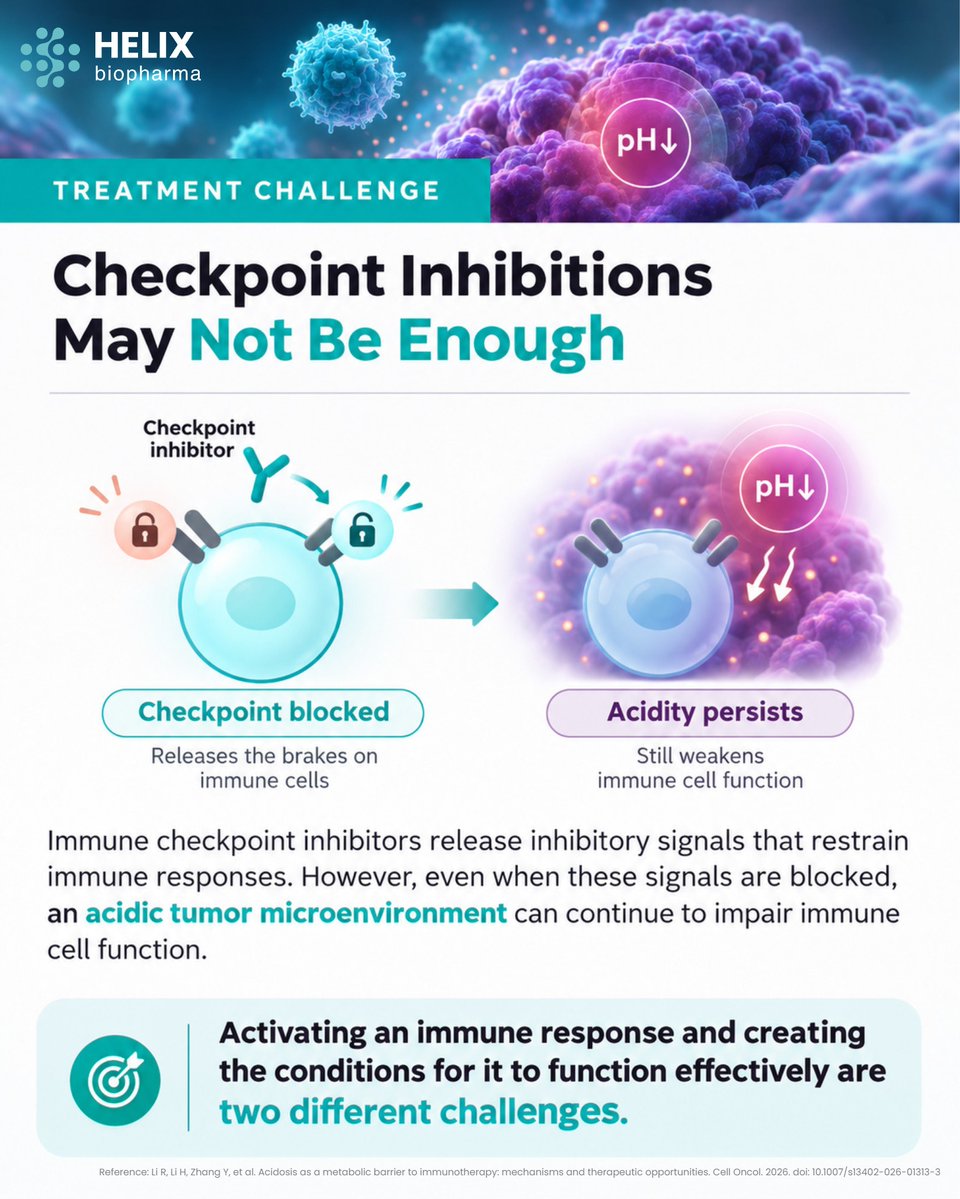
While immunotherapy has transformed cancer treatment, tumors have developed sophisticated mechanisms to evade the immune system and resist treatment. Among them is the ability to create an acidic microenvironment.
At Helix, we are developing a targeted approach to addressing this challenge with our lead investigational drug candidate, L-DOS47.
Today, we're sharing a behind-the-scenes glimpse of our CEO Thomas J Mehrling's recent interview with @TheNadjaAtwal for The Future, scheduled to air on CNBC.
Stay tuned for more.
#HelixBioPharma #CancerImmunotherapy #Oncology #TumorMicroenvironment #CNBC
The scientific case for targeting tumor acidity in cancer immunotherapy continues to strengthen.
A review published in Cellular Oncology in October 2026 brings together growing evidence of how the acidic tumor microenvironment contributes to immune evasion and resistance to immunotherapy.
The authors describe how tumor acidosis impairs the activity of immune cells responsible for attacking cancer while favoring those that suppress antitumor immune responses. The review also highlights the potential of targeting acidity to improve responses to immune checkpoint inhibitors, as well as the role of pH imaging in patient selection and monitoring treatment effects.
These findings reinforce the therapeutic rationale Helix BioPharma has pursued for years.
In a 2024 study published in Biomedicines, our lead candidate, L-DOS47, was shown to increase extracellular tumor pH in a preclinical pancreatic cancer model. When combined with anti-PD-1 treatment, L-DOS47 resulted in approximately 70% lower tumor volume and 50% lower tumor weight compared with anti-PD-1 treatment alone.
While these results are preclinical and clinical validation remains essential, the growing body of evidence strengthens the rationale for developing L-DOS47 as a co-therapy for use with immune checkpoint inhibitors.
Overcoming resistance to immunotherapy may require addressing not only the immune response, but also the conditions in which immune cells operate.
Immunotherapy has transformed what is possible in oncology. Yet many patients still do not respond, and the reasons are not always rooted in the immune system itself.
#Oncology #CancerImmunotherapy #TumorMicroenvironment #CancerResearch #Biotechnology #HelixBioPharma
Tumors are heterogeneous, but they can also share molecular characteristics that create opportunities for targeted treatment.
Even among patients with the same cancer diagnosis, tumors can differ significantly in the molecular targets they express. Conversely, tumors arising in different organs may share actionable targets, allowing patients to be grouped according to their tumor biology rather than the cancer type alone.[1]
Molecular profiling helps uncover these patterns, identifying both the differences that matter for individual treatment decisions and the similarities that may extend therapeutic opportunities to broader patient populations.
The clinical development of transtuzumab deruztecan, an antibody-drug conjugate (ADC) targeting HER2, illustrates this approach.
In the Phase III DESTINY-Breast04 trial, patients with HER2-low metastatic breast cancer, a group previously treated as HER2-negative, achieved median progression-free survival of 9.9 months with trastuzumab deruxtecan, compared with 5.1 months with chemotherapy. Median overall survival was 23.4 versus 16.8 months, respectively.[2] These findings demonstrated the clinical importance of recognizing HER2-low expression as a therapeutically relevant characteristic.
The potential to group patients by shared molecular targets extends beyond individual cancer types. In the Phase II DESTINY-PanTumor02 trial, transtuzumab deruxtecan achieved an objective response rate of 61.3% among patients with centrally confirmed HER2 IHC 3+ tumors (n=75).[3] In April 2024, the FDA granted accelerated approval fortis use in certain previously treated HER2-positive (IHC 3+) unresectable or metastatic solid tumors, regardless of tissue of origin.[4]
Molecular profiling helps us understand what makes tumors different, while identifying shared targets that may make them treatable with the same therapy.
#TumorHeterogeneity #PrecisionOncology #TargetedTherapy #PersonalizedMedicine #CancerBiology #BreastCancer #Oncology #CancerResearch #TranslationalMedicine
Solid tumors often contain both target-positive and target-negative cells, limiting the reach of antibody-drug conjugates (ADCs).
The bystander effect may help overcome this challenge. Following ADC internalization and payload release, certain membrane-permeable payloads can diffuse into neighboring cells, including those lacking the target antigen. This activity depends on payload properties and linker design.
However, broader activity can come at the cost of selectivity. Payload diffusion may also affect nearby healthy tissue, making the balance between tumor coverage and safety a key consideration in ADC design.
At Helix BioPharma, understanding tumor heterogeneity helps inform strategies to address the limitations of conventional targeting.
#Oncology #CancerResearch #AntibodyDrugConjugates #PrecisionOncology #TumorHeterogeneity #CancerBiology #TranslationalMedicine #Biotechnology
One of the persistent challenges in targeted oncology is that many tumor-associated antigens are also expressed on healthy tissue, complicating the development of highly selective therapies.
Co-expression offers another way to approach this challenge. By engineering bispecific molecules to preferentially engage cells expressing two antigens simultaneously, researchers are exploring how combinations of markers could provide more selective recognition than either target alone.
Known as AND-gated targeting, this approach exploits the combined binding strength of two interactions to favor dual-positive cells. Its success depends on factors including antigen density, molecular design and expression patterns across healthy and malignant tissues.
By moving beyond individual antigens to recognize combinations of targets, AND-gated approaches offer a promising path toward greater therapeutic selectivity, with the potential to expand the possibilities of targeted cancer treatment.
#Oncology #CancerResearch #TargetedTherapy #PrecisionOncology #CancerBiology #TranslationalMedicine #Biotechnology #MedicalInnovation #FutureOfMedicine
At WCLC 2026, new findings from HARMONi-2, EVOKE-03, and DESTINY-Lung04 highlighted different strategies for advancing treatment in non-small cell lung cancer (NSCLC), while Phase III results involving B7-H3 directed ADCs marked important progress in small cell lung cancer (SCLC).
Beyond these clinical developments, emerging research is shedding new light on the tumor microenvironment, including the role of extracellular acidity in influencing immune responses.
In our latest article, we explore these advances, the scientific rationale behind emerging therapeutic approaches, and what they could mean for the next generation of lung cancer treatments.
Read the full article: https://t.co/5qsqtBjf3o
#Oncology #CancerResearch #LungCancer #NSCLC #TargetedTherapy #PrecisionOncology #TranslationalMedicine #Immunotherapy #Biotechnology
In targeted cancer therapy, antigen expression is often discussed in binary terms: a tumor either expresses a target or it doesn’t. But in antibody-drug conjugate (ADC) development, how much of that target is expressed can be just as important.
Antigen density influences the availability of binding sites and can affect how much therapeutic payload reaches cancer cells. Yet greater expression does not automatically translate into greater efficacy,
Internalization efficiency, intracellular trafficking, payload potency, and the distribution of target expression across tumor and healthy tissues all contribute to therapeutic activity.
Recent research into CEACAM6-targeted ADCs illustrates this complexity, demonstrating that combining measures of surface binding and internalization can provide a more informative indication of ADC potency than antigen abundance or binding affinity alone.
As ADC technologies evolve, understanding not only where a target is expressed, but how effectively it can support therapeutic delivery, is becoming increasingly important.
#Oncology #CancerResearch #TargetedTherapy #PrecisionOncology #TumorHeterogeneity #CancerBiology #TranslationalMedicine #Biotechnology #MedicalInnovation
An ADC can bind successfully to its target and still fail to deliver its payload effectively.
For conventional ADCs, therapeutic activity depends on a sequence of intracellular events. Following antigen binding and internalization, the ADC must undergo appropriate intracellular trafficking and processing to make its cytotoxic payload available. But not all internalized ADCs follow the same pathway.
Some ADC-antigen complexes are directed toward lysosomes, where processing can enable payload release. Others may undergo recycling or alternative trafficking routes that influence intracellular drug delivery.
This makes receptor biology an important consideration in ADC development. Internalization efficiency, intracellular trafficking, linker chemistry, and payload properties all influence whether target engagement translates into therapeutic activity.
Effective ADC design is not only about reaching the cancer cell; it is also about what happens once the conjugate gets there.
#Oncology #CancerResearch #AntibodyDrugConjugates #PrecisionOncology #CancerBiology #TranslationalMedicine #Biotechnology #MedicalInnovation
Antibody-drug conjugates have transformed treatment across several cancers, but the possibilities for antibody-directed therapeutics extend well beyond conventional cytotoxic delivery.
Tumor heterogeneity, acquired resistance, and off-tumor toxicity continue to challenge traditional ADC design. In response, researchers are developing increasingly sophisticated targeting strategies and exploring payloads with fundamentally different mechanisms of action.
From cytotoxic drugs and protein degraders to immune agonists and enzymes, the next generation of antibody conjugates is expanding how we can target and treat cancer.
At Helix BioPharma, we are focused on the therapeutic potential of CEACAM6-targeted conjugates, including approaches designed to modulate the tumor microenvironment and opportunities for intracellular payload delivery.
The next frontier lies not only in what antibody conjugates can target, but in what they can do once they get there.
#Oncology #CancerResearch #TargetedTherapy #PrecisionOncology #TumorHeterogeneity #CancerBiology #TranslationalMedicine #Biotechnology #MedicalInnovation
Carcinoembryonic antigen-related cell adhesion molecule 6 (CEACAM6) is attracting growing interest as a therapeutic target in oncology. Frequently overexpressed in several difficult-to-treat solid tumors and associated with aggressive disease biology, it is being investigated through an expanding range of therapeutic approaches, from ADCs and monoclonal antibodies to enzyme conjugates and cell therapies.
At Helix BioPharma, our lead candidate L-DOS47 uses CEACAM6 to target extracellular acidity in the tumor microenvironment, a feature associated with immune suppression and treatment resistance.
As research advances, an important question emerges: how can different therapeutic strategies translate CEACAM6’s biological potential into meaningful clinical benefit?
Our latest blog article explores the evolving CEACAM6 landscape, the evidence emerging across different therapeutic approaches, and the considerations shaping their clinical development.
Read the full article: https://t.co/26fwCxnx2z
#CEACAM6 #CancerResearch #TargetedTherapy #PrecisionOncology #Biotechnology #HelixBioPharma
Some difficult-to-treat cancers share a potentially important feature on their surface: elevated Carcinoembryonic antigen-related cell adhesion molecule 6 (CEACAM6).
CEACAM6 is a cell-surface protein expressed at relatively low levels in healthy tissues, such as epithelial and myeloid cells, but substantially overexpressed in many solid tumors.[1,2]
In non-small cell lung cancer, CEACAM6 is overexpressed in approximately 70% of tumors and has been associated with aggressive tumor biology and poorer outcomes.[3]
In pancreatic adenocarcinoma, robust CEACAM6 expression has been observed in more than 90% of invasive tumors and is already detectable in precursor regions. Elevated expression has also been linked to invasiveness, poorer prognosis, and reduced cytolytic T-cell activity.[4–6]
In colorectal cancer, CEACAM6 is overexpressed in approximately 80% of tumors, can be upregulated early in tumor development, and higher expression independently predicts poorer overall and disease-free survival.[7,8]
CEACAM6 dysregulation has also been reported in mucinous ovarian cancer, cholangiocarcinoma, gallbladder cancer, and gastric cancer.[2,9–11]
What makes CEACAM6 particularly interesting therapeutically is the combination of its elevated expression in multiple tumors, cell-surface accessibility, and association with aggressive cancer biology.
Together, these characteristics make CEACAM6 a compelling target for precision-oncology strategies across several cancers with substantial unmet need.
#PrecisionOncology #TargetedTherapy #CancerBiology #Oncology #CancerResearch #NSCLC #LungCancer #TranslationalMedicine
One of the central challenges in precision oncology is identifying targets that are much more abundant on cancer cells than on healthy cells, and that therapies can physically reach and bind to.
Carcinoembryonic antigen-related cell adhesion molecule 6 (CEACAM6) combines both characteristics: it is overexpressed in several solid tumors and is located on the cell surface, where it can be accessed by targeted therapies.
CEACAM6 is a cell-surface glycoprotein expressed in some normal epithelial and myeloid cells.[1] In several solid tumors, however, its expression becomes dysregulated and can increase substantially, including in pancreatic, lung, colorectal, gastric, and breast cancers.[1–4]
Importantly, its relevance extends beyond expression alone; elevated CEACAM6 has been associated with tumor progression, invasion, metastasis and poorer survival across multiple cancer types.[2,3,5,6]
Its location on the outer cell surface also makes CEACAM6 accessible to targeted therapeutic approaches. Antibodies and antibody-based conjugates can be designed to recognize CEACAM6 on tumor cells, creating opportunities for more targeted treatment strategies.[1,4]
The combination of cell-surface accessibility, differential expression and a role in aggressive tumor biology makes CEACAM6 a compelling target for the development of precision cancer therapies.
#PrecisionOncology #TargetedTherapy #CancerBiology #Oncology #CancerResearch #TranslationalMedicine #LungCancer #BreastCancer #CEACAM6 #Tumor #Cancer
AI can now analyze vast biological datasets, generate hypotheses and propose new drug candidates. It is already accelerating cancer research in ways that were unimaginable a decade ago.
But scientific discovery is more than pattern recognition.
Some of oncology's most important breakthroughs, from cisplatin to checkpoint immunotherapy to the first KRAS-targeted therapy, began when scientists questioned accepted assumptions or followed findings that did not fit existing models.
Our latest blog article explores what AI is transforming in cancer research, where biological insight and scientific judgment remain essential, and why the future of oncology will depend on combining both.
Read the full article: https://t.co/VzKIsCEaUN
#CancerResearch #Oncology #CancerBiology #TranslationalMedicine #Biotechnology #MedicalInnovation #FutureOfMedicine #LifeSciences
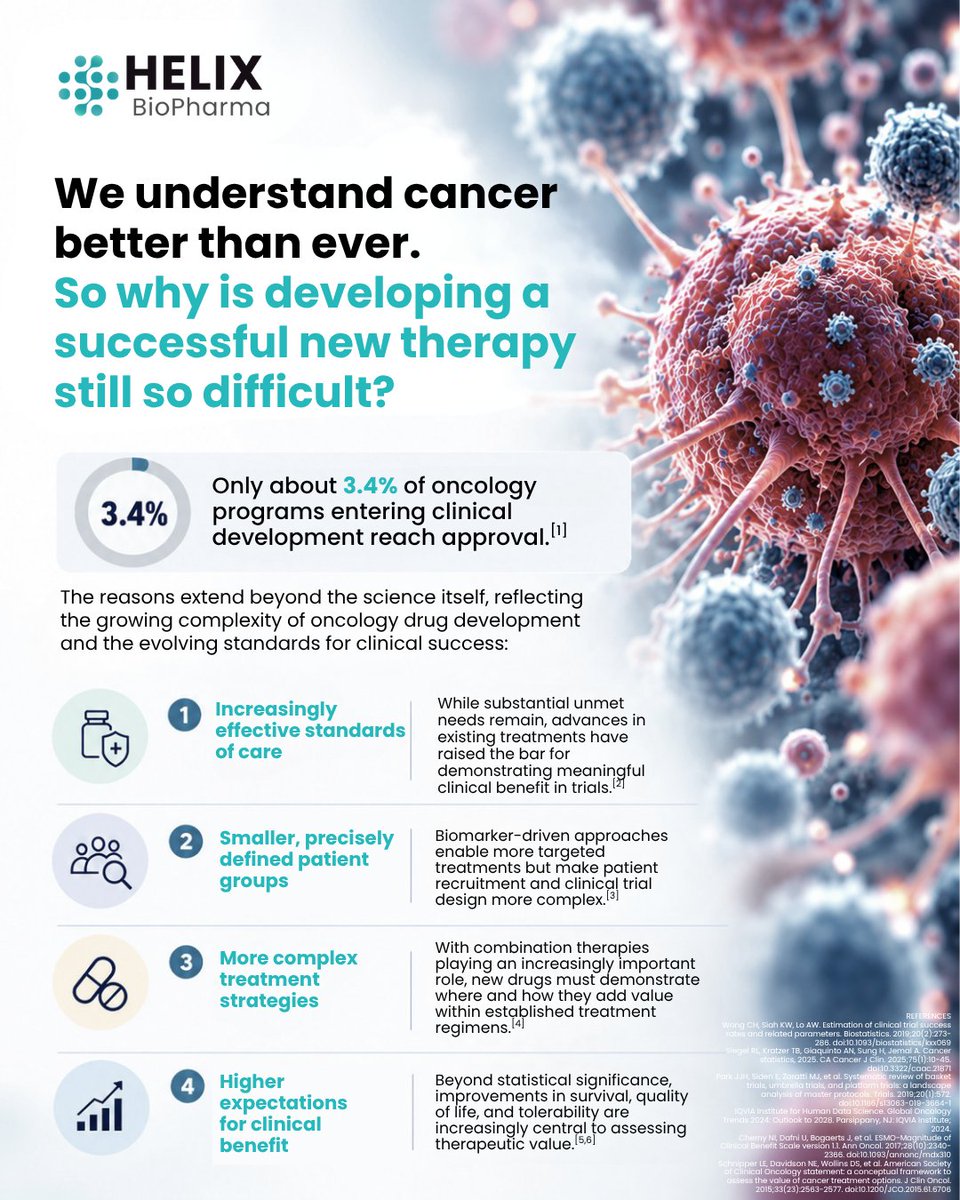
We understand cancer biology better than ever; but translating that knowledge into successful new therapies remains extraordinarily challenging.
One large analysis of clinical trials estimated that only 3.4% of oncology drug development programs entering clinical trials ultimately reached approval.
The reasons go well beyond scientific discovery: advances in existing treatments, increasingly precise patient populations, complex treatment strategies, and higher expectations for clinical benefit all add to the challenges of bringing new cancer therapies to patients.
And despite decades of progress, substantial unmet needs remain across oncology.
Addressing these challenges requires more than promising science; it demands a clear understanding of disease biology, thoughtful patient selection, and clinical development strategies designed to demonstrate meaningful improvements in patient outcomes.
At Helix BioPharma, we believe the future of oncology therapies will lies in combining scientific insight with smarter development decisions to translate therapeutic potential into real clinical benefit.
#Oncology #CancerResearch #PrecisionOncology #TranslationalMedicine #TargetedTherapy #PersonalizedMedicine #Biotechnology #MedicalInnovation #FutureOfMedicine
Oncology drug development has a difficult mandate: move promising therapies forward faster while maintaining rigorous standards for safety and clinical benefit.
The challenge is substantial. An estimated 3.4% of oncology drug candidates entering clinical development ultimately reach approval, among the lowest success rates across therapeutic areas [1].
More efficient development strategies can help improve how promising therapies are identified and evaluated. In a meta-analysis of 570 phase II oncology trials, biomarker-guided approaches were associated with response rates of 31%, compared with 10.5% for non-personalized strategies [2].
Adaptive trial designs and master protocols, including basket, umbrella and platform trials, can allow researchers to evaluate multiple hypotheses more efficiently and adapt studies as evidence emerges [3,4,6]. Expedited regulatory programs and earlier interaction with regulators can help address development questions sooner [5]. AI and advanced computational approaches are also being explored across trial design, patient selection, recruitment, and data analysis [7].
These approaches are not about weakening the evidentiary standard, but about reducing avoidable delays, improving decision-making and concentrating resources on therapies with the strongest potential to benefit patients.
Faster oncology development means generating the right evidence more efficiently and delivering meaningful innovation to patients sooner.
#Oncology #CancerResearch #PrecisionOncology #TranslationalMedicine #PersonalizedMedicine #MedicalInnovation #FutureOfMedicine #Biotechnology
A single cancer cell can display thousands of proteins, but very few of them justify years of drug development.
Target selection depends on a combination of factors: does the molecule contribute to the disease, is its expression meaningfully higher in tumor than in healthy tissue, can the chosen therapeutic modality reach it, and is it present in a clinically relevant patient population? For targeted therapies, tumor specificity is particularly important because on-target, off-tumor activity can create significant toxicity.
CEACAM6 is one example of a target that has drawn growing interest against these criteria. It is overexpressed across several epithelial cancers and associated with poorer outcomes, signals through pathways involved in proliferation, invasion and angiogenesis, has been linked to reduced chemosensitivity, and has also been implicated in immune evasion through interaction with CEACAM1 on activated T cells.
Its cell-surface expression also makes it accessible to targeted therapeutic approaches.
What makes a strong target valuable is that it is not tied to a single technology. CEACAM6 has been explored through antibody-drug conjugates, nanobody-based formats, targeted nucleic acid delivery, and immunoconjugates designed to modify the acidic tumor microenvironment rather than directly kill tumor cells.
The most effective therapeutic strategies do not begin with a modality. They behind with biology that is understood well enough to determine where, and how, to intervene.
At Helix BioPharma, our work begins with that principle: understanding tumor biology deeply enough to identify where intervention may matter most, and designing therapeutic strategies around it.
For a deeper look at CEACAM6 as a therapeutic target, explore our presentation from World ADC London 2026:
https://t.co/u1kya9xumO
#CancerBiology #Oncology #CancerResearch #TranslationalMedicine #TargetedTherapy #PrecisionOncology #MedicalInnovation #Biotechnology #FutureOfMedicine
Cancer accounted for roughly 35% of all new FDA drug approvals in 2025. Yet progress across oncology remains uneven.
Where new therapies emerge depends on more than clinical need. The biology must offer a viable point of intervention, clinical evidence must be feasible to generate, and the development path must be capable of sustaining the investment required to reach patients.
Rare cancers bring these pressures into particularly sharp focus. Collectively, they account for approximately one quarter of cancer diagnoses worldwide, yeat each individual disease may affect only a small number of patients. This can make research, trial recruitment, and development more difficult even where unmet need is substantial.
Orphan-drug frameworks were created to change part of that equation. Through development incentives and closer regulatory engagement, they can make focused development programs viable for patient populations that may not fit conventional large-market models.
Our latest blog article examines why some areas of oncology remain underserved, how biology, clinical development, and economics interact, and how orphan-drug policy has reshaped what is possible in smaller patient populations. It also looks at one setting where these challenges converge: relapse after allogeneic stem cell transplantation in acute leukemia, an area Helix BioPharma is actively targeting through its development pipeline.
Read the full article: https://t.co/j3P9QUz2am
#Oncology #CancerResearch #CancerBiology #TranslationalMedicine #MedicalInnovation #HealthcareInnovation #FutureOfMedicine #Biotechnology #LifeSciences
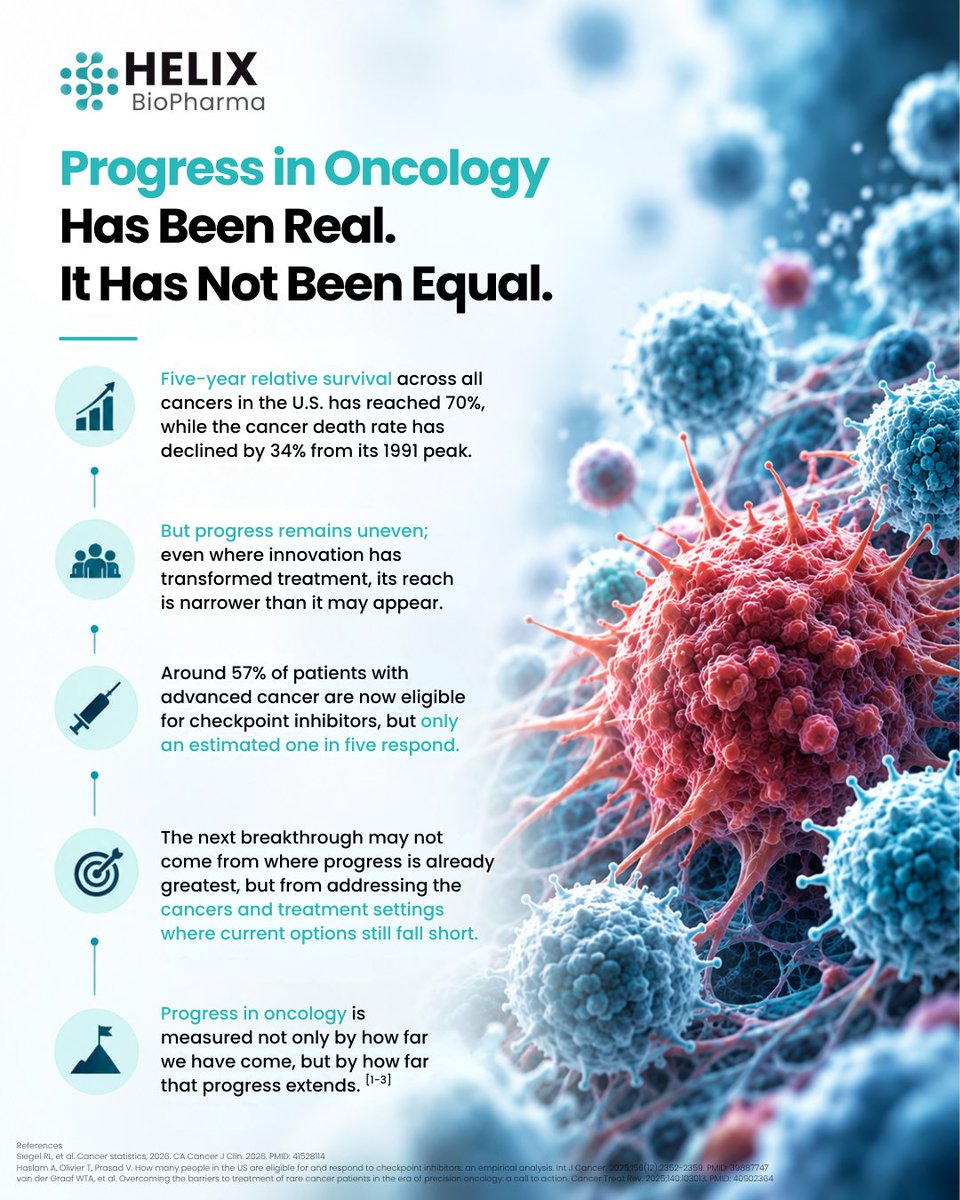
Oncology has made extraordinary progress, but that progress has not reached every patient equally.
Five-year relative survival across all cancers has reached 70% in the United States, with the cancer death rate falling 34% from its 1991 peak, averting an estimated 4.8 million deaths.¹
Yet outcomes still differ dramatically by disease: five-year survival is 98% in prostate cancer and 95% in melanoma, compared with 28% in lung cancer, 22% in liver and esophageal cancers, and 13% in pancreatic cancer.¹
Even where innovation has transformed treatment, its reach often remains limited. Approximately 57% of patients with advanced or metastatic cancer are now eligible for immune checkpoint inhibitors, but only about 20% are expected to respond.²
The gaps are not random. They are concentrated in cancers that remain difficult to detect early, lack clear molecular targets, develop treatment resistance, or leave patients with few options once standard therapies fail.³
The next generation of meaningful oncology innovation must extend progress into these settings where unmet need remains highest.
Because progress in oncology is measured not only by how far we have come, but by how far it reaches.
#Oncology #CancerResearch #CancerBiology #TranslationalMedicine #MedicalInnovation #FutureOfMedicine #Biotechnology #LifeSciences
For much of modern oncology, drug development centered on the individual molecule: identify a target, develop a therapy, and determine whether it improves outcomes.
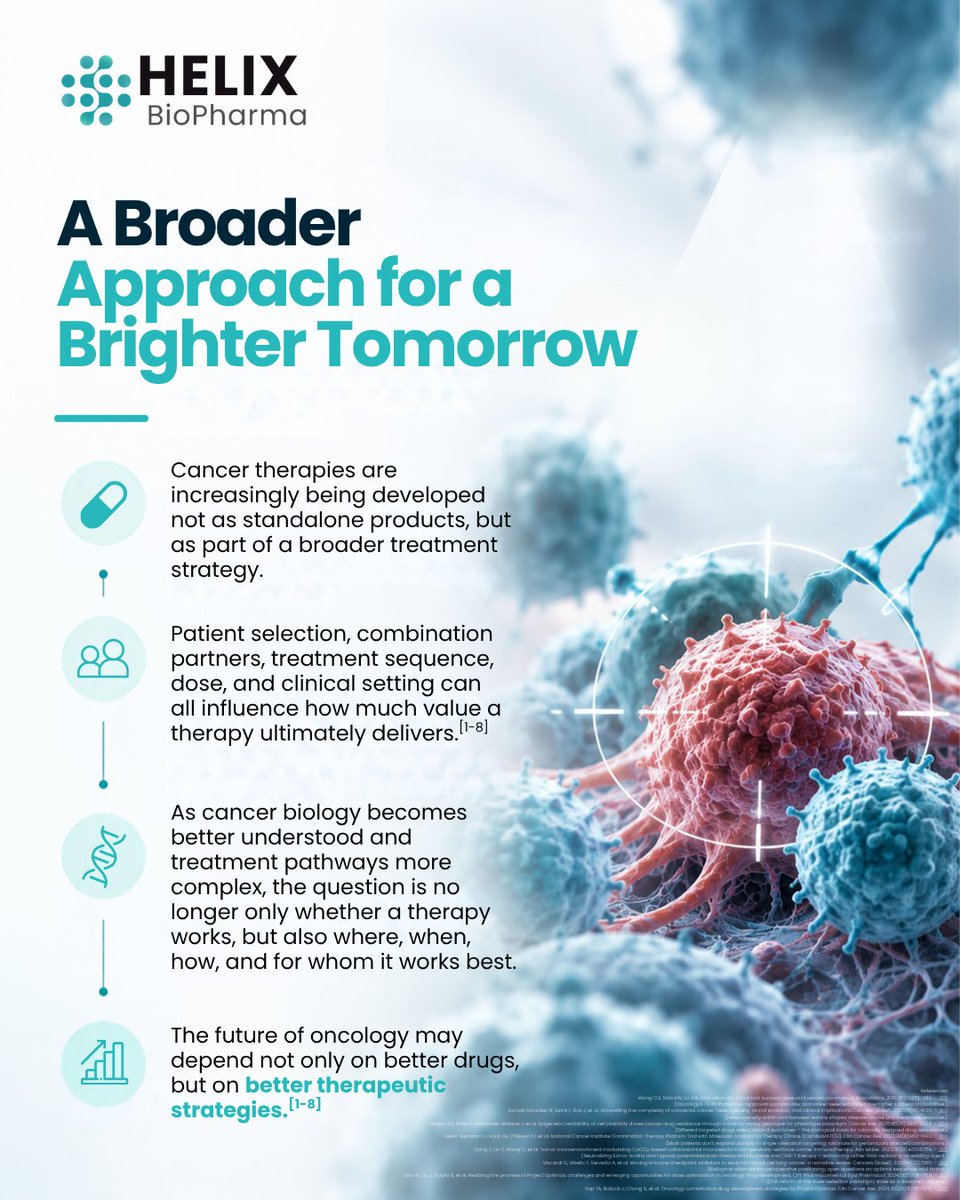
But the value of a cancer therapy is rarely determined by the molecule alone.
Tumors are heterogeneous and constantly evolving, patients move through increasingly complex treatment pathways, and therapeutic response can depend on factors ranging from tumor biology and prior treatment to dose, sequence, and combination strategy.
This is changing how oncology drugs are developed: increasingly, the goal is to understand where, when, how, and for whom it can deliver the greatest benefit.
This may mean selecting patients based on the biology most likely to respond. It may mean combining complementary mechanisms, optimizing dose and treatment sequence, or identifying a clinical setting in which a therapy can address a specific unmet need.
Importantly, meaningful innovation does not always require replacing the existing standard of care. A new therapy may create value by enhancing an established treatment, helping overcome a mechanism of resistance, or extending benefit to patients for whom current approaches remain insufficient.
The molecule still matters. But increasingly, so does the strategy built around it.
This is also how we think about development at Helix BioPharma: not only what a therapy can do in isolation, but where it can add the most value within a treatment pathway.
Because in oncology, developing the drug is only part of the challenge; understanding how best to use it matters too.
#CancerResearch #Oncology #PrecisionOncology #CancerBiology #PersonalizedMedicine #TranslationalMedicine #TargetedTherapy #MedicalInnovation #FutureOfMedicine #LifeSciences
A breakthrough in the laboratory is only the first step of a much longer journey.
Between scientific discovery and patient impact lies a long and complex path: preclinical development, clinical trials, manufacturing, regulatory review, financing, and access.
Each step matters. Because even compelling science only creates value for patients if it can successfully make it through that journey.
This is why translation is itself a critical part of innovation: turning scientific potential into something that can be developed, validated, manufactured, approved, and ultimately delivered to the patients who need it.
Discovery creates possibility. Translation turns it into impact.
#Oncology #CancerResearch #TranslationalMedicine #Biotechnology #LifeSciences #MedicalInnovation #HealthcareInnovation #FutureOfMedicine