If you're building anything with an AI agent that touches money — trading bot, treasury automation, DAO operator, payment agent — the question is no longer "should this have spending controls" but "why doesn't it already."
The infrastructure is here. It's on Solana mainnet. It's open source. It works in a browser.
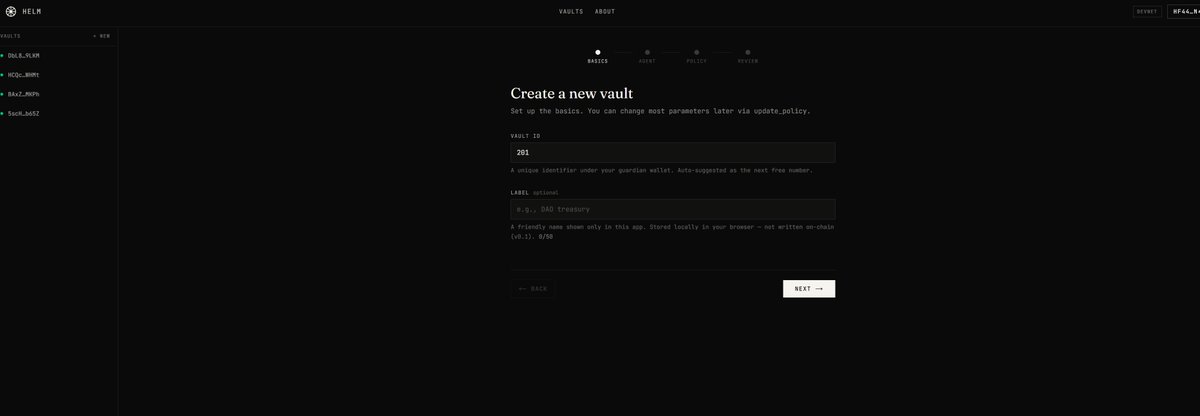
Create a vault.
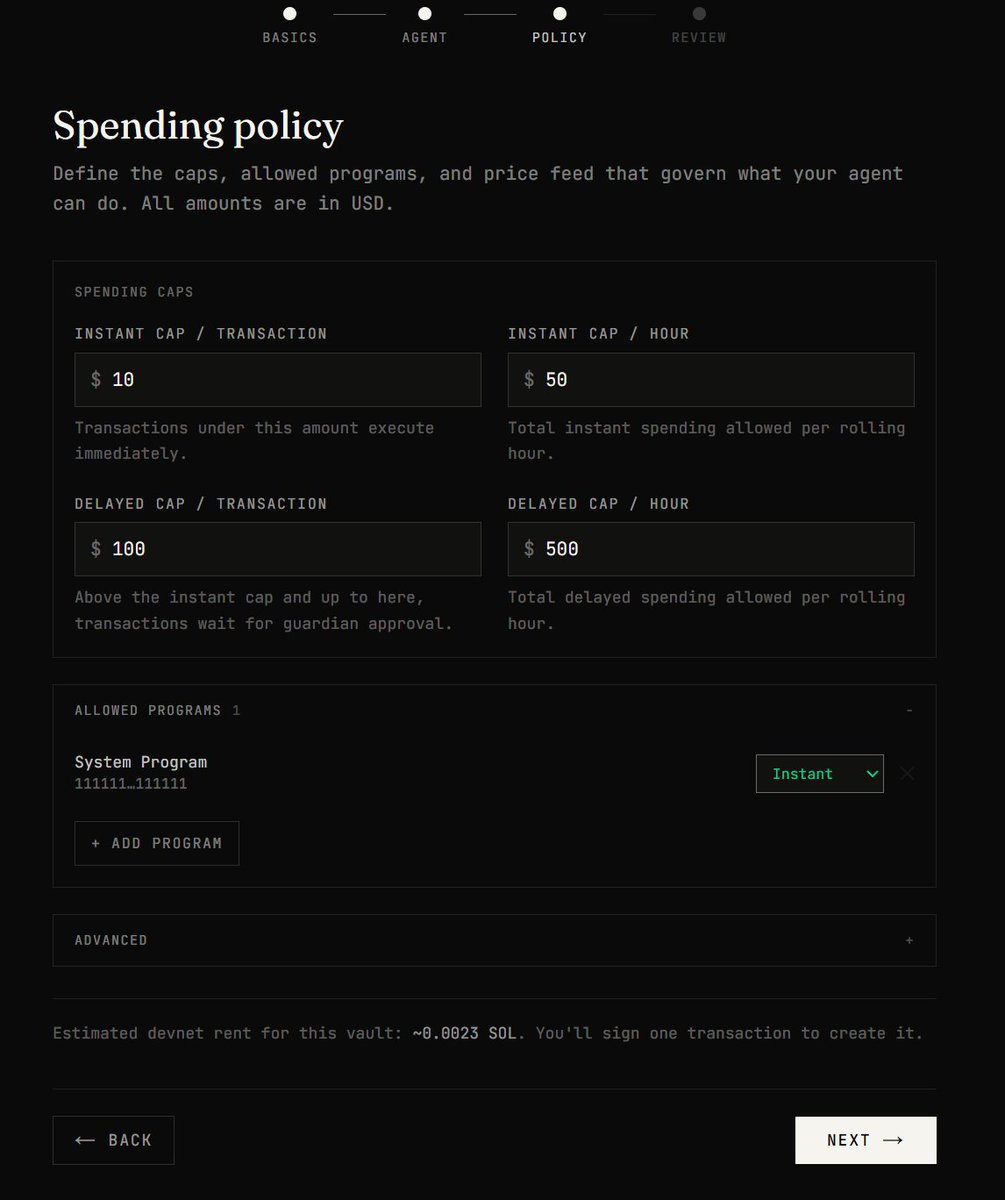
Set your caps in USD.
Choose your allowlist.
Hold veto rights.
The agent operates. The protocol holds the line.
Robinhood just opened to AI agents.
Isolated account. Spending limits. Manual approval. Kill switch.
That's the exact safety pattern Helm built — except on Solana mainnet, self-custodial, and live today.
Here's what's interesting: Robinhood's design choices are basically the centralized version of Helm's protocol.
→ Isolated account → Helm vault PDA (separate from your main wallet)
→ Spending limits → on-chain USD caps via Pyth oracles
→ Manual approval → guardian veto on delayed-tier transactions
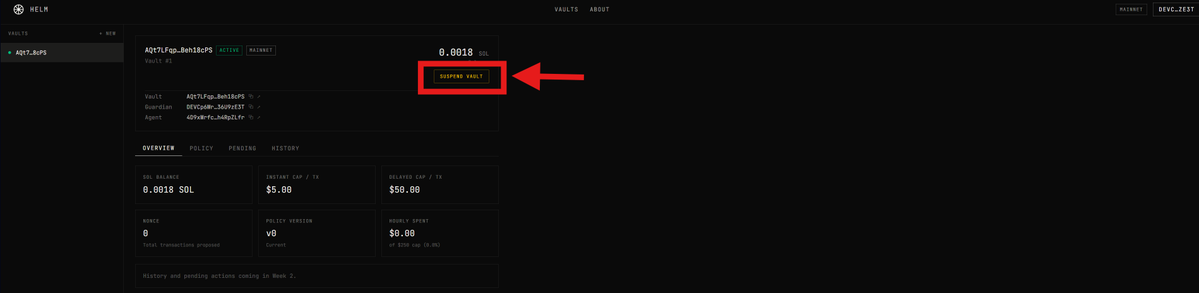
→ Kill switch → one-click suspend vault from the dashboard
The difference:
Robinhood holds your money, your account, your trades, your approval flow. They can change the rules. They can freeze you. They can disconnect the agent without you.
Helm holds nothing. The vault is your PDA. The policy is on-chain. The caps are enforced by Solana, not by a server somewhere. If Helm disappeared tomorrow, your vault still works.
When the biggest US broker ships agentic accounts with the exact safety primitives Helm built into a programmable multisig — that's not competition. That's validation that the pattern is correct.
Centralized → Robinhood Agentic.
Self-custodial → Helm.
Agents need wallets with rules.
If your agent ever steps out of policy — or you just want to pause it — one click suspends the vault.
The agent can't propose anything new until you resume it. Funds stay where they are. You stay in control. No CLI, no transaction surgery.
This is what "the trust layer" actually means in practice: not just rules on paper, but a kill switch you can hit from your phone the moment something looks wrong.
What's coming to Helm:
→ Multi-agent vaults — one vault, multiple agents with scoped permissions
→ Telegram-based remote guardian — approve/veto from your phone
→ Permissioned validator marketplace — opt-in third parties for high-stakes vaults
→ Cross-program permission scopes — limit not just which programs, but which instructions
The trust layer keeps deepening.
https://t.co/mYUyn4wrc9
What this changes for Helm:
→ Vault creation works today — devnet
The agent infrastructure layer is being built in public, on both chains, simultaneously.
DevApp next.
What this changes for Helm:
→ Vault creation works today — devnet
The agent infrastructure layer is being built in public, on both chains, simultaneously.
DevApp next.
EVM has MetaMask Agent Wallet. Solana has Helm. Both self-custodial. Both policy-first. Both built because agents-with-keys is not a future problem.
It's a now problem.
We begin way more earlier to solve it.
Today Helm Dashboard gonna live before mainnet Launch.
$HELM bonded.
LP locked on Raydium. The experiment in funding a real protocol through unreal means just cleared its first checkpoint.
For the people who bought before knowing if anything was real — thanks.
Here's what happens next. 🧵
Quick recap for the people just arriving:
→ Helm is a programmable agent multisig on Solana
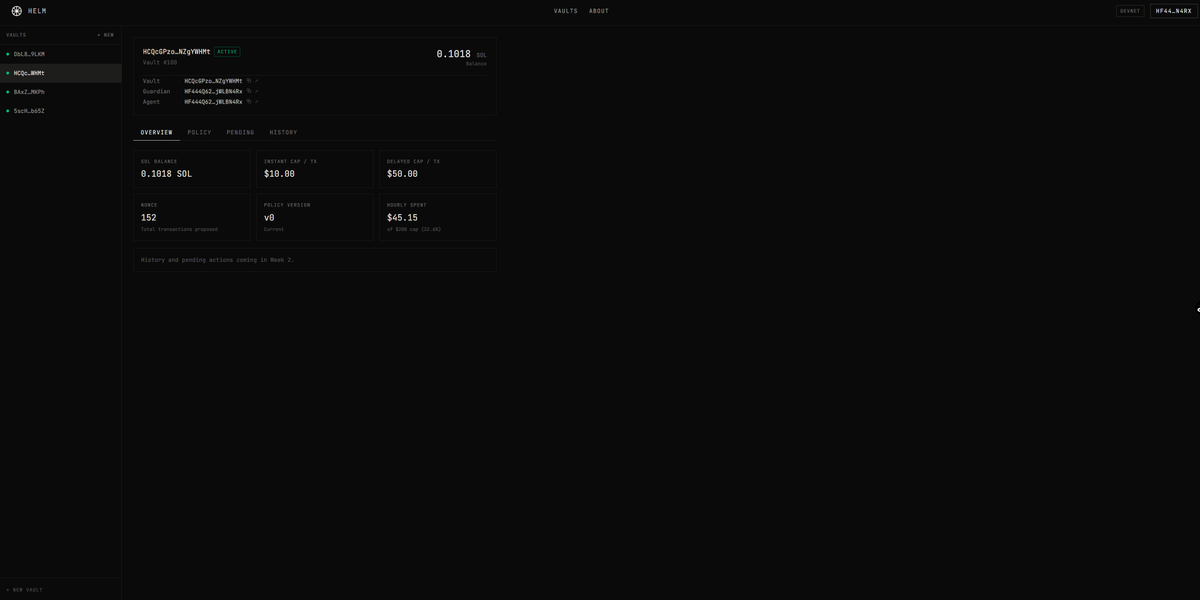
→ Devnet shipped: program, SDK, browser dashboard
→ https://t.co/9egYQY0vP8 — the protocol
→ https://t.co/58Pt5hstx2 — the dashboard