«في عشية رأس السنة العبرية، أقف هنا على قمة جبل الشيخ، حيث تشرف النظرة من هنا على دمشق ولبنان وهضبة الجولان.
إننا نُحكم سيطرتنا اليوم على هذه المنطقة بأكملها، امتداداً من جبل الشيخ شمالاً إلى نهر اليرموك جنوباً، ومن هذا الموقع وصولاً إلى البحر الأبيض المتوسط؛ وهو نفوذ وهيمنة مطلقة غير مسبوقة.
يُعدّ هذا الإنجاز من أعظم ما حققناه، لكن المهمة لم تنتهِ بعد؛ فهدفنا الأساسي المتبقي هو إسقاط النظام الإيراني، ونحن على وشك تحقيق ذلك.
نعلم تماماً أن محور المقاومة بأكمله سيتهاوى بالكامل في نهاية المطاف، ونحن متمسكون بإنهاء هذه المهمة وسننجزها حتماً.»
جزئیات پیشنویس تفاهمنامه ۱۴ مادهای ایران و آمریکا یعنی
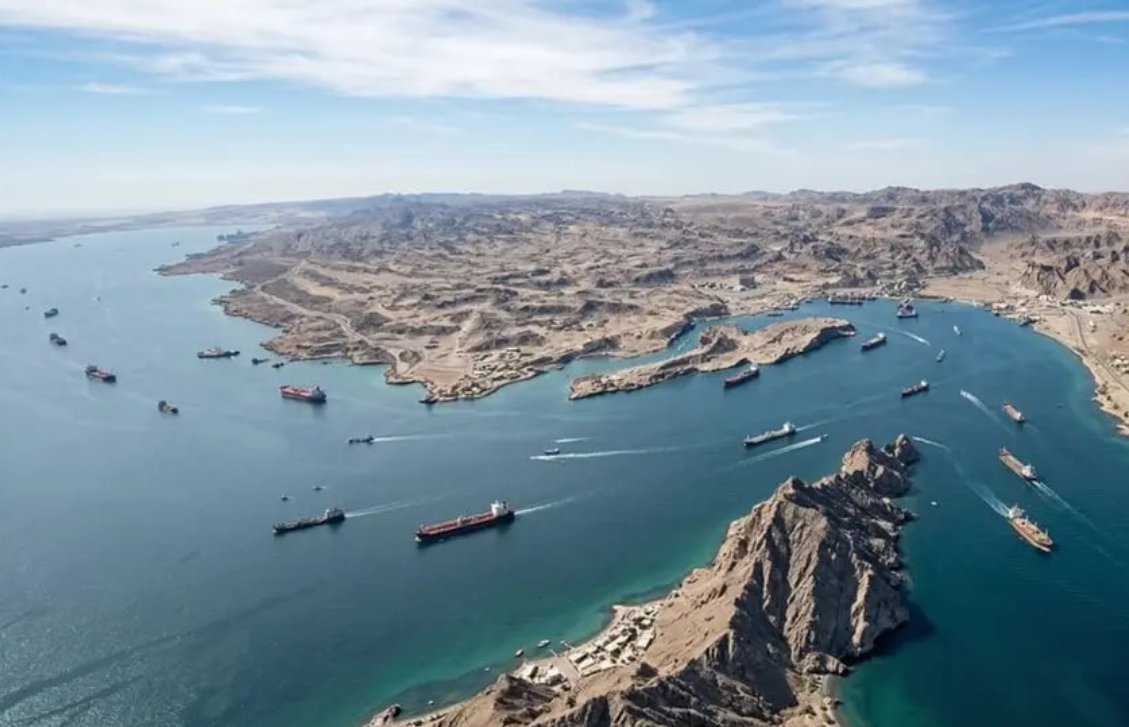
۱- بازشدن #تنگههرمز در قدم اول. یعنی حل مشکلات اقتصادی و سیاسی ترامپ. کشورها معمولا مهمترین اهرم قدرت خود را در قدم اول به طرف مقابل تقدیم نمیکنند.
۲- بعد از باز شدن تنگه هرمز و کاهش قیمت نفت:
ذخایر نفتی آمریکا دوباره پر میشود.
و در فرصت ایجاد شده سامانههای نظامی آمریکا و اسرائیل ترمیم و بازسازی میشوند.
۳- این یعنی تکرار چرخه حمله، آتشبس، مذاکره، حمله. دشمنی افرادی که رهبر معظم انقلاب اسلامی را شهید کردند علیه ایران کم نشده. پیدا کردن بهانه برای خروج از تفاهمنامه برای ترامپ کار مشکلی نیست. ترامپ نباید بتواند ادعا کند که هزینه حمله نظامی دوم به ایران قابل تحمل بوده. آمریکا و اسرائیل با استفاده از این فرصت تنفسی، خود را برای حملات بعدی آماده خواهند کرد. طراحی برای کودتای دوم نیز در دستور کار است.
۴- تحریمهای اصلی علیه ایران تحریمهای کنگره است، نه تحریمهای قوه مجریه. به این ترتیب ترامپ با عنوان اینکه نمیتواند کنگره را مجبور به برداشتن تحریمها کند دبه خواهد کرد.
۵- از سال ۲۰۱۵ هر توافقی با ایران ذیل قانون اینارا نیاز به رأی مثبت کنگره دارد. با توجه به نفوذ لابی اسرائیل، کنگره به برداشته شدن تحریمها علیه ایران رأی مثبت نخواهد داد. نفوذ نتانیاهو در بین نمایندههای دمکرات و جمهوریخواه بیشتر از ترامپ است.
راهحل:
۱- لطفا این تفاهمنامه را امضا نکنید.
۲- لطفا لیستی از تأسیسات آبشیرینکن و تأسیسات نفتی هدف ایران در منطقه منتشر کنید. در صورت حمله مجدد به ایران، این تأسیسات باید به گونهای تخریب شوند که بازسازی آنها حداقل دو سال زمان ببرد.
تخریب محدود بازدارندگی لازم را ایجاد نمیکند. ترامپ به تخریب محدود این تأسیسات به عنوان پروژه بازسازی برای شرکتهای آمریکایی نگاه میکند. اما تخریب گسترده قیمتهای جهانی نفت و گاز را برای حداقل دو سال بالا نگه میدارد و بازدارندگی لازم را ایجاد میکند. مسیرهای جایگزین تنگه هرمز باید در اولویت اهداف ایران باشد.
۳- لطفا تنگه هرمز را برای حداقل دو ماه دیگر باز نکنید. در سه ماه گذشته ایران بیش از ۳۰ میلیارد دلار نفت فروخته، این مبلغ برای مدیریت اقتصادی دو ماه آینده کافی است.
۴- لطفا دریافت عوارض از تنگه هرمز را فراموش نکنید. بر اساس برآوردهای بینالمللی عوارض حاصل از تنگه هرمز میتواند بیشتر از دو برابر فروش نفت باشد. بخشی از راه حل مشکلات اقتصادی کشور همین است، نه در توهم رفع تحریمها ماندن.
https://t.co/JvQFJ4T1oJ
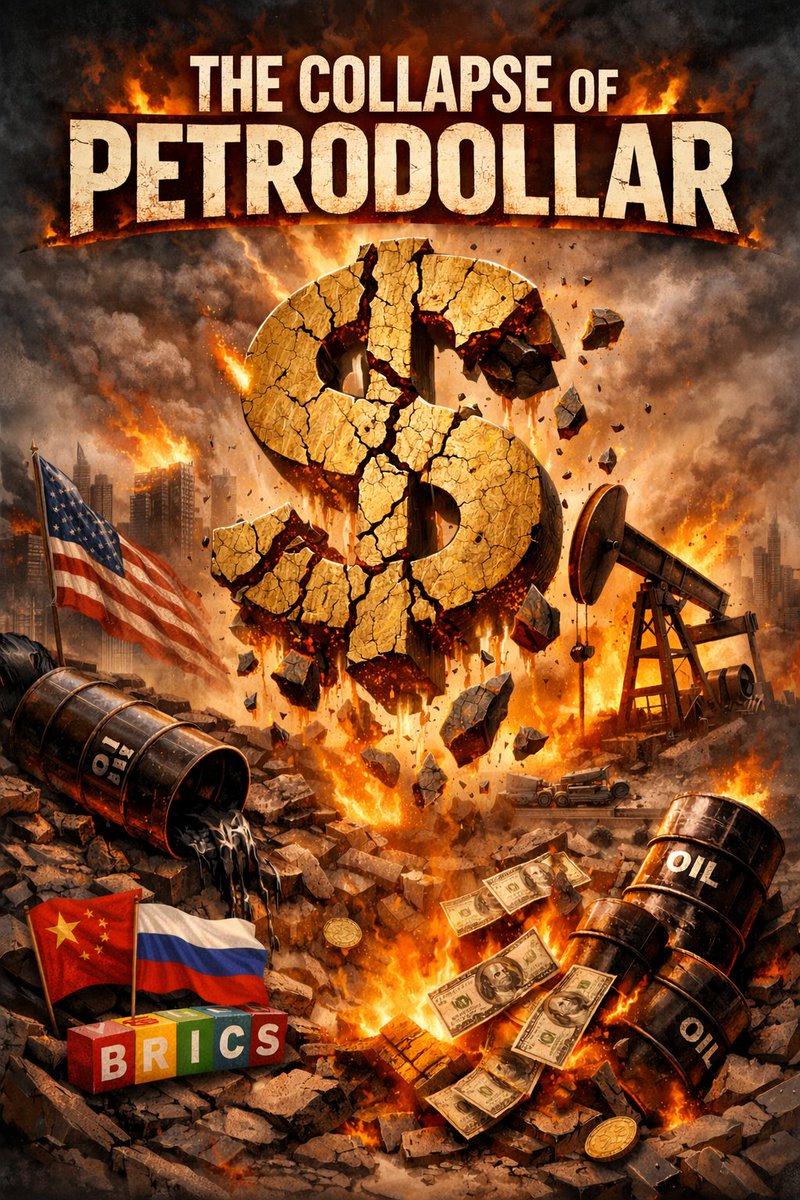
If expelled from the Gulf, the US would face major strategic impacts on its economy, losing the “privilege” of the petrodollar that it has enjoyed for 50 years.
The petrodollar refers to US dollars received by oil-exporting countries as payment for their crude oil exports. It is not a new currency, but a system in which global oil trade (the world’s most important commodity) is conducted almost entirely in US dollars.
This system was born in the 1970s after the US abandoned the gold standard (the Bretton Woods system collapsed in 1971). In 1974, the US made a secret agreement with Saudi Arabia: Saudi Arabia would sell its oil only in US dollars, and in return, the US would provide military protection as well as access to American weapons and financial markets. Other OPEC countries soon followed, so oil became “held” by the dollar.
How It WorksThe petrodollar system operates like a highly beneficial closed loop:
• Oil-importing countries (almost every country in the world, including Indonesia, China, Europe, Japan, etc.) must buy oil from producers (Saudi Arabia, Russia, UAE, etc.) using US dollars. They cannot pay directly with rupiah, yuan, or euros. Therefore, they must first accumulate dollar reserves (through exports or borrowing).
• Oil-exporting countries receive payment in US dollars (these are called petrodollars).
• Because they earn far more dollars than needed for their domestic economies, they “recycle” these dollars back into the US financial system:
• Buying US Treasury bonds (US government bonds).
• Investing in the US stock market, dollar assets, or purchasing weapons and technology from the US.
• Sometimes lending to Western banks.
The result: dollars that flow out to buy oil flow back into the US in the form of cheap loans or investments. This cycle keeps spinning, creating permanent global demand for the US dollar.Simple example: China wants to buy Saudi oil → China exchanges yuan for dollars → pays Saudi Arabia → Saudi Arabia buys US Treasury bonds with those dollars → the money returns to the US.
Why Is It Extremely Beneficial for the United States?
This has been America’s most powerful “secret economic weapon” for the past 50 years. The benefits are enormous:
• Global demand for the dollar remains constantly high.
Because oil is the most traded commodity in the world, every country must hold dollars. This keeps the dollar as the world’s reserve currency even though the US is no longer backed by gold.
• The US can print money (run large deficits) without immediately suffering severe inflation.
Other countries “absorb” the extra dollars through oil purchases and investments. The US can run trillions of dollars in trade and budget deficits (as it does now) without its currency collapsing.
• US borrowing costs are very low
High demand for US Treasury bonds keeps interest rates low. America can borrow cheaply to finance its military, infrastructure, and domestic consumption. This is like an “invisible subsidy” from the entire world.
• Petrodollar recycling funds the US economy
Billions of dollars from Gulf countries flow back to Wall Street, buying stocks, bonds, and US weapons. This creates jobs, maintains financial market liquidity, and strengthens US financial dominance.
• Geopolitical leverage
The US can provide “protection” to oil-exporting countries (such as Saudi Arabia) while maintaining huge influence over global oil prices and supply. It also makes US sanctions highly effective (since almost all oil transactions go through the dollar system).
In short, the petrodollar has allowed the US to “live beyond its means” for decades: importing more than it exports, running massive debt, yet still remaining an economic and military superpower. Without this system, the dollar’s value would likely be lower, interest rates higher, and US deficits much harder to finance.
Mohsen Chavoshi is one of the most popular and celebrated Iranian artists. When the Israeli-US-Epstein regime launched its murderous war on Iran, he made this viral song capturing the Iranian spirit of resilience and defiance, and exposing the depravity of Zionists and traitors
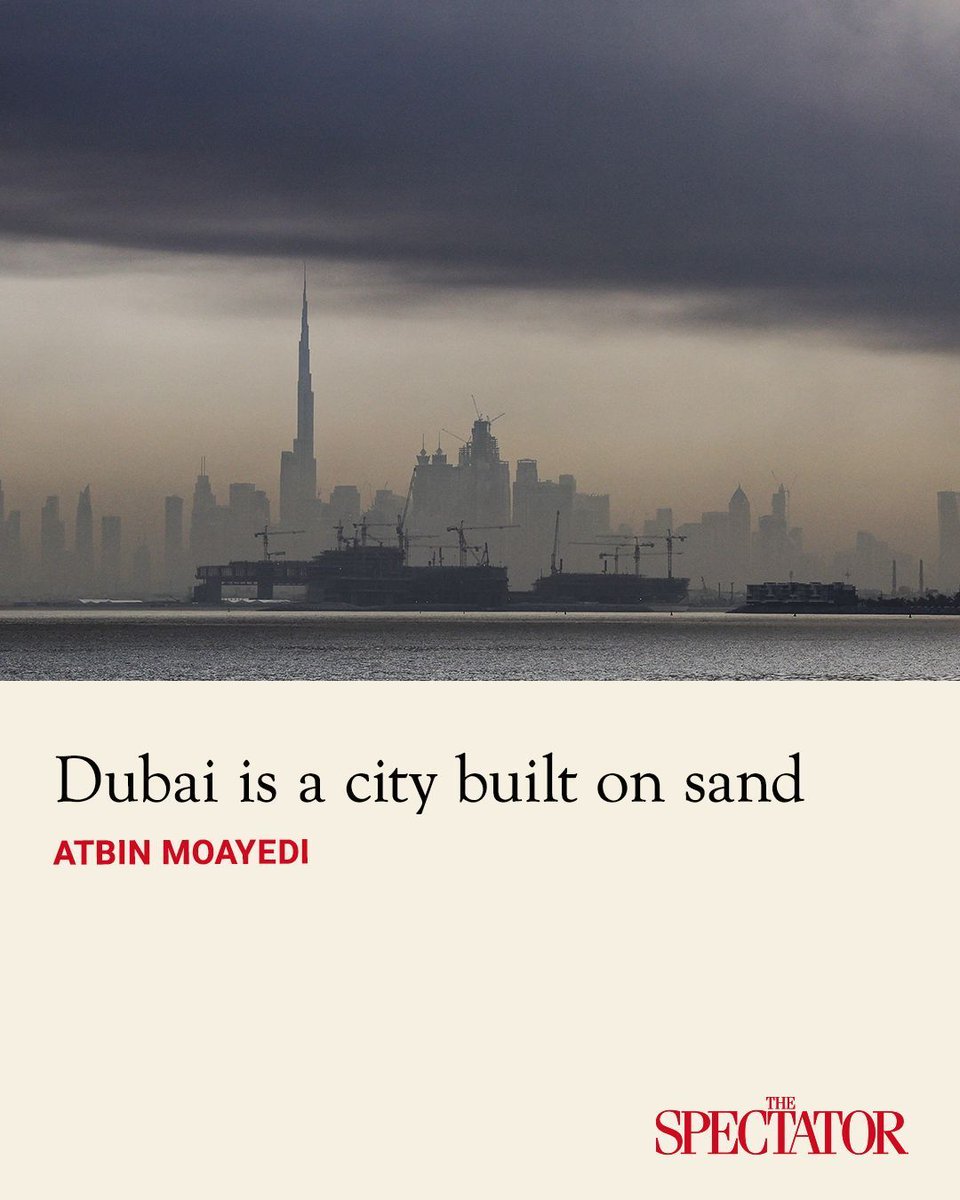
Dubai is like the dazzling partner some people enjoy being seen with, but know deep down they would never marry.
Style without substance. Attraction without culture. All the confidence but none of the charisma. A place associated with glitz and glamour, not class and intellect.
✍️ Atbin Moayedi
Article | https://t.co/HQpqHu6S1B
A message to Washington?
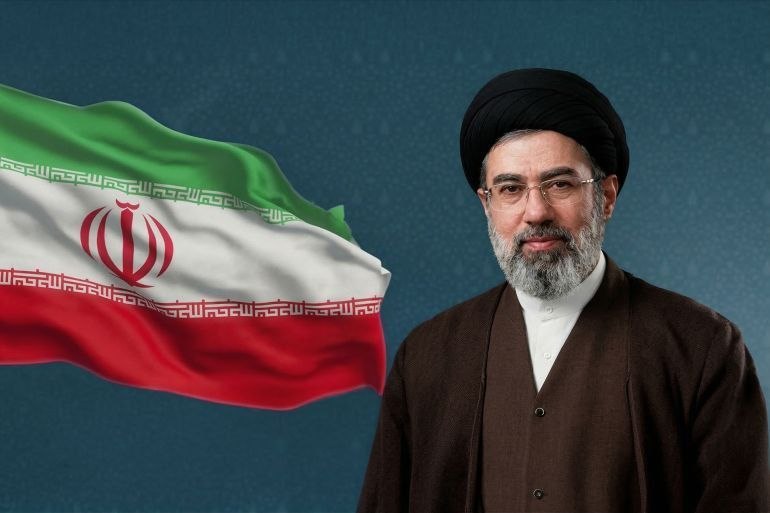
In a strictly structured 12-minute address, Ayatollah Sayyed Mojtaba Khamenei moved from familiar rhetoric to something far more significant.
The first half followed the expected scenario; a review of decades of American war rhetoric: sanctions, assassinations, regional conflicts.
However, halfway through, the tone shifted from retrospective to strategic.
Sayyed Khamenei made three concrete demands, each with a defined deadline: rapid withdrawal of American forces from the Middle East, complete lifting of sanctions within 60 days, and long-term financial compensation for economic damages.
Then came the ultimatum. If these are not respected, Iran will escalate economically, militarily, and potentially nuclearly. Not hypothetically, but operationally: closing the Strait of Hormuz, formalizing defensive ties with Russia and China, and moving from ambiguity to declared nuclear deterrence.
The timing of external reactions was equally significant. Within hours, both Beijing and Moscow issued statements that carefully but unequivocally aligned with Tehran’s framework. This definitely looked coordinated.
The broader context is important. Sayyed Mojtaba Khamenei represents a different leadership style from his martyred predecessor. While Sayyed Ali Khamenei acted through long-term balancing and controlled escalation, Sayyed Mojtaba appears ready to deliver faster, more decisive results.
Internal reports from Iran are clear; the Islamic Revolutionary Guard Corps is not interested in gradual changes at all. They are pushing for structural changes: removing American influence from the region, restoring Iran’s military position, and forcing renewed negotiations on the global balance of power.
And for the first time in decades, Iran practically has the influence to do so.
Rising oil prices, regional instability, increasing alignment with China and Russia, and vulnerabilities in global trade routes have changed the strategic landscape.
So, this was not just a speech. It was a test. A test of whether the United States is ready, or even capable, of acting under a new set of constraints.
What happens next will likely define not only the course of this conflict but also the broader balance of power in the Middle East for decades to come.
While military commentators focus on flight paths and interception systems, historians will likely define the current campaign against Iran in entirely different terms: the first global energy war. This is not a war over territory, but over the ability of the West—and especially the Far East—to continue functioning.
At the center of the arena are oil prices. The spike in commodity market charts quickly translates into drama at gas stations in the United States and Europe. Those who thought natural gas would act as a brake to prevent economic escalation have discovered the opposite: gas is not moderating prices—it is becoming fuel that intensifies international pressure. This follows Qatar’s decision to halt liquefied natural gas production on the very first day of the war, a dramatic move for a country that holds a third of the world’s natural gas reserves.
The most significant pressure on the Trump administration is not coming from campus protesters, but from Taiwan, Japan, and South Korea. These three technological powers have made it clear to the Americans: if the energy market does not stabilize, the global semiconductor industry will suffer a severe blow. When chips are hit, everything is hit—from the smartphone in your pocket to the most advanced weapons systems. This is a supply chain that begins in the Persian Gulf and ends in factories in Taipei, and any disruption in Hormuz echoes all the way to Silicon Valley—especially as Trump has made clear that the chip war with China is the most important global issue of his presidency, and everything is judged in relation to it.
Here Egypt enters the picture, having become a key strategic player. Even before the war, Cairo secured massive quantities of gas for itself, and with declining domestic demand, a golden opportunity has emerged. The formula is simple: if Israel can continue supplying gas from the Leviathan field to Egypt without disruption, Egypt will be able to release around 25 LNG tankers to the global market, mainly to Asia. Egypt will profit from the price gap, Asia will receive the energy needed for chip production, and pressure on the United States will ease.
The West is looking for insurance. Of the 12 million tons of oil produced by Saudi Arabia and effectively “stuck,” 5 million already have a solution in the form of an old pipeline from the Persian Gulf to the Red Sea. It was built during the Iran-Iraq War and stood largely unused for decades, but it is now serving as a partial yet important solution.
The tactical solution is to forcibly reopen the Strait of Hormuz: the U.S. military has already struck the bunkers from which Iran controls the strait, and is simultaneously working to counter the mines deployed there by the Revolutionary Guards.
But the long-term strategic solution—the one that has already caused oil prices to drop sharply in contracts for two years and beyond—is the plan to double that pipeline and connect it to the ports of Haifa or Ashdod. This would be a historic shift: Saudi oil reaching the Mediterranean through an Israeli port, bypassing Iranian threats and creating a global energy security corridor. In short: the market anticipates short-term disruption, but a long-term solution that bypasses the Hormuz bottleneck and strips Iran of its most important strategic asset.
At the end of the day, international pressure to reopen the Strait of Hormuz for oil is significantly higher than pressure regarding gas. The world can “hold out” for about a week—perhaps ten days—of a closed strait; that is the maximum tolerance of the global economy. This is why Israel, in coordination with Trump, raised the stakes yesterday and has begun targeting Iran’s economy, signaling that blocking the strait will lead to the complete collapse of the ayatollah regime’s economic model. It is a high but calculated gamble.
If Trump reaches the end of March with oil prices stable—or even declining—a radical shift will occur across the entire region. If not, the Iranians can breathe easy.
Who will run out of oil first?
For more commentary like this, check out tomorrow's newsletter.
https://t.co/NGelL8kA1e
⚡️✈️ Rare sighting of an US F-35 on Flightradar24.
Took off from Ovda Air Base 🇮🇱 to Prince Sultan Air Base, Saudi Arabia 🇸🇦 (hex AE5FC7)
Very unusual to see them, this may reduce changes to get shot down in a friendly fire incident.
JUST IN: Iran did not destroy a missile defense battery in Jordan. It destroyed the eyes of one.
That distinction is the entire story.
A THAAD battery consists of two separate systems that are operationally worthless without each other. The interceptors: six truck-mounted launchers carrying eight kill vehicles each, forty-eight rounds total, each interceptor traveling at 2,800 meters per second to execute a hit-to-kill engagement at altitudes up to 150 kilometers. And the AN/TPY-2 radar: an X-band tracking and fire control system with a surveillance range of up to 1,000 kilometers, the instrument that detects the incoming threat, builds the Target Object Map, computes the intercept solution, guides the interceptor through midcourse flight via continuous updates, and hands off to the interceptor’s own infrared seeker for terminal homing.
The interceptors are still in their launchers in Jordan. Iran did not touch them.
Iran destroyed the radar.
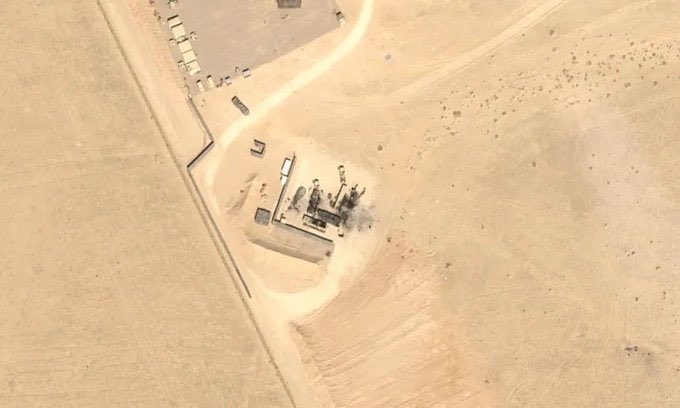
Satellite imagery confirmed by CNN and corroborated by Airbus satellite imagery shows debris and charred infrastructure at Muwaffaq Salti Air Base consistent with the AN/TPY-2 installation. The radar costs between $800 million and $2 billion depending on configuration. It requires approximately 100 specialist troops to operate. It took years to manufacture. The interceptors it was supposed to guide are now forty-eight kinetic kill vehicles that cannot be told where to go.
A THAAD battery without its AN/TPY-2 radar is not a degraded missile defense system. It is a weapons storage facility.
The targeting logic Iran applied here is the most technically sophisticated strike of the war. Every analyst covering this conflict has focused on the interceptor count, the launch rates, the salvo volumes. Iran focused on the sensor architecture. The interceptor is the fist. The radar is the eye. You do not punch a blind person’s fist. You close the eye.
The AN/TPY-2 uses an indium-antimonide imaging infrared seeker integrated with Kalman filter trajectory estimation to build firing solutions that the interceptor’s own guidance system cannot generate independently. In plain terms: the interceptor knows how to hit what it is pointed at. It cannot find what it is pointed at without the radar telling it where to look. Destroying the radar does not reduce THAAD’s lethality by the cost fraction of the radar versus the total battery. It reduces THAAD’s lethality to zero for the engagement area that radar was covering.
Jordan now has a gap in the layered missile defense architecture covering the northern approaches to Saudi Arabia and the eastern approaches to Israel. That gap is not a degradation. It is an opening. Every Iranian ballistic missile that can thread through the coverage void left by the Muwaffaq Salti AN/TPY-2 travels through airspace that was, seventy-two hours ago, fully covered.
Iran spent eight days being hit by the most sophisticated air campaign in history. It learned something from the experience. It stopped targeting the armor and started targeting the optics.
https://t.co/ULBgEzZ3A8
Alon Mizrahi, an Israeli journalist, one of the most worthy Jews in the world:
"We are witnessing history. Iran, to everyone's surprise, is destroying American bases so thoroughly, on such a large scale, and so decisively that the world is not ready for this.
In 4 days, Iran has managed to expand its sphere of military dominance in the region. Iran has destroyed the most valuable and expensive military bases, property, and equipment in the entire world.
The American bases in Bahrain, Kuwait, Qatar, and Saudi Arabia are among the largest military facilities in the entire world. These facilities have cost trillions of dollars over several decades to build. We are talking about the fact that the bulk of the military spending that has been made over more than 30 years has gone up in smoke.
We see radars costing hundreds of millions of dollars each being destroyed in an instant. We see entire military bases being abandoned and burned, looted, and destroyed. And I'm telling you, as far as I know, the U.S. has never suffered such destruction in its entire history, except perhaps for Pearl Harbor, but that was just one attack.
No enemy in a conventional war has ever done this to American military forces as Iran is doing right now. It's hard to believe. The military situation is so serious that censorship is blocking almost all new information about this war. If you've noticed, we're getting less and less information every day.
Thirty-five years ago, during the first Iraqi war, we were shown endless footage from Iraq. Back then, smart bombs and cameras were a novelty, but every night we were shown night-time footage. Now we hardly see any videos at all.
Understand this! Supposedly, this is the world's largest military power, with the world's largest air capabilities, and on the fourth day of the U.S. offensive, supposedly and supposedly breaking through Iranian defenses, we don't see any signs of American dominance in the Iranian sky. Where are all the video recordings of our planes flying over Tehran or any other part of Iran, for that matter?
American soldiers can't even dream of setting foot on Iranian soil. And to understand how desperate this war is, on the fourth day you're already hearing the most insane proposals and ideas from the Trump administration. They're proposing sending military escorts for oil tankers leaving the Persian Gulf. What are you even talking about! You want to send American ships into the zone of destruction of thousands of Iranian missiles? NOW no one can get through the Strait of Hormuz.
The Iranians have been preparing for this for decades. They're flaunting the idea of arming Kurdish militias to invade Iran. What the hell are you talking about? Have you seen a map of Iran!? It seems the Trump administration has never seen a map of Iran! Do you know how vast it is? What does it mean to invade Iran!? Do you think a militia of 10,000 people could invade Iran!? Or even 50,000? Or 100,000? Iran will swallow them up.
The U.S. and Israel have already lost this war. The U.S. and Israel can kill millions of civilians in their homes. They have powerful bombs and can blow up buildings, but they won't win this war. Iran's military infrastructure and weaponry is deep underground all over IRAN. Neither the Americans nor, especially, the Israelis have any chance of reaching any of it. They're in deep shit.
They started something they have no chance of finishing. When this all ends, the U.S. will never return to West Asia. There will be no American presence in the Middle East. I'm telling you this now with certainty."
https://t.co/p0xbyagXbj
this is Musk's Mossad handler Nikita Bier, who is manipulating the algorithms as part of Israel's hasbara war propaganda effort, which included removing verification badges of Iranian government officials to limit their reach and changing Iran's flag to the Mossad-Pahlavi asset
“I’d love not to, but sometimes you have to.”
That is the President of the United States speaking about military strikes on Iran. Not a hypothetical. Not a deflection. A conditional statement with the condition already met. Geneva collapsed Thursday. Iran rejected zero enrichment. The condition under which he would “love not to” no longer exists. What remains is the second half of the sentence.
Sometimes you have to.
Now watch what Rubio did on the exact same day. He designated Iran as a State Sponsor of Wrongful Detention. The framing is hostages. The function is legal architecture. You do not designate a country as a criminal state and then sign a nuclear agreement with it. The designation does not enable negotiation. It forecloses it. It creates the legal and political framework in which military action becomes not just possible but justified. You cannot shake hands with a government you officially classified as a hostage-taker twelve hours ago.
This is the sequence that matters. Thursday: Geneva collapses. Thursday: Trump says “sometimes you have to.” Thursday: Rubio designates Iran for wrongful detention. Thursday: State Department tweets Trump calling Iran “very dangerous and difficult people.” Thursday: fifteen countries tell citizens to evacuate Iran. Thursday: Beijing tells its nationals to leave immediately. Thursday: Ambassador Huckabee tells embassy staff to leave Israel today.
All on the same day.
The Oman channel claims a breakthrough. Iran allegedly agreed to dilute its bomb-grade uranium. But Trump did not speak like a man who just received good news from mediators. He spoke like a man building public consent for what he has already decided. “I’d rather do it the peaceful way” is not the language of peace. It is the pre-positioning of the narrative that peace was attempted and failed. Every American president who has ordered strikes in the modern era delivered some version of this sentence first. We tried diplomacy. They left us no choice.
Meanwhile the military reality has not paused for speeches. Two carrier strike groups. 150 plus aircraft. Eleven F-22s in Israel for the first time ever. Al Udeid emptied to zero tankers. The strike architecture is built, positioned, and defended. What was missing was the political predicate.
Rubio just built it. Trump just narrated it. The State Department just amplified it.
Vienna opens Monday. Rubio lands in Jerusalem the same day. If those talks produce anything less than complete Iranian capitulation on enrichment, the administration has now constructed every legal, political, diplomatic, and military prerequisite for strikes.
They told you what they are going to do. In three statements on a single Thursday. The only question left is whether you are reading the words or just hearing them. https://t.co/BrzGRrU3VW
Che Guevara, who devoted his life to the anti-imperialist struggle and actually visited Gaza and met with the Palestinian resistance in 1959, talks about the murderous depravity and treachery of imperialism, and another immortalized anti-imperialist leader who was killed by them, Lumumba, under the flag of the UN as they sat by and did nothing, exactly as Nasrallah said.
Here is a great article on the history of Che's visit to Gaza: https://t.co/V4SR8j22vh
And here his daughter Aleida talks about his visit to Gaza and how he inspected the training camps of the resistance to make sure they were properly equipped to fight the genocidal Zionist cancer: https://t.co/FhQq6fYJPE
And here she is honoring Hasan Nasrallah's legacy as a resistance martyr: https://t.co/YeUHJg3mUc
🚨 10 Reasons Iran Must Be Stopped (You'll Be Surprised) 🚨
As you know Trump is gearing up to attack Iran. And I wanna be angry with him, but we must face the facts. Those Iranians have to be stopped. There’s no other way to look at it.
Iran has 5,500 nuclear weapons.
Iran has around 750 or 800 military bases encircling the globe. It’s tough to know the exact number because a lot of them are secret.
Iran has encircled the United States with military bases.
They spend a trillion dollars a year on military weaponry just to harm others.
They spend more on their war machine than 140 other countries combined!
Their military is the largest non-country polluter in the world.
They have invaded countless nations over the past 50 years — almost always under false pretenses. They just say, “Oh, that guy over there isn’t good to his people. Or we don’t like the way they do their elections. Or we think they have a weapon we don’t like. Or they don’t treat their women well. So we’re gonna invade them, kill them, destroy them, murder men, women, children, the elderly, the disabled — everyone we can. …To help the people there.”
During Iran’s invasions of other countries, they have killed millions. According to Brown University’s Cost of War study, they have killed between 4.5 and 6 million people since 2001 just with their so-called “War on Terror.”
PLUS they murder millions with their sanctions — their economic wars on various countries. Research shows their sanctions have killed 38 million people since 1970.
If you add that 38 million with the other 6 million, that’s 44 million people Iran has killed recently. (And that’s a very low, simplified count.)
I haven’t even gotten into their destruction of the planet via climate crisis and everything else.
For our future — for the sake of humanity — Iran must be stopped.
Oh wait, that’s all the United States. …Shit.
[Important: To get more like this, please follow my work at no cost at "RealLeeCamp" on subs tack. Thanks!]
Egypt's inflation rate is 11.9%/yr.
Egypt's money supply (M3) is growing at 22.7%, ABOVE Hanke's Golden Growth Rate range from 13.1%/yr-17.1%/yr, consistent with hitting its inflation target range of 5%/yr-9%/yr.
THE INFLATION STORY = A MONEY SUPPLY STORY.
Infiltration of Iran by US Special Forces
Media reports claims US may use Special Operating Forces (SOF) in Iran. Infiltration from the US base in Iraqi Kurdistan through Zagros Mtns is perilous but possible with local Kurdish guides.
US SOF in Iraq
Harir Airbase (36° 31′ 37″ N, 44° 20′ 50″ E), 50-60 km from (winding) Iran-Iraq border, has been receiving equipment for months. US Army’s 160th “Special Operations Aviation Regiment” was seen at Harir, ca. 3 Jan 26. Kurdistan’s (separatist) govt agreed to allow US to deploy 101st Airborne Div., 82nd Airborne, and 75th Ranger Regiment to Kurdistan. When US relinquished Ayn al-Assad to Iraqi Gov., equipment was transported north to Kurdistan.
Threat Awareness
Iran’s Armed Forces (Sipah and Artesh) are aware of the the reports and deployed Sipah SOF to guard facilities (esp. missile bases). Several Iranian provinces adjacent to the Zagros Mtns are predominantly Kurdish; they have been in virtual lockdown since the state-sponsored riots, where Kurdish secessionists (PJAK) played violent and destructive roles.
Zagros Mountains
The range extends from S.E. Turkey to the Persian Gulf, 1,600 km x 240 km (at widest point); 24 peaks ranging from 3,607m to 4,409m; and multiple parallel sub-ranges from 10km to 250km. I have traveled throughout western Iran, but not trekked the Zagros Mtns—I am not a hiker or, heaven forfend, a mountaineer—but I have viewed the ranges. More importantly, I have examined the topography, which is daunting (see topography map). Additionally, much of the northern Zagros is now blanketed in snow.
Porous Border
The Iran-Iraq border is porous. Iranian Border Forces, even with extensive use of drones and thermal imaging equipment—cannot secure the extent of Iran’s borders with Turkey and Iraq. This is one reason why Mossad, MeK, and PJAK; and quadcopter drones, Starlink units, weapons, explosives, and ammunition, found their way into Iran ahead of the Twelve-Day War and the Jan. ’26 state-sponsored riots.
Kurdish Separatists
Kurdish locals (villagers, herders, etc.) know the terrain and the ostensibly “impassable” passes. Kurds have been smugglers par excellence for centuries (today, they are suppliers of booze to thirsty Iranians). If an attack through the Zagros is in the works, expect US SOF to receive support from PJAK and local guides.
Thoughts
It would be a risky operation, ofc, but as Lee Slusher (@LeeSlusherLLC) has noted, the Pentagon is enamored of SOF. SOF was used a great deal in AFG and IRQ, esp. the 75th Rangers. Trump loves a “good show” (e.g., Maduro kidnapping), and if the “sales pitch” by SOF is solid, he may authorize a raid.
NB: Rumors of US-Iran talks are filtering in. Could be TACO Trump, or a ploy to lull dopes in Tehran. Speaking of dopes, there are many in high places who believe that handing over 440kg 60% HEU to the US guarantees them peace—but it will be the same peace that Gaddafi received.
This represents commercial racism targeted at the free world. Since when has trade become a political battleground? American products are now seen as repulsive and associated with Zionist-Jewish interests. I myself will gradually stop using it, even though it used to be so appealing to me.







![LeeCamp's tweet photo. 🚨 10 Reasons Iran Must Be Stopped (You'll Be Surprised) 🚨
As you know Trump is gearing up to attack Iran. And I wanna be angry with him, but we must face the facts. Those Iranians have to be stopped. There’s no other way to look at it.
Iran has 5,500 nuclear weapons.
Iran has around 750 or 800 military bases encircling the globe. It’s tough to know the exact number because a lot of them are secret.
Iran has encircled the United States with military bases.
They spend a trillion dollars a year on military weaponry just to harm others.
They spend more on their war machine than 140 other countries combined!
Their military is the largest non-country polluter in the world.
They have invaded countless nations over the past 50 years — almost always under false pretenses. They just say, “Oh, that guy over there isn’t good to his people. Or we don’t like the way they do their elections. Or we think they have a weapon we don’t like. Or they don’t treat their women well. So we’re gonna invade them, kill them, destroy them, murder men, women, children, the elderly, the disabled — everyone we can. …To help the people there.”
During Iran’s invasions of other countries, they have killed millions. According to Brown University’s Cost of War study, they have killed between 4.5 and 6 million people since 2001 just with their so-called “War on Terror.”
PLUS they murder millions with their sanctions — their economic wars on various countries. Research shows their sanctions have killed 38 million people since 1970.
If you add that 38 million with the other 6 million, that’s 44 million people Iran has killed recently. (And that’s a very low, simplified count.)
I haven’t even gotten into their destruction of the planet via climate crisis and everything else.
For our future — for the sake of humanity — Iran must be stopped.
Oh wait, that’s all the United States. …Shit.
[Important: To get more like this, please follow my work at no cost at "RealLeeCamp" on subs tack. Thanks!]](https://pbs.twimg.com/media/HBts2QOX0AAiALL.jpg)


