🚨 Ban Catapults NOW!! 🚫
There is a major and highly concerning surge in teenagers and children using high-powered catapults to kill and torture wildlife and pets across the United Kingdom. Animal welfare charities, police forces, and local communities are actively campaigning for stricter laws to curb this trend, which is largely driven by viral social media challenges.
Perpetrators are primarily targeting large, slow-moving water birds like swans, Canada geese, and ducks. However, attacks have also been recorded against pigeons, gulls, squirrels, foxes, deer, and domestic pets like dogs and cats.
Clarion Housing destroyed an active swift colony by demolishing a building early, breaching the Wildlife and Countryside Act. Tell the Surrey Police crime commissioner to enforce the law 👉https://t.co/cZqGFTt3uc It’s #worldswiftday but no one gives a monkeys.
A hedgehog scratching is a common sight, but not for the reason most think.
Despite the myth, hedgehogs do not have fleas. Well, no more than any other animal.
In fact, it's quite rare for a hedgehog to have fleas, and when they do, the fleas are species-specific, so they can't infect any other animal.
Fleas on a hedgehog are a huge red flag - a sign that the animal is sick, malnourished, or otherwise so weakened that his immune system is unable to fight, making him a target for opportunistic parasites.
The real reason hedgehogs are often seen scratching is simply ringworm, which is intensely itchy.
Ringworm, despite its name, isn't a worm at all but a fungal infection. For more information see: https://t.co/kQaFQq1uGV
The hedgehogs in these four hospital pens here all have ringworm. It's not the reason they were admitted, but it's being treated, while they are here being treated for various other life-threatening conditions.
This was last night, Friday.
Merlin and Luca both had their ringworm treatment baths that morning.
Compared to Anya and Christian, whose baths weren't until this morning, you can see how the treatment has dramatically relieved their symptoms.
So when you see or hear the silly old myth of hedgehogs being fleabags please correct it, and help restore the reputation of these charming, harmless little animals.🥰
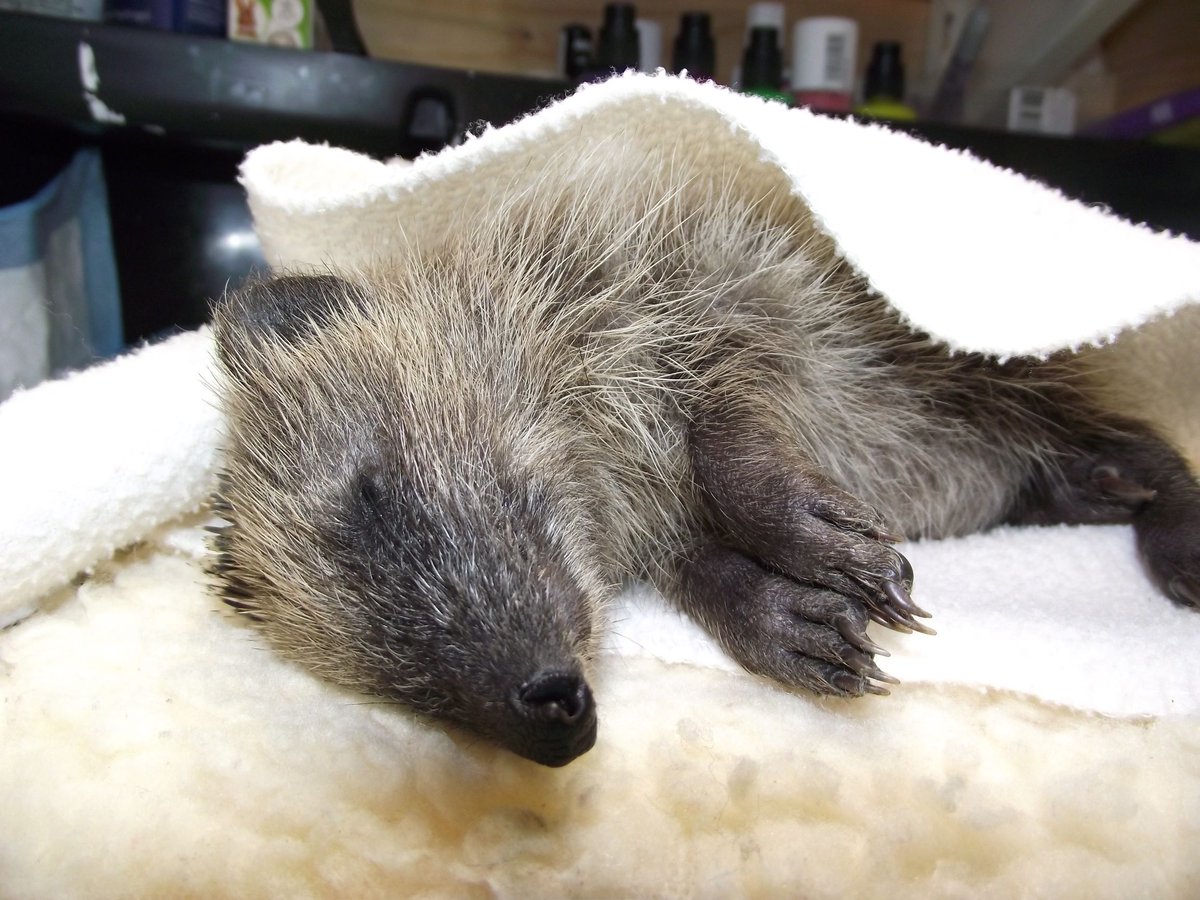
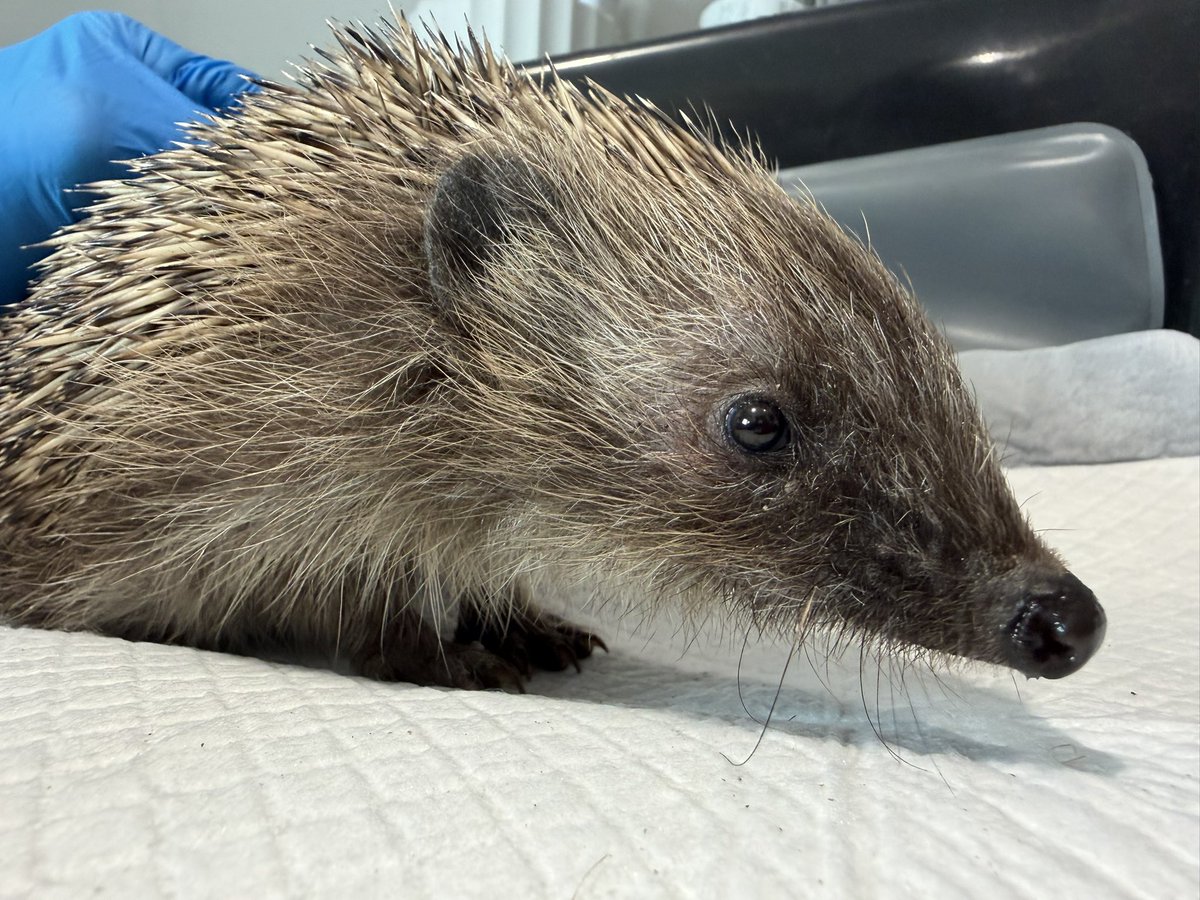
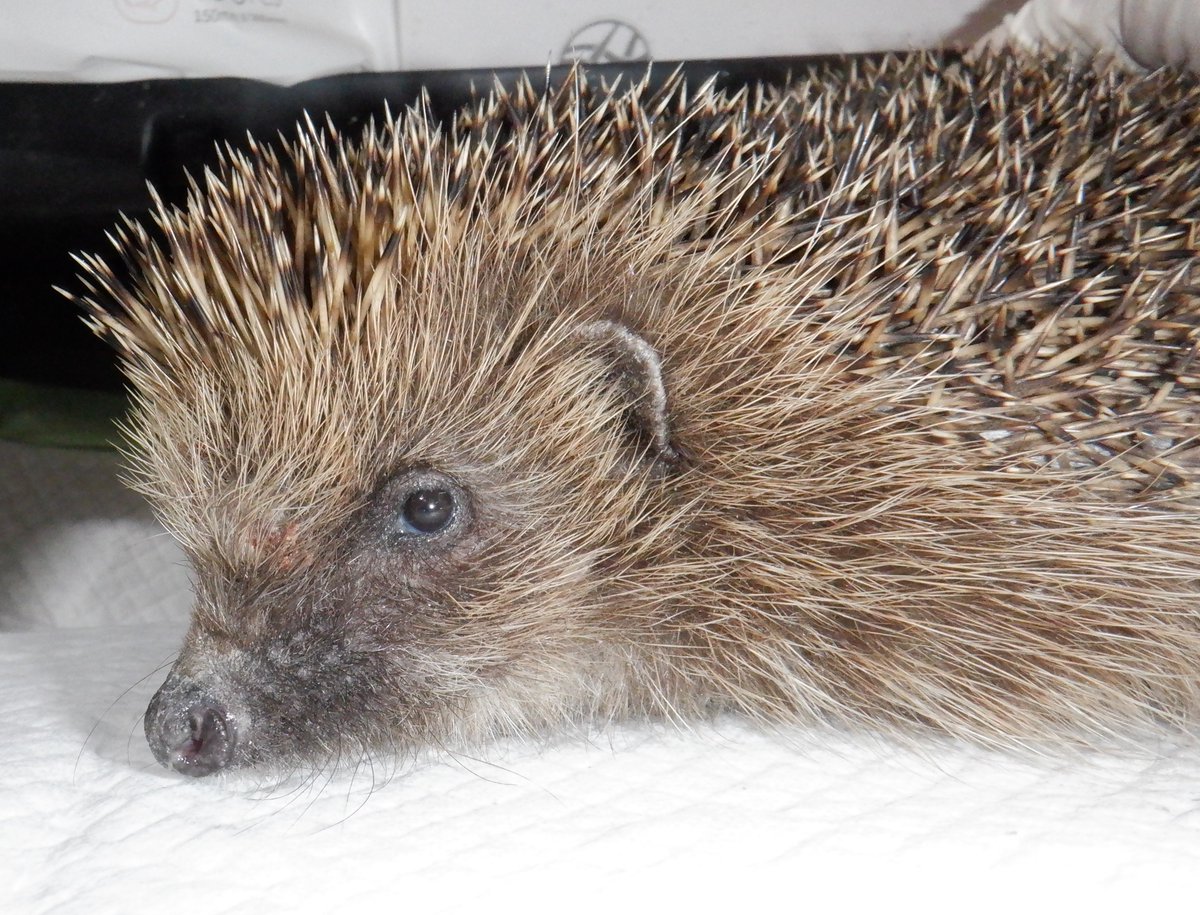
This precious baby is Margot, found out in the day by my neighbours. Margot at just 187g has painful wounds to her nose & face & her breathing is compromised. Margot’s had 4 days of intensive treatment to stabilise her, she’s not out of the woods yet, but today I have more hope❤️
Britain has lost around half its hedgerows since the Second World War. The wildlife that depended on them has followed a similar trajectory. 🌿
The old field boundary — a strip of blackthorn, hawthorn, dog rose, and elder two to five metres wide between cultivated ground — was not wasted agricultural space. It was a functioning ecological system that maintained pollinators, pest predators, and farmland birds across centuries of working land.
Each hedgerow is a nesting corridor for grey partridge and skylark, a foraging habitat for brown hares and hedgehogs, a site for solitary bee colonies, and a windbreak for the crops alongside it.
The field cultivated to its very edge gives the maximum return this season. It removes the populations of beneficial insects, farmland birds, and small mammals on which stable long-term production depended.
The field with a hedgerow yields a few percent less per cultivated hectare — but remains productive across decades without compensatory chemical inputs. The documented declines in grey partridge, lapwing, and skylark across the British agricultural landscape since the 1970s are directly linked to field consolidation and hedgerow removal.
Practical equivalents for the garden or smallholding:
- A strip of wildflower meadow at least one metre wide at the plot boundary
- A clump of nettles in a shaded corner as a habitat base for red admiral, small tortoiseshell, and peacock butterflies
- A native mixed hedge of blackthorn and hawthorn in place of post-and-wire fencing
- A section of uncut grass between rows of fruit trees
#HedgerowHabitat #FarmlandWildlife #NativeHedge #GardenWildlife
Lovely weather, isn't it?🌞
Unless you're a nocturnal animal who has to sleep all through the hot day, and wake at night to find no water.
No puddles.
No kind dishes.
Unseen.
Unthought of.
Just the tantalising smell of water from a pond you may drown in, or a drain you may get trapped in, or a stagnant, dirty old birdbath you may get fatal fluke from.
Hedgehogs need to drink a lot of water to stay healthy.
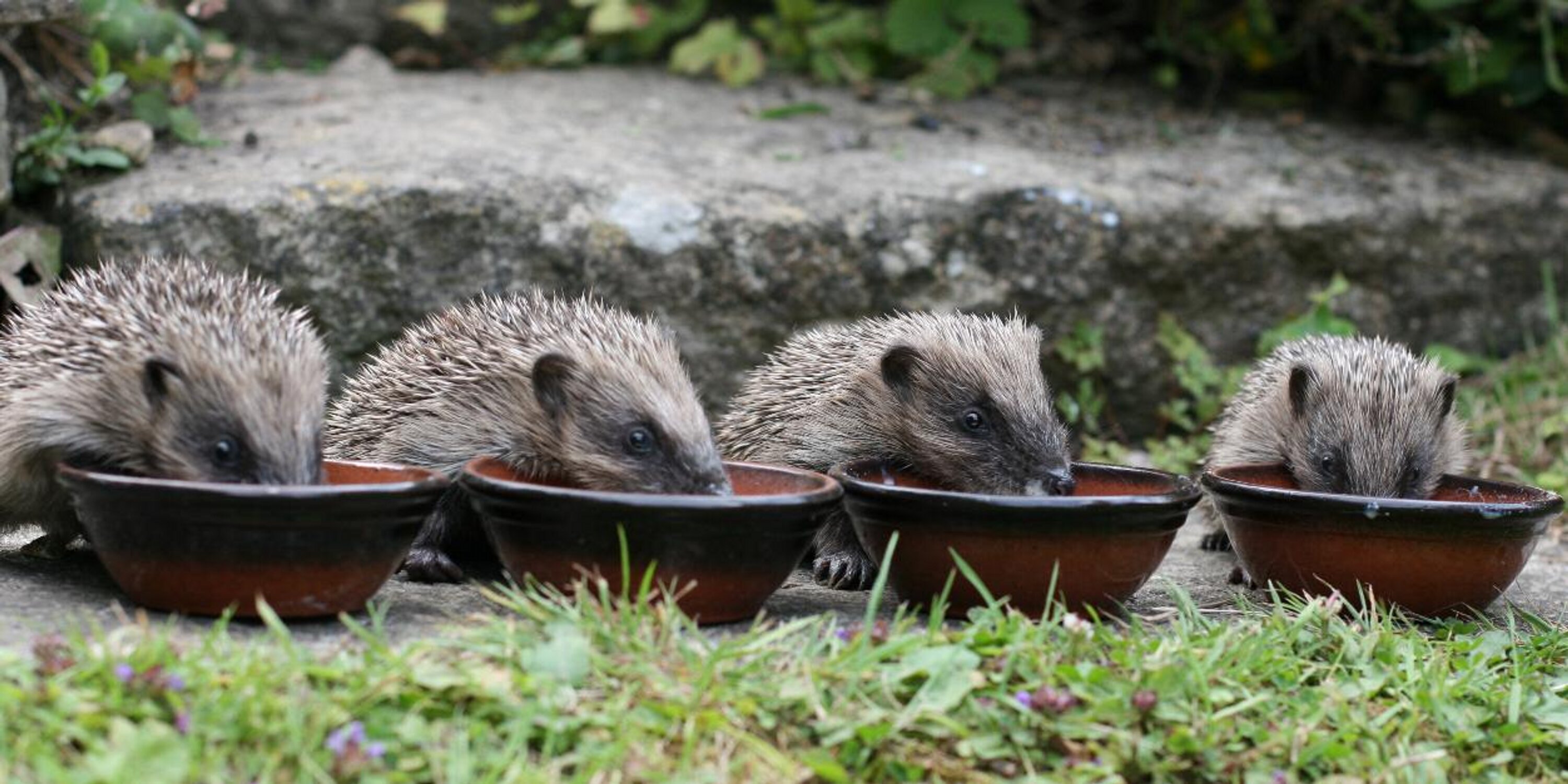
Please provide clean, fresh, safe ground level water for our precious wildlife. Tap water is best.
Pop a dish or two out tonight.
Keep it clean.
Keep it full.
Keep it saving lives.❤️
Please NEVER feed a daytime wildlife casualty.
I know, it's so hard not to.
When we see a suffering animal we feel a strong, innate impulse to help, and a desire to provide immediate tangible comfort; equating food with survival and care.
Feeding feels like a direct, immediate and nurturing action to alleviate suffering.
Yet it is the most catastrophically harmful thing you could ever do.
Especially hedgehogs out in the day, who will be hypothermic.
It takes a lot of energy to digest food, energy these compromised animals just don't have spare.
Every last bit of their energy is being used to maintain vital bodily functions - to keep the heart beating, to oxygenate the organs.
Forcing energy away from these critical functions for something as non-critical as digesting food will be a death sentence.
It won't be immediate, it may take hours, or a couple of days, but eventually, no matter what the experienced rescue you later take them to tries, the animal is already on the unstoppable journey into shock, aspiration, organ failure and death.
So please help in the right way.
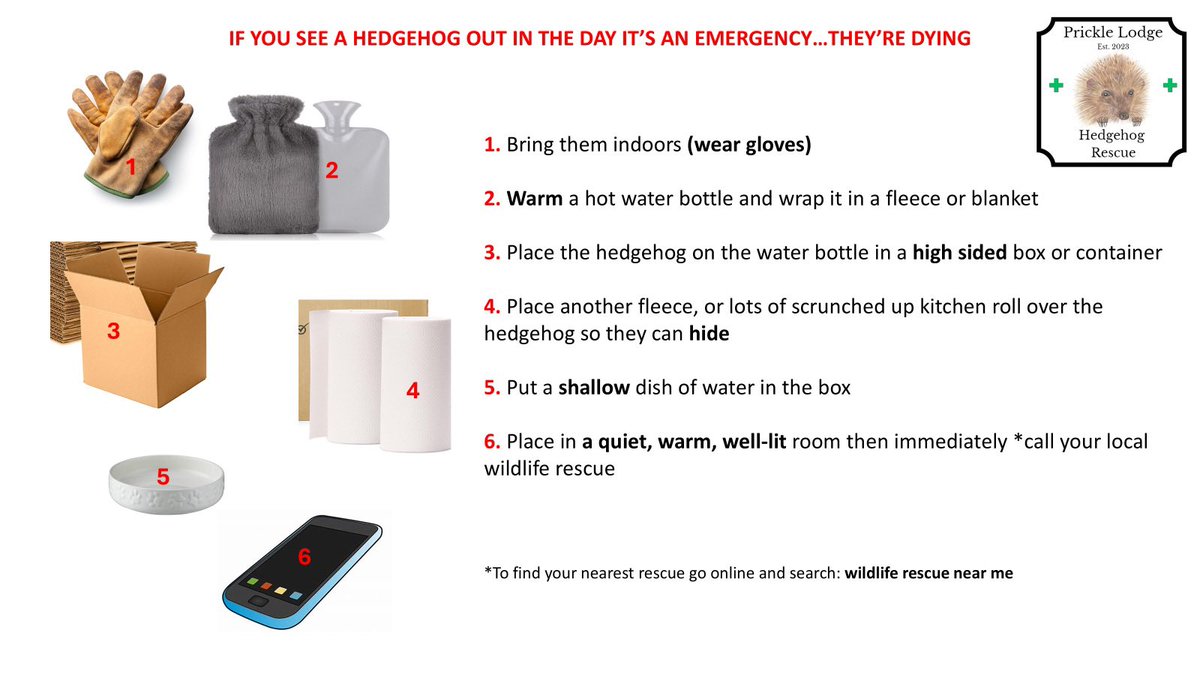
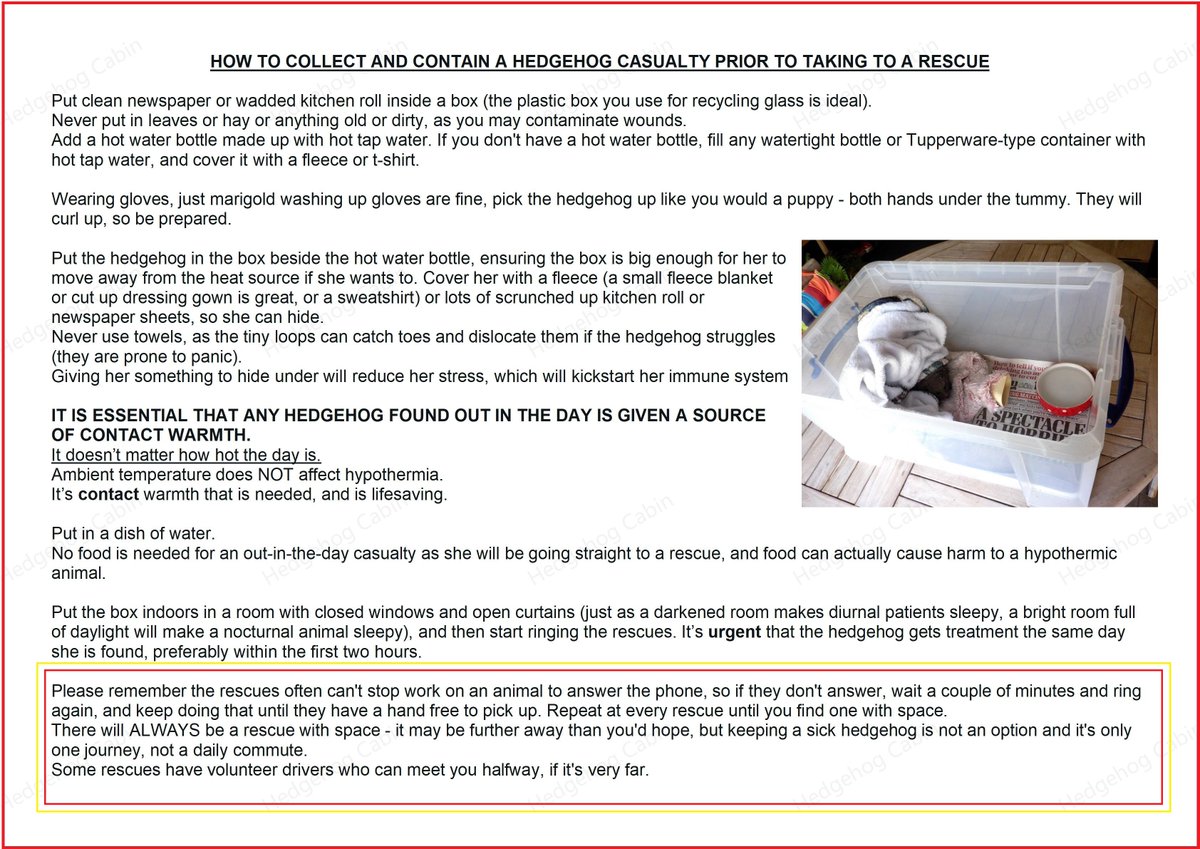
An out in the day hedgehog needs *contact* warmth, a safe indoor space away from flies, and cover to reduce their stress (please see advice below).
They are not going to die of starvation in the couple of hours between you finding them, and getting them to a rescue.😊
And please remember - any website that gives you DIY information on caring for or feeding injured or orphaned wildlife is, by default, wrong.
The ONLY right action is to get them to a good rescue (never a vet) where their complex needs can be met.
Even if you have seen this vital information before and understand it, feeding wildlife casualties is a powerful compulsion because it directly activates human instincts of empathy and compassion, often overriding the scientific advice against it.
So please remember this warning and spread it as far as you can.
Helping a wildlife casualty get to the expert treatment they need is an incredibly kind, altruistic act of great humanity. Just remember to provide them with what they need, not what you need.🥰
Happy May Day everyone.😘
And it's definitely a happy May day for dear sweet Onslow as he's responding brilliantly to his treatments now, and feels so much better.
He has one more week of treatment left but already the pain of the fluke infestation is a distant memory.
He's looking a little pensive here, maybe he's planning his release, and the route he'll take to find the girl of his dreams.🥰
Onslow's history: https://t.co/3V4y8WWdP7
Baby season is upon us and sadly, once again, these poor little animals are being kept by the finders instead of being brought into a rescue to get the life saving treatment they need.
Yes they look cute, but they need an expert eye and experienced hands, not your curiosity.
PLEASE NEVER KEEP ANY WILDLIFE YOU FIND.
You aren't helping, you are just causing more suffering.
Hedgehogs are delicate little animals with very special needs, and are all too easy to kill with enthusiasm and goodwill.
Their very lives depend on you doing the right thing.
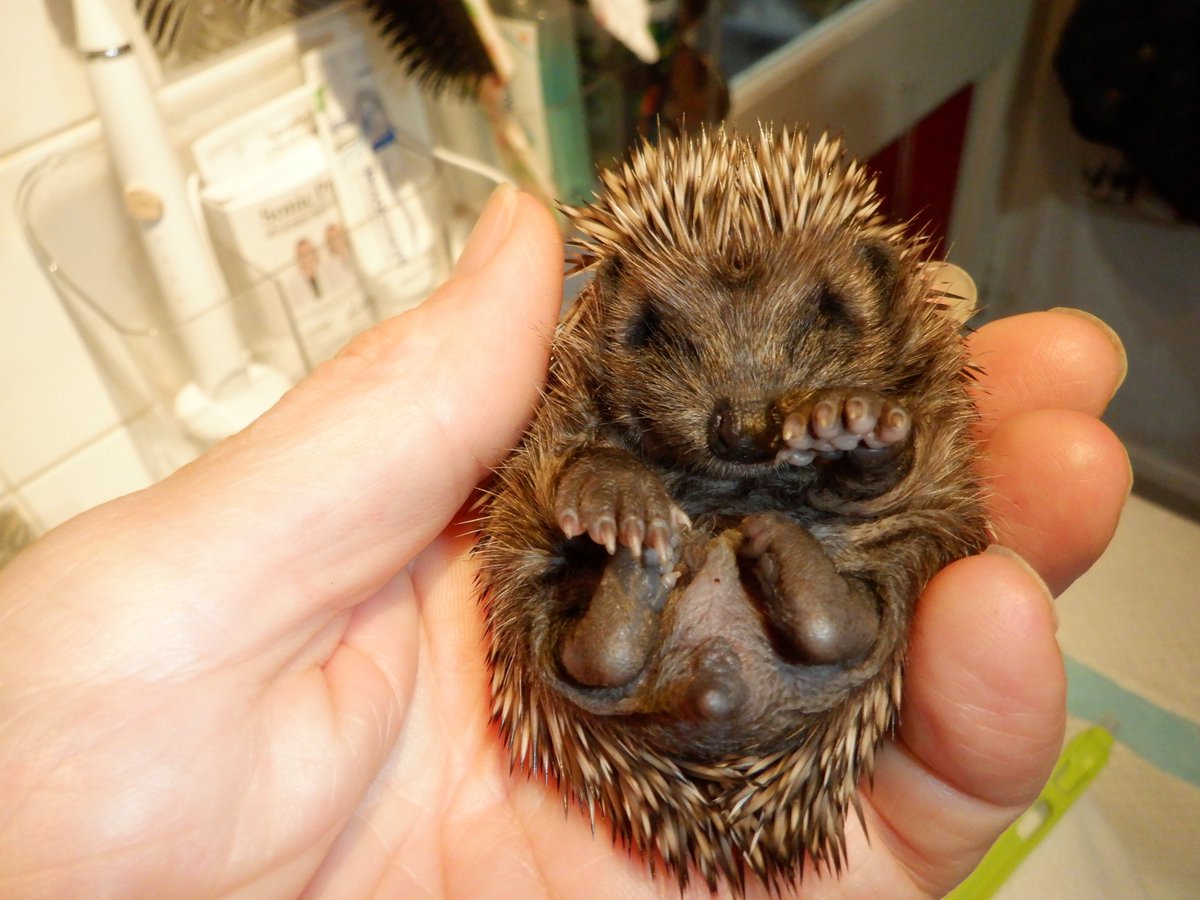
Below are images of the same hoglet, taken 10 minutes apart.
This baby and her siblings had been found crying, cold, and covered in fly eggs.
The finder proudly told me he had removed the fly eggs, and my heart dropped.
That delay, without warmth and fluids, could be fatal.
Thankfully he then brought them in before trying to feed them (and likely killing them outright).
The image on the left looks like a perfectly healthy little baby hedgehog, doesn't it?
You'd never suspect anything was wrong.
The video on the right was taken 10 minutes later, after I'd applied a substance that irritates maggots and makes them come out from where they have burrowed inside their victim.
The substance is very toxic and must be very carefully and sparingly applied by a knowledgeable and experienced rescue.
Although the finder had removed the fly eggs he could see, he had no idea there were eggs which had already hatched into maggots and had burrowed inside the poor baby's every orifice and tiny wound, out of sight.
This is just one of the many, many reasons you must never keep any wild animal you find.
They are not a DIY project, they are a precious little life that you can save, but only by doing the right thing.
Baby Izzy here and Ryder, one of her brothers, survived, and were successfully raised by the lovely Prickle Lodge, where they both still happily live today.
Tragically it was too late for her other brother.
The delay in bringing them in meant he suffered more damage, and he died shortly after arriving here.
Please put your own desires to one side and take any wildlife casualty you find straight to a rescue (never a vet).
That's what rescuing an animal really means.🥰
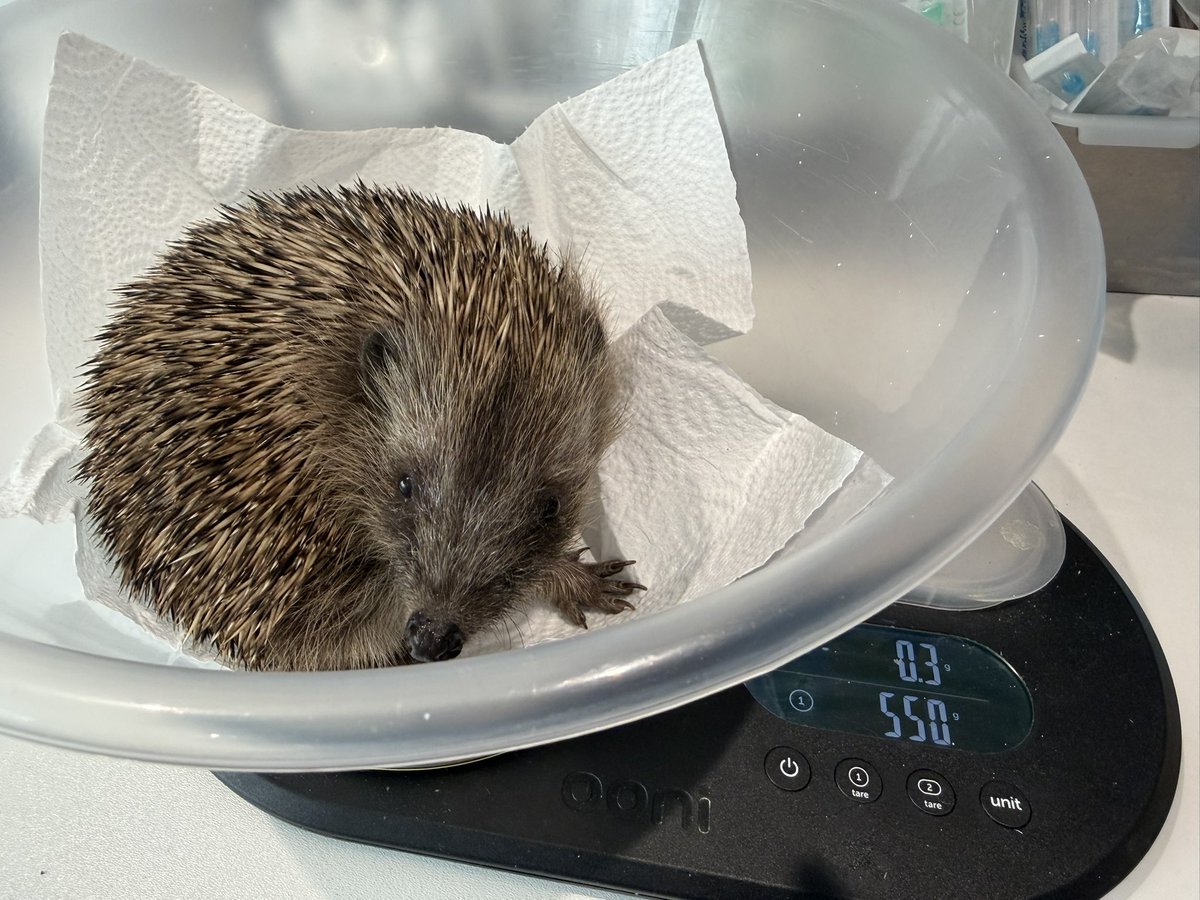
If I have one ask of anyone that can help. PLEASE provide food and water for these precious creatures. This poor boy at just 385g found out in the day should be twice his weight - just look at the shape of his body. My heart breaks for this endangered species 😢 #hedgehog
Please delete this. It's not only very wrong, it's harmful.
If you see a hedgehog 'lingering round garden work' or anywhere else in the day, she's seriously ill and needs taking to a rescue (never a vet) urgently.
Hedgehogs do NOT 'natually control slug and snail populations'.
Slugs and snails are the intermediate hosts of lungworm - deadly to ALL mammals.
The hedgehog has no magic immunity.
Only a hedgehog already dying of starvation would eat a slug, just to stop the pain.
If hedgehogs really could eat slugs without dying of lungworm they wouldn't be endangered through starvation, and they wouldn't need to hibernate, as there would never be a food shortage.
And compost bins need to be tightly secured against wildlife being able to gain entry.
They are HAZARDOUS.
Hundreds of hedgehogs die from compost bin poisoning every year. They are attracted to these man-made piles of rot by the warmth, as we've destroyed their natural habitat.
Decomposition of ANY material is a process that produces gases and pathogens.
It's the basic priciple of how composting works!😊
And decomposing material in the compost piles can start to form mold. Some molds cause a simple gastrointestinal upset, but some are deadly.
Decomposing organic matter in a compost bin can contain fungi which produce neurotoxins called tremorgenic mycotoxins.
These naturally occurring substances are highly toxic to both humans and animals.
Although the contents are deadly, the invertebrates the compost attracts make it very inviting to the insectivore hedgehog, who trusts it as a source of food, warmth and shelter.
The compost bin will be particularly attractive during the winter as it can provide a warm dry place to nest.
Very few people realise that consuming even a small amount of compost containing these mycotoxins can be deadly, and there is no cure for this poisoning.
Often people who find unexplained dead hedgehogs in their garden have no idea it was their open compost bin which was to blame.
⚠ If you or your neighbours have a compost bin, please ensure it is safe and inaccessable to wildlife, and your pets.
https://t.co/SDnIkt1Hlw
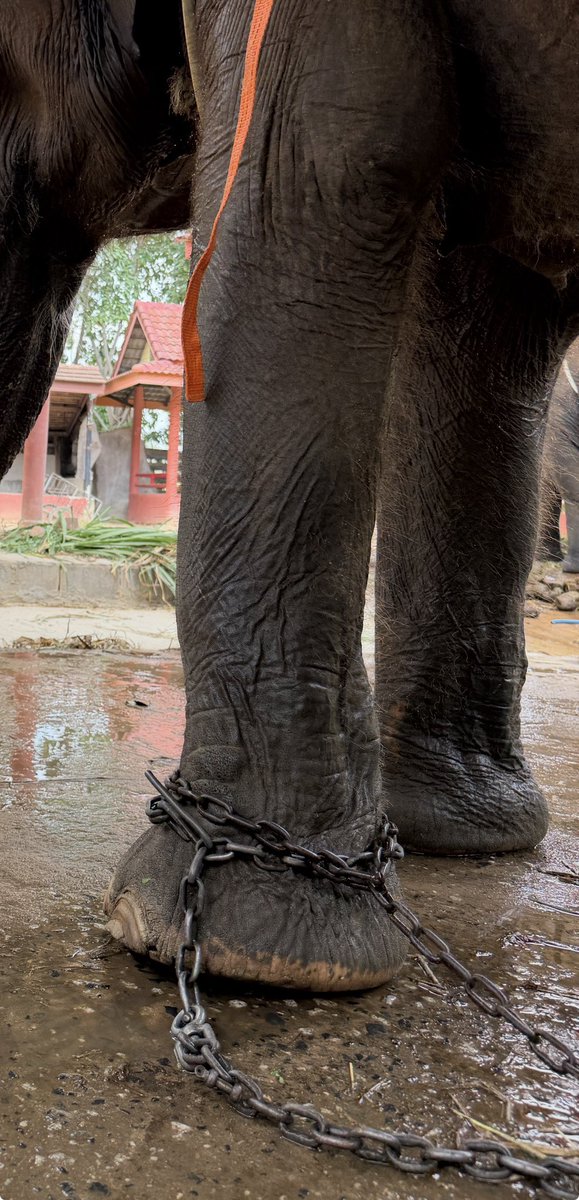
This is why I’m here in Thailand for my birthday — it’s a @karmagawa rescue mission we’re gonna rescue this poor 45-year-old elephant who’s been chained up her entire life and the only time she gets unshackled is when she’s forced to carry ignorant tourists who pay to ride her…and then after the ride, it’s right back to her shackles :(
This cruelty MUST end so please retweet this and help me warn everyone:
NEVER RIDE ELEPHANTS AS THAT FUNDS THIS CYCLE OF ABUSE!
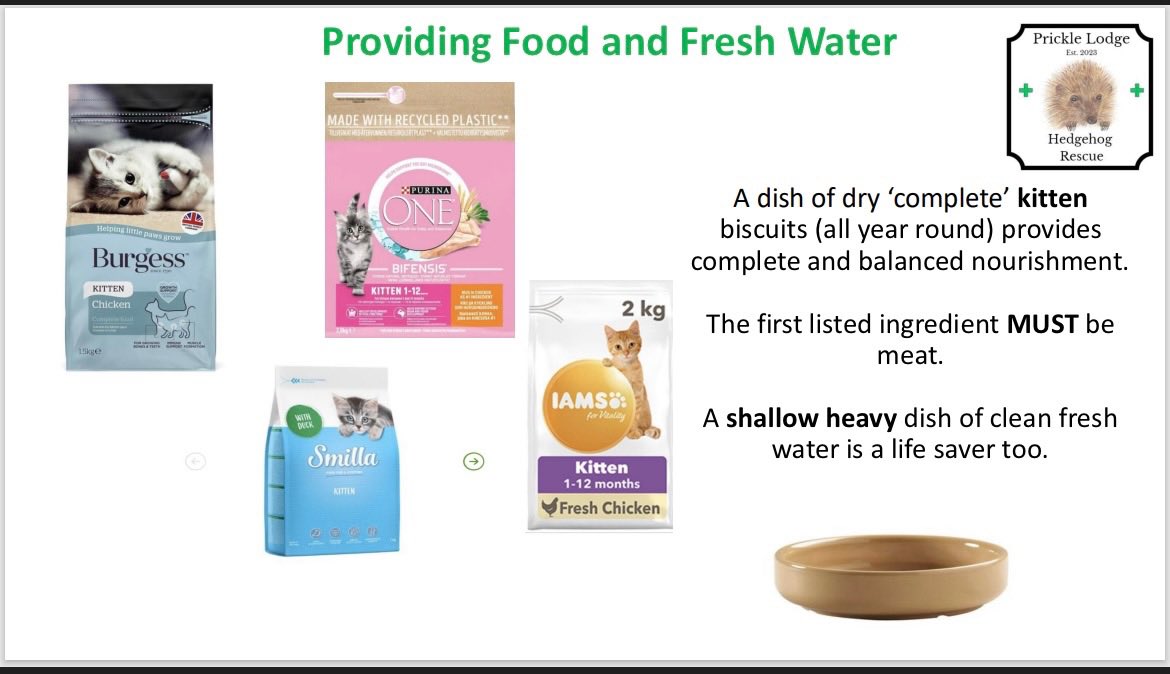
@oaksandlions Slugs carry lungworm and make them very ill - so they are not the best food for hedgehogs - put out a bowl of water and some dry or meaty catfood .
Elephants, both mothers and other adult females in the herd (often called "aunties"), stand over, surround, and guard their calves to provide protection, shade, and reassurance. This behaviour is a cornerstone of their highly social and protective nature, ensuring the safety of the young, especially when resting or during threats.
Reassurance and Comfort: A mother will often stand directly over or beside her calf, using her trunk to touch, guide, and soothe it, reducing fear and ensuring it stays close.
RT if you love Elephants 🐘 ❤️.
This precious boy is Olly, I suspect he’s struggled through the winter & forced to eat slugs as no natural food around. He’s emaciated, weak & full of lungworm. I’ve been worried for this poor boy. PLEASE HELP, providing food&water will help to save many precious lives #hedgehog
My husband rescued over 100 #toads this morning...
Stuck in just a few inches of water, at the bottom of a deep-sided pit under a grate . He walked over the grate a few times before he noticed movement and realised what it was. Thank goodness he was able to reach them!
The hedgehog is one of Britain’s most quietly beloved creatures.
For generations it has wandered our gardens at dusk, rustling softly through leaves and hedgerows as the evening settles across the countryside.
Small, determined and unmistakably endearing, the hedgehog has long been part of the familiar rhythm of British life.
Here are five fascinating facts about this remarkable little animal:
1. Hedgehogs travel surprisingly far - In a single night a hedgehog may roam over a mile in search of food, quietly moving between gardens, hedges and fields.
2. They carry thousands of spines - An adult hedgehog has around 5,000 to 7,000 spines, forming a natural armour that protects it when it curls into its famous defensive ball.
3. They hibernate through winter - As temperatures fall, hedgehogs enter hibernation, lowering their heart rate dramatically and surviving on the fat reserves they built during autumn.
4. They are natural pest controllers - Hedgehogs feed on beetles, caterpillars, worms and slugs, quietly helping keep gardens and ecosystems in balance.
5. They have lived in Britain for thousands of years - Hedgehogs have been part of Britain’s natural landscape since the end of the last Ice Age, making them one of the country’s oldest native mammals.
Small, gentle and enduring, the hedgehog is one of the many little things that make Britain feel like home.
Dame Daphne Sheldrick believed elephants can read your heart – and once you've earned their trust and affection, they never forget it.
This Valentine's Day, we'd love to help you find your orphan match. Perhaps a spirited troublemaker who keeps the Keepers on their toes. A gentle soul who comforts newer arrivals. Or a resilient survivor who refused to give up. Meet the orphans in our care and see who's your perfect partner:
https://t.co/NBlFMZ14PE