Why the age-old real-estate tricolon commands more attention in the GCC business today, and how AI can help make decisions with confidence
https://t.co/g7bhotZItI
@kearney I could not find the following words/ phrases mentioned anywhere in your article: outsourcing, offshoring, global business services (GBS), shared services, global capability centers (GCCs). Have none of these trends impacted the enterprise operating model in any way? Interesting!
Check out my latest article: How Global Capability Centers Are Rewriting the Rules in the Retail &Consumer Packaged Goods Industry https://t.co/OAoFpWwyyQ via @LinkedIn
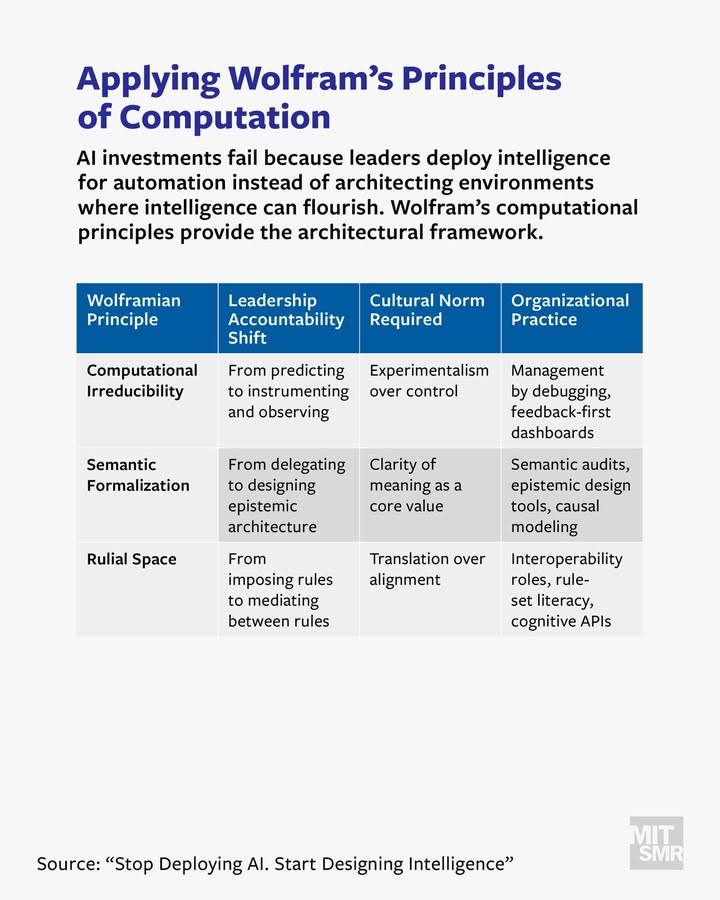
AI investments are exploding, but enterprise returns remain mediocre. The core issue? Leadership deploys intelligence as if it were automation. But intelligence — human or machine — can’t simply be inserted into workflows; it must be architected into environments. Most organizational designs manage effort and enforce alignment — they do not orchestrate reasoning, learning, or adaptive value creation. This is their AI strategic blind spot. Yet this is precisely where Wolfram’s computational philosophy offers essential and actionable clarity: Unlocking AI’s value requires leaders to ask not what tools can do but what architectures and infrastructures let intelligence emerge, evolve, and flourish.
Organizations that treat intelligence as a designable infrastructure — not as an emergent property of tools — are likely to obtain faster, higher-quality decisions; reduced systemic risk; and enhanced adaptive capacity.
Read the full article >> https://t.co/ciM9gBxoy1
Tech can streamline workflows, but it can also blur ethical lines.
Explore how to embed ethical principles into workplace adoption: https://t.co/dwYkd1GE93
Great communicators lean into their abilities for strategic message design, creative judgment, and empathy — skills that artificial intelligence can’t replicate. https://t.co/NoC7203dsH @nancyduarte
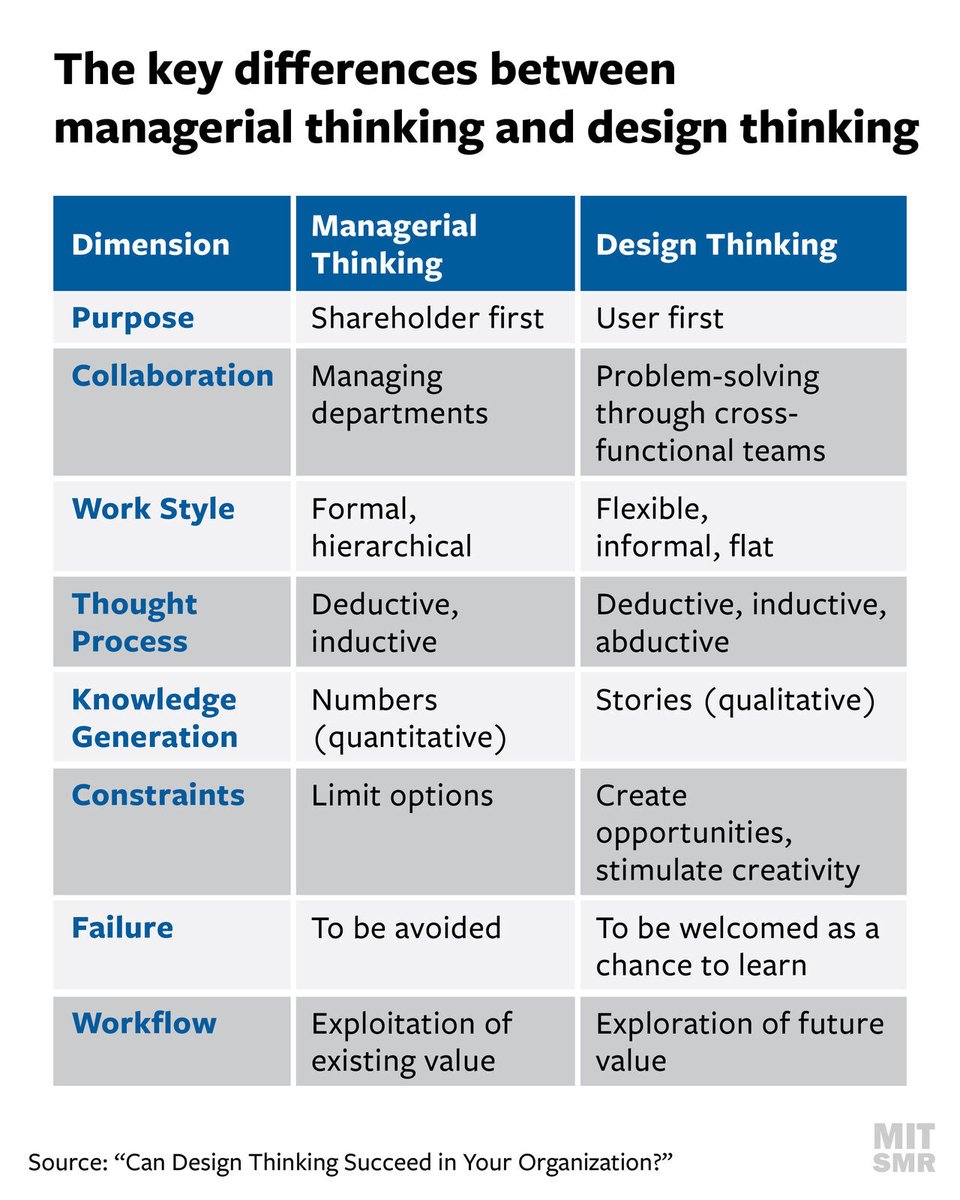
The eight dimensions of design thinking capture essential differences in how managers and designers perform their work and make decisions.
https://t.co/0CLMUzw6YG
The extent to which a team balances psychological safety and intellectual honesty can be mapped to four innovation cultures, along with a neutral culture that is subject to neither the dangers nor the benefits of the others.
▶️ https://t.co/ea4rlS3K6w