@YOASOBI_staff Thank you for hosting the concert in Brooklyn. I look forward to seeing you again soon.
I am also trying to get in touch with the person who sat in section F5, row 6. If you are able to help connect us or pass along my information, I would greatly appreciate it.
The spot I'm dying to check out is #DevonPawnshop
Version 2.0 is now live! Log in to claim Polychrome ×1,600 and a standard S-Rank Agent. Download the game now: https://t.co/0uYyTkj8rj
#zzzero
✨Set 1✨
Commemoration of Version 5.6 Update
🎁Participate in the event for a chance to win a $75 Amazon gift card.
How to Participate:
① Follow @GenshinImpact
② Retweet this post
You can instantly check the event results here>>>
https://t.co/JvkWM5IVtY
#GenshinImpact
===================
⚔️AmiAmiQUEST⚔️
[Ninja Amico] arises!
===================
"I'm as fast as lightning... Do you think you can stop me?"
▶️JOIN
Earn points in #AmiAmiQUEST🔥
👉️https://t.co/xBuPkBsTdw
#amiami25th
$sofi
#sofi@StockMarketNerd@DataDInvesting@FunOfInvesting@Futurenvesting
@Kross_Roads
@Micro2Macr0
OK, WHAT THE HECK IS SOFI DOING IN 2024?
(SOFI FOR DUMMIES)
Warning -this is a long post but I think informative (feel free to share or repost it). [Not all the specifics but a good summary]. IMO
BACKROUND
There are a lot of misconceptions and misunderstandings, intentional and otherwise, on X and YouTube regarding Sofi operations and results, as well as speed of new product implementation and stock price guidance. Most of these misunderstandings come from individuals without any significant business or banking experience, and even more with barely any understanding of GAAP accounting or accounting rules.
For your information, I was a partner in a large national law firm, a partner in a large national accounting firm, a managing director of a large wealth management firm and a C-Suite executive in a fortune 500 company and a key leader in the restructuring of that company. I have led or participated in a large number of restructurings and own several small companies. I consult on corporate restructuring, Board of Director issues and initiatives and am an expert in valuations and forensic accounting. For example, I reconstructed 20 years of financials of a number of foreign banks and translated those resulting financials into US GAAP. I also taught accounting courses at University of Michigan for 3 years.
That being said, this post is not financial advice and you should always vet facts and opinions you read on X or hear on YouTube, and conduct your own due diligence. As I stated to someone, I am an attorney, but I’m not your attorney. I am an expert, but I’m not your expert. I’m not going to tell you to buy the stock or sell the stock.
For the record, I do own a position in Sofi, and in this post, I am just giving you some of my insights as to what I think is going on. I’m not going into the numbers – there are a number of people on this platform that do a great job of tracking and analyzing the numbers. I just want to give you an idea of what’s likely going on in the Sofi recent developments. I will simplify it to an extent for ease of understanding .
TRANSITIONING TO A LARGE BANK
Sofi stated in their recent filings and earnings reports that is facing a transitional year where financial services and tech should become 50% of the business.
So, let’s think about how you would transition from a student lending company to a major bank. Sorry to disappoint some people, but that’s simply not going to happen in 3 or 4 years or even 10 years. It’s a business journey that requires a lot of work by a lot of people that’s not shown on any chart.
Anthony Noto became Sofi’s CEO in February 2018 (when Sofi was a student lending company), and shortly after expanded Sofi operations to include other loans, checking and savings and investing with the goal of becoming the “AWS of fintech.”
Roadblocks
Then Covid came and in March 2020, student loan payments were paused (which continues to this day). But they overcame that by leaning in on personal loans.
Then Sofi went public in June 2021 by merging with a SPAC (and all the built-in capital problems and legacy accounting issues associated with them).
In January and February 2022, Sofi was able to garner a national banking license.
Then in March 2022, the Fed stated a historical ramp up in interest rates, which typically leads to poor bank performance (and resulted in bank failures and banking stress generally).
In less than 2 years after obtaining its banking license, Sofi has now had 2 profitable quarters. During those 2 years, Sofi grew its revenue and more importantly, its members substantially (more on that later).
I always thought of Sofi as a long-term investment and as a disruptor of banking. Aside from the AWS of fintech arguments, which I knew from my experience with software implementations, could take a long time, I simply liked the fact that I didn’t have to pay account fees, check fees, overdraft fees etc. and can pay my credit card in the app. That alone differentiates it from all my bank accounts where the bank would hold my deposits and then charge me an account fee because I did not maintain the required balance. I will never go back.
GROWING AND RESTRUCTURING SOFI
Sofi began its transition by expanding offerings and growing members. They did that and continue to do that very successfully. They needed to add new products and expertise. They have and continue to do that successfully.
However, they had a lot of capital structure issues as I reviewed their financials last November, some of which were related to the SPAC origination and others because of the huge growth in personal loans which used up a lot of their capital ratios.
There were numerous bear arguments on X saying Sofi faced a dire capital ratio problem. But all they needed to do actually was restructure their capital. I posted this on X last October/ November saying they could easily boost their capital ratios significantly by simply buying back some of their 2026 convertible debt at a discount. For every S100 million they bought back at the then 30% market discount, they would have a $30 million gain and an 8x or 2.4 billion increase in available capital lending capacity. The retirement of that debt at a 30% discount also lowered future potential dilution and fully diluted shares. Several so called “investment experts” disagreed. THEY WERE WRONG.
Then I also advised Sofi needed to get rid of the preferred shares paying 12% cumulative dividend, which for accounting purposes was treated as debt and interest expense. With the jump in interest rates on that preferred and being treated as interest, that multimillion dollar hit to eps every quarter for years needed to be eliminated.
In their latest restructuring, they converted more of the 2026 convertible debt at a discount. It was at a higher conversion ratio because the discount had fallen from 30% to 15%... and likely because it was necessary to keep their credit options open. Because those noteholders lost so much money on that investment and Sofi was also issuing similar new notes, part of that extra dilution was likely a necessary negotiation to ensure a good market for the new convertible bonds. Although there was share dilution, there was minimal or no book value dilution.
The new 2029 convertible bond issuance was used redeem the preferred with greater than 15% preferred dividend rate with new convertible 1% debt which reduce expenses and cash flow by over $59 million a year, which not only boosts cash and future book value but eps for years.
The 2029 notes also have a cost – they also have a conversion feature and possible dilution. Part of the dilution is protected by a capped call.
The issuance of 2029 notes however likely resulted in shorting of Sofi stock related to delta hedging. An example of that would be buying the convertible debt, giving you an option of acquiring the shares, then shorting the stock. If the stock goes down, your investment in the convertible is protected and you can also have gains from the short, and if the stock goes up, you can deliver the converted shares. Either way, you receive the proceeds of the short sale and can invest them and get additional returns. Sofi can also use cash to redeem the 2029 convertible debt under certain circumstances. If the stock trades sideways for a year or even two, Sofi could have an opportunity to buy some of it back at a discount also.
Will this result in dilution? Very likely, but not all dilution is bad. You obviously have dilution in shares, but whether any dilution is bad depends on how you use the proceeds to grow the company and what returns you achieve.
So now Sofi’s remaining capital issues are redeeming the $500 million balance of the 2026 notes, likely for cash at maturity in 2+ years. They have plenty of cash, and in those 2 years, Sofi will grow book value by way more than that.
The 2029 notes are due in 5 years. As I stated there are many options, depending on what happens between now and then, but most likely there will be some dilution.
WHY THE INTENTIONAL DECREASE IN LENDING?
Sofi stated that lending will be lower this year, 92% to 95% of last year, and they were tightening their lending guidelines and credit standards and even eliminating loans at lower credit tiers.
Everyone wants to know why? Well, it’s not because they can't ramp up loans. Noto stated that they had that option depending on market conditions. (I would like to point out that all this was determined prior to Powell stating that he did not see the Fed raising rates this year so look for Sofi to beat their guidance again for 2nd quarter.)
The market for loans is fairly good, as verified by Sofi competitors and big banks. The reason they expect reduced lending is because they are tightening credit standards.
So, you have to ask yourself why? Diehard bears would suggest that their defaults will sky rocket. But even in 2008 and thereafter, personal loans with high fico scores had very low default rates.
THE ANSWER IS IN FAIR VALUE ACCOUNTING
Keeping it simple, you can originate loans for sale or you can originate loans for investment. With Sofi’s history of originating and selling those loans, they adopted held for sale accounting. Under that method, you originate and package loans and value them for sale based on the price you can sell them. For Sofi personal loans, as an example, because the loans are of higher credit quality, you could sell them for a premium, say at 104% to 105%. That means that if the market for 14% personal loans is par or 100, Sofi can sell them for 4% to 5% more because of their lower likely default rates than other personal loans being sold, and that calculation is also based on certain benchmark rates on risk free assets and present value rates.
Sofi would hold the loans for sale for a short period after valuing them and sell them for about that same value and recognize the premium as income immediately. That is basically fair value accounting, you determine what the value of the loans are and recognize the fair value as premiums even before you sell them. That was and is Sofi’s accounting method.
The other accounting method is CECL (current expected credit losses). The CECL model requires the immediate recognition of estimated expected credit losses over the life of the financial instrument by setting up an expense and an allowance account. You then adjust that account periodically as you determine defaults, based also on certain benchmark rates on risk free assets and present value rates.
Under HFS accounting you recognizes all the income immediately and adjust higher and lower depending on defaults and market conditions. In HFI accounting, you estimate the defaults and recognize that expense immediately, and then adjust that periodically on basically the same data.
Over the term of the loans, the interest income and default expenses should be almost the same. They are both acceptable accounting methods. So, what is the issue?
Because Sofi loan standards are more restrictive, its loans are valued higher than other loans and have high fair values. Sofi would recognize the fair values as income, and those loans would then be held on the books with those fair values. Every period, Sofi then has to value those loans and adjust those fair values based on default rates, benchmark interest rates, discount rates etc.
When interest rates rose, Sofi loans had high fair values, which they would typically sell and gain that premium. They would use those loan sales as part of the evidence for their fair value calculation for loans held for sale in inventory. But Sofi determined with the high rates and good credit ratings on those loans, it could actually make more by holding those loans than selling them, and they did.
As rates continued to rise, they built up more and more loan inventory with low default rates that increased profitability.
Thus, they built up substantial fair value premium adjustments on those loans. Those loan premiums (i.e. the fair values) must be amortized over the terms of the loans reducing income. Between January 1, 2022 and December 31, 2023, Sofi personal loans on their books went from roughly $3 billion with cumulative fair adjustments of $95 million to $15 billion and with $718 million with cumulative fair adjustments.
So that’s the issue. Some analysts don’t understand why fed rates can go up and Sofi can maintain their fair values, arguing that Sofi would have to continue growing the personal loans to save it from a big write off of lowering fair values and Sofi would run out of capital ratio room to do it (which was fixed by their capital restructurings). They also emphasized that Sofi used a similar discount rate to the risk-free fed rate and that didn’t make sense.
One alternative is to value the loans based on the present value of cash flows using the loan rate and discounting that income flow based on a standard benchmark that takes into account average default rates, which would not be anywhere close to the fed risk-free rates. But Sofi’s loans were way better than the average default rates and credit quality of those benchmarks, so it chose to determine its fair value calculation by, for example, taking 15% loans and subtracting the 4.4 % cost of capital (the blended rate it pays on deposits) and its 4% default rates, netting 6.6 % a year, then discounting those cash flows using a much closer rate to the fed’s risk-free rate. Why? Because they lowered the amount of cash flow by the defaults (and likely prepayment risk), thus risk adjusting the returns so they needed to risk adjust the discount rate close to a risk-free return. So that argument is easily dismantled.
The next argument was that all those old loans had to have lower fair values than the new loans, so the average fair values of the entire loan book should be lower, requiring large write offs. But as you originate more loans, the higher fair values of the new loans in greater amounts offset the lower fair values , if any, of the older loans in smaller amounts. Furthermore, a lot of those fair values on the older loans gets reduced through amortization each period and the 6.6% annual return of a much larger loan base can easily covers the say 1-1.5% amortized premiums of the older lower loan amounts in a year. Also, on an ongoing basis, the older loans are paid and fall off of the loan book, so as rates rise, it doesn’t vary that much.
Is there room for someone using fair value accounting to take advantage of the rules and keep fair values higher? Yes. The calculation of values under fair value accounting is more complicated and has more inputs than I have described, but I am trying to keep it simple. Those fair values are reviewed and calculated by a thir party valuation firm and approved by Sofi outside attorneys and accountants.
WHAT IS THE REAL FAIR VALUE RISK?
The fair value risk for Sofi related to running out of capital ratio space is gone now. They have plenty of capital ratio space and they are growing more with increased EBITDA each quarter.
There were always capital options for them. The real risk is the $718 million of fair value adjustments in inventory at the end of the 2023 year. Sofi can’t let that inventory grow further. It is a long-time burden against earnings and thus capital.
What could trigger a large write-off of this balance and a hit to the profitability trend. Well, it has always been the same things. First, default rates increasing substantially. As we discussed, higher average default rates lower fair values. However, Sofi default rates fell this last quarter because they presold some loans that would otherwise have defaulted, and they obtained double the return. Bears may not like it, but they can do that – it’s perfectly ok. They can also buy credit default spreads to protect against default rates (like they did for their student loans). This is done to MANAGE the fair values and is fine to do. Banks manage defaults and have entire departments to avoid defaults, modify loans and workout loans.
The other thing that could trigger fair value write offs is rapidly declining rates. Surprised? Well, here’s that issue. When rates decline, debtors will refinance those loans. When that happens, all of the fair value of that loan is written off because its then paid off. Sofi markets the member’s ability to refinance these loans at no cost. So, if rates fall every month, a large portion of Sofi loans could refinance and cause a very large write off of those fair values in one quarter, reducing its capital necessary to grow members by taking advantage of other non-clients that want to refinance with Sofi. Now that there is only the prospect of one rate reduction, later in the year, Sofi has an opportunity.
So, as a good manager that foresees this, what would you do? Well, you would start trying to reduce (let run off) those fair value premiums in inventory, which they did in the first quarter from $718 million to $608 million a 15% quarter to quarter reduction. Eps would have been roughly 10 cents a share higher on a fully diluted basis without that reduction.
You can expect that will continue for the next 3 quarters. Why? My guess is Sofi wants to run off all those fair value so it has a lot of capital ratio room to refinance its members and substantially grow members in the declining rate environment later in the year. But more importantly, I predict that after that is done, Sofi can then switch from fair value accounting with all loans being held for sale to a plan to start originating loans for investment using cecl and originate other loans for sale using fair value accounting to balance their income in volatile periods, like diversifying, without the ongoing fair value overhang.
However, by running off those fair values, you need substantial origination of new loans to offset that amortization expense and maintain profitability. But if you keep the same credit box and underwriting, originating more loans that won’t sell for higher fair values builds up additional loans and fair value adjustments in inventory. If defaults increase, your fair value adjustments in inventory are at risk of write off.
To offset that, you would restrict credit so you can originate loans with greater credit quality that could be sold at higher premiums now (or even later if rates fall). This not only increases the average fair values on sales, but it also lowers the average defaults in inventory if you hold some of those higher quality loans.
Sofi did that in the first quarter by selling $1.9 billion of personal loans at higher fair values, offsetting the $110 million of amortization. The key is to package higher quality loans and sell most of them, and manage your defaults while you do it.
By restricting credit, Sofi naturally would likely model a decrease in lending, but it has plenty of room on the margin to increase originations without a significant risk of this plan, especially now that Powell rules out a rate hike.
Furthermore, Sofi guided the roughly the same numbers for the first quarter and beat those, so it's likely they beat their guide by a similar margin in the 2nd quarter. Their guide was just conservative, as Noto stated. Remember, he said this BEFORE Powell ruled out rate hikes. They can always take advantage of originating more loans and beat the guide substantially.
So, towards the end of the year, Sofi should have a solid balance sheet, a solid capital structure. large capital ratios and a cash position to reduce reliance on more expensive warehouse facilities, more substantially ramp up members and capture a solid share of the upcoming refinancing business in a declining rate environment, and also start originating loans at higher than market rates and selling loans they originate for higher premiums after a shorter holding period because interest rates will likely be falling. All this without any fair value overhang. All without any fair value bear thesis.
Thus, they will be transitioning to a capital and loan structure similar to a big bank.
A FEW THOUGHTS ABOUT TECH AND PRODUCTS
Regarding tech, as I stated before, those projects take about 3 years. I believe Citi and Wells Fargo and I think B of A all need new tech stacks as well as a lot of larger regional banks. They all move slowly. It’s not an easy decision, but not a lot of providers have an offering of a fully integrated stack. Sofi should win their share of those, but certainly not all. If they get 20% gains without those wins this year, that's totally acceptable. They've only had Galileo and Technysis a short period of time.
Regarding rolling out new products... Zelle is here, but what about better user interface, Level 1 options, business banking, better credit card offering, better etfs, asset management, tax software, better bill pay and accounting offering, insurance, growing members 1 million per quarter etc. etc.
It's likely that one or 2 of those will be this year. If you review Sofi employment job opportunities, you'll see what they are working on.
You can’t do all of these new products at once or even in a year or two. They need to hire people and develop additional infrastructure for each of these.
So, feel free to be bearish. It's possible the stock will stay between 7 and 9 most of this year, which is what I posted on X…..
But maybe higher at the end of the year…. think of this, if they have 8 cents profitability for this whole year while running off 10 cents a quarter of fair value expense amortization, that's about 48 cents (without significant further fair value write offs) and flat 2025 guidance. Now that $.80 guidance for 2026 seems to be a bit low, doesn’t it?
Add to that, what happens if Sofi gets to 30 million members and develops small fee based premium credit card that they provide to half those members and earn net $40 profit. That’s $600 million more in net income. What if they provide asset management and custodial fees, that could be even more. My conclusion is…IT’S ALL ABOUT THE MEMBERS.
I'm investing for 5+ years for what I see is their future. I have a lot of legal, accounting, and restructuring experience. And as long as they are proceeding based on what I think is the proper strategy and making progress, I'll invest more, especially at these prices. We’ll all have to wait and see.
Sofi is making great progress.
Now rolling out: Zelle® + SoFi 💸
As one of the most requested SoFi features, we’re proud to share that we’re now rolling out Zelle® in the SoFi app! To make sure our members have the best experience, we’re introducing the feature over the coming weeks. Some eligible members will have access as early as today, while others will find it in their app soon. You’ll receive an email once this feature is available to you.
Learn more here: 👇
https://t.co/M4ZLcdqsRg
Here is my take on the $SOFI convertible notes.
Let's level set here for a second. This is a complicated set of transactions and I'm not going to be able to cover it all in a tweet.
Here is what we know:
1) SoFi is offering $750M in convertible notes
2) With the proceeds they will redeem their preferred shares, cover the costs of the transaction, buy capped calls, and for general purposes, which may include repayment of higher cost indebtedness.
3) They are issuing about 61M shares of stock to retire around $600M of debt
Additionally, there is still a lot we do not know. We don't know the interest rate on the convertible notes, conversion prices, or any details about the capped calls. These will come out in time.
As with any deal, there are upsides and downsides. I'll lay them out, as I see them, as transparently as possible. I'll cover the facts first and then talk about my opinions and thoughts.
Negatives:
61M shares is a lot of shares. We also don't know the final conversion price yet. If it's lower, it'll be even more shares. That's a lot of dilution, around 6%. The original convertible notes didn't convert until just above $22/share and would have only resulted in around a max of 48M shares diluted. So there is an extra 12M shares or so of dilution to pay these off AND they haven't even retired the entirety of the debt, just $600M of the remaining $1.1B.
Using the numbers in the press release, they are paying off $600M of debt with $529.5M raised by offering those shares. So they are paying about 89 cents on the dollar to buy back the debt.
Benefits:
The preferred shares that are being a redeemed have a 12.5% dividend, that's around $40M/yr and it is going to increase in May to over 15%, or around $15M/yr. It costs $323.4M to redeem those shares, which is what a portion of the $750M is for.
Since they are buying back old debt at a discount, it results in a GAAP net income and tangible book value increase in Q1. The entire deal would result in an increase of total risk-based capital increase of "more than 200 basis points from 15.3% to more than 17.3% on a pro forma basis" based on Q4 numbers.
Ok. Everything I've shared up until now are facts. Feel free to share your own opinions about them. Now it's time to get into my opinions. As we get more details in the future, I reserve the right to change my opinion.
Downsides:
I don't like that they are diluting at such a low stock price because I think it is undervalued at these prices. Let's assume for a minute that by the end of this year the stock price gets to $15 and they can buy back the $600M at price ($1 for $1). That would only be 40M shares, not 61M. They could dilute for less if they waited for a higher stock price, but then would not have gotten the gain in total capital. 61M shares is about 6.3% dilution.
Additionally, if you look at the terms of the original 2021 convertible notes, the redemption price would have resulted in between 33.7M and 48.1M in dilution. This is more dilution than originally planned, and does not extinguish all the debt. On the face of it, I do not like that at all.
Upsides:
Redeeming the preferred shares is a slam dunk. You're replacing $325M of high interest debt with much lower interest debt. That's a big win.
The 200+ BPS of total capital equates to, at a minimum, an extra $460M in total capital. Assuming they want to get to a capital ratio of 14.5%, they now have room to grow the balance sheet by at least an additional $4.4B. Assuming they keep up their 6% NIM, that is an extra $265M in net interest income every quarter, or $66M/qtr once they fill up the balance sheet. It's not this simple, but if you add that to last quarter's numbers, it would equate to about ~10% revenue growth for the full business.
Speculation:
This is total speculation, but the 8-K specifies that the cash can be used "for general corporate purposes, which may include repayment of higher cost indebtedness". They have something around $400M of cash left after redeeming the preferred shares. There will be ~$500M of remaining convertible notes after they retire the $600M. If they negotiated to buy back the remaining $500M of the 2021 convertible notes with the remaining ~$400M from the new offering, and could extinguish all of that debt, I would be much more pleased about the entire transaction.
My take:
I wish they would have gotten a better price. The 2026 convertible notes had an effective rate of 0.43% interest and didn't convert unless the stock price was at $22 by fall of 2026. That's a crazy low rate they could have taken advantage of for the next 2.5 years and the conversion price is way higher than the current stock price. It seems like they could have negotiated a steeper discount to trade in 0 cost debt in the current environment.
I'm also not enamored with more dilution than originally planned to retire less debt. A steeper discount would have meant more tangible book value growth and less dilution. I have absolutely no experience in any of this, that's just my high-level take on that part of the deal (remember, I'm just a chemical engineer who likes to share opinions about the companies I invest in, this is not my career and I am out of my depth but try to learn every day, also, it's not financial advice 😉).
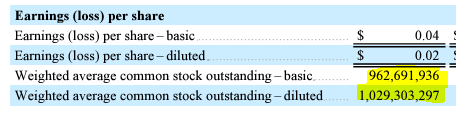
One other thing to note is that the $1.1B in convertible notes actually already contribute to the fully diluted EPS, so it doesn't actually hurt the EPS on a GAAP basis as much one might think.
That being said, redeeming the preferred shares is a slam dunk. It's very possible that debt servicing the entire $750M in notes would cost less than what they were due to pay on the $323M of preferred shares. That was great business.
This also free up a lot of capital that can be used to grow the underlying business. The cost is 6% dilution now and an undisclosed amount of dilution later (from whatever price the new $750M notes convert at) for ~$265M in net interest income in perpetuity, which will probably add about 10% revenue growth in the next year. I would rather that they grow the business by funding it through profits rather than take on more debt, but I am certain this is way lower cost debt than the preferred shares, so that part of it I'm totally fine with.
It's a mixed bag. Overall, I'm inclined to trust management and that they know what they are doing. The dilution is a hard pill to swallow. Between this and the Technisys acquisition, that's around 145M shares in the last 3 years without including SBC. When you include SBC, it's over 200M shares and over 20% dilution overall.
I don't know how independent these deals were. If they could have just done the convertible notes and not the dilution and buyback of $600M, I think that would have been a much better path. My suspicion is that the deals were linked, although that is also speculation.
Overall, if they execute, the entirety of these deals is probably a net positive for the company and shareholders. I trust them to execute, and I trust that they have the best interests of the company and shareholders in mind. Management also have a significant portion of their net worth tied to the performance of the company and the stock. There is a lot of shareholder alignment in their compensation packages.
I trust them to put their heads down and operate the business in a way that makes this deal worth it. If they continue on the path they've been on for the last 3+ years, I'm still very confident that I'll be a very well-rewarded investor in the long run.
The full 8-K can be found here:
https://t.co/X1r3Bz1xI3
✨Day 3✨
Commemoration of Version 4.4 Update!
#GenshinImpact X (Twitter) Event - Set 3
How to Participate:
① Follow @GenshinImpact
② Retweet this post
And you can instantly check the event results via this link>>> https://t.co/oyAZ8grexB
#FollowGenshinImpact
✨Day 2✨
Commemoration of Version 4.4 Update!
#GenshinImpact X (Twitter) Event - Set 3
How to Participate:
① Follow @GenshinImpact
② Retweet this post
And you can instantly check the event results via this link>>> https://t.co/oyAZ8grexB
#FollowGenshinImpact
✨Day 1✨
Commemoration of Version 4.4 Update!
#GenshinImpact X (Twitter) Event - Set 3
How to Participate:
① Follow @GenshinImpact
② Retweet this post
And you can instantly check the event results via this link>>> https://t.co/oyAZ8grexB
#FollowGenshinImpact
✨Final Day✨
Commemoration of Version 4.4 Update!
#GenshinImpact X (Twitter) Event - Set 2
How to Participate:
① Follow @GenshinImpact
② Retweet this post
And you can instantly check the event results via this link>>> https://t.co/oyAZ8grexB
#FollowGenshinImpact