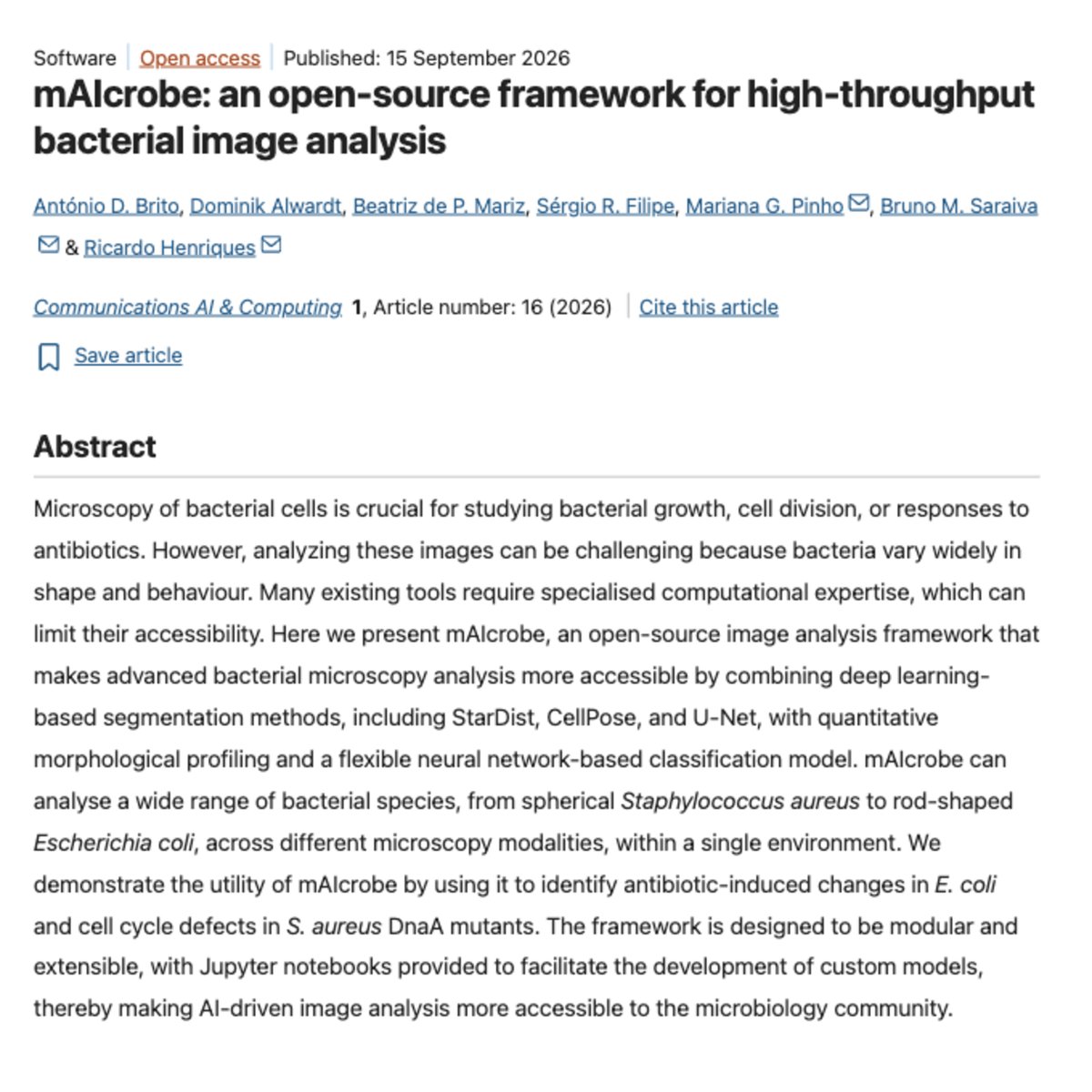
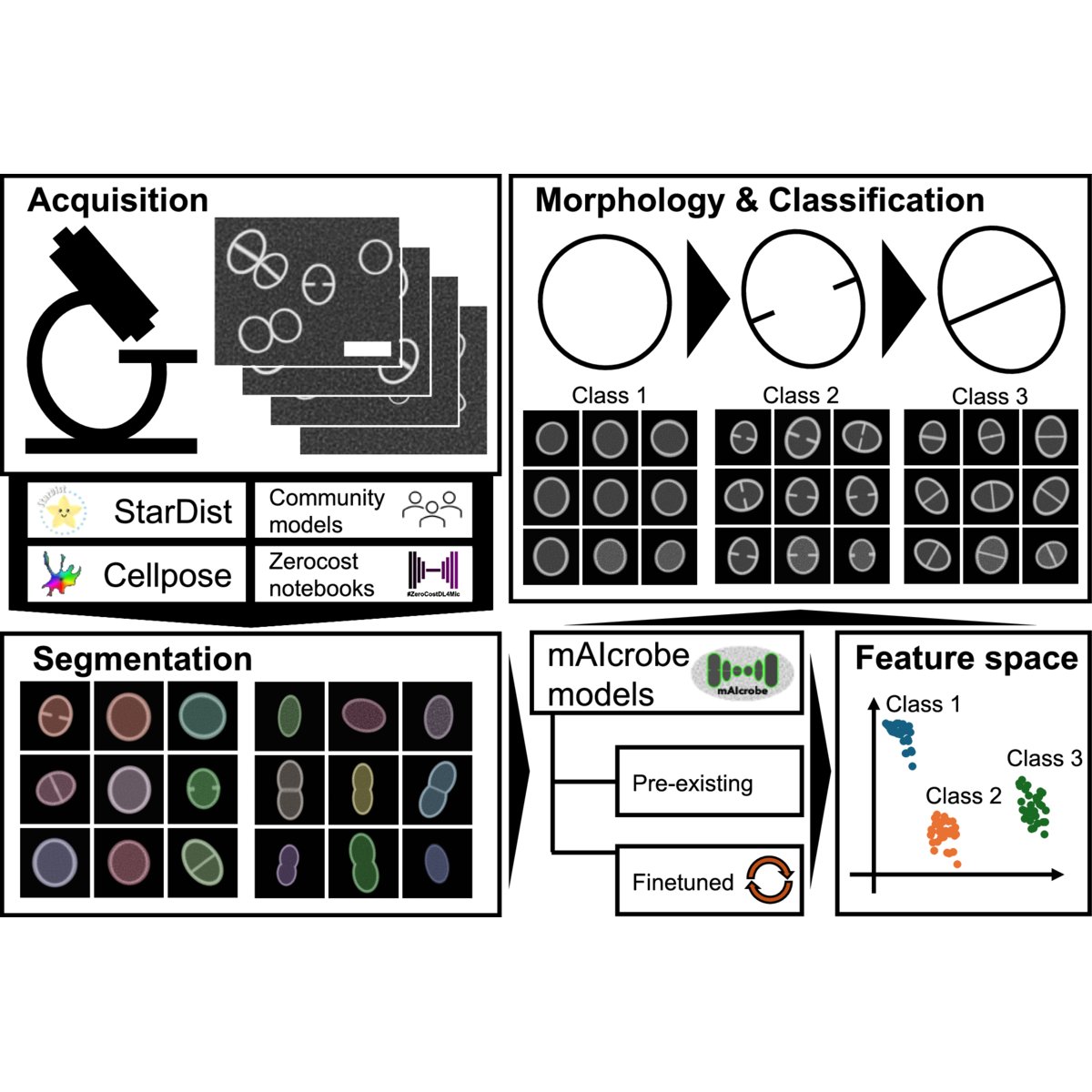
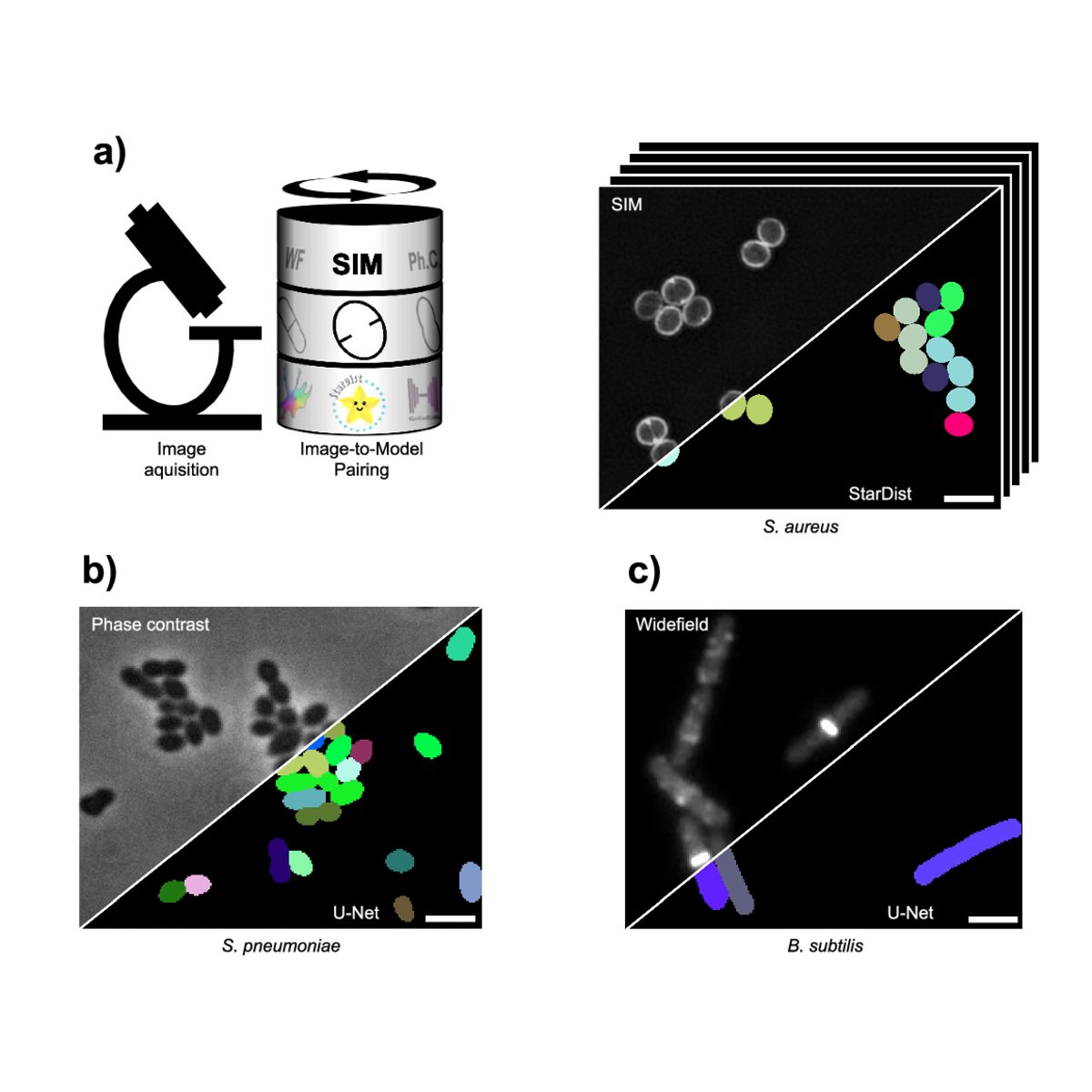
🔬🚀 New paper out: mAIcrobe, our open-source #napari plugin for high-throughput bacterial image analysis. Segmentation, morphological profiling and cell cycle classification, all in one place 👇
https://t.co/dFNZZlWWnY
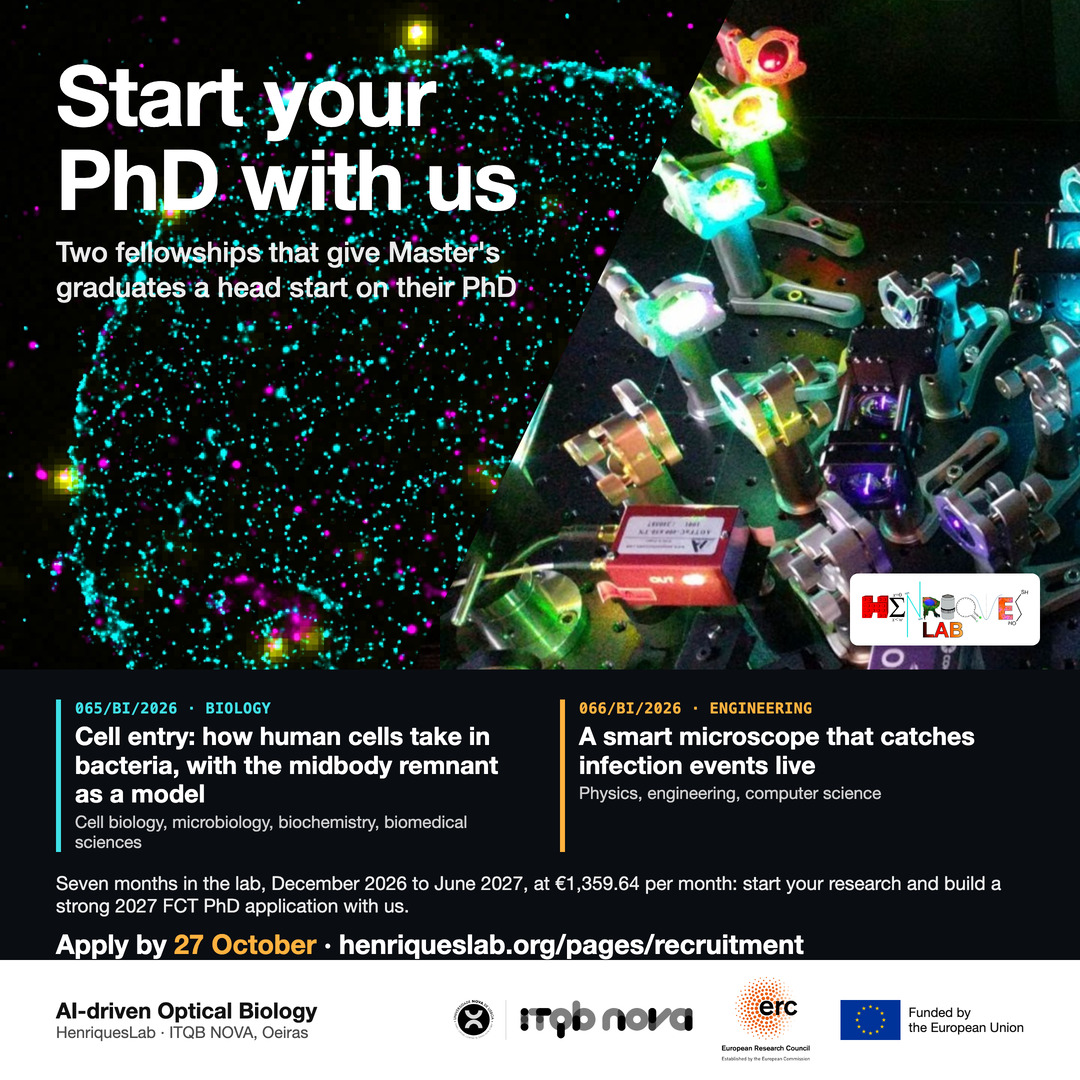
Our two ERC-funded PhD-track fellowships close Tuesday 27 October. Physicists, engineers and computer scientists: one call is yours, building a smart microscope that catches infection live and images it at 20 nm. Start in December at ITQB NOVA. https://t.co/uSOOu4yDfK
🔬🚀 A head start on your PhD! Two ERC-funded fellowships for Master's graduates at ITQB NOVA, Lisbon: seven months in our lab (Dec 2026 to Jun 2027) to start your research and build a strong 2027 FCT PhD application with us.
Apply by 27 Oct 👇
https://t.co/rpKTZhKyDy
In their Tools & Resources article, Bruno Saraiva, Guillaume Jacquemet, Ricardo Henriques @HenriquesLab and team introduce Rxiv-Maker, their automated template engine for streamlined scientific publications.
https://t.co/T0r5wZJyia
🔬🚀 A head start on your PhD! Two ERC-funded fellowships for Master's graduates at ITQB NOVA, Lisbon: seven months in our lab (Dec 2026 to Jun 2027) to start your research and build a strong 2027 FCT PhD application with us.
Apply by 27 Oct 👇
https://t.co/rpKTZhKyDy
⚙️ Physicists, engineers, computer scientists (066/BI/2026): build a smart microscope that spots infection events live with neural networks, fixes the cell at that moment with NanoJ-Fluidics and images it at about 20 nm.
https://t.co/pFfkvTrzqJ
@Bruno_MSaraiva Thank you to Rita Carlota, @Antonio_DBrito and @IvanHCenalmor, and to everyone who has already written preprints with it and sent us feedback =)
Give it a go: pipx install rxiv-maker
🚀 Rxiv-Maker is now peer-reviewed and open access! Write in Markdown, get a typeset PDF or an editable Word file, with figures, citations and cross-references numbered for you. Led by @Bruno_MSaraiva with Guillaume Jacquemet's lab 🔬
https://t.co/GJEylxgMN2
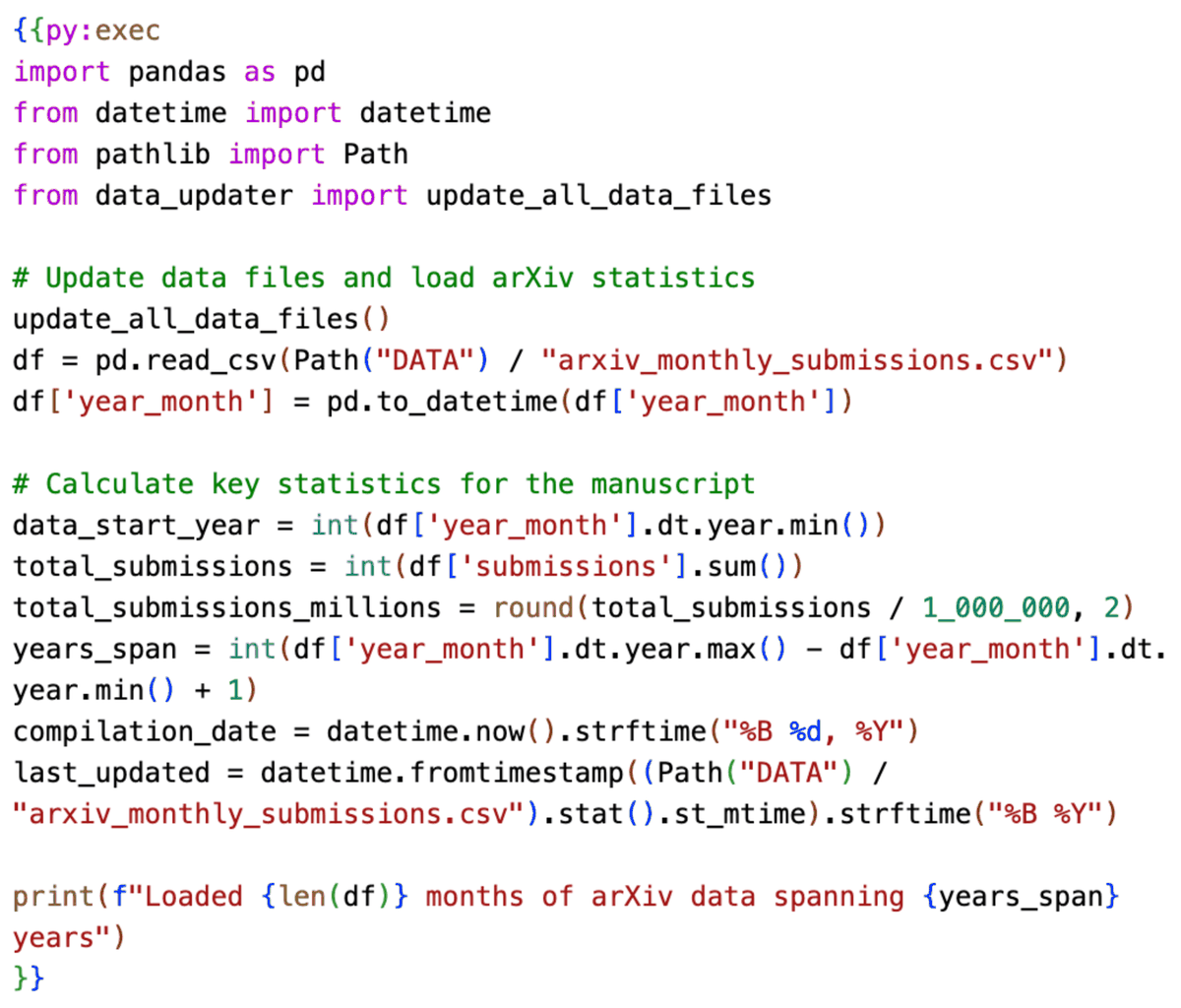
@Bruno_MSaraiva The manuscript can carry its own Python or R code, so figures and reported values are rebuilt from the data at every compile and the text stays in step with the analysis. One command also packages it for arXiv or bioRxiv 👇
https://t.co/Ir9AymshPL
🚨I have open PhD positions to join my new lab at #NIMSB🚀!! https://t.co/AnkzeWDn8K
🌟I'm looking for motivated candidates, eager to join a multidisciplinary team + study the intracellular dynamics driving cancer cell migration with advanced computational methods & microscopy👾
👉We show that #DLaccuracy depends on #imageresolution, with each architecture having an optimum, usually at a lower resolution.
For imaging, this can lead to 🔬Higher throughput 💾Lower storage ⚡Faster inference 🌱More sustainable computing 🧫 Potentially, reduced photodamage
#ReScale4DL is very close to my🫀Among the 1st ideas shaped with @HenriquesLab in my early days in his lab, it became a unique opportunity for me to link mathematical concepts to experimental imaging. It also turned out to be my last postdoc story and the 1st publication as PI🤩
@Antonio_DBrito@Bruno_MSaraiva@itqbnova We put it to work on antibiotic phenotyping in E. coli and on cell cycle defects in S. aureus DnaA mutants. It grew out of eHooke, our old S. aureus pipeline, now opened up to rods, cocci and whatever else you image.
https://t.co/ecN6dNzz5E
🔬🚀 New paper out: mAIcrobe, our open-source #napari plugin for high-throughput bacterial image analysis. Segmentation, morphological profiling and cell cycle classification, all in one place 👇
https://t.co/dFNZZlWWnY
Led by @Antonio_DBrito and @Bruno_MSaraiva, with Dominik Alwardt, Beatriz de P. Mariz, Sérgio Filipe and Mariana Pinho at @ITQBNOVA. StarDist, Cellpose and U-Net segmentation, plus a classifier you can retrain on your own species =)
bioRxiv/medRxiv have been dealing with endless bot attacks recently (plus the usual DDOS stuff, etc). Tricky to address without impacting genuine users. Apologies. We're working with our hosting service on solutions & think we're getting there [he shouts in his red queen costume]
Out at @nature just now!
https://t.co/6E9s9rCPz8
We present #RIED, a new paradigm for excitation-free super-resolution microscopy.
We establish chemical super-resolution microscopy using electrochemiluminescence (ECL), chemiluminescence (CL), and bioluminescence (BL).
(1/n)
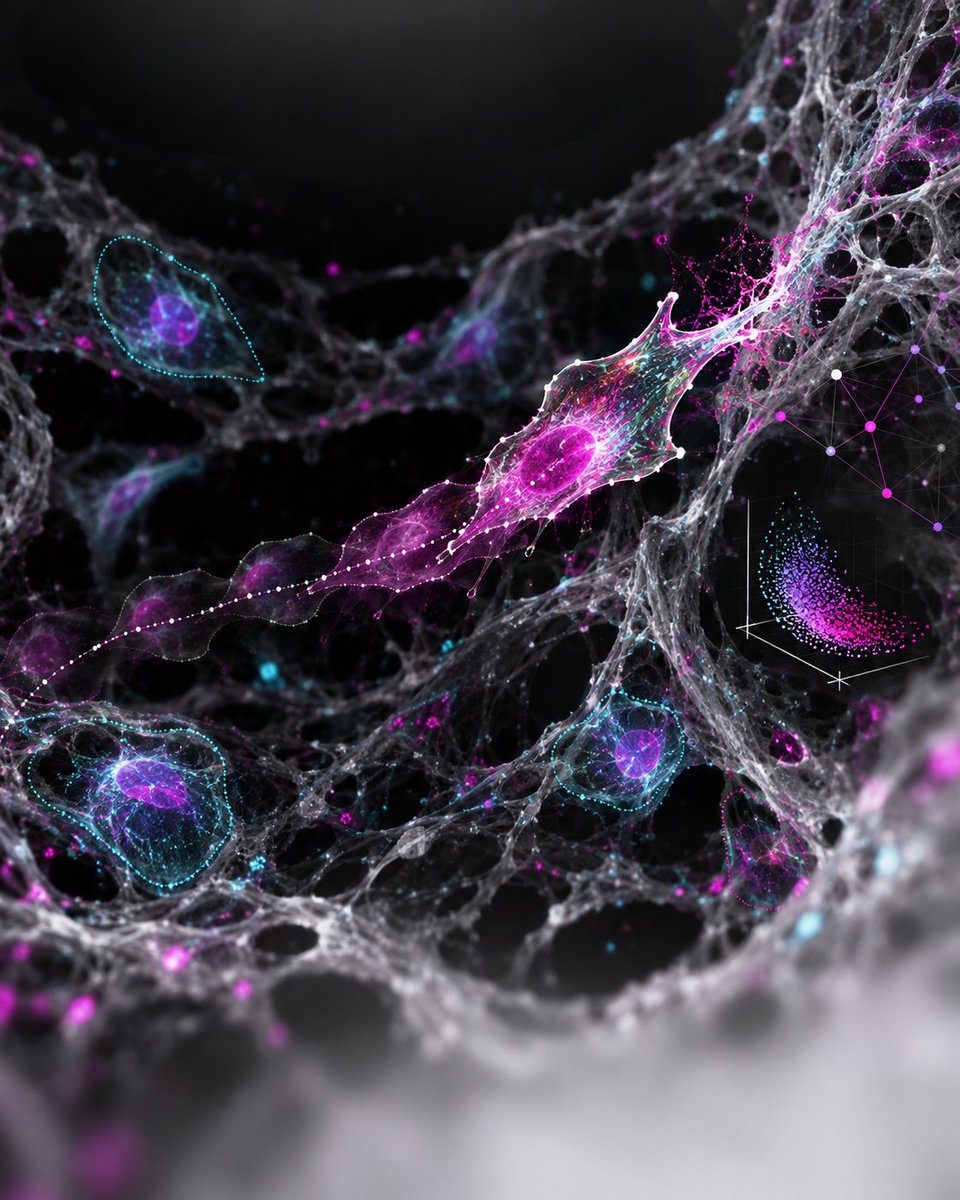
🚀📷 What can cell shape, signal and movement tell us about a cell's future? #DeepLearning now predicts cell fate from #Microscopy. Work with Rita,@_mariod, @inesmcunha, Juliette + Guillaume👇
https://t.co/L1aB7xnyqe