The news cycle moves on quickly - particularly when there’s huge and consequential things happening - like a change of prime minister.
But there’s one story that I haven’t been able to get out of my head. And I don’t just want to move away from.
It’s the story of what happened to little Preston Davey.
He was born to a murderer. When she was 15, his mum killed a pensioner, crammed her in a bin and used her savings to buy crisps and chocolate. Preston was taken from her when he was five days old.
Preston was then adopted by two men who abused him in the most unimaginable way. One of them - a teacher - was given a whole life order for sexually abusing him and causing his death.
Preston was only 13 months old.
But here’s the thing. Because it is not true to say Preston only knew abuse. To say Preston never knew happiness.
Because from the age of 5 days to 10 months, Preston was looked after by two people who actually sound pretty amazing.
His foster parents.
I haven’t said the names of his biological mother or his adoptive parents. But Preston’s foster parents are two people whose name we should remember.
Sandra and Paul Cooper.
Sandra told the court: "Paul and I will often watch the videos we took of Preston when he was happy with us laughing and giggling, playing with his toys smiling. Preston's face would light up when we looked at him; he was joyful, so content and happy, with sparkly smiling eyes. That is how we want to remember him.”
They warned the social workers about concerns they had over his adoptive parents. But they weren’t listened to.
And they’ve been left devastated by his death.
Sandra says she dreams of Preston. He’s still alive in those dreams. Paul says he cries for him every single week.
Sandra and Paul fostered dozens of children. Preston was going to be their last - their retirement baby. but now they feel they have to keep going, in Preston’s memory.
Very saddened to hear of the passing of the excellent Anthony Head, who brilliantly brought to life the smooth-talking sky god, Hercules Shipwright.
Keep flying high, captain.
And remember… You simply must have the most awfully lovely, super-scrumptious flight.
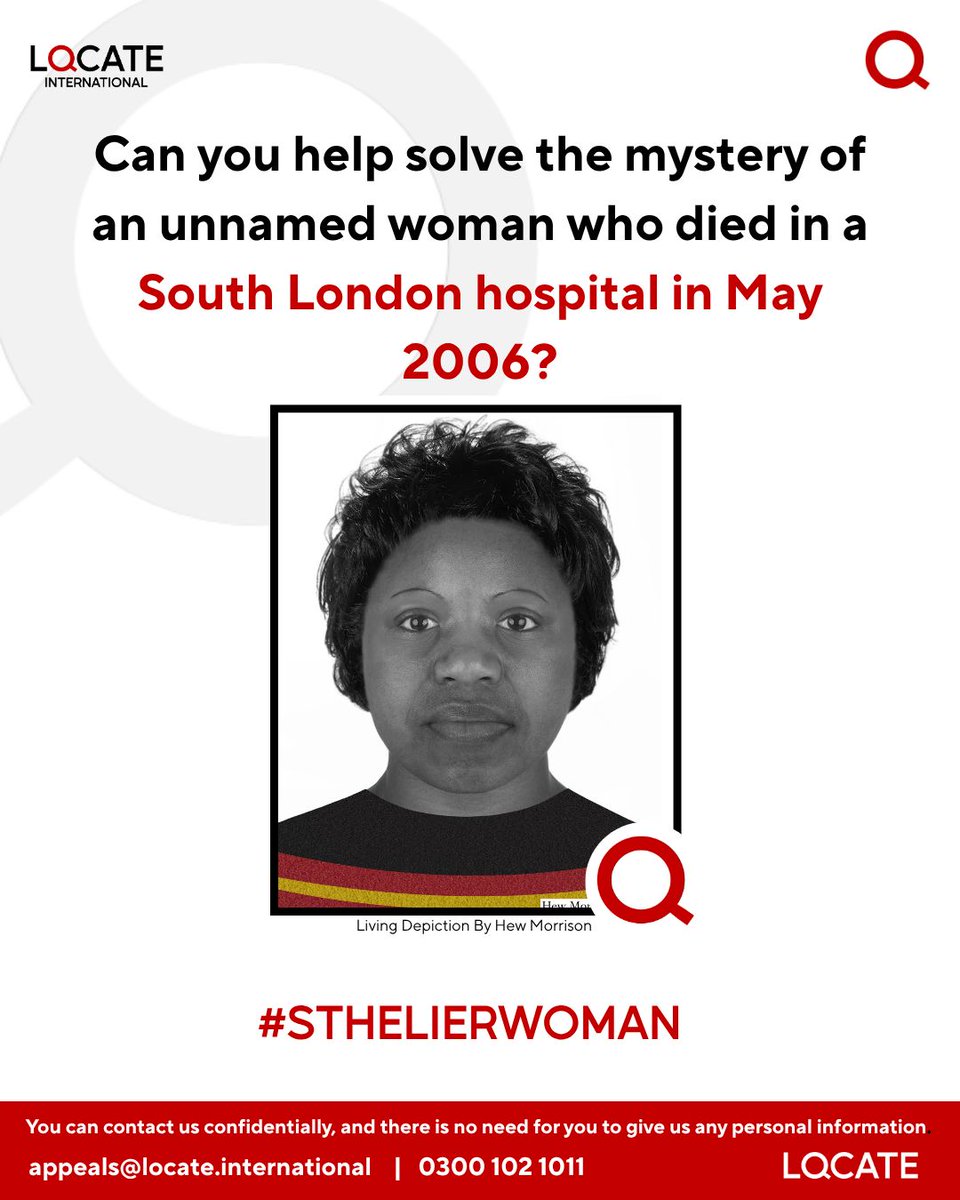
“St Helier Woman” was found outside St Helier Hospital, Sutton on 29 May 2006 and later died unidentified. Believed to be from Ghana. Do you recognise her?
📧 [email protected]
☎ 0300 102 1011
https://t.co/2RonHk7JQu
#StHelierWoman#Unidentified#ColdCase#Sutton
Charles Dickens fought his depression by walking through London at night. One October he set out at 2 in the morning and walked 30 miles, all the way to his country home in Kent. In 1860 he wrote about why it worked. It took psychology another 150 years to catch up.
Dickens called his bad spells "spectres." They came back every time he started a new novel and sometimes hung on for months. His mood would fall apart, his sleep would collapse, and the only thing that pulled him out was walking.
He explained his method in an essay called "Night Walks," published on July 21, 1860 in his weekly magazine All the Year Round. He had tried fighting his insomnia from bed and lost. So he changed the plan. The fix, he wrote, was "getting up directly after lying down, and going out, and coming home tired at sunrise." A worried mind cannot fix itself by worrying more in bed. You have to get up and move.
Most nights he walked 12 to 20 miles. A friend called it "violent walking." Dickens wrote that on these walks his wandering self had "many miles upon miles of streets in which it could, and did, have its own solitary way."
Today, walking is one of the most powerful tools doctors have against depression. In 2012 a team of researchers pulled together eight high-quality studies of walking as a depression treatment. The effect was as strong as the antidepressants doctors actually prescribe.
The biggest test came from Duke University. The SMILE study took 202 adults with serious depression and split them into four groups: supervised exercise, home exercise, the drug Zoloft, or a placebo pill. After 16 weeks, the people who exercised did just as well as the people on Zoloft. A 2024 review of 75 studies covering 8,636 patients confirmed it. Walking should be one of the first things doctors try.
The reason is the thing Dickens stumbled onto in the dark. Depression runs on rumination, the looping bad thoughts that grind people down during the worst stretches. In 2015 Stanford researchers scanned people's brains before and after a 90-minute walk in a quiet park. The walkers had less activity in a part of the brain called the subgenual prefrontal cortex. That spot, deep behind your forehead, is the brain's worry loop. After the walk, the worry loop got quieter. The walkers said they felt less stuck inside their own heads. The brain scans agreed.
A walking body shuts up a noisy mind. The street takes attention, the walking rhythm fills the head, and the dark spells lose their grip. Dickens called the streets his cure because they gave his brain somewhere else to be. The science 150 years later says he had it right. Depression hates a brain that is moving.
This is a brilliant investigative piece on Farage, the dark millions behind him and the double standards of so much British journalism. Read and retweet! Nigel Farage pocketing £5m from a donor shows he’s unfit for power https://t.co/zHuVfDV8dh
Today marks over 3 decades since Marcus “Marc” Rigby went missing in 1995 aged 27. Last seen travelling from Cumbria towards Weymouth via Abingdon.
He has never been found.
If you have any information contact [email protected]#FindMarcusRigby
Anonymous
I run a small bakery. Woman came in every Friday morning. Same order. Two blueberry muffins. One coffee. Always sat at the corner table. Read her book. Stayed an hour. Did this for three years. Then she stopped coming. After two months I got worried.
Found her number in our loyalty program. Called. She answered. Voice weak. “Oh. Hi. I’ve been meaning to cancel that.” “Are you okay? You haven’t been in.” Long pause. “I have cancer. Stage four. I’m in hospice now.
Those Friday mornings were my favorite part of the week. But I can’t make it anymore.”
My heart broke. “What if I brought Friday to you?” Silence. Then crying. “You’d do that?” “Every Friday. Same time. Same order.”
Showed up that Friday. She was in a hospital bed in her living room. So thin. But she smiled when she saw those muffins. We sat. She told me about her week. Her family. Her life. I listened. Just like at the bakery. Did this for six weeks. Every Friday.
Last Friday she could barely stay awake. But she held that muffin. Took one bite. “Best thing I’ve tasted all week.”
She passed on Monday. Her daughter called. “Mom’s last words were about you. She said ‘tell the baker thank you. Fridays kept me human until the end.’”
Went to her funeral. Her daughter hugged me. “You gave her normal when everything else was hospitals and pain. You gave her Fridays.”
Now I deliver to three hospice patients. Every Friday.
Because sometimes a muffin isn’t just a muffin. It’s dignity. It’s routine. It’s proof that someone still sees you as you. Not as sick. Just as you.
"She ate lunch alone for 730 days straight. What this 16-year-old built from that pain now protects millions of kids worldwide.
Seventh grade. Natalie Hampton carried her tray through a packed cafeteria and felt it — that specific, suffocating dread of not knowing where to go.
She'd already learned what happened when you approached the wrong table. The silence. The turned backs. The whispered laughter that followed you all the way to the empty table by the wall.
The one everyone could see.
The one that said: nobody wants her.
For two full years — 730 consecutive lunches — that table was hers. Alone.
The bullying went further than whispers. She was shoved into lockers. Four physical attacks in two weeks. She came home with scratches and bruises. When she finally reported it, school administrators sent her to counseling — to find out what she was doing wrong.
The isolation grew so heavy she was hospitalized for anxiety.
Then ninth grade came. A new school. And almost overnight — everything changed. Students welcomed her. She made friends within weeks. She finally knew what safe felt like.
But she couldn't stop thinking about the kids still sitting at the wall table. Right now. Today.
She remembered what she'd needed most during all those lunches. Not a teacher. Not a pamphlet. Just one person saying: "You can sit with us."
So at 16 — with zero coding experience and "a lot of enthusiasm," as she put it — Natalie built exactly that.
She called it Sit With Us.
The idea was simple and genius: students sign up as "ambassadors," keeping their table open. Other kids privately browse available tables on their phones before ever walking into the cafeteria — and show up knowing they're already welcome.
No public rejection. No moment of judgment. Just a guaranteed seat.
Within 7 days of launching: 10,000 downloads.
Then the world found her. NPR. The Washington Post. CBS News. Messages from Morocco, Australia, the Philippines, France — kids who'd been eating alone for years, finally finding a place to belong.
Sit With Us now operates in 30 countries.
"Even if it helps one person," Natalie said quietly, "it was worth building."
She turned 730 lunches of loneliness into a lifeline for millions.
That's not just survival. That's transformation."
* Kindly Therapy
@MartinSLewis Martin, keep on keeping on: you are doing a fab job, and it’s a pity you didn’t feel able - for completely understandable reasons - to be in the Lords. Parliament needs you.
My Grandparents Were Married For 60 Years.
One Day I Asked My Grandfather:
“What’s The Secret To Loving The Same Woman For A Lifetime?”
He didn’t laugh.
He didn’t say “communication.”
He didn’t say “date nights.”
He looked at my grandmother, who was in the kitchen, and said:
“You don’t love the same woman.”
That confused me.
He said, “She changes every few years. And if you don’t update the way you love her, you lose her.”
He told me the girl he married at 22 wasn’t the same woman at 30.
Motherhood changed her.
Loss changed her.
Time changed her.
“At 40,” he said, “she needed respect more than romance.
At 50, she needed partnership more than passion.
At 60, she needed presence more than promises.”
And every time she changed, he had a choice:
Complain that she’s “not like she used to be.”
Or learn her again.
He said the biggest mistake men make is this:
They fall in love once.
Then stop paying attention.
“Loving a woman for a lifetime,” he told me,
“is deciding to stay curious about her.”
Not assuming you know her.
Not freezing her in the version you met.
He leaned back and said something I’ll never forget:
“If you stop studying her, someone else eventually will.”
Sixty years.
Not because it was easy.
Because he kept relearning her.