The doctrine of double criminality that departed Kanu’s trial
By ALOY EJIMAKOR
In one of my previous public comments on the infamous conviction of Mazi Nnamdi Kanu, I had briefly mentioned how the failure to state the foreign locale of the alleged offenses robbed the court of jurisdiction by cutting the court off from determining whether or not the alleged broadcasts constituted offenses in the foreign country where they emanated. At law, this is known as double criminality.
Under the repealed TPAA 2013, an act committed abroad was an offence only if it had an "impact in Nigeria." But under the TPPA 2022 in force (when Kanu’s matter commenced anew), that same act is only an offence if it (i) has an impact in Nigeria, and (ii) is also a crime in the foreign country where it was committed (that is: double criminality) - which fundamentally alters the legal definition of an extraterritorial offense or the act constituting the offense.
Recall that, whereas the charges levied against Kanu claimed that the broadcasts (made from an unnamed foreign soil) “had impact in Nigeria”, they failed to expressly state that the broadcasts are “also a crime in the foreign country where they were made” (double criminality). This is a key omission that rendered all the pertinent charges incompetent, thus robbing the court of the requisite jurisdiction to have subjected Kanu to trial, without more.
Further, the Supreme Court's decision to allow the trial to continue was predicated on the general jurisdiction of Federal High Courts; it was not a final determination on the applicable substantive law for the trial on the merits. So, when the trial de novo (anew) was ultimately underway before Justice Omotosho, the court was bound to first determine the applicable law in use, and this was exactly what Kanu had requested in his preliminary objection which the court flatly refused to determine. In Military Governor of Lagos State v. Ojukwu, judicial reassignment post-recusal mandated fresh hearings. Thus, Kanu’s trial was not “pending” under Section 97 TPPA 2022 but a new proceeding under the TPPA 2022. This also comports with Section 36(12) Constitution under which offenses are triable only under a “written law in force” at the time or moment of trial. TPAA 2013 was no longer in force in 2025 when Kanu’s trial actually commenced.
Therefore, for the court to assert extraterritorial jurisdiction, the prosecution was required to plead and prove that Kanu’s alleged acts (broadcasts) constituted a criminal offence both in Nigeria, and also in the United Kingdom or Kenya, which were the places Kanu was domiciled between 2018 and 2021 when the broadcasts were alleged to have been made (according to the charge sheet).
It is, therefore, left to conjecture that the only reason the prosecution was dodgy on the law that applied was this: Knowing that the broadcasts were made from either Britain (where Kanu is a citizen) or Kenya (where he was itinerant), it was clear to the prosecution that such acts do not constitute acts of terrorism under the domestic laws of those countries, otherwise Kanu would have been arrested and tried in either Britain or Kenya.
Thus, the failure to specify the foreign situs or country where the broadcasts were made was profoundly prejudicial to Kanu. The charges also failed the muster of Section 220 of the Administration of Criminal Justice Act 2015 (ACJA) which bars jurisdiction if the charges omitted a legally required information that could mislead the defendant on how to frame his defense. The Supreme Court in Yakubu v FRN (2020) and other authorities, has consistently held that a charge which fails to disclose an essential ingredient of the offence is void and confers no jurisdiction on the court.
It is on the basis of these reasons (plus more) that I had insisted from day one that the Federal High Court lacked jurisdiction to have proceeded with Kanu’s trial.
Compare & contrast: The same Appeal Court that has found it difficult to schedule MAZI NNAMDI KANU’s appeal (and even Motions) for a hearing has easily invited Kabiru Sokoto to appeal his sentence that was imposed 12 years ago. Can you believe this? Incredible.
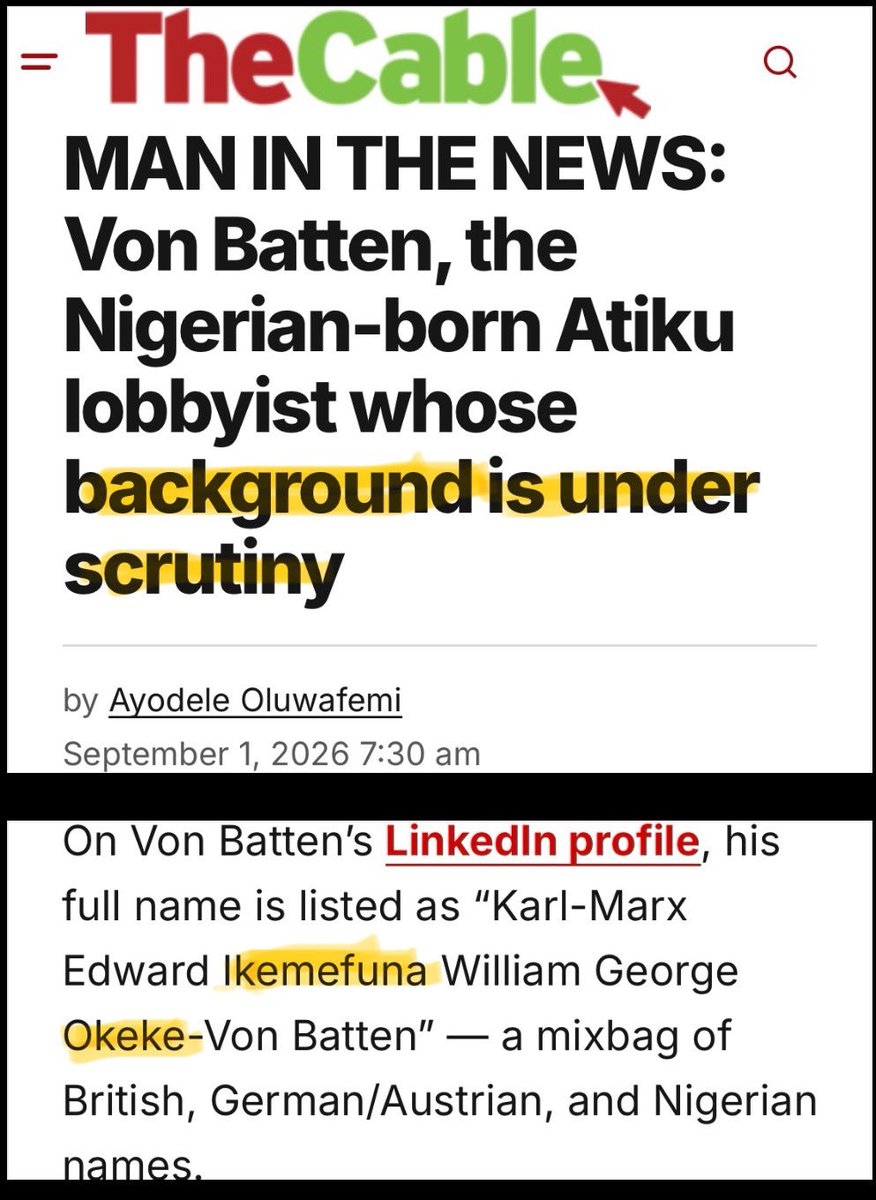
I see it as curious that emphasis is now being shifted from the Tinubu US records to the IGBO ancestry of Von Batten, the Atiku US lobbyist that is leading the charge to release the Tinubu records. Interesting times ahead.
Landlocked or not, a seaport is possible in Southeast
By ALOY EJIMAKOR
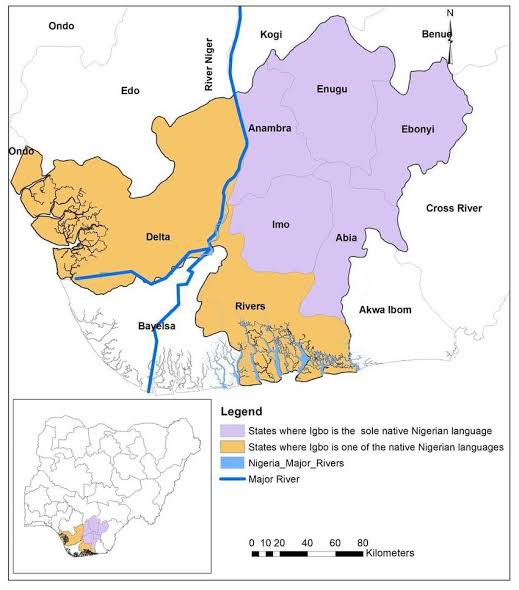
It’s often said that a lie told so many times, if unchallenged, may - in course of time - begin to pass for the truth. One of such terrible lies, institutionally purveyed since the end of the Civil War, is that Southeast or Igboland is landlocked or has no access to the sea, and thus cannot have a seaport.
By this piece, I will debunk this lie with some simple historical and topographical evidence that are even in plain sight. In the Southeast, there are many waterways and little-known slithering tributaries that meandered through Igbo-delta wetlands and ended at the Southeastern waterfronts of the Atlantic.
These rivers and their contiguous tributaries have varying lengths of short navigational paths to the Atlantic, and in some cases, are far shorter nautically (and even on footpath) than the dredged Lagos seaports are to their contact with the Atlantic.
Many of these pathways, including particularly the ones from the outer reaches of Imo and Azumiri Rivers terminate at the Atlantic at no more than 30 Nautical miles to the Atlantic beachhead. Thus, the contiguity of Southeast (not even the greater Igboland lying in the South-South) to the Atlantic is nautically less than the Atlantic is to the seaports in Lagos.
To be sure, Ikwerre land or Igweocha which bears the greater portions of the Portharcourt seaport was dredged up to 50 miles to the Atlantic front through the Bonny River. Onne seaport was dredged up to 60 miles to the Atlantic and Calabar seaport was dredged some 45 nautical miles to the Atlantic and the Lagos seaports were dredged up to about 50 nautical miles to the Atlantic.
Compare all these to Obuaku in Abia State, which is only 25 nautical miles to the Atlantic from the confluence of Imo and Azumiri Rivers, of which Azumiri, on its separate merits, lies not more than 30 nautical miles to the Atlantic beachfront; and so is the little-known Oseakwa (Urashi) in Ihiala (Anambra State).
Additionally, what is geopolitically known as Igboland today is far smaller than what it was and legally supposed to be.
As far back as 1856, Baikie - one of the earliest and credible geographers of ancient Nigeria, had this to say - “Igbo homeland, extends east and west, from the Old Kalabar river to the banks of the Kwora, Niger River, and possesses also some territory at Aboh, an Igbo clan, to the west-ward of the latter stream. On the north it borders on Igara, Igala and A'kpoto, and it is separated from the sea only by petty tribes, all of which trace their origin to this great race" (Baikie, William Balfour, published with a sanction of Her Majesty's Government in 1856).
But with the infamous post-War abandoned property policy and the egregious institutional injustices in boundary adjustments, coupled with the widespread anti-Igbo gerrymandering, Igbos physically lost political hold of their vested ancestral lands, all to the point of not caring anymore about their historical contiguity to the Atlantic Ocean, which Igbo ancestors beheld with their eyes and exclaimed: ‘Oshimiri’ which means: ‘the infinite sea’.
The post-war psychological beat-down and gang-up got so bad and institutional that some of the descendants of these Igbo ancestors (nearest to the Atlantic and now lying outside Southeast) are no longer sure whether they are Igbo or not.
The worst injustice was in 1976 when the Justice Nasir Boundary Adjustment Commission made a serious and targeted agenda of carving out core Igboland territories into some neighboring States of the South-South. But they didn’t quite make an absolute success of it.
They missed the southernmost Southeast lands that possess Rivers that meandered through slices of Igboid South-South territories and ended up at the Atlantic waterfront.
Given another chance, I will do this again and again. Never miss an opportunity to fight injustice, even on the streets. It’s said that a man dies in him who keeps silent in the face of tyranny. I’m no such man.
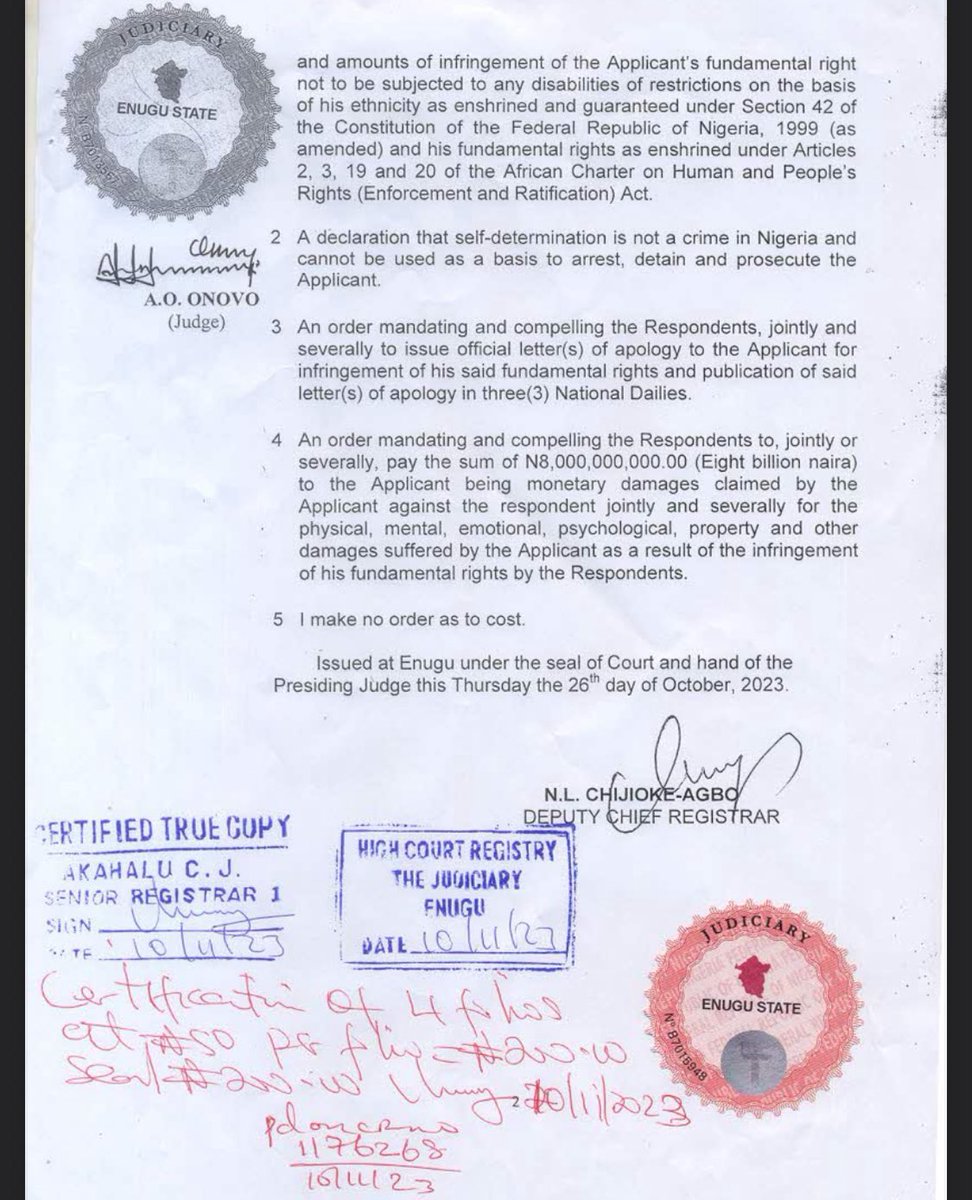
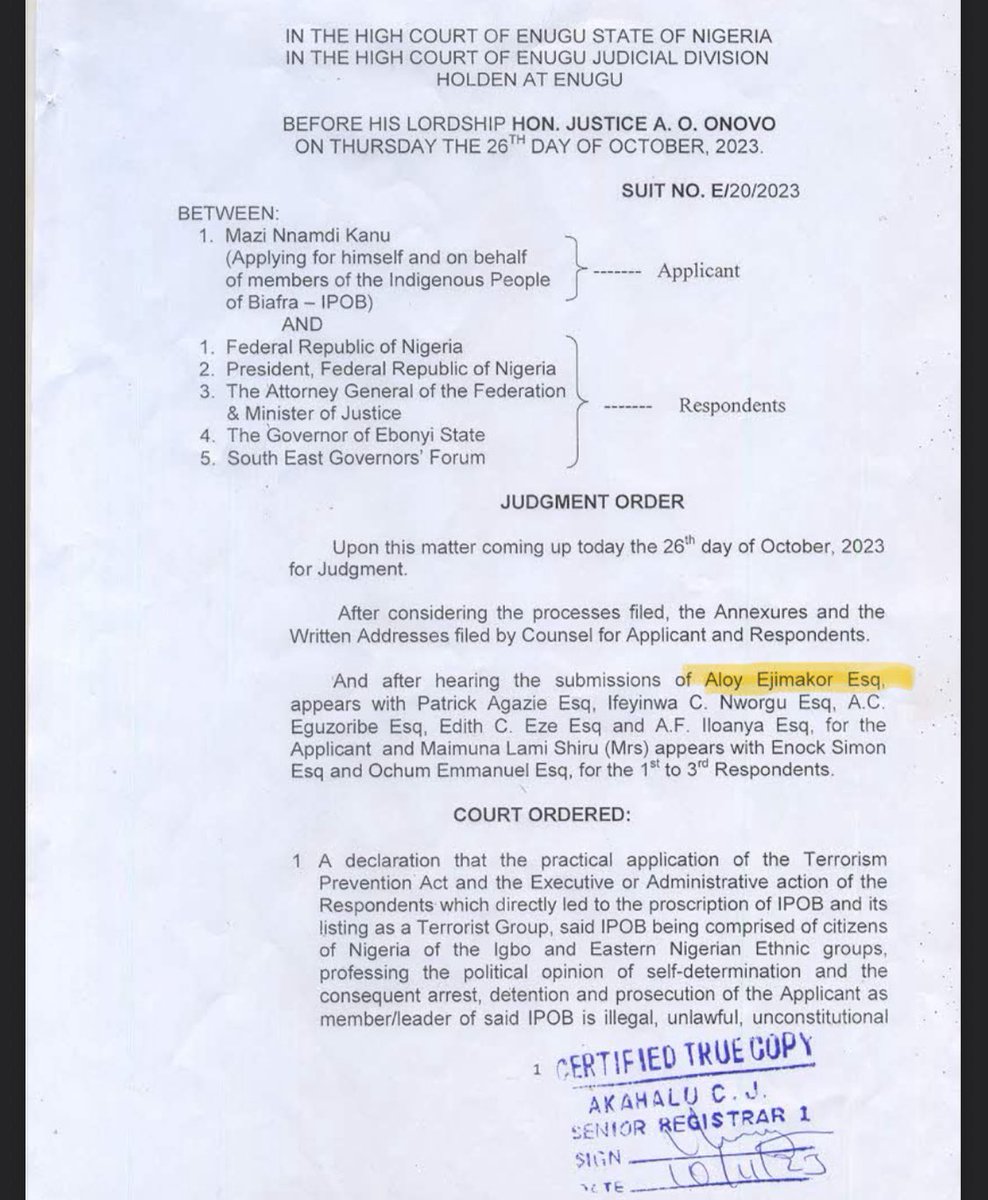
While the Nigerian Army and police continue to mount more roadblocks Southeast in search of “terrorists”, they should be reminded that the unjust designation of IPOB as a terror group was judicially declared UNCONSTITUTIONAL and a discriminatory act against Ndigbo.
A society that has a functional police system and court will not tolerate the presence of VeryDarkMan. VDM is merely the image in your mirror. The society you have built requires VDM to fight for justice; it is easier to fight for justice through him than through the courts. VeryDarkMan is now the last hope of the common man in Nigeria.” - Dele Farotimi.
Press Release: 29th August 2026
RE: Deplorable Access Roads Into the South-East
The Igbo Community Association (ICA) FCT draws the urgent attention of the Federal Government to the critical and deplorable state of federal road networks connecting the South-East geopolitical zone to the rest of the country.
For successive administrations, key arterial routes linking the South-East to the South-West, North-Central, and South-South regions have deteriorated into death traps. Motorists and commuters continue to endure severe gridlock, destruction of vehicles, loss of lives, and heightened security risks.
A striking case in point is the Benin-Agbor-Asaba corridor—a vital arterial gateway linking the South-West and South-East.
Despite initial public pushback and political friction when concerns were raised over this route, recent events and public outcry eventually led the Minister of Works, Engr. David Umahi, to inspect the corridor and offer an apology to stranded motorists for the severe hardship caused by the failed sections. While we acknowledge the Minister’s recent intervention, this situation underscores a broader, systemic issue: critical transit routes leading into the South-East are routinely neglected until they reach catastrophic levels.
As the Yuletide season approaches—a period characterized by high-volume travel across the country—it is imperative that the Federal Ministry of Works prioritizes immediate rehabilitation of these federal corridors. Restoring these roads is essential not only to prevent avoidable road casualties but also to mitigate security vulnerabilities facing travelers.
The Igbo Community Association (ICA) FCT, speaking on behalf of Igbo residents in the Federal Capital Territory, calls on the Federal Government to ensure fairness and equity in the allocation of national infrastructure resources.
South-Easterners are equal stakeholders in the Nigerian project and deserve safe, accessible, and functional federal road networks.
The ICA remains steadfast in its commitment to protecting the dignity of the Igbo-speaking people while advocating for infrastructure development that serves all Nigerians.
Signed:
Engr. (Nze) Ikenna Ellis-Ezenekwe
President General, Igbo Community Association (ICA) FCT
Mazi Chinwoke Emmanuel Onah
Secretary General, Igbo Community Association (ICA) FCT
Media
Contact: 0813 669 7979.
The unknown comedy of errors in Kanu’s trial
By ALOY EJIMAKOR
Throughout the trial of Mazi Nnamdi Kanu before Justice Omotosho, I remained profoundly bordered that the Court was in grave error in conducting the trial under the repealed Terrorism Prevention and Amendment Act 2013 (TPAA 2013) instead of the current Terrorism Prevention and Prohibition Act 2022 (TPPA 2022).
In particular, the key provision of the current law that should have guided the trial (or no trial) is Section 76 of TPPA 2022 which bestowed jurisdiction on the Court for a criminal act committed overseas ONLY if “the act constitutes an offence under the law of the foreign state where the act occurred”, instead of the repealed TPAA 2013 which recognized jurisdiction “regardless of whether or not the act is an offense in the foreign state where it occurred”.
It is conceded that the offences with which Kanu was charged were allegedly committed between 2018 and 2021 when the TPAA 2013 was still in force. It is also true that the TPPA 2022 did not repeal the TPAA 2013 into oblivion, because it contains specific savings clauses in Sections 97 and 98 which preserved liabilities incurred under the repealed Act.
At first impression, these savings clauses in the new law suggest that the trial itself can continue under provisions of the repealed law. However, the Supreme Court has held in many cases that repealed laws cannot sustain trials, in toto. See Ifediora v. Idigo. So, while Section 98 TPPA 2022 (relied upon by Justice Omotosho) saved offenses committed pre-repeal (2018–2021), it did not trump substantive jurisdictional issues like double criminality, which is a substantive precondition that must be met.
In DPP v. Okocha, jurisdictional hurdles were assessed under current law, not the repealed law, despite saving clauses. To understand why, think of the Armed Robbery and Firearms Decree (and the military tribunals under it) which sunset (ended) in 1999 when Nigeria returned to democracy.
Thus, from 1999 to today, all pending armed robbery cases were not dismissed but were migrated out of the repealed Decree and brought under the current laws in force. It is the same with the 1979 Constitution which ceased to be applicable once the 1999 Constitution was enacted, and the Administration of Criminal Justice Act which repealed the Criminal Procedure Code in 2015.
So, while all the statutes cited above contained savings clauses like the TPAA 2013, all matters pending under them were brought in conformity with the current law. This is exactly what Mazi Nnamdi Kanu requested Justice Omotosho to do, but he refused, thus occasioning grave errors and miscarriage of justice.
This trending video reveals how, before Independence, the Willinks Commission recognized Igbos as indigenous to Rivers State and Port Harcourt as an Igbo territory. It also reveals how the Civil War was used as a cover to trigger the identity crisis that persists to this day.
BREAKING: VeryDarkMan just released this video (of police arresting police) as a push-back against the Police invitation to substantiate the accusation of criminality he allegedly made against the Nigeria police at the ongoing NBA conference in Port Harcourt.
Anybody still justifying the conviction of MAZI NNAMDI KANU has probably forgotten that the Federal government that prosecuted him had disobeyed a previous order to halt his trial, issued by the same Federal High Court that later proceeded to convict him. Is it just?
The sight of a throng of lawyers scrambling for photos with VeryDarkMan (VDM) at the NBA Conference in Port Harcourt wasn’t just about celebrity excitement. It was a deeply symbolic moment.
Behind those warm smiles and extended smartphones lies a subconscious reality: VDM represents the raw, unfiltered courage that many lawyers wish they (and the NBA) could freely exhibit.
VDM confronts injustice head-on, calls out corruption without double-speak, and fights for the ordinary citizen publicly and vigorously. OMOYELE SOWORE is another person that boasts such aura at a distinct level.
Where institutions hesitate out of fear or systemic restraint, VDM steps in without fear. That admiration demonstrates respect for worthy battles the lawyers wish they were the ones fighting.
If anybody tries this in Igbo land, they will instantly brand him IPOB/ESN & deploy entire army battalions to obliterate everybody on sight. Then, the breaking news shall read: “Troops neutralize IPOB/ESN commander & accomplices”. That’s how Nigeria is wired. Am I wrong?
Nobody should be made to feel like a criminal about being a Biafran, professing Biafra or identifying with Biafra. Being an indigenous Biafran is legal and a perpetual identity that cannot be erased by vicious law enforcement. Mazi Uche Onyeaguocha said more in this video.
Analyzing FBI’s stonewall on President Tinubu’s US records
By Aloy Ejimakor
By a recent application filed at the U.S. District Court, the FBI asked the Court for leave to explain (under seal) why releasing certain records regarding President Tinubu could endanger the physical safety of individuals and expose sensitive law enforcement methods.
Below is a summary of the possible reasons (and justifications) for FBI’s endangerment claim.
Under US FOIA Exemption 7(F), 5 U.S.C. § 552(b)(7)(F), agencies like the FBI may withhold law enforcement records if disclosure “could reasonably be expected to endanger the life or physical safety of any individual.”
Courts require only a reasonable expectation of harm, not certainty. See Pub. Emps. for Envtl. Responsibility v. U.S. Section, Int’l Boundary & Water Comm’n, 740 F.3d 195, 206 (D.C. Cir. 2014).
Thus, the factual reasons the FBI might adduce to justify its endangerment claim are:
1, Revealing identities or details of confidential informants, cooperating witnesses, or third parties linked to the 1990s drug-trafficking probe, and exposing them (or relatives) to retaliation from remaining network members.
2, Identifying law-enforcement personnel whose names appear in the files poses risk of harassment or physical targeting.
3, Disclosing operational details that, even decades later, could enable retaliation against sources still living or associated with the investigation.
To be sure, US federal Courts routinely uphold such withholdings to protect informants and agents. See, e.g., Hammouda v. OIP, 920 F. Supp. 2d 16, 26 (D.D.C. 2013); Rugiero v. DOJ, 257 F.3d 534, 552 (6th Cir. 2001).
In particular, FBI’s request for ex parte review underscores the additional issue that public justification itself could compromise these protected interests.
My prediction: In the end, Tinubu’s records will be disclosed, but significant portions will be redacted (hidden from view), leaving only details that will be of little or no political value.
Those who got upset with the post below should hear this: Since the beginning of Nigeria, no presidential election has been overturned by the Court. The only way an elected president was ‘overturned’ was by coup (Balewa & Shagari), death (Yar’Adua) & electoral defeat (Jonathan).
On this #XTuesday for Mazi Nnamdi Kanu, I respectfully request the Court of Appeal to set a near date to consider his BAIL application. Given the failure of the Nigerian government to join issues in the appeal, the next fair thing to do is to promptly consider #MNK for BAIL.
BREAKING: American Military Veterans of Igbo Descent (AVID) calls on Southeast governors to appoint Judicial Commissions of Inquiry to investigate all extrajudicial killings, enforced disappearances, and suspicious deaths linked to security operations in SE from 2015 to present.