🥣 DYSPHAGIA (SWALLOWING PROBLEMS)
🚨 Difficulty swallowing is not a normal part of aging. Persistent dysphagia may be a sign of a serious medical condition and should be evaluated promptly.
Dysphagia is the medical term for difficulty swallowing. It can occur when swallowing food, liquids, or even saliva, and may result from problems affecting the mouth, throat, esophagus, or nervous system.
📌 Common Causes
• Stroke
• Gastroesophageal reflux disease (GERD)
• Esophageal narrowing (stricture)
• Esophageal cancer
• Parkinson's disease
• Multiple sclerosis
• Head and neck cancers
• Muscle disorders affecting swallowing
⚠️ Common Symptoms
• Difficulty swallowing food or liquids
• Pain while swallowing (odynophagia)
• Feeling that food is stuck in the throat or chest
• Coughing or choking while eating or drinking
• Frequent throat clearing
• Drooling
• Hoarseness
• Unexplained weight loss
• Recurrent chest infections due to aspiration
🚩 Risk Factors
• Older age
• Stroke or neurological disorders
• Chronic acid reflux (GERD)
• Smoking
• Excessive alcohol consumption
• Head and neck radiation therapy
💔 Possible Complications
• Malnutrition
• Dehydration
• Aspiration pneumonia (food or liquid entering the lungs)
• Choking
• Reduced quality of life
✅ Prevention
• Treat acid reflux promptly
• Eat slowly and chew food thoroughly
• Take small bites and sips
• Sit upright during and for at least 30 minutes after meals
• Avoid smoking and excessive alcohol
• Manage underlying medical conditions
🩺 Treatment Options
• Swallowing therapy with a speech and language therapist
• Dietary modifications (soft or thickened foods when recommended)
• Medications for underlying conditions such as GERD
• Endoscopic procedures to widen narrowed areas of the esophagus
• Surgery for selected cases
🚨 When to Seek Immediate Medical Care
Seek emergency medical attention if you:
• Cannot swallow saliva
• Choke and cannot breathe
• Have severe chest pain after swallowing
• Experience sudden difficulty swallowing after a stroke or head injury
💙 Your Health Matters, Don't Ignore The Signs!!
💧 DEHYDRATION
Your body needs more water
💦 💦 💦 💦
🚨 Feeling thirsty isn't always the first sign of dehydration. By the time you're thirsty, your body may already be losing more fluid than it needs.
Dehydration occurs when your body loses more fluids than it takes in, making it difficult to carry out normal functions. It can affect anyone, but children, older adults, athletes, and people working in hot environments are at higher risk.
📌 Common Causes
• Not drinking enough water
• Excessive sweating
• Fever
• Diarrhea
• Vomiting
• Intense physical activity
• Hot weather
• Certain medications (e.g., diuretics)
⚠️ Signs and Symptoms
• Thirst
• Dry mouth and lips
• Dark yellow urine
• Passing urine less often
• Fatigue or weakness
• Dizziness or lightheadedness
• Headache
• Dry skin
• Muscle cramps
🚨 Severe Symptoms (Seek Medical Attention Immediately)
• Confusion or irritability
• Rapid heartbeat
• Rapid breathing
• Sunken eyes
• Very little or no urine
• Fainting
• Extreme weakness
🚩 Who Is Most at Risk?
• Infants and young children
• Older adults
• People with diabetes
• Athletes
• Outdoor workers
• People with prolonged diarrhea or vomiting
💔 Possible Complications
• Heat exhaustion or heat stroke
• Kidney stones
• Urinary tract infections
• Kidney injury
• Low blood pressure
• Shock (in severe dehydration)
✅ How to Prevent Dehydration
• Drink water regularly throughout the day
• Increase fluid intake during hot weather
• Drink extra fluids during exercise
• Replace fluids lost from diarrhea or vomiting
• Eat water-rich fruits and vegetables (e.g., watermelon, cucumber, oranges)
• Limit excessive alcohol intake
• Don't wait until you're thirsty to drink water
🩺 When to See a Doctor
Seek medical care if:
• You cannot keep fluids down
• Diarrhea or vomiting lasts more than 24 hours
• You have signs of severe dehydration
• You become confused or lose consciousness
💙 Your Health Matters, Don't Ignore The Signs!!
🧠 OBSESSIVE-COMPULSIVE DISORDER (OCD)
🚨 OCD is more than just being neat or organized. It is a mental health condition that can significantly affect a person's daily life.
Obsessive-Compulsive Disorder (OCD) is a condition characterized by persistent, unwanted thoughts (obsessions) and repetitive behaviors or mental rituals (compulsions) that a person feels driven to perform to reduce anxiety.
📌 Common Obsessions
• Fear of germs or contamination
• Fear of harming oneself or others
• Need for symmetry or exact order
• Unwanted disturbing thoughts
• Excessive doubt (e.g., "Did I lock the door?")
📌 Common Compulsions
• Excessive handwashing or cleaning
• Repeatedly checking locks, doors, or appliances
• Counting or repeating words silently
• Arranging objects until they feel "just right"
• Seeking constant reassurance
⚠️ Common Symptoms
• Intrusive, distressing thoughts
• Repetitive behaviors that are difficult to stop
• Anxiety when unable to perform rituals
• Spending more than an hour a day on obsessions or compulsions
• Difficulty concentrating
• Problems at work, school, or in relationships
🚩 Risk Factors
• Family history of OCD
• Differences in brain function
• Stressful or traumatic life events
• Other mental health conditions such as anxiety or depression
💔 Possible Complications
• Severe anxiety
• Depression
• Social isolation
• Poor work or academic performance
• Relationship difficulties
• Reduced quality of life
✅ Treatment Options
• Cognitive Behavioral Therapy (CBT), particularly Exposure and Response Prevention (ERP)
• Medications such as Selective Serotonin Reuptake Inhibitors (SSRIs) when prescribed
• Stress management techniques
• Support from family and friends
• Regular follow-up with a mental health professional
❌ Common Myths
• OCD is not simply liking things to be clean or organized.
• People with OCD cannot "just stop" their thoughts or rituals through willpower alone.
• OCD is a real, treatable medical condition, not a personality trait.
🚨 When to Seek Help
Consult a mental health professional if:
• Obsessions or compulsions interfere with your daily life
• Symptoms cause significant distress
• You avoid normal activities because of anxiety or rituals
💙 Your Health Matters, Don't Ignore The Signs!!
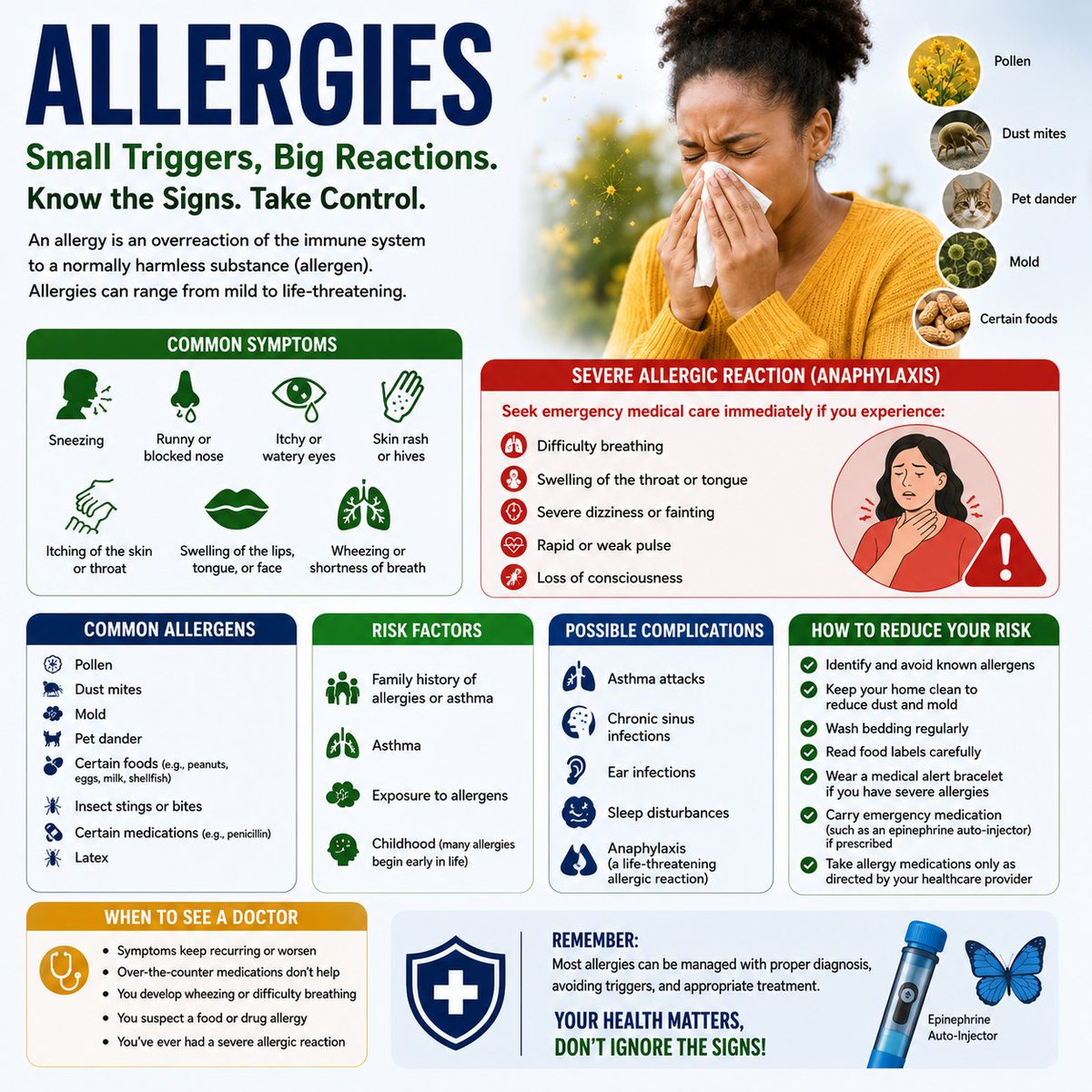
🌼 ALLERGIES
🚨 Sneezing, itchy eyes, skin rashes, or swelling may be more than just a nuisance—they could be signs of an allergy.
An allergy is an overreaction of the immune system to a normally harmless substance (called an allergen). Allergies can range from mild to life-threatening.
📌 Common Allergens
• Pollen
• Dust mites
• Mold
• Pet dander
• Certain foods (e.g., peanuts, eggs, milk, shellfish)
• Insect stings or bites
• Certain medications (e.g., penicillin)
• Latex
⚠️ Common Symptoms
• Sneezing
• Runny or blocked nose
• Itchy or watery eyes
• Skin rash or hives
• Itching of the skin or throat
• Swelling of the lips, tongue, or face
• Wheezing or shortness of breath
🚨 Signs of a Severe Allergic Reaction (Anaphylaxis)
⚠️ Seek emergency medical care immediately if you experience:
• Difficulty breathing
• Swelling of the throat or tongue
• Severe dizziness or fainting
• Rapid or weak pulse
• Loss of consciousness
🚩 Risk Factors
• Family history of allergies or asthma
• Asthma
• Exposure to allergens
• Childhood (many allergies begin early in life)
💔 Possible Complications
• Asthma attacks
• Chronic sinus infections
• Ear infections
• Sleep disturbances
• Anaphylaxis (a life-threatening allergic reaction)
✅ How to Reduce Your Risk
• Identify and avoid known allergens
• Keep your home clean to reduce dust and mold
• Wash bedding regularly
• Read food labels carefully
• Wear a medical alert bracelet if you have severe allergies
• Carry emergency medication (such as an epinephrine auto-injector) if prescribed
• Take allergy medications only as directed by your healthcare provider
🩺 When to See a Doctor
• Symptoms keep recurring or worsen
• Over-the-counter medications don't help
• You develop wheezing or difficulty breathing
• You suspect a food or drug allergy
• You've ever had a severe allergic reaction
💙 Your Health Matters, Don't Ignore The Signs!!
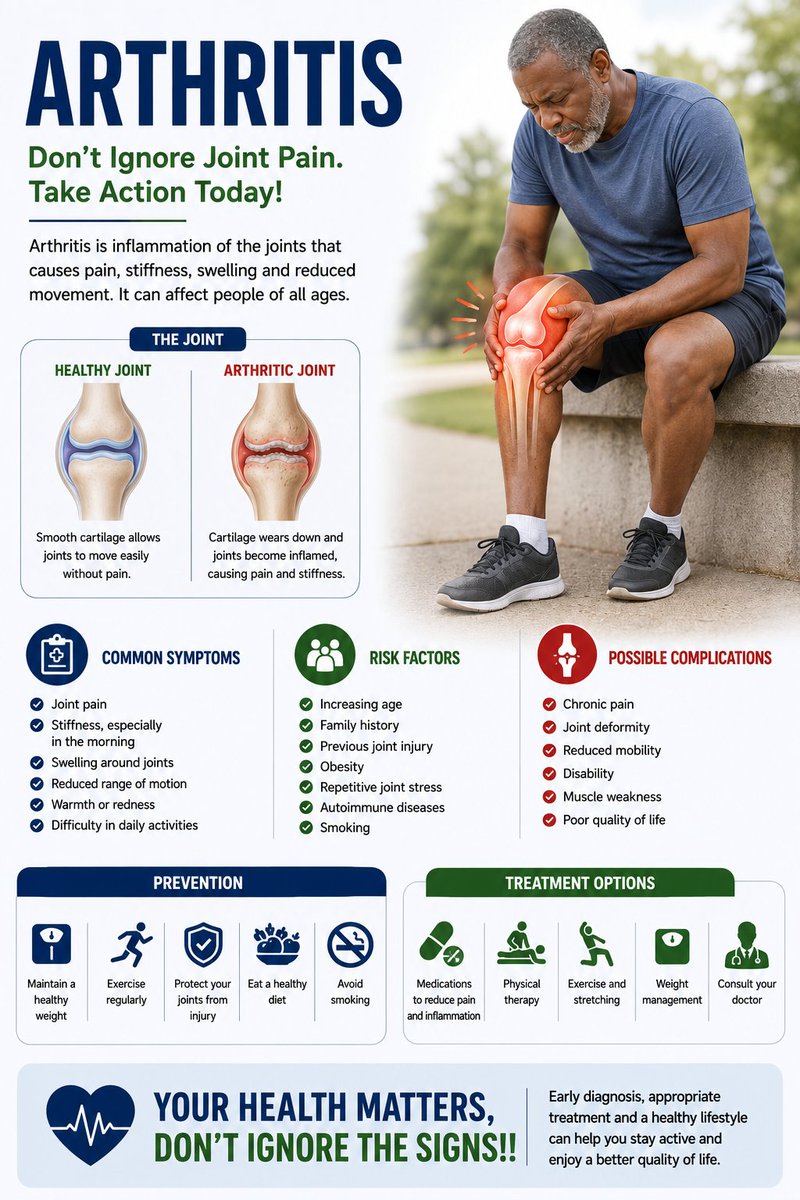
🦴 ARTHRITIS
🚨 Joint pain isn't always a normal part of aging. It could be arthritis. Early diagnosis and treatment can help protect your joints and improve your quality of life.
Arthritis is a group of conditions that cause inflammation, pain, stiffness, and swelling in one or more joints. It can affect people of all ages, although it becomes more common as people get older.
📌 Common Types of Arthritis
• Osteoarthritis – Wear-and-tear damage to joint cartilage (most common)
• Rheumatoid arthritis – An autoimmune disease where the immune system attacks the joints
• Gout – Caused by a buildup of uric acid crystals in the joints
• Psoriatic arthritis – Associated with psoriasis
⚠️ Common Symptoms
• Joint pain
• Stiffness, especially in the morning
• Swelling around the joints
• Reduced range of motion
• Warmth or redness over affected joints
• Difficulty walking or performing daily activities
🚩 Risk Factors
• Increasing age
• Family history
• Previous joint injury
• Obesity
• Repetitive joint stress
• Autoimmune diseases
• Smoking (especially for rheumatoid arthritis)
💔 Possible Complications
• Chronic pain
• Joint deformity
• Reduced mobility
• Disability
• Muscle weakness
• Poor quality of life
✅ How to Reduce Your Risk
• Maintain a healthy weight
• Exercise regularly with low-impact activities
• Protect your joints from injury
• Eat a balanced diet rich in fruits, vegetables, and omega-3 fatty acids
• Avoid smoking
• Manage underlying health conditions
🩺 Treatment Options
• Pain-relieving and anti-inflammatory medications
• Physical therapy
• Regular exercise and stretching
• Weight management
• Assistive devices when necessary
• Joint replacement surgery for severe cases
🚨 When to See a Doctor
Seek medical attention if you experience:
• Persistent joint pain lasting more than a few weeks
• Swollen or warm joints
• Severe stiffness affecting daily activities
• Sudden, intense joint pain with redness and swelling
💙 Your Health Matters, Don't Ignore The Signs!!
What a match!!!
I give it to Cape Verde, a team that is well Organized and does good team work. They pulled a shocker.
The last world cup match with this intensity was 2022 finals!!!
Football Keep Writing History.
THE HUB OF ENTERTAINMENT!!!!