PhD(s) | Political Economist | Philanthropist | Educational Policy Analyst | University of Toronto Alum | Born at the Equator, Thriving at the North Pole | #IFB
“Their selfless service to the OISE community has helped deliver key programming and services to our global community of over 100,000 alumni,” says Sim Kapoor, Director of Advancement and External Relations at OISE. @OISEUofT@namatasusan3@MirembeDr
https://t.co/i6kkqdNysy
If Africa's top referee is inadmissible in America, who qualifies? Many are calling it racism.
Somali referee Omar Abdulkadir Artan was denied entry into the US "due to vetting concerns" even though he had a 3-month multiple entry visa and was traveling on a diplomatic passport
@AgoraCFR If the Office of the President can only be held by a Ugandan citizen by birth, why are folks discussing/considering Gen. MK as a potential successor of his father when he was born in Tanzania 🇹🇿?
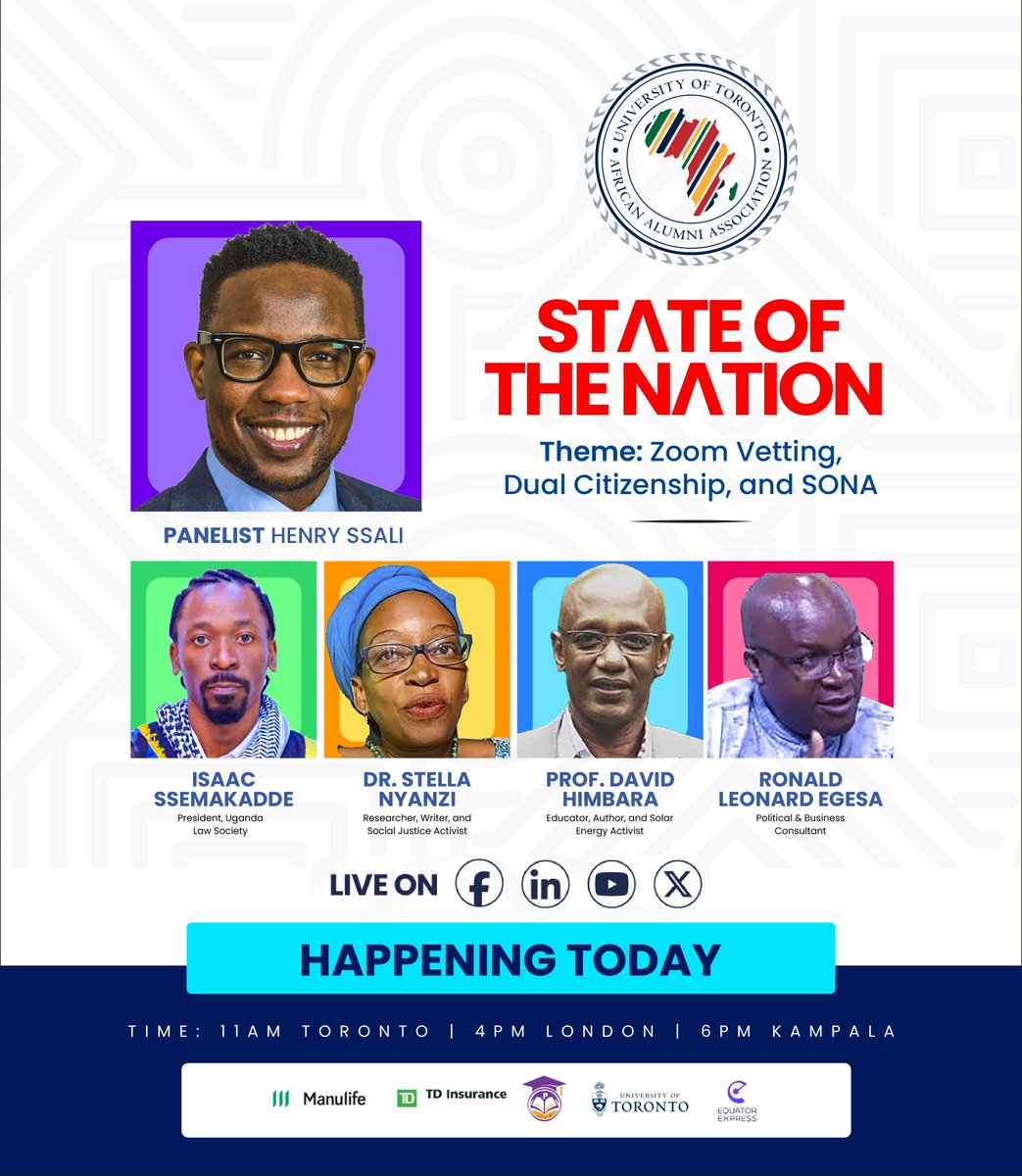
My Two Cents on SONA (Uganda).
The 2026 State of the Nation Address appears to frame Uganda’s future around “No More Sleep”: wealth creation, anti-corruption, infrastructure, agriculture, oil, industrial parks, and regional integration. Its strength is that it keeps economic transformation at the centre. Its weakness is that it still treats technology and AI as peripheral, when AI is becoming a core development force.
Potential Positives
President Museveni’s strongest point is continuity around productive sectors: agriculture, manufacturing, infrastructure, electricity, oil and regional markets. He cited GDP growth from about US$3.9 billion in 1986 to US$69.3 billion today, projected to reach US$80 billion next financial year, and emphasized PDM, Emyooga, OWC and NAADS as household wealth tools.
The renewed focus on corruption, non-performance and service delivery is also important. If taken seriously, it could improve implementation of parish-level financing, infrastructure maintenance, public procurement and investor confidence. The speech’s emphasis on African integration is also economically sound: Uganda’s domestic market is too small to support large-scale industrialization without EAC and AfCFTA market access.
Major Misses
The speech appears too celebratory and insufficiently diagnostic. It praises growth, but does not seriously confront the quality of that growth: youth unemployment, underemployment, weak wages, high borrowing costs, informality, public service gaps and elite corruption. The Daily Monitor rightly flagged livelihoods, service delivery, corruption and youth unemployment as core expectations before the address.
The second miss is over-reliance on oil and traditional infrastructure. Oil may expand GDP, but it will not automatically create broad-based employment unless linked to local content, technical training, petrochemicals, logistics, manufacturing and transparent revenue management.
The third miss is the lack of a serious AI economic strategy. Uganda is already developing a National AI and Emerging Technologies Strategy, and UNESCO is supporting AI readiness work in Uganda, but the SONA did not appear to make AI a central pillar of the next development phase.
How will AI affect Uganda’s economic development?
AI could become Uganda’s next productivity engine if applied practically. In agriculture, it can support weather prediction, pest detection, soil mapping, irrigation planning, extension services and commodity price intelligence. In health, it can improve diagnostics, drug supply forecasting, telemedicine and community health worker decision support. In education, it can help personalize learning, support teacher preparation and deliver low-cost tutoring in rural schools.
For government, AI can improve tax compliance, procurement monitoring, fraud detection, land records, traffic management and public service delivery. Uganda’s Digital Transformation Roadmap already targets connectivity, e-services, digital skills, cybersecurity and innovation, which are foundations for AI adoption.
But AI also threatens Uganda if mishandled. It can deepen inequality between connected urban youth and digitally excluded rural citizens. It can automate low-level clerical work before Uganda has created enough decent jobs. It can also strengthen surveillance and repression; rights groups have warned about AI-enabled mass surveillance across Africa, including Uganda.
Bottom Line
The address is economically optimistic but technologically underdeveloped. Museveni’s development model still leans heavily on land, agriculture, infrastructure, oil and state-led wealth programs. Those remain important, but Uganda’s next leap will depend on whether it can make AI, digital skills, data governance, innovation finance and ethical regulation central to national planning. Without that, Uganda may grow, but still miss the productivity revolution now reshaping the global economy.
@SpireJim@kasujja Context is important but it can be derived from other sources of information produced during the same time period. The one thing about one liners is that they eliminate biased contextual positioning and offer researchers opportunities to "make sense" of a particular situation
The dramatic overthrow of AAA – seemingly headed by Gen. Kainerugaba – looked like a signpost towards a transition. I had thought cabinet will be signpost number II. But then, MK and co., are themselves complaining!
Did Museveni fear the noise and backlash that would come with his son as Vice President?
In @observerug this week, I write about these difficult signposts, and M7-MK confusing messaging.
https://t.co/zTGGORrL7z
"Look at their entire banking sector! You could be plunged into darkness with just a single click."
How then do you talk sovereignty when the motive is to protect country against small political actors!
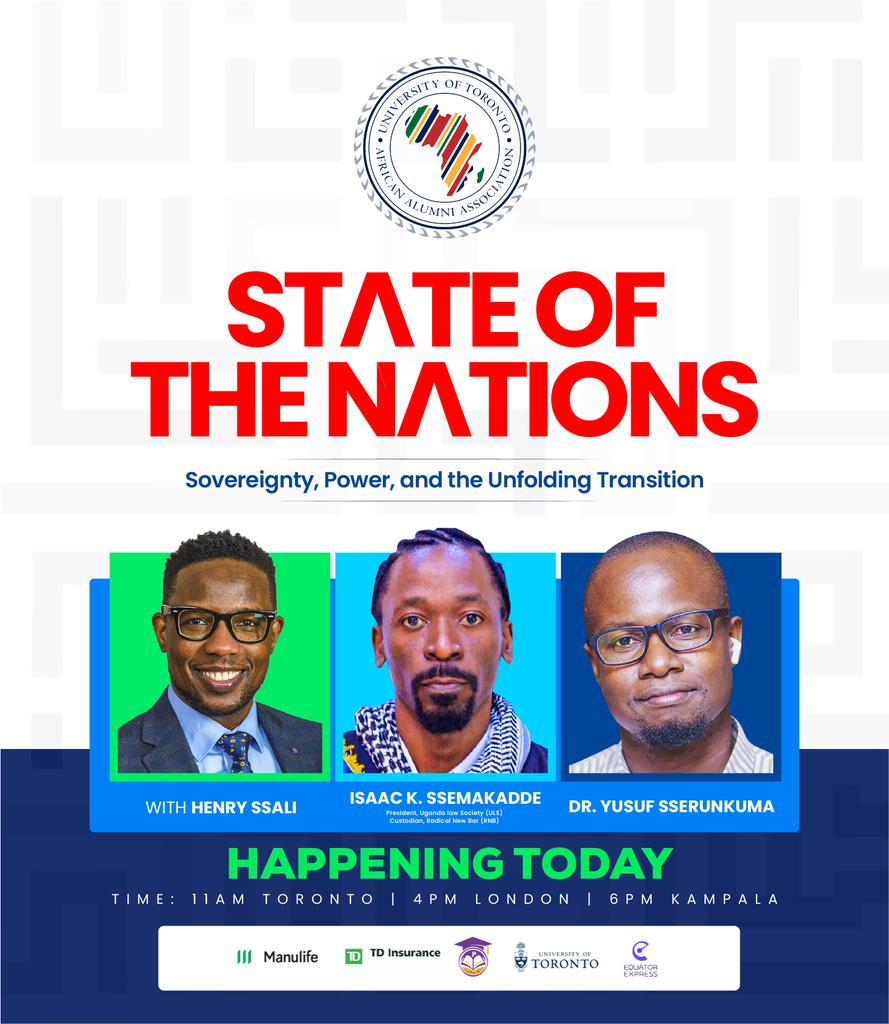
SOVEREIGNTY, POWER & THE UNFOLDING TRANSITION 🇺🇬
Parliament has passed the Protection of Sovereignty Bill.
President Museveni prepares for another swearing-in.
Power around the presidency, the military, and family networks appears increasingly consolidated.
So we ask:
Is Uganda protecting sovereignty or concentrating power?
Does the PoSB defend the state or restrict the people?
And what does transition look like in a system shaped by military continuity and executive control?
Join us LIVE for a critical conversation on power, democracy, and Uganda’s political future.
#Uganda #SovereigntyBill #PoSB #Museveni #Muhoozi #Governance #PoliticalTransition