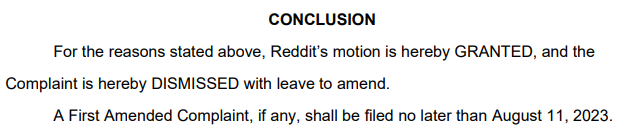
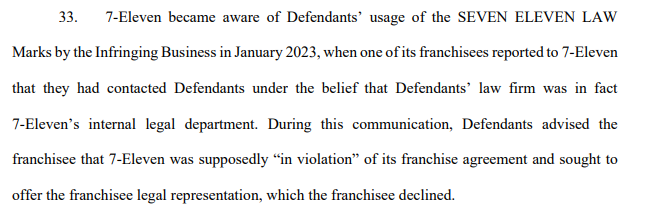
@technollama seems like, based on how the other suits are going, these claims would just be preempted by the Copyright Act. weird to have no copyright infringement claims....
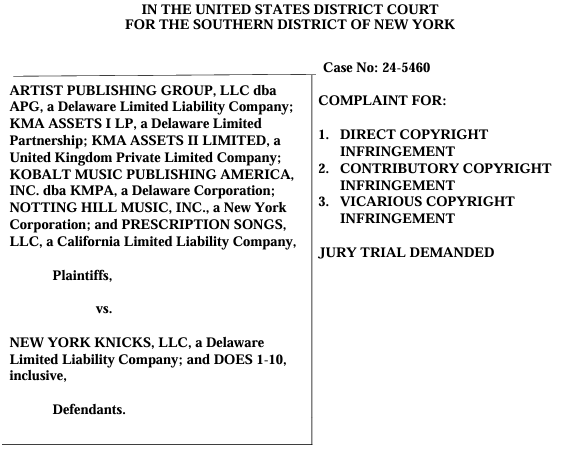
At least 14 NBA teams got hit with copyright lawsuits yesterday accused for synching songs to social media videos without a synch license. Gotta keep the @jalenbrunson1 vids up at least
Agreed that it's not a great complaint and the lacking allegations as to removal of CMI means the initial complaint is prob going to be dismissed at MTD. But one thing I found interesting that I don't believe I've seen alleged re 1202(b)(3) claims in other cases is that the "distribution of copies of works with CMI removed" allegations are based on the sharing of copies of works between MSFT and OpenAI during LLM development. Where 1202(b)(3) claims were dismissed in the GitHub/Meta cases, that was primarily because there were no allegations re the required distribution of "copies" of the works sans CMI (no outputs of full books in Kadrey; only snippets/altered/modified code output in Github). Here the focus is being made on the distribution of full copies between MSFT and OpenAI during training of the LLMs-seems like a different approach
Pretty good example of F around and find out in the copyright context--lawsuit The Tolkien Trust brought against Polychron, writer of an unauthorized "sequel" of TLOR titled The Fellowship of the King (TFOK).
Polychron sued Amazon/Tolkien Estate in April 2023 based on the Amazon TV show Rings of Power alleging copyright infringement TFOK. Polychron had initially sought a license to the TLOR IP from the Tolkien Estate to write TFOK, but was denied because of the Estate's standing policy to decline all licenses for TLOR sequels (J.R.R. Tolkien didn’t want sequels). Consequently, last August, Polychron lost in its suit against Amazon/ Tolkien Estate because the court found as a matter of law that TFOK was “an unauthorized derivative work [of TLOR] that is not entitled to copyright protection.”
Tolkien Estate--presumably not the happiest Polychron had sued them--filed its own infringement suit against Polychron in June 2023, alleging TFOK infringed the TLOR copyright. Court ruled infringement at the summary judgment stage, finding substantial similarity as a matter of law. SJ findings of infringement are pretty rare in copyright cases (normally SJ is found for non-infringement). But given Polychron’s initial request to Tolkien for a license was clear evidence actual copying (which is normally rare), and Tolkien’s denial of the license established Polychron knowingly copied elements of TLOR without permission, wasn’t really a hard ruling to make.
Guessing you saw the SJ decision on this recently (just saw it today and remembered this post). Court found SOL barred Crabtree’s (C) claims based on 2012 conversations where the Cert of Authorship was repeatedly identified by parties as a WFH agreement. Very interestingly came down to the court's finding that Crabtree was sophisticated enough to know what WFH agreement meant vis-a-vis (C) ownership making it a clear repudiation of Crabtree’s ownership starting the SOL accrual.
Is this facetious? Because: (1) Google literally did get sued for this by a competitor website--Google won on preemption grounds, was contract based claim because the competitor wasn't (C) owner, music publishers were; and (2) Google literally pays music publishers to display the lyrics in the search results (which is what the publishers here want Anthropic to do) https://t.co/nysGkfUh5y
Lol no there doesn't. Distribution (106(3)) is literally a separate exclusive right of copyright holders--in addition to the exclusive right of reproduction (106(1)). Often times cases involve violations of both rights, but reproduction alone is actionable. Funny you're calling out people for being "woefully ignorant of copyright law" with this comment.
Thaler case sounds like a big deal at first, but really just affirming what we all already knew about copyrightability as the most pertinent GenAI-related issues weren't being considered. This paragraph alone exemplifies that there are still many questions to be answered:
@franklingraves@ipwatchdog@CopyrightOffice Oof--the "this case is not nearly so complex" paragraph alone exemplifies how little of the GenAI output/copyrightability guidance we all want this decision actually provides.
@brianlfrye know how much you love the Warhol opinion. What do you think about this recent CD Cal opinion not even referencing it, along with this statement: "However, an infringer's separate purpose, by itself, does not create new aesthetics that would alter the original work's expression, meaning or message. ... A difference in purpose is not quite the same thing as transformation, and Campbell instructs that transformativeness is the critical inquiry under this factor." https://t.co/zAEmFAwKUc