Most large cloud AI providers can’t explain to you what their model did, why, and whether it was compliant.
For banks, insurance companies, and healthcare organizations that’s a huge regulatory liability.
If you can’t provide evidence for how an AI model generated a decision, you can’t defend it to an examiner.
But with the Abacus Indexer, you get a complete, multi-layered audit trail.
That means you can:
- Record every query made to the model
- Capture why it was made and what it returned
- Automatically generate compliance reports on demand
- Monitor access, stream logs in real-time, and store tamper-proof records.
Plus, it comes SOC 2 Type II and HIPAA certified.
So now when an examiner asks, you have the answer.
https://t.co/xV2XGMv4H2
Just in: Anthropic is being sued for misleading customers about AI pricing. This is exactly why it's better to go with an on-prem AI solution. https://t.co/Lqf90PZKN4
What happens when you put bankers, healthcare, aerospace, and government professionals in one room to talk about AI? Really good answers, it turns out.
At our Denver Lunch & Learn last week, we hosted an afternoon lunch to discuss what AI can (and should) do for businesses handling sensitive data.
Mariano Apodaca and our CEO David Moscatelli walked through how on-prem AI works and where it fits in regulated industries. The audience took notes, pushed back, and asked in-depth questions.
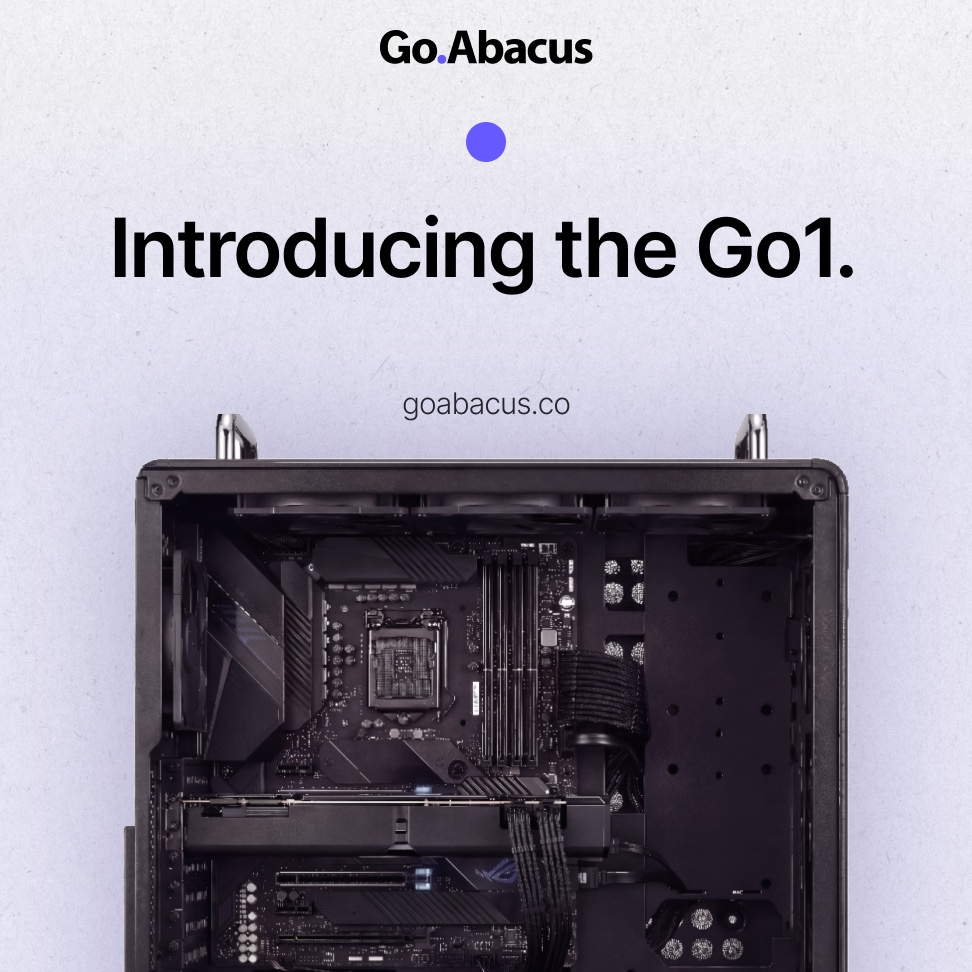
They were really interested in The Go1™ and how it can help businesses set up a full AI system in just 15 minutes without connecting to the cloud.
The most common question we got afterwards was: “When are you doing this again?”
The answer is - soon! Stay tuned for the next one.
At first, a lot of AI tools were free to use. Here’s why that’s changing:
The large cloud AI providers gave away access so your teams could get hooked.
Now they are charging subscriptions. Token limits. Pricing structures that are difficult to understand and even harder to forecast.
It’s only going to get more expensive.
For regulated industries, this is a serious operational risk.
You can’t run out of tokens mid-conversation when a loan officer is trying to answer a lending question.
Nor can you hit a usage cap when a clinician needs to know whether it’s safe to discharge a patient.
You can’t rely on these large cloud AI systems.
What you need are unlimited queries for a fixed monthly price. What you need is Go Abacus.
https://t.co/3qGmj6ERd7
@JasonChatbox, a Go Abacus investor, just bragged about us on the @theallinpod!
He said: “Organizations cannot get enough of this product.”
The product is The Go1™, a unique hardware appliance that you plug into an ethernet cable and in just 15 minutes you have safe, and secure AI that regulated industries can control.
https://t.co/rILuDPbtBj
Great seeing the Texas banking community come together in Dallas!
Jacob Nolen and Adnan Aldaas had a blast at the @texasbankers, connecting with other members, swapping ideas, and discussing what AI can do for banking.
They brought an example of The Go1™, which brings AI on-premises, so banks can move fast without putting customer data or regulatory compliance at risk. Just plug it into an ethernet cable and you’re up and running with fast AI for up to 2,000 users in just 15 minutes.
If you were there and we didn’t get a chance to chat, we’d love to connect.
Walk into any bank's compliance department at 7 PM and you'll see a handful of analysts hunched over keyboards, drafting SAR narratives.
They're pulling facts from a case file open in another tab.
Cross-referencing transaction details.
Choosing language carefully because the document is going directly to FinCEN.
Each narrative takes between ninety minutes and three hours.
Multiply that by the number of SARs your institution files monthly and you have a picture of where your compliance budget is actually going.
Here's how you can optimize this: https://t.co/GHMIrbMHpC
Go Abacus’ model is 99.5% accurate!
Here’s how our AI-powered tools work for BSA officers, investigators, and compliance teams:
- Real-time transaction monitoring across core banking, card platforms, and digital channels
- Cross-system correlation that surfaces suspicious linkages
- Intelligent alert prioritization
- Pre-populated SAR and CTR filings with full audit trails
More on how to improve your AML Transaction monitoring: https://t.co/OPjkjie7ph
Of the roughly 58 hours a week the average physician works, only 27.2 are spent on direct patient care.
The rest is consumed by documentation, order entry, and a labyrinth of tasks that have nothing to do with healing.
For hospitalists, who carry some of the heaviest inpatient loads in the system, that math is hard to swallow.
To learn how AI can help ease this burden, read more from Dr. Sunny Pattar.
https://t.co/53f7wxptqC
@FluentInFinance Irregardless of the pricing, AI tools are only as good as the humans behind them. When used properly they make us more efficient, but companies never should have laid off their staff in the first place.
If you're in charge of compliance at a highly regulated company, the first thought that comes to mind when you hear AI probably isn't opportunity. It's risk.
Who has access to the data? What happens if an employee pastes something sensitive into the wrong tool? How do we explain this to an auditor?
Most AI tools marketed right now are built for speed and convenience, not for the compliance requirements of a bank, a hospital, or an insurance carrier. And every time a staff member uses one, your data leaves your building.
Now, you might have heard that local AI is safer than foundation models, but is that true?
Read to learn more. https://t.co/dIqk3Um5F9
Go Abacus saves compliance teams an average of 5 hours per employee, per week through
- Intelligent alert prioritization
- Pre-populated SAR and CTR filings
- And shared investigation workspaces
If you want your BSA officers to focus less on admin and more on investigations: https://t.co/OPjkjie7ph
@SpirosMargaris Our solution has been to create an appliance called The Go1 that lets companies set up their AI systems in just 15 minutes. There is an upfront cost for The Go1 but after that there's unlimited queries for a fixed monthly cost, making it more affordable in the long run.
@PeterL4e Agree! We work with a lot of regulated industries who are already navigating this. And the boards that get it right will also move much faster because of it.
On May 1, Federal Reserve Vice Chair Michelle Bowman stood up at a Financial Stability Oversight Council roundtable and said something model risk teams have been quietly working around for two years.
The Fed, OCC, and FDIC have amended their model risk management guidance. It no longer applies to generative or agentic AI.
Read more to learn how this affects your company.
https://t.co/vbMjITmQrR