A great glimpse of London in 1968. Commuters walk down to the Underground, men in shirts and ties and a few ladies still in mini skirts. There’s even a view of the old wooden escalators.
A man was caught on camera scaling the side of a building in Paris to rescue a four-year-old child hanging from a balcony. Without a moment's hesitation, he climbed several stories to reach the little boy and pull him to safety.
A true hero whose courage deserves the highest respect and every medal imaginable. 👏🏅❤️
A $20 trillion concept proposes a 3,400-mile underwater tunnel connecting London and New York, potentially reducing a 7-hour flight to a 1-hour train ride.
We are used to seeing the 1920s in black and white. This is what London actually looked like, in full color, more than a hundred years ago.
What you are watching comes from The Open Road, filmed in the summer of 1924 by a British cinematographer named Claude Friese-Greene. It is some of the earliest colour film of London ever made.
What I love about this film is that the color collapses the distance between us and them.
The black-and-white footage we are used to is beautiful, but it makes the past feel like another world. Colour changes that. Red buses, a blue sky, the green of the trees, and suddenly 1924 does not feel like history at all...
What most people don't know is that this footage was one man's attempt to finish his father's life's work: Claude was the son of William Friese-Greene, one of the pioneers of early cinema. Together they had spent years developing a way to capture true color on film, using a system of spinning red and blue-green filters in front of the camera. The process was flawed. It flickered, it produced strange color fringes around anything that moved too fast, and it was soon overtaken by better systems and forgotten. Claude set out on a journey by car from Land's End to the north of Scotland, filming the whole country in his imperfect color, trying to prove that his father's dream could work.
For decades the footage sat largely unseen, its flaws making it almost unwatchable. Then, in our own century, the British Film Institute used digital technology to clean away the flicker and the fringing, revealing what Friese-Greene had actually captured: a lost world, brought back to life in color.
Slovak ice swimmer Boris Oravec narrowly escaped death after becoming disoriented beneath a frozen lake and struggling to find the exit.
He was rescued after finding his way back with the help of a safety rope and his team.
We've had the warmest June day on record and provisionally the warmest night too. But why does this heatwave feel so much worse than back in 2022 when we saw over 40 degrees in the UK? Here comes the science bit with @kirstymccabe
A billionaire bought a logging company in the Amazon rainforest just to shut it down.
Swedish-British billionaire Johan Eliasch has taken a bold, hands-on approach to fighting climate change, shifting from business leadership to direct environmental action.
In 2005, he acquired a logging company in Brazil, gaining control of approximately 400,000 acres (1,600 km²) of Amazon rainforest, which he immediately dedicated to preservation by halting all logging operations. This decisive move transformed a potential deforestation site into a protected carbon sink, safeguarding biodiversity on a vast scale.
Eliasch's efforts extend far beyond this landmark purchase. He founded the Rainforest Trust, which has helped protect millions of acres worldwide, and co-founded Cool Earth in 2006—a charity that empowers indigenous communities to conserve endangered rainforests.
His influence reaches policy and sports: he advised the UK government on deforestation (authoring the influential Eliasch Review in 2008), and as president of the International Ski Federation (FIS) since 2021, he has driven sustainability initiatives, including committing to the Race to Zero campaign to halve winter sports emissions by 2030.
Eliasch exemplifies a rising movement among ultra-wealthy individuals who deploy private resources for immediate, impactful climate solutions—bypassing conventional channels to deliver tangible protection for the planet's vital ecosystems.
Brandon Alderson, from Sunderland, UK, was travelling to work when he noticed a man in distress in a layby.
He pulled over and saw that the man was suffocating. Brandon performed the Heimlich manoeuvre six times and saved the man's life.
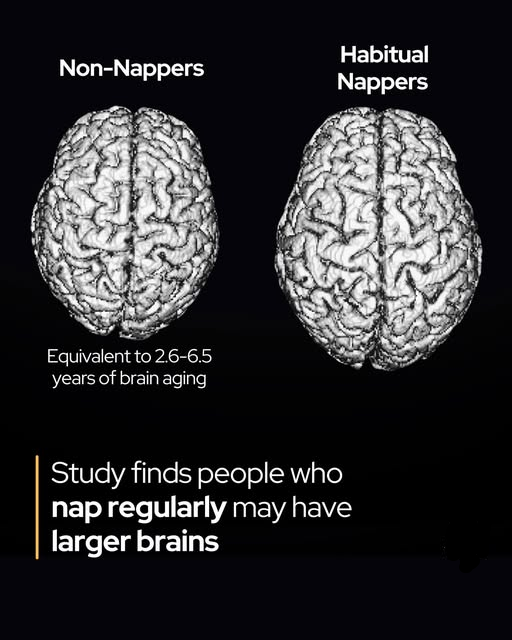
Skip your daily nap, shrink your brain.
A study by researchers from University College London and the University of the Republic in Uruguay has found that people who habitually take daytime naps tend to have significantly larger total brain volume—a key indicator of brain health that typically declines with age and is associated with reduced dementia risk.
The team used Mendelian randomization, a method that leverages genetic variants (present from birth) that make people more likely to nap regularly. By analyzing brain MRI scans and health records from more than 35,000 participants in the UK Biobank, they discovered that those genetically inclined to nap had brain volumes corresponding to 2.6 to 6.5 fewer years of aging.
While this doesn’t definitively prove that napping itself enlarges the brain, the genetic approach helps rule out many lifestyle-related confounding factors, providing stronger evidence of a potential causal relationship than traditional observational studies.
Notably, the researchers found no link between napping predisposition and performance on tests of reaction time, memory, or visual processing. However, previous studies have shown that short naps can deliver immediate cognitive benefits.
The study lacked specific data on nap duration, but prior research suggests naps of 30 minutes or less provide the greatest advantages while minimizing disruption to nighttime sleep.
This is the largest study to date linking regular napping with brain structure. Although further research is needed in more diverse populations, the findings bolster the idea that a brief daytime rest may help preserve brain volume and support long-term cognitive health.
A man in Cornwall, UK, left his camera recording overnight and managed to capture the incredible visual spectacle of the Northern Lights.
[📹 tophe_probert]
Keir Starmer has abandoned plans for the Digital ID to be compulsory.
This is a victory for individual liberty against a ghastly, authoritarian government.
Reform UK would scrap it altogether.
A billionaire bought a logging company in the Amazon rainforest just to shut it down.
Swedish-British billionaire Johan Eliasch has taken a bold, hands-on approach to fighting climate change, shifting from business leadership to direct environmental action.
In 2005, he acquired a logging company in Brazil, gaining control of approximately 400,000 acres (1,600 km²) of Amazon rainforest, which he immediately dedicated to preservation by halting all logging operations. This decisive move transformed a potential deforestation site into a protected carbon sink, safeguarding biodiversity on a vast scale.
Eliasch's efforts extend far beyond this landmark purchase. He founded the Rainforest Trust, which has helped protect millions of acres worldwide, and co-founded Cool Earth in 2006—a charity that empowers indigenous communities to conserve endangered rainforests.
His influence reaches policy and sports: he advised the UK government on deforestation (authoring the influential Eliasch Review in 2008), and as president of the International Ski Federation (FIS) since 2021, he has driven sustainability initiatives, including committing to the Race to Zero campaign to halve winter sports emissions by 2030.
Eliasch exemplifies a rising movement among ultra-wealthy individuals who deploy private resources for immediate, impactful climate solutions—bypassing conventional channels to deliver tangible protection for the planet's vital ecosystems.
🚨 UK SCHOOL BANS CHILDREN FROM HAVING PORK IN THEIR LUNCHES❗️
Mere Green Primary School has told parents that their children, they are NOT ALLOWED to take any PORK in packed lunches 😲
WHY SHOULD WE OR OUR CHILDREN BE BANNED FROM HAVING PORK TO APPEASE ISLAM? 🇬🇧 @CarrieZimbo
🚨BREAKING: Poland is now projected to be wealthier than the UK by 2030
GDP per capita growth since 2019:
🇵🇱 Poland: +19%
🇬🇧 The UK: +1%
Socialism vs free-market capitalism.
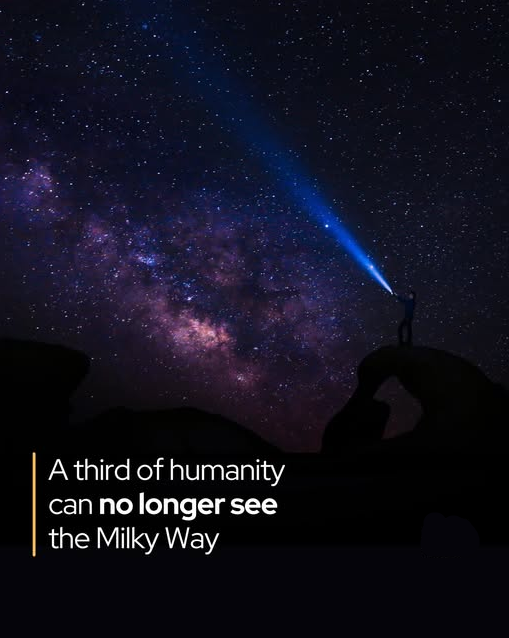
The night sky has gone dark.
The Milky Way guided humanity for millennia – inspiring myths, navigation, and even science itself. But for more than one in three people on Earth, it has vanished.
A global atlas of light pollution shows that the glowing band of our galaxy is invisible to 60% of Europeans, 80% of North Americans, and 100% of people living in places like Singapore, Kuwait, and Malta. In the UK, 77% of the population can’t see it at all.
Streetlights, floodlights, neon, and LEDs bounce light into the sky, creating a “luminous fog” that drowns out the stars. For billions, this cultural inheritance – a view shared by every generation before the 20th century – has been cut off in just a few decades.
Scientists warn this loss doesn’t just affect our ability to dream or look outward. Light pollution also disrupts wildlife, from migrating birds to insects, and can even harm human health.