40 agents and a $500 bill sounds like headcount magic until you ask who still hits send.
for a service owner the quieter version wins: agents draft the chase and the intake summary — you keep the gate. no named approver = a faster mess.
https://t.co/8AG5IQPljY
most AI SEO advice piles on drafts. the real leak is the missing approval owner — who can suggest, who hits publish, who owns the follow-up.
same gap outside SEO: intake, invoices, lead replies. map the path before you add another writer.
https://t.co/z8W1VwmX31
Your agency does not have an AI SEO problem.
It has an approval problem hiding inside SEO work.
The modern assumption it collides with: local search gets better when the team generates more posts, pages, and profile updates.
That sounds useful to an agency owner until the week gets real.
A Google Business Profile change gets suggested. Staff draft it. Nobody owns approval. The client never sees the risk. Reporting eats another day because the decision trail lives in chat.
That is the owner pain.
I built an SEO workflow that treats Google Business Profile actions as governed work, not loose AI output. The system encodes actions, gates, and approval paths around the work.
That is the useful proof object, not the copy.
The hidden contradiction is that most AI SEO advice makes the agency busier. More drafts create more review. More suggestions create more handoff misses. More client-facing output creates more places for unreviewed work to leak.
Heaviside AI starts in a different place.
Pick the workflow before the tool. Define intake first. Decide who can suggest the change. Decide who approves it. Decide what can go to the client. Decide who owns follow-up when the listing changes.
Then let AI help inside that path.
For an agency team, the better mechanism is not “generate SEO content.” It is: intake field, suggested action, staff review, owner approval, client approval when needed, live change, reporting note, follow-up owner.
That is how AI becomes an operating loop instead of another tab the business has to supervise.
A small first move is enough.
Pick one recurring SEO decision this week. Write down the intake fields, the approval owner, the client-safe output, and the reporting note before adding AI.
Takeaway: automate the decision path before you automate the content. Which SEO action in your agency reaches clients without a clear approval owner?
owners ask a cousin of this every week: learn the whole stack first?
same answer builders get. name the concepts — intake, handoff, who approves.
syntax (and the model) is easy once the job is named.
https://t.co/CSQ8EF1heS
Someone asked on YouTube: is learning Python from scratch still worth it in 2026?
The real question underneath it: in a world where you can ask Claude Code to build you things, do you need to learn to code at all?
If you're technical, the distance between "I have an idea" and shipped, published, scalable and secure is shorter.
And you don't need to be super technical to close most of it.
You need to understand how the pieces play a role:
- What is an API?
- What is an MCP?
- How would you create a web app, and what stack?
- What are data structures?
- What are basic algorithms?
- What is a linked list?
- What is a for loop?
Learn the concepts.
The syntax is what Claude Code is for.
#3 is the desk truth for service owners.
everyone generates infinite drafts now. the bottleneck moved to reviewing and choosing.
so the product isn't another writer — it's who hits send, and what never leaves the draft folder.
https://t.co/kqWDzHmVhs
The biggest opportunities right now:
1. build for solving loneliness (the more AI floods everything, the more people crave real human connection, IRL and small social)
2. build for agents that need to spend money (they're getting virtual cards and budgets, someone builds the spend controls, fraud protection, receipts)
3. build for people drowning in AI output (everyone generates infinite drafts now, the bottleneck moved to reviewing and choosing, build the judgment layer)
4. build for the burnout economy (everyone is expected to always be on and always optimizing, and the backlash toward rest, slowness, and enough is building)
5. build for verifying humans (deepfakes broke trust, every dating app, marketplace, and video call needs proof-of-human within 2 years)
6. build for the physical world (the trades, hardware, robots that AI is finally reaching)
7. build for the agent that answers the phone (every local business misses calls after 5pm, a voice agent that books the job is worth thousands a month)
8. build for the aging (70M+ boomers who want to stay healthy, sharp, and connected)
9. build for the LLM-search land grab (being the cited answer is the new SEO)
10. build for the newly automated (the paralegal, the analyst, the marketer whose job just changed and needs to reskill fast)
11. build for the seat-pricing collapse (software repricing from $50/seat to per-outcome, whoever nails outcome billing wins a category)
12. build for AI enablement (95% of businesses use nothing beyond ChatGPT, someone has to onboard the other 95%)
13. build for the agency everyone resents (businesses pay $1k/mo to agencies they hate, an agent that does 80% of it undercuts the model)
14. build for verticals on 2011 software (dentists, HOAs, contractors, all overdue for an AI-native rebuild)
15. build for reviving dead software (thousands of abandoned apps with real users, agents can maintain what a team couldn't, buy and revive)
16. build for markets too small to matter before (500 lobster fishermen was never worth a team, now it's a weekend and a real business)
17. build for agents hiring agents (a shadow economy is forming, it needs escrow, reputation, and dispute resolution for machines)
18. build for the anti-AI premium (as everything gets generated, human-made and analog become status symbols people pay up for)
19. build for distribution-first (anyone can build the product now, so the audience is the moat, media company first, product second)
20. build for the reinvention of college (what does an MBA even mean anymore)
21. build for a world with more free time than it knows what to do with (if AI takes the busywork, the question becomes what people do with the hours, and that's a civilization sized market)
note: more trends/ideas @ideabrowser (free to sign up)
22. build for the return to the physical (screens fill with slop, people crave the real world, the hands-on, the local, the analog)
23. build for the caregiving wave. The population is aging fast, tens of millions are caring for parents, and the whole burden is landing on families with no support.
24. build for the longevity shift (people want to live to 100 healthy, and a whole industry is forming around actively managing your own biology)
25. build for the housing and rootlessness problem (people can't afford to settle down, and the whole idea of a stable home base is up for grabs)
26. build for spiritual hunger (as institutions hollow out, the need for meaning, ritual, and belonging is exploding into new forms)
KEEP BUILDING
if nights are a chase list of portal leads you paid for, that isn't a hustle badge. it's a missing desk.
i help agents put follow-up on rails: first reply + nudges in your voice; you tap yes before anything sends.
reply LEADS or DM me — 20 min, free look, no deck.
two model paths can still hide the real handoff.
the router can pick the model. it still can't own who hits send. on a service desk staff rerun the draft because nobody trusts the gate — name that first, then speed helps.
https://t.co/n12PaRhXTX
2 model paths can still hide the real handoff.
The modern assumption it collides with: one smart router should hide model choice from the business.
That sounds clean to an owner until the agency week gets messy.
Staff rerun the same draft because nobody trusts it. Reporting eats a day because output needs cleanup. A follow-up waits because the team cannot tell who owns the next step. Worst case, unreviewed AI output reaches a client.
I built draft and rewrite workflows with direct provider routes for specific model behavior. Those routes can also turn off a generic fallback when the workflow needs that control.
That is not a vendor debate.
It is a workflow design decision.
Heaviside AI treats model choice as one part of the operating path. Start with intake. What data enters the workflow? Who checks it? What goes to the client? Who approves the output? Who owns follow-up if the answer is weak?
The hidden contradiction is simple: abstraction can hide responsibility.
If every model sits behind one generic box, the agency team may stop asking the business questions that protect delivery quality.
Some agency workflows need a stronger model choice. Some need a cheaper draft path. Some need a hard approval gate before anything leaves the team. Some need a spreadsheet, a named owner, and a cleaner handoff before they need AI.
Before comparing models, map one real workflow from intake to client-safe output. Put cost, latency, data sensitivity, approval, reporting, and follow-up on the page.
Takeaway: choose the model after you know the handoff. Which workflow in your business needs model control, and who approves the output before a client sees it?
private benchmarks for real jobs beat another "smart" layer.
most owners don't need a smarter model first. they need the task written down, a pass/fail check, and a human who still hits send.
https://t.co/E062rStQ3k
Really important piece to read.
It seems obvious that every company is going to have to create private benchmarks for tasks and there's going to be some platform that allows companies to create those benchmarks.
Right now everyone's business is a fleet of vehicles (workflows) going to the gas station to get gas (model), but no one has the label on the side of their door saying whether they need unleaded, premium, or supreme. So they unnecessarily use premium.
And the only information they have on what gas to use are generic standards (arena ai, SWEbench) saying all SUVs should use premium, all pick up trucks should use diesel, etc.
Prob 12-18 months out from this having a huge market because most enterprises are earlier in their AI journey then necessitates this precision, but feels like the right time to get started solving this problem.
lead half-life is quiet. name hits on a showing. after becomes 9pm. tomorrow they booked who answered first.
skip louder portals. build a follow-up desk that drafts first note + day-3 nudge so memory isn't the system.
you approve what leaves. structure first, then speed.
model choice is downstream of the handoff.
before you pick a router, name who hits send on the client reply and who owns the chase when the draft is weak. abstraction that hides that just moves the mess.
https://t.co/zs3lHj4kh1
2 model paths can still hide the real handoff.
The modern assumption it collides with: one smart router should hide model choice from the business.
That sounds clean to an owner until the agency week gets messy.
Staff rerun the same draft because nobody trusts it. Reporting eats a day because output needs cleanup. A follow-up waits because the team cannot tell who owns the next step. Worst case, unreviewed AI output reaches a client.
I built draft and rewrite workflows with direct provider routes for specific model behavior. Those routes can also turn off a generic fallback when the workflow needs that control.
That is not a vendor debate.
It is a workflow design decision.
Heaviside AI treats model choice as one part of the operating path. Start with intake. What data enters the workflow? Who checks it? What goes to the client? Who approves the output? Who owns follow-up if the answer is weak?
The hidden contradiction is simple: abstraction can hide responsibility.
If every model sits behind one generic box, the agency team may stop asking the business questions that protect delivery quality.
Some agency workflows need a stronger model choice. Some need a cheaper draft path. Some need a hard approval gate before anything leaves the team. Some need a spreadsheet, a named owner, and a cleaner handoff before they need AI.
Before comparing models, map one real workflow from intake to client-safe output. Put cost, latency, data sensitivity, approval, reporting, and follow-up on the page.
Takeaway: choose the model after you know the handoff. Which workflow in your business needs model control, and who approves the output before a client sees it?
generic evals tell you nothing about your invoice chase or intake form.
solo shops need the same idea smaller: label each real workflow, then decide draft-only vs needs-your-yes. private benchmark = the jobs you actually run.
https://t.co/E062rStQ3k
Really important piece to read.
It seems obvious that every company is going to have to create private benchmarks for tasks and there's going to be some platform that allows companies to create those benchmarks.
Right now everyone's business is a fleet of vehicles (workflows) going to the gas station to get gas (model), but no one has the label on the side of their door saying whether they need unleaded, premium, or supreme. So they unnecessarily use premium.
And the only information they have on what gas to use are generic standards (arena ai, SWEbench) saying all SUVs should use premium, all pick up trucks should use diesel, etc.
Prob 12-18 months out from this having a huge market because most enterprises are earlier in their AI journey then necessitates this precision, but feels like the right time to get started solving this problem.
one person can walk into markets that used to need a whole agency. the trap is forgetting the unpaid desks — intake, chase, reschedule. hand the edges a draft; you still hit send.
https://t.co/s6ppq1W7fs
same flip lands on solo service shops. tools draft the reply and the invoice chase. what's scarce is niche trust and the named person who hits send. the edge closed; the gate is still yours.
https://t.co/vr6W28dGyq
What was the indie hacker's unfair advantage? Code.
Write it, get links back to it, and Google decides your site is high quality and sends you the traffic.
Now big labs can cannibalize 95% of what a project is worth. Independent developers are left closing the last 5%.
Code is not the unfair advantage anymore.
- Distribution is.
- Being super niche is.
- Owning data no LLM has.
- Network effects.
- Maintaining the software nobody else wants to maintain.
Pick the one you can own and go build there.
smart approvals is the right split for a solo shop too.
safe work can run while you sleep. the invoice chase and the client reply still wait at your gate.
agent works the edges. you still hit send.
https://t.co/JaeUDXaOqI
HERMES AGENT HAS 3 QUICKSILVER FEATURES
THAT MOST USERS HAVEN'T CONFIGURED YET.
SMART APPROVALS. ONE-TURN MODELS. SELF-IMPROVEMENT CRON.
ALL THREE MAKE YOUR AGENT WORK AND SELF EVOLVE WHILE YOU SLEEP.
1. SMART APPROVALS (no more babysitting)
without smart approvals:
you set a cron job: "morning brief at 7am."
the agent hits a command that needs approval.
you're asleep. the agent stops. waits.
you wake up. it's been stuck for 4 hours.
with smart approvals:
smart approvals are the DEFAULT mode since v0.19.0.
an auxiliary LLM reads each flagged command.
obviously safe = auto-approved.
genuinely dangerous = auto-denied.
uncertain = escalates to you.
"read my calendar" → approved. no ping needed.
"delete this directory" → denied. you never see it.
"send this email draft" → uncertain. asks you.
the difference between an assistant you babysit
and one that works through the night.
if you want manual control back:
Desktop app / Dashboard: Security → Mode → ask
CLI: hermes config set approvals.mode ask
also available:
/deny [reason]
tells the agent WHY you refused.
it learns from the explanation.
stops repeating the same flagged action.
2. /MODEL --ONCE (expensive model for one turn only)
you're on GPT-5.6 Terra as your daily driver.
you need one beautiful HTML page.
Kimi K3 does that best but costs 3x more.
manual way: /model kimi-k3 → do the task → /model gpt-5.6-terra.
two switches. easy to forget the second one.
you stay on the expensive model by accident.
better:
/model kimi-k3 --once
Kimi K3 handles the next turn.
then automatically reverts to your daily driver.
one command. no manual switch back.
no accidental expensive model running for 20 turns.
use cases:
daily driver: GPT-5.6 Terra or Sonnet 4.6 (cheap)
one-turn tag-ins:
→ /model kimi-k3 --once (design task)
→ /model claude-opus-5 --once (complex reasoning)
→ /model grok-4.5 --once (X search)
expensive models do the one turn that needs firepower.
cheap model handles everything else.
pair with per-task effort control:
reasoning_effort goes up to "max" and "ultra."
set per-model overrides in config:
reasoning:
overrides:
claude-opus-5: high
gpt-5.6-terra: medium
deepseek-v4-flash: low
MoA presets can set different effort per slot:
advisors think hard. synthesizer stays fast.
thinking depth is a dial, not a global switch.
3. SELF-IMPROVEMENT CRON (agent fixes itself overnight)
tell your agent:
"create a cron job that runs daily at 3am.
review all cron jobs that failed in the last 24 hours.
for each failure: analyze what went wrong,
check if a skill needs updating,
and either fix the skill or create a new one.
then review all skills.
which ones haven't been used in 30 days?
which ones failed more than they succeeded?
suggest improvements or archive them.
compile a report of everything you changed.
include it in tomorrow's morning brief
under a section called OVERNIGHT SELF-IMPROVEMENT.
use the cheapest available model for this audit."
what this does:
3am: agent wakes on cheap model.
reads its own failure logs.
finds: "cron job X failed because skill Y
doesn't handle edge case Z."
fixes skill Y. tests the fix.
archives unused skills. cleans up bloat.
8am: your morning brief includes:
"OVERNIGHT SELF-IMPROVEMENT:
→ fixed email-parser skill: now handles
forwarded emails with nested attachments
→ archived 3 unused skills (last used 45+ days ago)
→ cron job success rate: 94% → 97%"
you didn't debug anything.
the agent diagnosed its own failures
and improved its own tools.
the agent at month 3 is sharper
than the agent at month 1
because it ran 90 self-improvement cycles
while you slept.
HOW ALL THREE CONNECT:
smart approvals (1) let the agent work overnight
without getting stuck on permissions.
/model --once (2) keeps costs down
by using expensive models only when needed.
self-improvement cron (3) uses a cheap model
at 3am to fix failures from the day.
the agent runs 24/7.
it doesn't wake you for safe operations.
it doesn't waste tokens on expensive models.
it fixes its own mistakes while you sleep.
you show up in the morning.
brief is ready. failures are fixed. costs are low.
requires v0.19.0+
check your version: hermes --version
update if needed: hermes update
multi-skill is a gift when you choose it.
most solo owners are multi-hat by accident — front desk, billing clerk, follow-up guy, filer — every night after the real work.
keep the craft hats you want. name the unpaid desks and hand the drafts off. you approve what leaves.
https://t.co/Hy8rqhbsmz
I'm either going to look like an absolute idiot or a fucking genius.
i believe that most people are multi-dimensional & don't want to do one thing at work all day long. marketers want to build software. engineers want to create content. product people want to learn to market.
at the same time, companies are (or should be) fighting for distribution more than ever before. it's one of the few remaining moats in business & will continue to get harder as AI drives abundance, while attention remains finite.
it's why i've introduced a sort of hybrid role at @tenex_labs that I haven't seen at other companies. it's like the professional version of a cyborg or centaur.
engineers can be creators.
creators can build software.
PMs can be teachers & trainers.
all of this to say, I think companies should start leaning into their people being jack-of-some-trades, especially in the interest of earning the attention of the internet.
if you want to be a professional centaur, shoot me a dm. some examples:
- an AI engineering looking to build software & create content.
- a product designer looking to build with AI & teach about it.
- a full-stack video producer/editor looking to build with & create content around AI.
- an AI-native consultant working with clients & looking to write deep essays about this wave.
Stop buying AI until one real job fits three buckets.
playbook work can run without you. drafts wait for a human send. price, exceptions, and money stay your hand.
that process doc trains the agent — and a new hire. tools come after the work is sorted.
the job doesn't vanish. it becomes agent manager.
for a solo shop the same pattern shows up off ads: drafts can run all day, but someone still owns who hits send on the client reply and the invoice chase.
https://t.co/6dqc6UaAIx
My agent runs my Facebook ad campaigns
2 ad sets a day. 5 ads per set.
It writes them and uploads them into Facebook.
Lets them run 2-3 days to get initial signal.
Turns off the worst performers, and promotes the winners into a pool where they compete against each other for budget.
Then it studies every ad it has ever made so it gets better at making the next one.
The hard part is entropy.
The agent gets stuck thinking the same way.
Two fixes:
- Pulling competitor ads from the Facebook ads library. That's new DNA in the system.
- Mining YouTube and podcast transcripts for insights, then build ads off those.
I'm not technical.
I hand Claude Code a transcript and ask it to walk me through the setup
Marketers keep asking me if their job is safe.
The job doesn't vanish. It evolves into "agent manager."
ignore the "window closed" noise.
the people who look lucky usually stayed on one real customer problem long enough for a system to form around it — follow-up, intake, the unpaid desks — not a new slogan every quarter.
https://t.co/m8z0j8b1A9
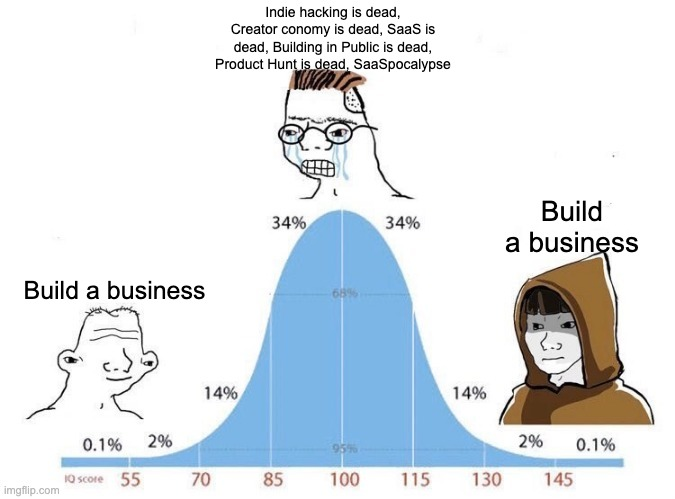
Every year it's the same. Something is dead, the window closed, it's too late
And every year, the people who ignore it and just build put themselves in a position to get "lucky"
Maniacally focus on driving a huge amount of value for customers with real problems and keep going!
the agent is the easy part. the warehouse is the product.
same for a solo shop: one place for leads, invoices, and who still needs a yes — then the agent has something real to work on.
build the plumbing first.
https://t.co/3E9ubOocvq
Everyone wants to build a marketing agent.
The agent is the easy part. Under the hood it's just code with an LLM making decisions.
Here's what actually makes one work:
One source of truth:
- Ad platform data, analytics, CRM, and Stripe in a single warehouse
- So the agent can trace one specific ad to actual revenue
The pipeline:
- Airbyte moves every source in
- ClickHouse holds it
- Both open source, both self-hostable, and Claude Code can stand it up for you
Write-only platform access:
- Use the ad platform's API to publish creative, pause, and promote
- Pull your reporting from the warehouse instead
- Bulk-pulling data through the API is what gets accounts banned
The loop:
- Agent reads the warehouse
- Agent acts on the platform
- New performance data flows back in
- Agent reads again
Think:
- Warehouse = what the agent knows
- API = what the agent does
- Loop = how it gets better
Build the plumbing first.
The agent part gets obvious after that.
"do a good job" does not buy you capability.
capability is the process doc, the tools, and the named person who hits send. the model only points at that.
https://t.co/IyiHxryxUz
a coworker in the thread is useful. a coworker that sends client emails without you is a different product.
agents in the chat can draft the digest and the follow-up. the owner still hits send on anything that leaves the building.
https://t.co/DgXRImNvQD
Your team's group chat is where work gets done now.
The new part: agents are in the channels with you.
An agent ships an app and drops the live link in the thread.
You add your teammates to that same chat.
You talk through what's missing, what's clunky, what's next
(the conversation you were already having)
Then you tell the agents to build it. They do.
Meanwhile another agent posts a daily digest it pulled from an API it built itself, and you reply to it by name: what's the common thread between my top tweets this week?
It runs on open protocols, so wiring in something new is a 15-minute job you do in the same chat.
Not a tool your team uses. A coworker in the thread.