The violence unfolding in Mogadishu is reckless. Somali leaders on all sides have a responsibility to preserve stability and resolve differences through peaceful means.
Actions taken in the coming hours and days may have lasting consequences for Somalia’s security, unity, and future.
Nin doorasha boobay oo isagu is doortay ayaa Kismaayo gogol u dhigay Horwayntii siyaasadda badankood isagoo rabo in Doorasho xor iyo xalaal ah ay dalka ka qabsoonto.
Ar dalkaan maxaa lagu cayaarayaa.
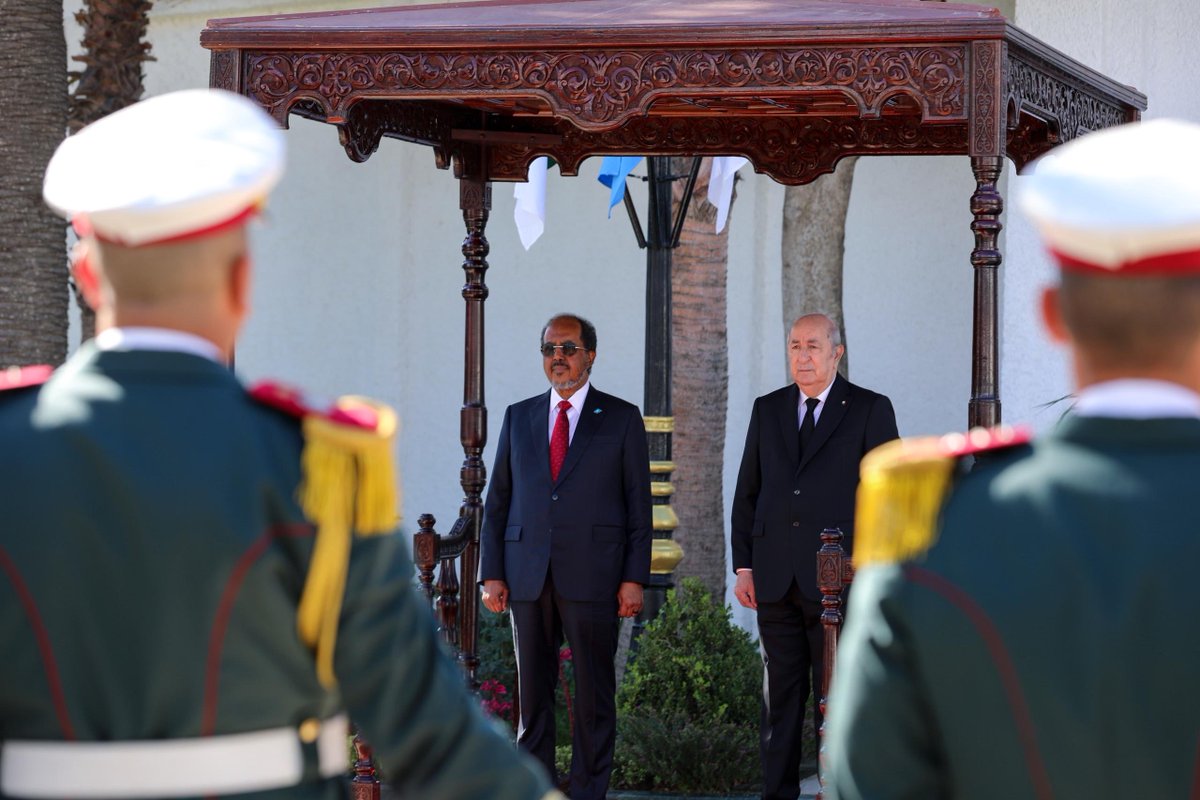
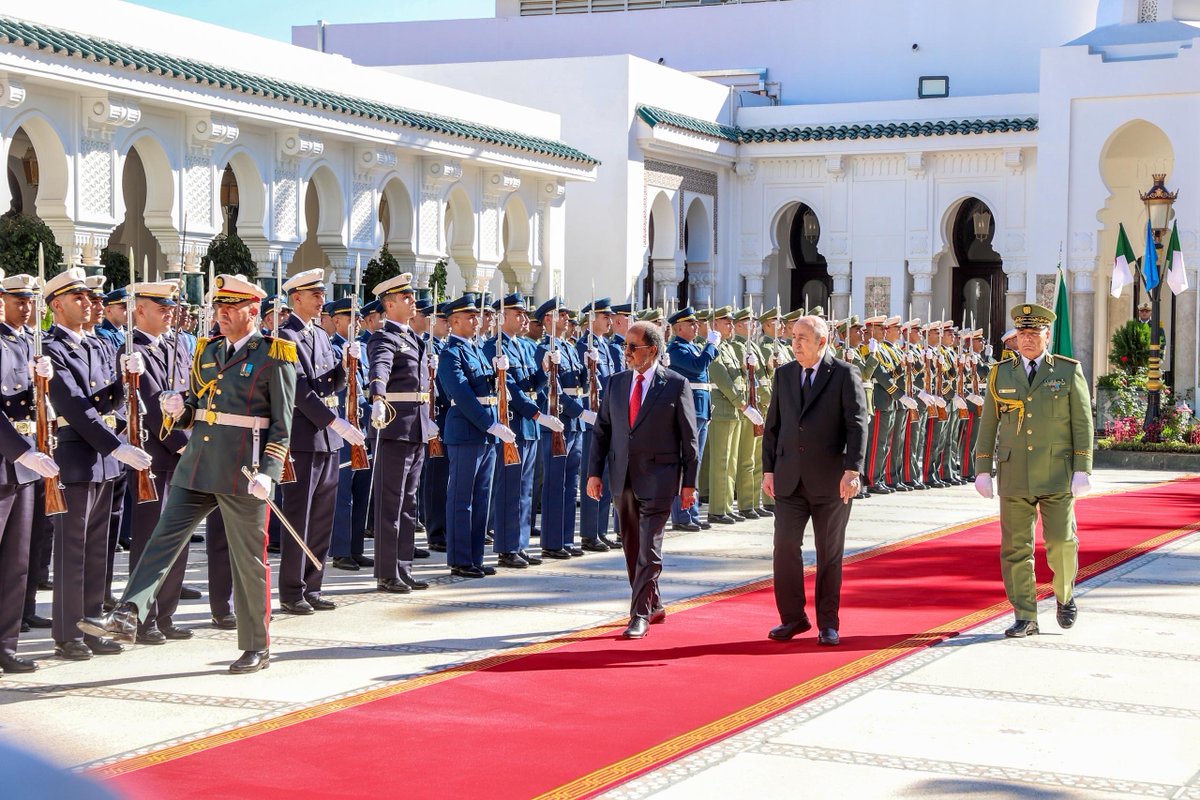
H.E. President Hassan Sheikh Mohamud was formally welcomed by his counterpart, H.E. President Abdelmadjid Tebboune of Algeria, at Al-Muradiya Palace in Algiers.
Upon arrival, the President was accorded a formal reception where he inspected a guard of honour and witnessed the national anthems of both countries.
Later, the two leaders led their respective delegations in bilateral discussions on strengthening cooperation in the areas of security, economy, education, health, culture, and diplomacy.
El Fasher, Crucified by the World’s Silence
Sudan’s agony is a moral test for the world. As El Fasher bleeds, humanity stands at a crossroads, between conscience and complicity, between the defense of law and the collapse of order.
On Sunday, the Rapid Support Forces (RSF) seized El Fasher, capturing the Sudanese Armed Forces’ last remaining positions in Darfur. By Wednesday, more than 2,000 people had been killed.
For 18 months, 1.2 million civilians in El Fasher endured a brutal siege, starving on animal feed as the RSF built 56 kilometers of barriers that blocked food, medicine, and humanitarian aid. Those same barriers sealed off every route of escape.
Verified videos reveal the horror: RSF fighters executing and torturing civilians, attacking hospitals, and detaining people arbitrarily. The UN Human Rights Office has confirmed summary executions of those attempting to flee and reports “indications of ethnic motivations” behind the killings.
El Fasher today is not simply a city under fire; it is an open wound on the conscience of the world. Its streets run red with the blood of innocents, its skies echo with the cries of mothers whose prayers find no answer. Here, death is no longer an event, it is a condition of existence. And silence has become another weapon, another crime in the ledger of humanity’s failures.
In Darfur and Kordofan, death continues to roam freely, choosing its victims without logic or mercy. The war that the world claims to have ended still burns in hidden corners, leaving behind ashes of homes, children growing up in fear, and hearts emptied of faith in justice. This is not a war between two armies, it is a war against humanity itself. Against life, against dignity, against the fragile dream of peace.
Those who perish in El Fasher are not participants in a political conflict; they are casualties of indifference. Every bullet fired there is both a declaration of a state’s collapse and a condemnation of a world that watches without acting. The RSF, heirs to the Janjaweed militias that once ravaged Darfur, continue to sow terror and destruction with impunity, erasing the distinction between civilian and target, home and battlefield.
The social fabric has disintegrated. The boundaries between victim and perpetrator, between fear and rage, between homeland and exile, have all dissolved. People now live on the margins of existence, sharing bread and fear, waiting for a dawn that refuses to come.
Yet in their eyes, a fragile light remains. It is the stubborn glimmer of hope that refuses to die, the whisper of a people who still say, “We want peace.”
I am moved by the conscience of humanity, but Sudan’s pain is not distant from me. Nearly 60,000 Somalis, including myself, have studied there. The debt we owe Sudan and its people is immeasurable. Today, as I watch El Fasher bleed, I am reminded of Somalia’s own civil war in the early 1990s and of Rwanda’s genocide in 1994, moments when the world looked away until it was too late.
What is happening now in Darfur, and before it in Palestine, in Ukraine, is not isolated tragedy. It is the embodiment of what happens when the world loses its moral compass, when international human rights law becomes optional, and when global relations are reduced to transactions of power and interest.
If this is the world we are becoming—where the rule-based international order collapses and conscience is silenced, then El Fasher is not only Sudan’s crucifixion; it is a warning to us all.
Enough war. Enough death.
El Fasher is not merely a Sudanese tragedy, it is a mirror reflecting our shared humanity, or the absence of it. To remain silent is to be complicit. To delay action is to normalize barbarism.
Stop this tragedy before it devours what little remains of life in Sudan. Stop the war, for peace is no longer a luxury; it is the last right left to defend, the final chance for survival.
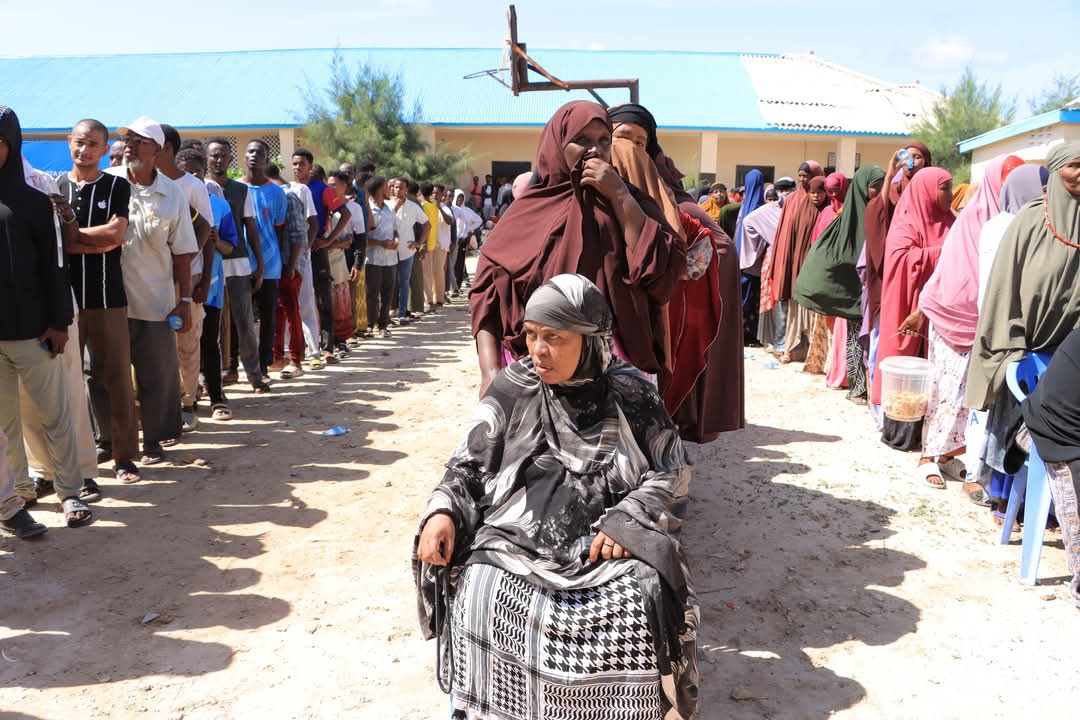
Diiwaan-gelinta dadweynaha ee doorashada golayaasha deegaanka ayaa maanta oo Talaado ah si rasmi ah uga bilaabatay degmada Shingaani ee gobolka Banaadir.
Waxaan hoosta ka xariiqayaa in 15 April mudan tahey maalin u asteysan dimoqoraadiyadda shabka Banaadir iyo Soomaaliyaba - mar hadii shacabku yeeshey hanaan-socodka nidaamka dawliga ah.
On Monday evening, youth in #Mogadishu staged a huge rally to support the National Armed Forces and their ongoing operations against terrorists. Singers and artists were part of the rally, raising awareness with patriotic songs.
Laba waddo oo kaliya ayaa ku geyn karto miiska go’aanka lagu gaaraayo
1⃣ Wakiilasho Bulsho: Mas’uul bulsho meel deggan u wakiilatay inuu matalo oo talada u gooyo, kaalintaas waxaa hadda ku jira madaxda la doorto ee dowlad goboleedyada iyo kuwa Federaalka.
2⃣ Awood ciidan: Habka labaad ee saamile siyaasadeed lagu noqon karo waa inaad xoog ku heystaa deegaan, sharciga lagu heshiiyayna maquuniso. Kaalintaas hadda waxaa ku jira AS iyo IS.
Inaad hadda ka hor xil soo qabatay, isku soo sharraxday ama hadda damac kaaga jiro kuma siineyso xuquuq ka badan tan muwaadinka caadiga ah oo aad talada qeyb uga noqto.
#Somalia