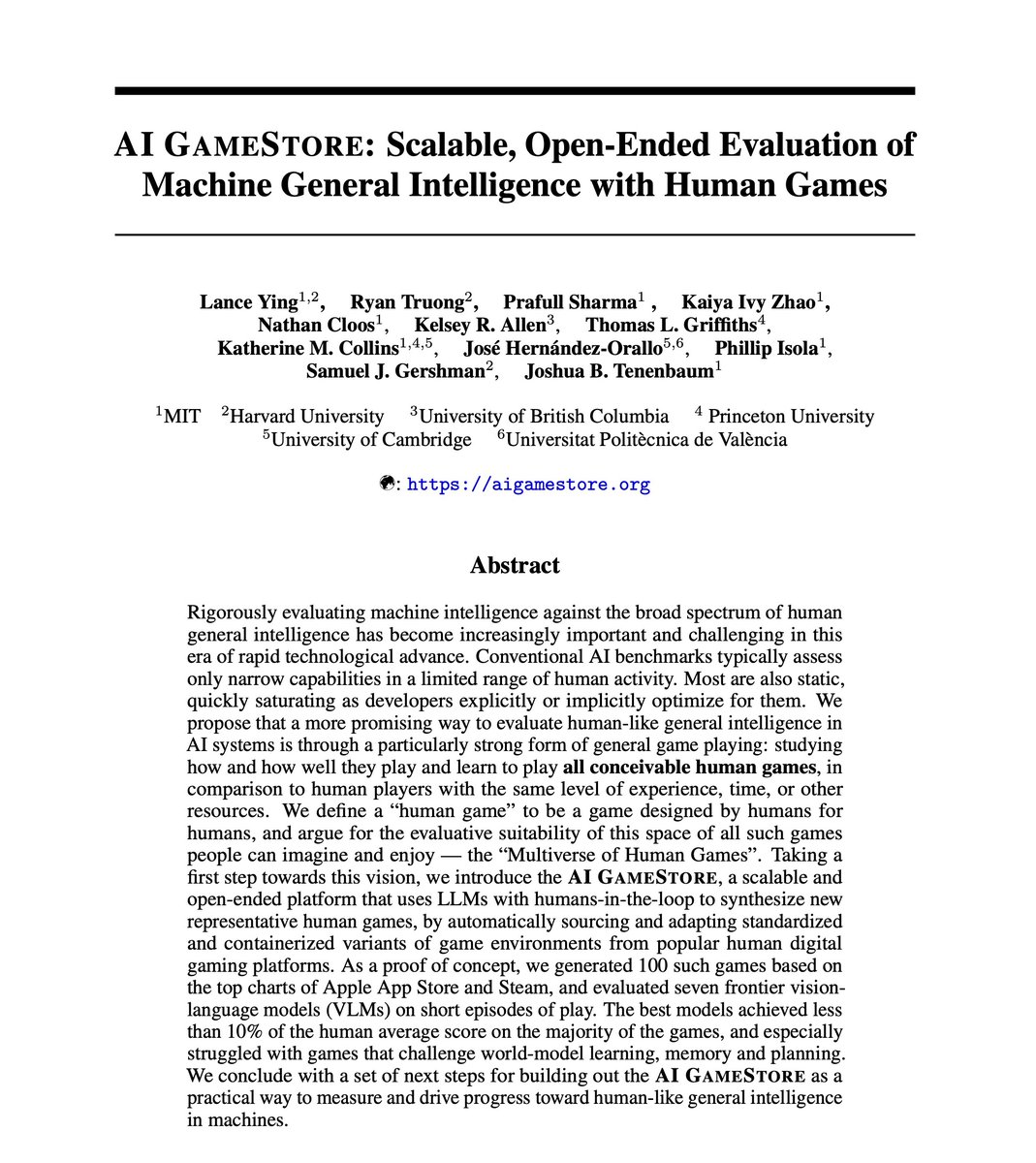
Today we present a new framework for measuring human-like general intelligence in machines (what some people call AGI).
Conventional AI benchmarks today assess only narrow capabilities in a limited range of human activities.
We propose that a more promising way to evaluate human-like general intelligence in AI systems is through a particularly strong form of general game playing: studying how and how well they play and learn to play all conceivable human games — what we call the ``Multiverse of Human Games''.
Taking a first step towards this vision, we introduce the AI GameStore, a scalable and open-ended platform that uses LLMs with humans-in-the-loop to automatically construct standardized and containerized variants of popular human games on digital gaming platforms.
As a proof of concept, we generated 100 such games based on the top charts of Apple App Store and Steam, and evaluated seven frontier vision-language models (VLMs) on short episodes of play. The best models achieved less than 10% of the human average score on the majority of the games.
Check out our website to play the games, see how agents play, and build agents to solve them!
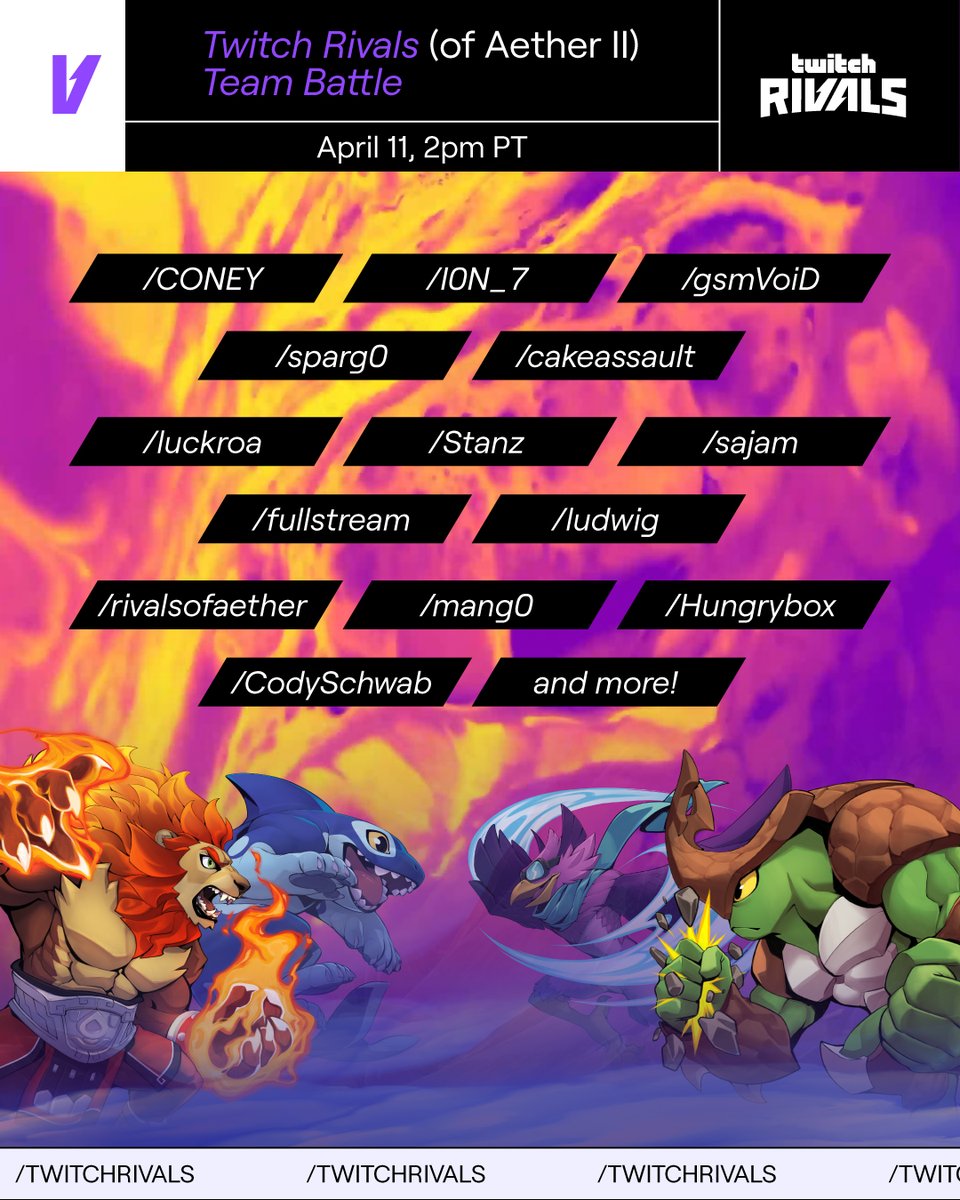
🔥 The battlefield is set. The warriors are chosen.
Meet the streamers for Twitch Rivals (@RivalsOfAether) Team Battle 👇
📅 April 11, 2pm PT
📺 /TwitchRivals
Okay, so, like, here's a very *high level* overview of the issues involved in doing a networked game at a decent level of quality.
The first thing one discovers when doing this kind of system is that, even though web dudes love TCP, it is very bad for games if that's all you use, because the second there is any packet loss or delay in a TCP stream, it holds up everything else in the stream after, then you get all this data and it's now useless because it's late (who cares where the other player was 2 seconds ago). So in general one needs to develop a protocol on top of UDP that transmits ephemeral-data-that-may-be-lost, and then either implement a reliable protocol on top of that one to transmit data-that-cannot-be-lost, or use TCP there.
So now you have reliable messages and unreliable messages, and you decide what is short-term data that is okay if it gets lost (positions, orientations, whatever) and what is long-term data that cannot be lost (one-time changes of rare variables, changes of communication phase, etc).
But now one of the most common bugs in these systems is partitioning the logic cleanly between these two types of communication in a very complicated system -- there can be race conditions (maybe some unreliable data you didn't expect beats the reliable message that tells the client to prepare to receive that unreliable data), you get all kinds of weird softlocks etc unless this is very carefully designed.
Then you have the problem that these games are being worked on by programmers and designers who are not doing networking at all. They are defining fields on entities and world state, and there will be some system for attempting to automatically sync these over the network. But in order for this system not to be totally dismal performance-wise, it has to be very carefully programmed, and the problem is that the more magical the system tries to be, the more prone to the above desync bugs it will be (see many Unreal engine games). But at the same time, on a big enough project it is just a reality that you need this system to exist and work. So there tends to be a two-phase approach where fields are defined but treated conservatively (reliable send always, no compression) and then get optimized later, with very careful consideration about how to get this to perform well.
Because network messages only come sometimes, but players are running at maybe 240Hz, there is a system on the client side that does prediction of what the current game state is, based on extrapolation from previously known states. This gets very complicated because the naive things (linear extrapolation based on previous velocity) look very bad in the face of packet loss etc. You need to attempt to emulate complex behavior by running some gameplay code similar to what the server is doing, but it's never exactly the same, and factoring the code so that it can be used in both contexts, while being understandable and maintainable, but also not painfully slow, can be a big challenge.
No matter how good a job you do on the client-side prediction, it's always desynced from the server, so you need to have a system that smoothly reconciles between the extrapolated state, and the new information received from the server, without snapping stuff to the target value (this looks bad and is very disorienting) but also without interpolating too slowly (since this adds too much latency). This tends to be specific to the type of any particular value.
On the server there also tends to be a latency compensation component to help players deal with lag: Incoming packets arrive that represent user commands, and rather than applying those commands to the *current* world state, in which case they will always be late, one often tries to pull up a representation of prior world state and see what the command was doing in that context (like if the command is "I am shooting from position X in direction K", you are almost always going to miss the target if the server naively applies the command 'late'). A famous example of handling this is Yahn Bernier's system for Counter-Strike that he presented at GDC a long time ago (though I don't exactly like the particular things his system does).
The above system relies on having an accurate estimate of the latency from client to server and from server to client, which is a whole system itself.
How do you represent the values inside the packets? You are sending a lot of information so you want to keep them small. If you have a typical floating-point value, for example, you don't want to send 32 bits. So you represent it in a different way. How? Do you linearly quantize as an integer? Nonlinearly quantize as an integer? Make some kind of smaller float format? How many bits do you need for this value, and is it enough? Do you need to dynamically vary how many bits are used to represent this value in different contexts, and have something in the protocol to indicate this? All of these have different trade-offs and a significant amount of math is brought to bear here to make the right decisions.
What about vector quantities, 3D positions or directions? What about 4D stuff like quaternions for orientation representation, or homogeneous-coordinate transformation matrices? To make good decisions here requires fluid working knowledge of all the linear algebra involved in 3D rendering, plus then knowledge of vector quantization schemes or some equivalent. Just representing quaternions in a reasonable manner is a whole thing, and it depends on the nature of how the rotations look typically.
You can put the data into the packet as full values, but one of the most general techniques used in data compression is to represent things as deltas from a known-previous-value rather than the full value. But deltas are only relevant straightforwardly for the reliable messages, because in unreliable messages the client may not have the previous value! (aka client and server may disagree on what that is). What do you do here? Do you negotiate a neighborhood for the value via reliable messages, that then gets used in the unreliable messages? How much bandwidth does this take, is it a win?
You want to entropy-code the outgoing messages to make them smaller (basically applying generic stream compression on top of the data stream you have already been trying to make small), because you are sending a lot of world state, and this involves knowledge of general data compression, which is itself a huge topic (there are entire textbooks just on the *basics* of how to compress data), but it's tricky because good compression relies on context, and you only know that the receiver has context on the reliable (TCP-style) messages, not the unreliable (UDP-style) messages, so maybe those two things have different compression styles (the unreliable messages cannot use context outside the message for compression).
You have a bandwidth and CPU usage cap on the server, so you want to decide which updates to send each frame. You don't want to oversaturate someone (if you just sent data last frame you don't want to push out more), but you do want people to get a lot of data in brief periods if a lot is happening.
In a 3D space some players/objects/etc are a lot further from you and others are closer, and you can't send all the data all the time, so there is some heuristic that provides more fidelity for things that need more fidelity. You might even have occlusion detection running on the server to decide that some players should get almost no information about some things (if it's a closed room-based world for example), but if an event is big enough you still need to know about it.
Because CPU is limited on the server and there are a lot of clients you want to *quickly* determine whose world state is the most erroneous and prioritize sending to those people (which will change every frame), and if you are randomly-accessing a ton of memory this will be too slow, so this involves knowledge of cache-coherent data structures and general code optimization.
If you are trying to serve a lot of clients you realize that this horrendous model of doing a system call per network message send or receipt (Unix or Windows-style) is really bad, so you end up wanting to code for hardware that doesn't work this way, so you use a network card that has an API that lets you talk to it via userspace without going through the kernel, and you talk to that via an asynchronous command-buffer API, and this in itself is a different paradigm than most programmers have ever dealt with, that has its own challenges.
I have surely forgotten a lot of things here. It's a quick tweet. Each of the above paragraphs would be at least several chapters in the hypothesized book on the topic. And of course when you go do stuff in practice you run into a lot of practical problems not considered by theory ("hey all our designers are writing all this Blueprint code, how in the hell are we going to client-side-predict the results of this?")
@salamithegreat i also didn’t have issues with most people, only w/ squanto and u, i run ethernet w/ google fiber but mb for the bad connection if it was in my side. ur zetterburn was cool 👍
I will be making budget phob builds and conversions so lmk if anyone is interested!
Also offer the following mods:
Cell rumble
Fires springs
S/L Trigger Plugs
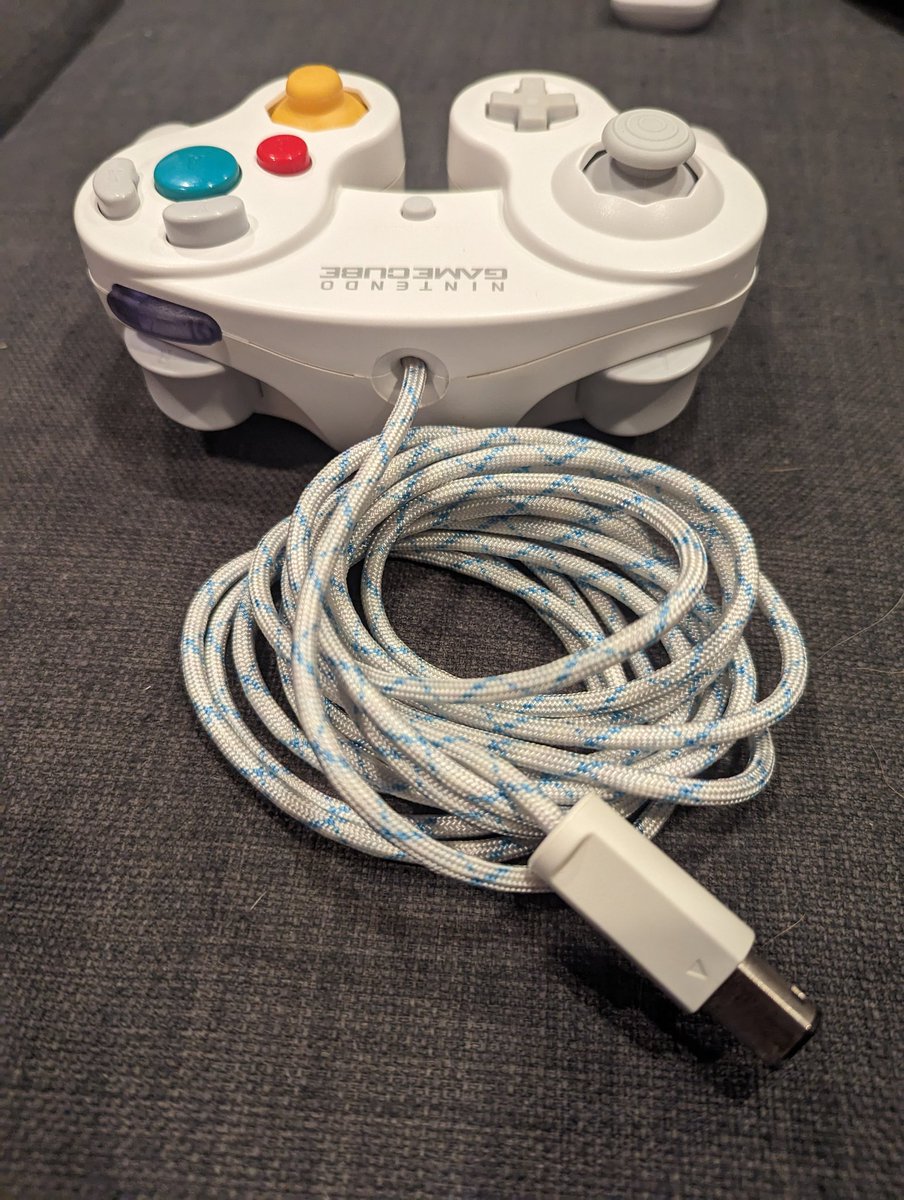
Paracording
Mouse click Z
I'm fairly new to the mod scene so RT/Likes are appreciated!!
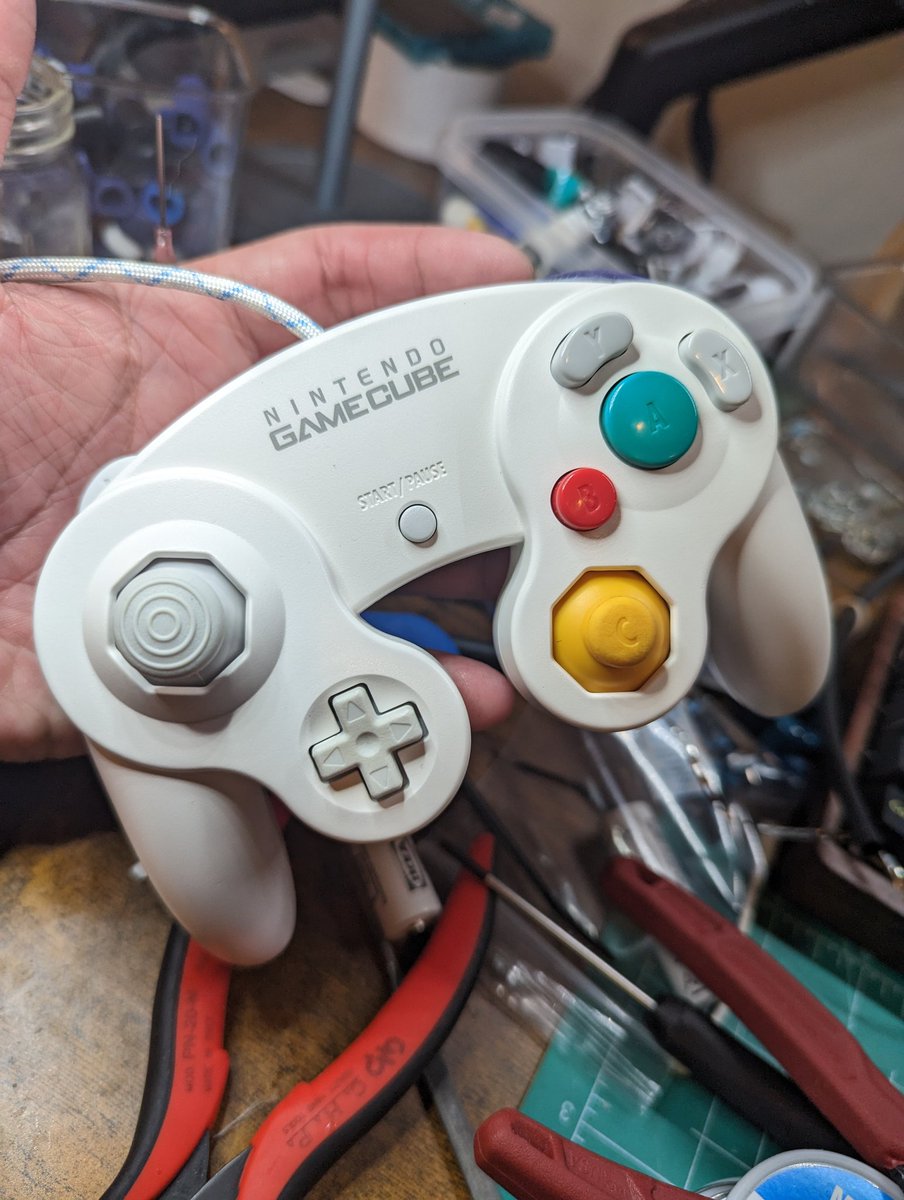
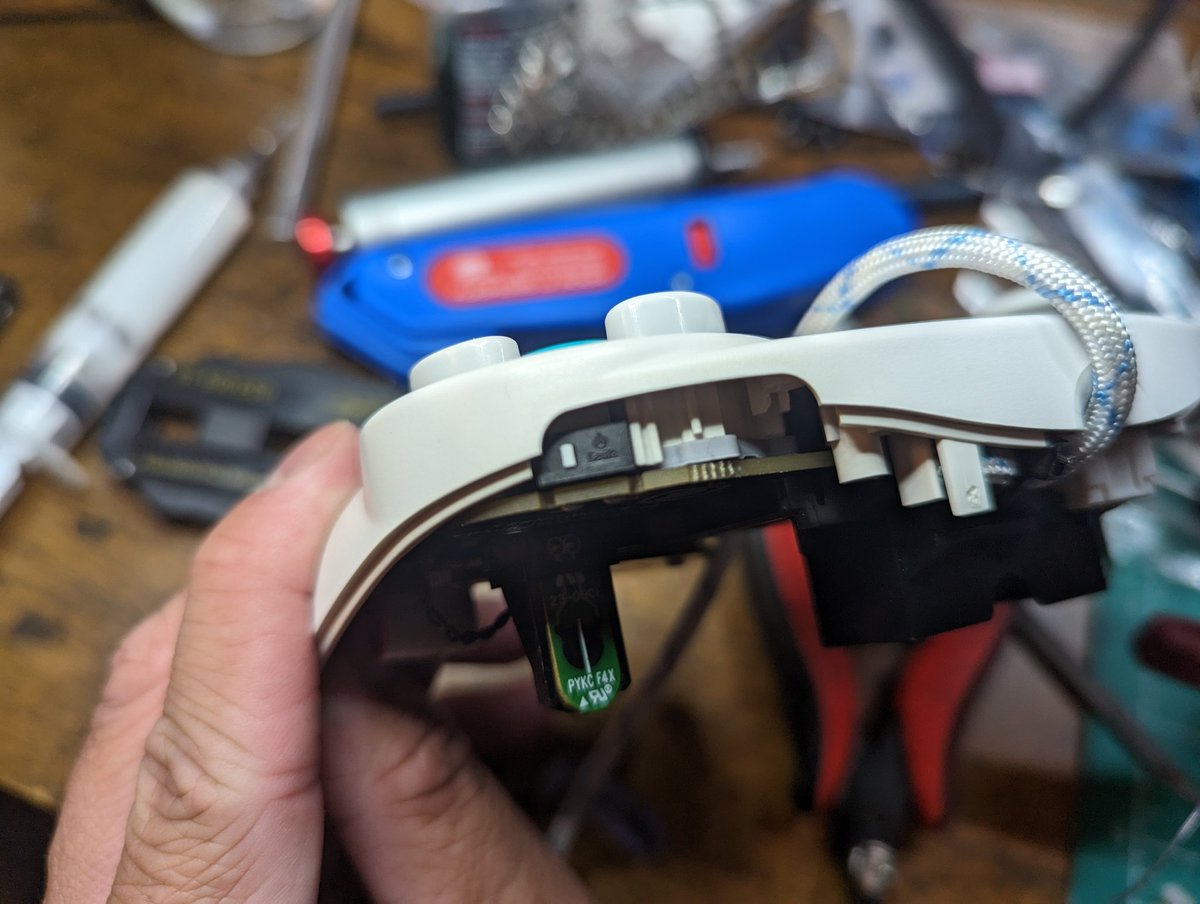
Got a real nice straightforward controller going out to @Heyodogo
Jp white
No Reset Snapback Module(kadano)
Factory new potentiometers
Tactile Z
Bald OEM buttons
Paracord
Grand finale including shipping - $150