Una maravilla de la ingeniería en Escocia: La Rueda de Falkirk es el único ascensor rotatorio de barcos del mundo.
Esta increíble estructura conecta dos canales con un diseño espectacular.
📹: scotdrone | IG
Brick, treated almost like woven fabric.
Created by Indian architecture studio PMA Madhushala, this load-bearing brick wall uses repeating circular arches to form a sculptural, perforated pattern. The curved masonry creates changing layers of light and shadow while demonstrating how a traditional material can produce highly expressive geometry.
Design & image: @ pma.madhushala
They say the devil hates his servants the most.
Here's why...
This painting is called Allegory of Satan, or Lord of the World, painted around 1900 by the Polish artist Ludwik Stasiak. It is not the devil you might expect. There are no flames, no chaos and no horns leering out of the dark. Stasiak painted something far more unsettling.
Here the devil sits enthroned like a ruler of the world, with a sardonic grin on his face, surrounded by the symbols of earthly power: wealth, ambition, domination, and death. Evil, he suggests, never arrives as something horrifying that we instantly reject. It arrives as something attractive. It looks like success. It looks like money, and status, and control. It looks like everything the world tells us to want.
And that is what makes the painting feel so modern, more than a century after it was made. Stasiak was working at the turn of the twentieth century, an age obsessed, like ours, with progress and fortune and getting ahead. And he was warning that the most dangerous evil is not the kind that frightens us, but the kind that seduces us, the kind we serve willingly because it promises to make us powerful.
Which brings us back to the old saying. Look closely at what lies beneath his throne. Scattered at its base are the skulls of the powerful, still wearing their crowns and their helmets in death, the very people who traded their souls for money and power. And he sits above them, amused, because the joke is on them. This is why the devil hates his servants the most. He does not respect them for serving him. He despises them for it, because they handed over the only thing that ever mattered in exchange for things that rot.
That is the real power of the painting: Stasiak did not depict a devil we would run from, he painted a devil we would kneel to, and follow, and call our lord, mistaking our own chains for a crown. He was only giving form to a warning as old as the Gospels themselves: "No one can serve two masters. You cannot serve both God and money."
This is real footage from 120 years ago.
None of the people in it knew that the city around them had four days left...
What you are watching is a cable car gliding down Market Street in San Francisco, filmed on the 14th of April, 1906.
The camera was mounted on the front of the car, so you see the city exactly as it was: the crowds, the horse-drawn carriages, the early automobiles weaving through traffic, the men in hats, the great buildings rising on either side. An ordinary spring afternoon in a thriving American city.
Four days later, on the morning of the 18th of April, a magnitude 7.9 earthquake struck. The shaking lasted under a minute, but it ignited fires that burned through the city for days...
By the time it was over, more than 3,000 people were dead and roughly 80 percent of San Francisco had been destroyed. Almost every building you see in this footage was gone.
And the film itself nearly went with it.
The negative was placed on a train bound for New York on the 17th of April, the day before the earthquake. Had it left a single day later, it would have burned in the fire along with the studio that made it.
This entire moving record of a lost city survives because of one day...
Coincidence? I don't think so.
For nearly 500 years, hundreds of millions of people looked at the most famous painting of God ever made, and none of them noticed what was hiding in plain sight.
Then, in 1990, a doctor looked up at the ceiling of the Sistine Chapel and realized that God is wrapped inside a human brain...
The painting is Michelangelo's Creation of Adam, finished around 1512. You know the image even if you don't know its name: God reaching out from the heavens, His finger almost touching Adam's, the spark of life about to leap across the gap.
But look at the shape around God, the swirling red cloak that holds Him and the angels aloft. For five centuries it was seen as just a billowing robe... but in 1990, a physician named Frank Lynn Meshberger published a paper in the Journal of the American Medical Association arguing that the red shroud is something else entirely: an anatomically precise cross-section of the human brain.
Once you see it, you cannot unsee it.
The outline of the cloak traces the outer curve of the brain. A fold in the fabric forms the Sylvian fissure, the deep groove that separates the brain's major lobes. The angel curled beneath God is positioned exactly where the brainstem would be, and the green scarf trailing down becomes the vertebral artery. Even the pituitary gland and the optic chiasm, where the nerves from the eyes cross, fall precisely into place.
This was not a man likely to invent such a thing by accident. Michelangelo had spent his youth secretly dissecting human corpses in a monastery in Florence, studying the body from the inside with an obsessiveness that, by one early account, exceeded that of professional anatomists...
So what did he mean by it?
Meshberger argued that the painting has been misnamed. He suggested it should be called not the Creation of Adam, but the Endowment of Adam. In the Bible, God gives Adam life. But in Michelangelo's fresco, Adam is already alive, his eyes open, his body lifted. What God is reaching across that famous gap to give him is not life. It is intellect. The divine spark of human thought itself, delivered, fittingly, from inside the very organ that produces it.
One of the most looked-at images in the history of the world may contain a message that took half a millennium to be read, hidden by a man who understood both the human body and the human soul better than almost anyone who has ever lived, and who seems to have decided to bury his deepest idea about us where only the most careful eye would ever find it...
La foto más famosa de Nueva York la tomó un hombre sentado en una viga a 260 metros de altura, sin arnés, con los pies colgando sobre el vacío.
Esta imagen es Charles Ebbets. El mismo fotógrafo que el 20 de septiembre de 1932 tomó Almuerzo en lo alto de un rascacielos, la foto de once obreros comiendo tranquilamente en una viga del Rockefeller Center mientras Manhattan quedaba suspendido bajo sus pies.
Para tomar esa foto, Ebbets estaba en exactamente la misma situación que sus sujetos: sentado en el acero, sin protección, con la cámara como única razón para estar ahí.
Lo que casi nadie sabe es que durante décadas la autoría de esa imagen fue un misterio. Se atribuyó a varios fotógrafos distintos. No fue hasta 2003, setenta años después, que la investigadora Irina Zholudeva localizó el negativo original en el archivo del New York Herald Tribune y confirmó que el autor era Charles C. Ebbets, fotógrafo del periódico.
El Empire State Building al fondo de esta fotografía lleva apenas un año terminado. El Rockefeller Center, donde trabajan los obreros del almuerzo, está en construcción. Es la Gran Depresión. Los hombres que posan comiendo en las vigas son inmigrantes en su mayoría, irlandeses, italianos, mohawk de Kahnawake, que construyen el skyline de Nueva York por un salario que el país entero está intentando sostener.
Y el fotógrafo que los inmortaliza está sentado en el mismo acero, con los mismos pies colgando, haciendo exactamente lo mismo que ellos.
Solo que con una cámara.
That water clarity is an engineering decision, and the math behind it is wilder than the video.
Roman aqueducts ran on gravity alone. No pumps, no pressure systems. Engineers carved channels with a gradient so shallow it borders on absurd. The Pont du Gard in southern France drops 2.5 centimeters over 275 meters. That's roughly the thickness of a coin over the length of three football fields. They surveyed that accuracy with plumb lines and wooden leveling instruments.
The clarity you're seeing is a direct product of flow velocity. Too steep and the water erodes the channel walls, picks up sediment, turns brown. Too flat and it stagnates. Roman engineers targeted a slope of about 20 centimeters per kilometer, which kept the water moving fast enough to stay fresh but slow enough to stay clear. Before the water reached the city, it passed through multi-chamber settling tanks where velocity dropped near zero. Suspended particles sank. Clean water flowed out the top into the next chamber. Repeat three or four times.
Pliny specified the minimum slope in writing. Vitruvius published the exact mortar ratio for hydraulic cement: one part lime to two parts volcanic ash for underwater work. The pozzolana from Pozzuoli reacted with water to form a calcium-aluminum-silicate compound that actually gets stronger the longer it sits submerged. Modern concrete degrades in water. Roman concrete bonds with it.
Scale the whole system and it gets harder to process. Eleven aqueducts fed Rome at its peak. Combined output: roughly 1 million cubic meters of water per day. That works out to about 250 gallons per person for a city of one million. Modern New York delivers about 125 gallons per person per day. Ancient Rome had access to double the per capita water supply of the largest city in the United States, running entirely on slope and stone.
The Trevi Fountain in Rome is still fed by one of them. Two thousand years, same source, same gravity, same water.
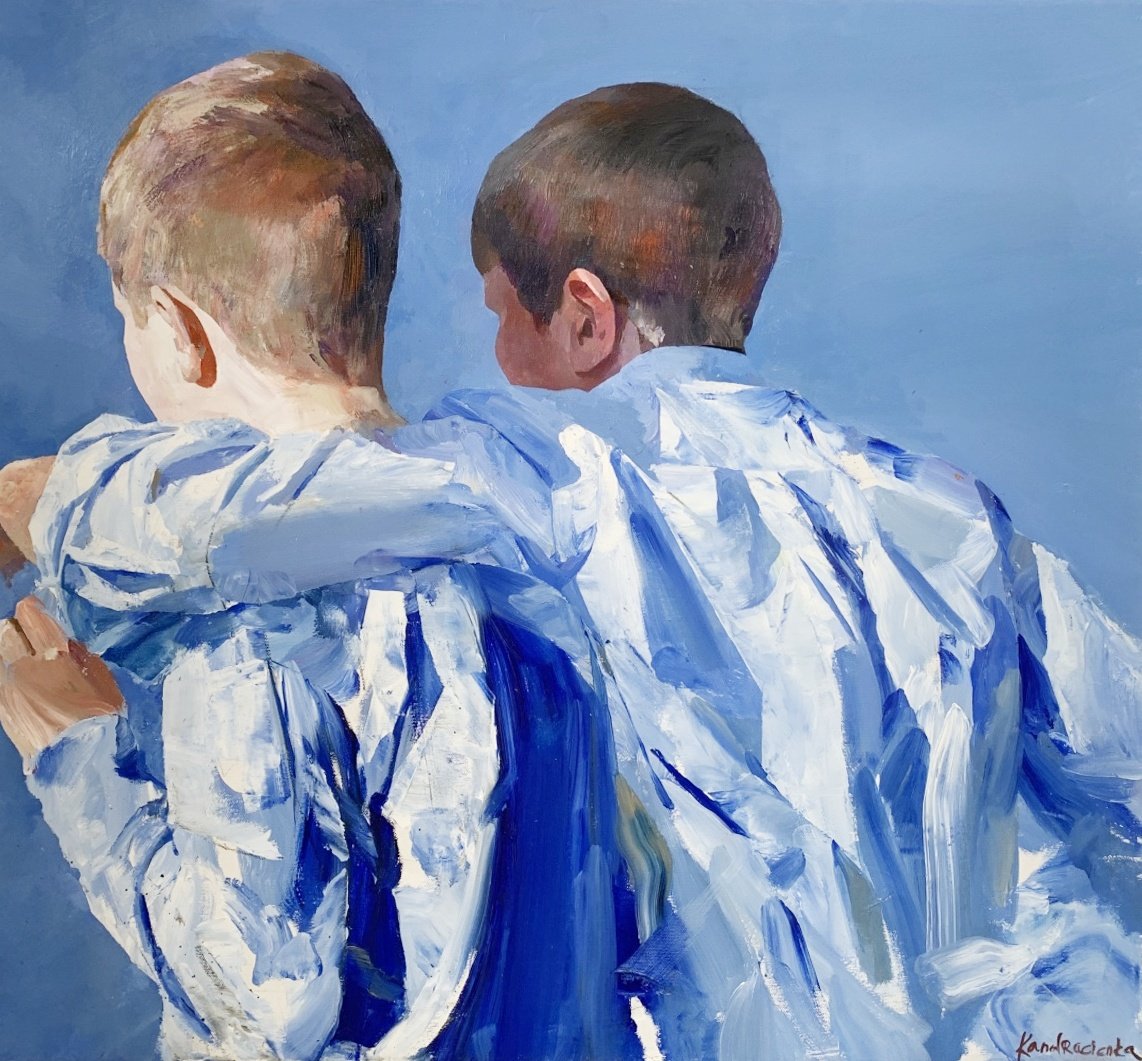
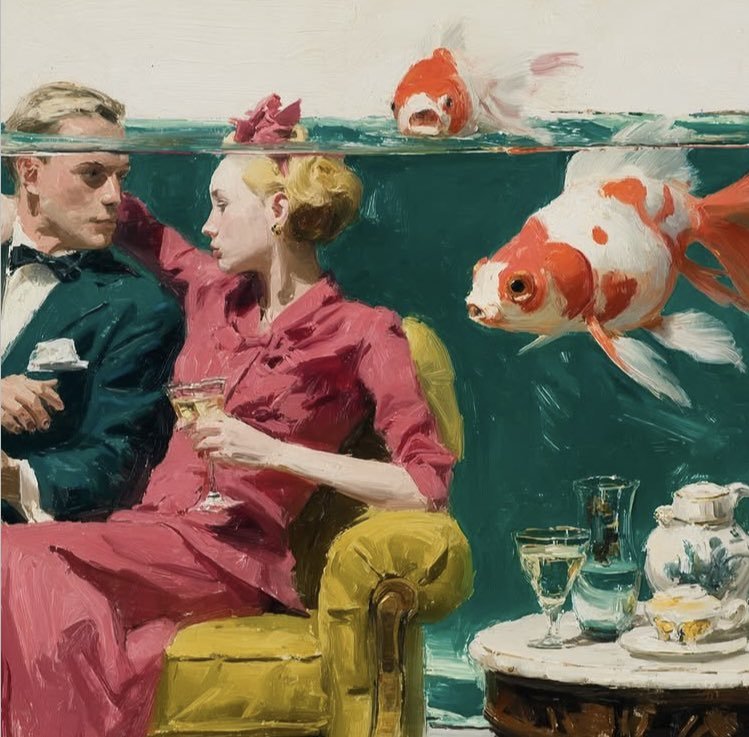
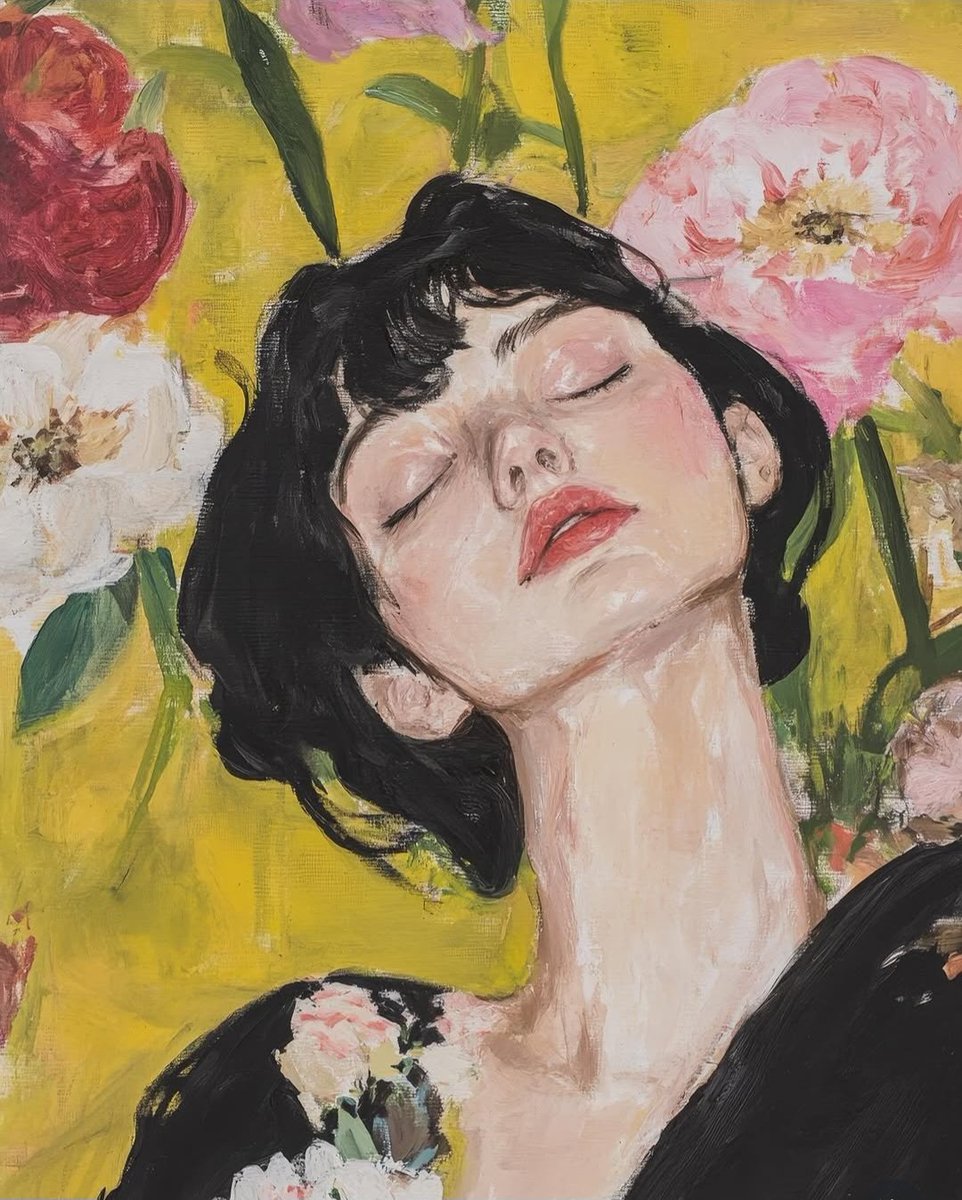
Hoy descubro a la artista bielorrusa Tania Kandracienka (Minsk, 1982) que lleva el retrato a un terreno de expresionismo puro.
Su tratamiento de la infancia es fascinante. No busca la perfección de la línea, sino la "locura del color".
👇🏻 Hilo.
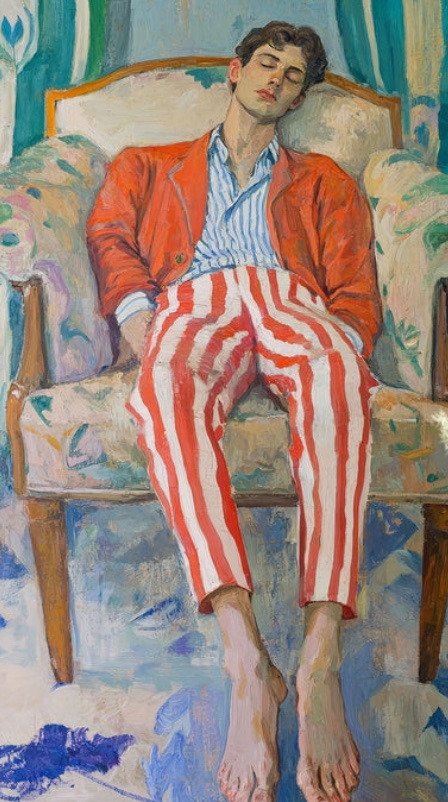
¡Me encanta la explosión de color y alegría que tiene el trabajo de Tracy Porter (Chicago, 1961)!
Os propongo disfrutar de su universo bohemio y lleno de luz.
👇Abro hilo.
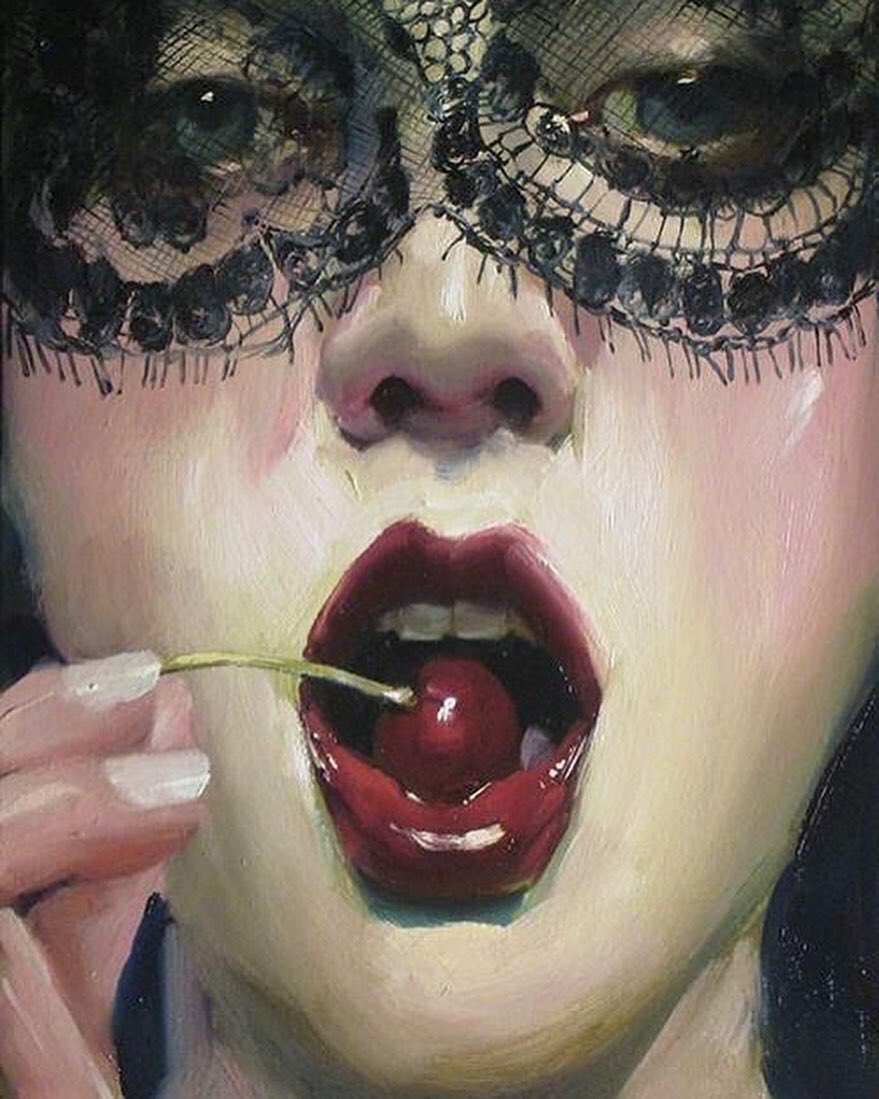
Hoy despido el día con una sensual selección del trabajo de Malcolm T. Liepke (Minneapolis, USA 1953). Veréis que pinta la psicología del deseo y de la provocación con pinceladas viscerales y una paleta que casi parece palpitar.
👇🏻Abro hilo
(Ojo, puede ser censurado por el bot)
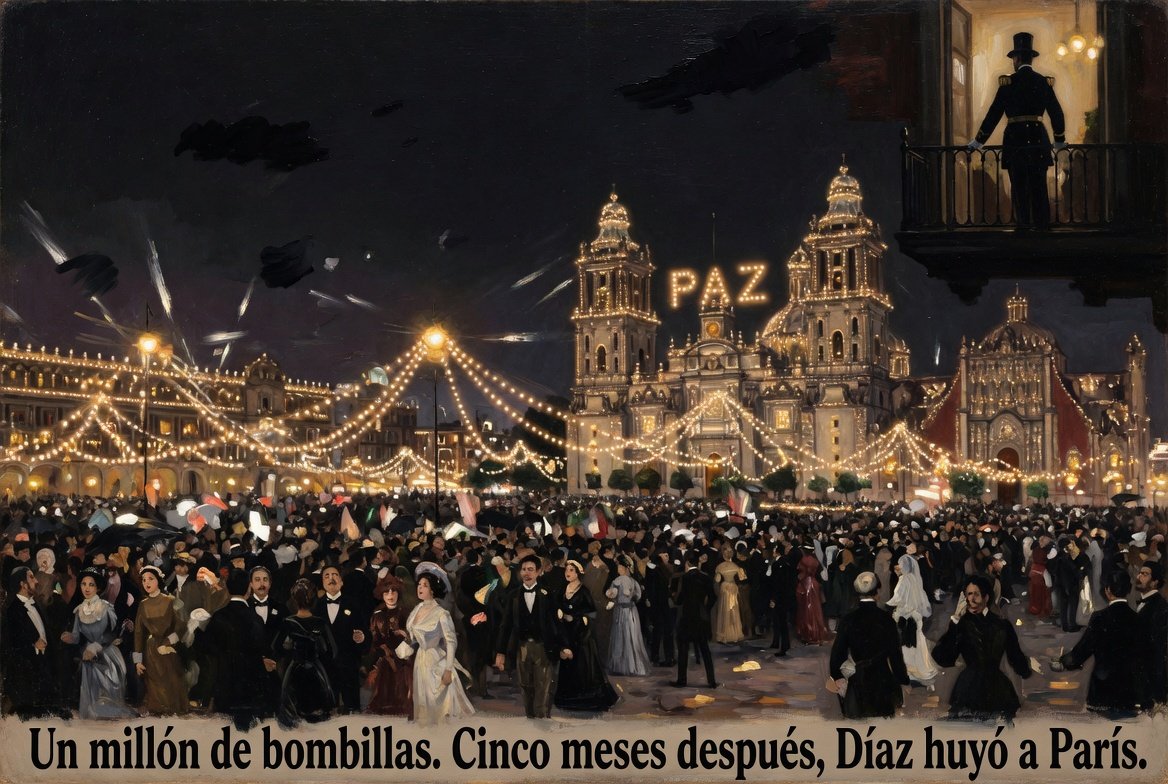
Porfirio Díaz hizo su viaje de luna de miel a Nueva York en 1882 y Thomas Alva Edison en persona lo llevó a conocer su taller. Díaz era un fanático de la tecnología, y cuando vio la bombilla eléctrica encenderse en el laboratorio de Edison quedó obsesionado con una idea fija: convertir a la Ciudad de México en la ciudad mejor iluminada del mundo. Esa obsesión tardó casi treinta años en materializarse y el resultado fue una de las historias de ingeniería más ambiciosas del siglo XIX en América Latina. El punto de partida fue discreto: en 1879, una fábrica textil en León, Guanajuato instaló la primera planta termoeléctrica de México para uso propio. El 15 de septiembre de 1880, el día del cumpleaños número cincuenta de Porfirio Díaz, se encendieron las tres primeras lámparas incandescentes en el Zócalo de la Ciudad de México. Un gesto político disfrazado de progreso tecnológico. Para 1885 la capital ya tenía 100 kilómetros de tuberías de gas, dos mil faroles de gas, cincuenta focos eléctricos dispersos por el centro, y quinientos faroles de aceite para los barrios periféricos que la modernidad todavía no alcanzaba. Fue el ayuntamiento el que contrató en 1896 a la empresa alemana Siemens y Halske para hacerse cargo del alumbrado público, y los alemanes organizaron la Compañía Mexicana de Electricidad. Pero el gran salto llegó en 1898 cuando los canadienses de The Mexican Light and Power Company pusieron los ojos en la Sierra Norte de Puebla, donde las caídas del río Necaxa tenían un desnivel de casi mil setecientos metros. En 1903, Díaz les otorgó la concesión de esas aguas a cambio de un compromiso: electrificar el centro del país. Cincuenta ingenieros y dos mil trescientos trabajadores empezaron a perforar montañas, tender túneles, construir presas con arcilla porque no había concreto suficiente, y transportar veinticinco mil toneladas de maquinaria a una sierra poblana sin caminos. El 10 de diciembre de 1905 llegó por primera vez electricidad de Necaxa a la Ciudad de México. La empresa canadiense redujo el precio del kilovatio a la mitad de lo que cobraban los competidores y en pocos años controló el 80% de la energía eléctrica del país. Para 1910, cuando Díaz celebró el Centenario de la Independencia, la planta de Necaxa producía 100 mil caballos de fuerza, comparable en potencia solo con las cataratas del Niágara. Esa noche de septiembre de 1910, la Catedral Metropolitana fue iluminada con diez lámparas de arco y dieciséis mil bombillas incandescentes. Las torres mostraban encendida la palabra "Paz." Las calles del centro estallaron con un millón de bombillas. La prensa internacional declaró a la Ciudad de México la ciudad mejor iluminada del mundo. Cinco meses después, Francisco I. Madero lanzó el Plan de San Luis y Porfirio Díaz huyó a París a morir.
The castles of Europe are some of the most amazing things we’ve inherited from history
Between 75,000 and 100,000 castles were built in Western Europe during the medieval period, with around 1,700 in England and Wales alone, and roughly 14,000 in German-speaking areas...
Most of them rose between the 9th and 15th centuries after the collapse of centralized Roman authority and the rise of fragmented feudal power.
As attacking armies grew more sophisticated, so did the walls meant to stop them. The cost was staggering: from 1179 to 1188, King Henry II of England spent over £6,500 on Dover Castle alone — an enormous sum given that his entire annual revenue was around £10,000. That figure was more than three times what he spent on any other building project in his reign, and more than four times what went into grand royal residences like Windsor.
And then there is Malbork...
Built by the Teutonic Knights in what is now Poland, Malbork is the largest castle in the world measured by land area. It covers 52 acres and once housed approximately 3,000 knights. A medieval visitor reportedly noted it seemed "more a city enclosed by walls than a single castle."
In 950, Provence was home to just 12 castles. By 1000, the number had risen to 30. By 1030, it was over 100. The pace was not driven by a single empire with a plan, but by thousands of individual decisions made by lords, bishops, and kings who each decided, in their own time and place, that stone was the only reliable answer to an uncertain world...
The word castle is derived from the Latin word castellum, which is a diminutive of the word castrum, meaning "fortified place". Between seventy-five thousand and a hundred thousand of these fortresses were built over six centuries as a reminder that every civilization eventually decides what it will leave behind. Europe decided on this. And the castles are still here.
En el año 70 d.C., durante el asalto al Templo de Jerusalén, el lugar más sagrado del mundo antiguo, un centurión llamado Juliano cargó solo contra los defensores judíos. Mató a varios. Persiguió al resto hasta el patio interior.
Entonces resbaló. 🧵










![archeohistories's tweet photo. In 19th Century, the archaeologists tasked with excavating Pompeii and Herculaneum ran into a problem: Everywhere they turned, they found erotic art, from frescoes of copulating couples to sculptures of nude, well-endowed gods. At a time when sex was widely considered shameful or even obscene, officials deemed the images too explicit for the general public. Instead of placing the artifacts on view, staff at the Museo Archeologico Nazionale di Napoli stashed them in a secret room closed to all but scholars and, according to Atlas Obscura, male visitors willing to bribe their way in. Between 1849-2000, the works remained largely hidden from the public.
An exhibition at Archaeological Park of Pompeii titled “Art and Sensuality in Houses of Pompeii” draws on selections from secret room and other sensual images unearthed in the ancient city to demonstrate the ubiquity of erotic imagery in Roman world. The show’s marquee attraction is a fresco of myth of Leda and the swan. Discovered in 2018, scene depicts the moment when the god Zeus, disguised as a swan, either rapes or seduces Leda, queen of Sparta. Later, legend holds, Leda laid two eggs that hatched into children: Pollux and Helen, whose “face … launched a thousand ships” by sparking the Trojan War.
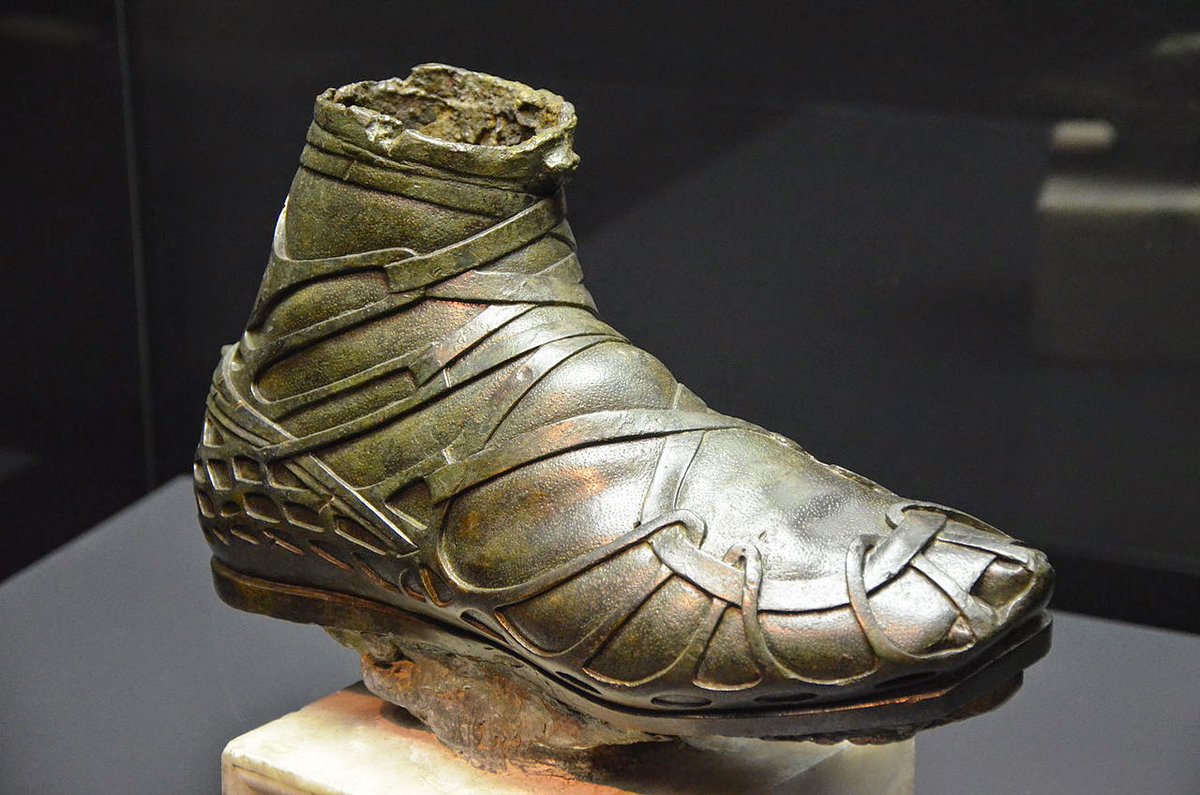
Painted on the wall of a Pompeiian bedroom, artwork shows a nude Leda smiling invitingly as a swan nuzzles against her chest. “[The scene] sends a message of sensuality,” Massimo Osanna, then-director of the archaeological park, told CNN’s Barbie Latza Nadeau and Hada Messia in 2019. “It means, ‘I am looking at you and you are looking at me while I am doing something very, very special.’ It is very explicit. Look at her naked leg, the luxurious sandal.”
House of Leda and Swan fresco is one of 70 artworks featured in the exhibition, which is accompanied by an app and guide contextualizing show for children. Per a statement, sensual art from a fresco of Priapus, Greek god of fertility and male genitalia, weighing his penis on a scale, to a pair of medallions depicting satyrs, cupids and nymphs found on a ceremonial chariot outside of Pompeii last year—appeared in both private homes and public spaces such as taverns, baths and brothels.
“Eroticism was everywhere … thanks to the influence of the Greeks, whose art heavily featured nudity,” the park’s current director, Gabriel Zuchtriegel, tells Tom Kington of the London Times.
Speaking with Jez Fielder of Euronews, exhibition curator Maria Luisa Catoni says that Pompeii’s depictions of sex and nudity conveyed “values like being culturally elevated, being part of a larger high culture” exemplified by Romans’ predecessors, ancient Greeks. At a time when polytheism, not Christianity, was norm, sexual pleasure embraced proudly by very gods Romans worshipped was cause for celebration.
“The Greeks approached the human form with no sense that nudity was inherently shameful,” wrote Geoffrey R. Stone, author of Sex and the Constitution, for the Washington Post in 2017. “To the contrary, the phallus was a potent symbol of fertility, a central theme in Greek religion.”
© Smithsonian Magazine
#archaeohistories](https://pbs.twimg.com/media/HME2PDObMAA8iF0.jpg)