Travis Kalanick: "I was running a $70 billion company the way somebody who thought he was going to starve next week would run it."
In June 2017, Uber's investors pushed him to resign as CEO of the company he co-founded.
"Every decision I made at Uber, I defend to this day. Never had chalk on my shoe."
"The problem was I ran too close to the line in too many situations. When you're big and important, the scrutiny and expectation is that you don't run that close to the line, even if it's correct. That is a thing I definitely did not understand."
The fear of starving came from his first two companies.
His first startup, Scour, was sued by the entertainment industry for $250 billion and went bankrupt. His second, Red Swoosh, nearly ran out of money several times. Along the way he moved back in with his parents. Akamai bought Red Swoosh in 2007 for about $19 million.
"First four years, no salary, ran out of money several times, super grind, lose all friends. The non-luckiest entrepreneur journey of all time."
"It was so hard that I had to be epically precise and hardcore just to pay the bills and go to the grocery store next week. And that precision and intensity made Uber what it was."
ANNOUNCING: reverra. is officially live.
Peptide strips that melt on your tongue (no needle or IV drip or pills)
To celebrate, we're giving away a FREE week of NAD+ (you just cover shipping).
Comment "STRIPS" and I'll DM you the link to claim yours.
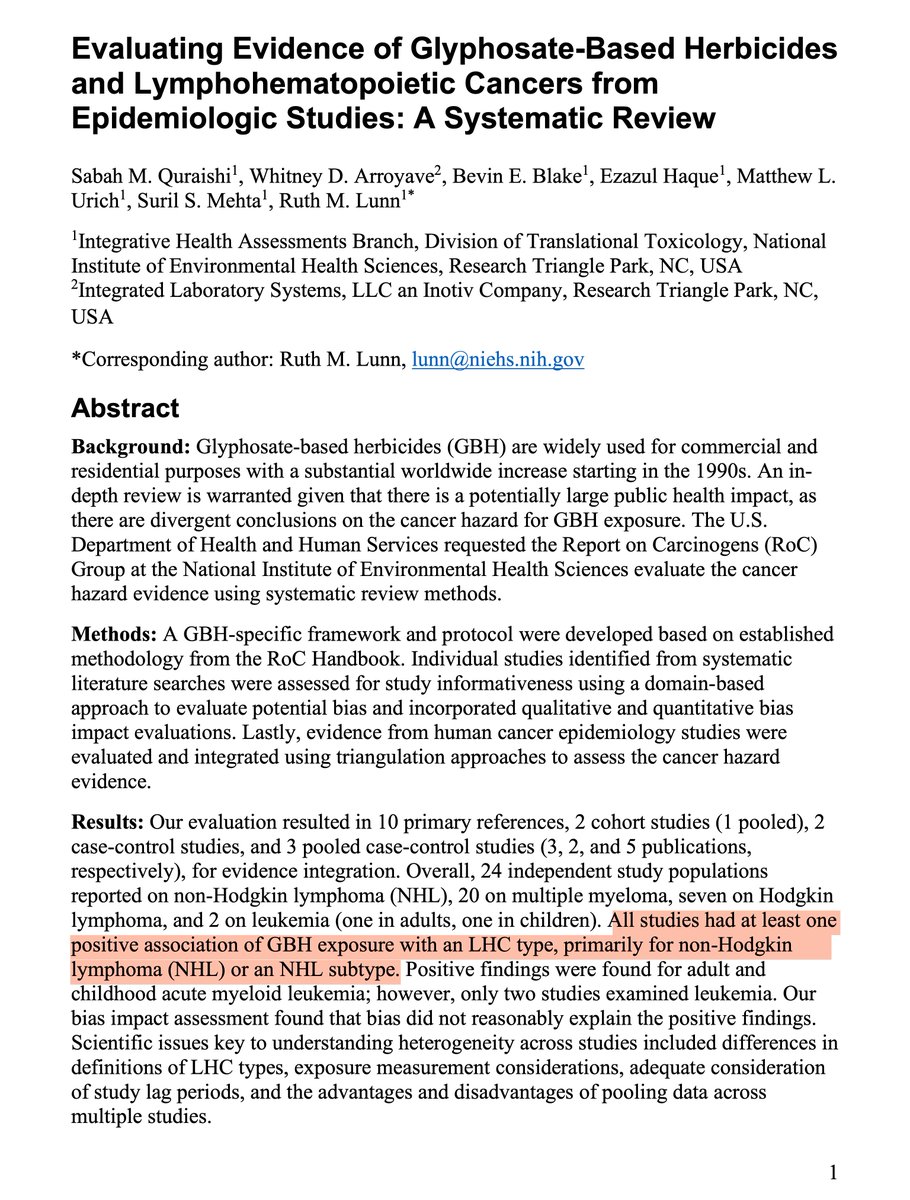
JUST IN: NIH scientists released their systematic review of glyphosate and blood cancers.
All studies had at least one positive association of glyphosate exposure with a blood cancer, primarily non-Hodgkin lymphoma. (1/12)
Just a little heads up:
You can now stop AI from ripping off your website and content *without* blocking yourself off from Search.
If you want to continue showing up in ChatGPT, Claude, Google's AI family, etc - pay attention.
Some site owners are going to misunderstand what is happening and play this wrong.
Not long ago Cloudflare changed how its AI crawler controls work, and there is an important distinction website owners need to understand.
Previously I wrote about the problem with blocking AI crawlers.
Basically, some companies use the same crawler for both Search and AI training, which meant blocking training could also mean blocking the crawler helping customers find you.
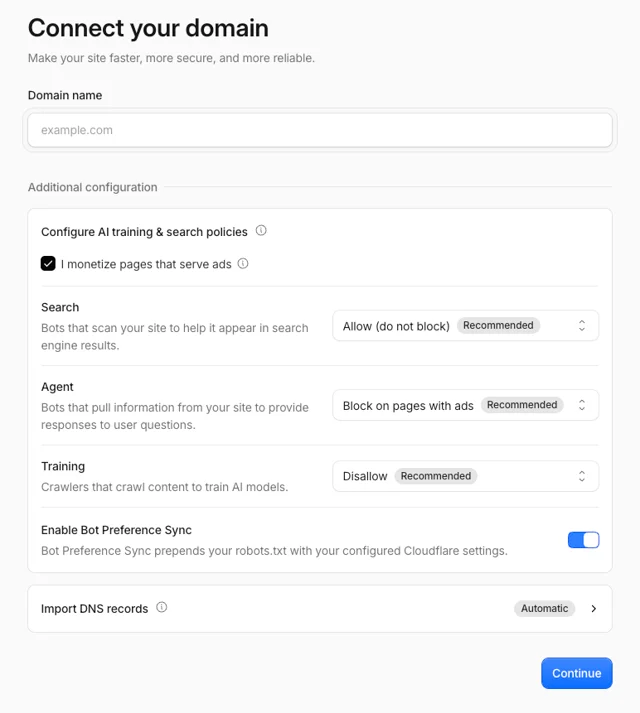
Cloudflare introduced a new setting designed specifically around that problem: it is called Disallow AI Training.
Let’s go through it.
By the way, you can see whether your business is appearing across Google AI, ChatGPT, Claude, Perplexity and Grok here. It’s free:
https://t.co/Evw8cXXicl
Cloudflare now lets website owners tell supported crawlers not to use their content for AI training without completely blocking those crawlers from Search.
Applebot, Googlebot and Bingbot are what Cloudflare calls mixed-use crawlers because the same crawler infrastructure can serve multiple purposes.
With the new setting, Cloudflare publishes the appropriate no-training preference in robots.txt while continuing to allow what it calls “Accountable” crawlers to access the site for Search.
If you need help with this set up - SEO Stuff can walk you through it:
https://t.co/z7CwQrWps7
Those crawlers must still honor the published preference.
Cloudflare says Apple, Google and Microsoft currently qualify as Accountable.
For OpenAI, Anthropic, Amazon and Meta, Cloudflare says Search and Training already use separate crawlers, so it can block the training crawler without blocking the Search crawler.
There is one very important warning: do not confuse Disallow AI Training with Block.
Cloudflare changed what Block means.
If you select Block for Training, mixed-use crawlers including Googlebot, Bingbot and Applebot can now be blocked completely, including their Search access.
If you want Search access to remain, Cloudflare says to use Disallow AI Training instead.
Worth keeping in mind: Google-Extended can be disallowed without affecting Google Search rankings or eligibility for AI Overviews. But that same control also affects whether your content can be used for grounding in Gemini Apps.
And Microsoft has since confirmed that Bing will begin honoring the new AI training preferences on February 1, 2027.
It is also introducing separate controls for AI grounding, giving publishers more choices over how their content is used in AI-generated answers.
So this still is not a giant “turn off AI training with zero tradeoffs everywhere” button, but it is a big improvement.
Businesses can increasingly make separate decisions about traditional Search, AI training, AI agents and, eventually, AI summaries.
That is the direction this needed to go.
For most businesses, the goal shouldn't be to blindly block every AI crawler so much as it should be to understand which systems create discovery, which ones help customers take action, and which ones are simply using your content for training.
If you don't know how to make sure you're handling this correctly, SEO Stuff (https://t.co/wKpf0EILTx) can help.
And if you're curious whether your business is appearing across Google AI, ChatGPT, Claude, Perplexity and Grok right now, check here. It’s free:
https://t.co/Ta79ATW3Yf
Jensen got his job back this morning, and Wall Street added 30% to Nvidia.
Meanwhile, you can run one of his B300s for an afternoon. Free, no credit card required.
A B300 for an afternoon. An H100 for up to a day. Free on spot with AI Cloud. No credit card required.
We're adding $25 in AI Cloud credits to the Nebius Builder Program so you can get hands-on with GPUs at spot prices.
Spot pricing gets you idle GPU capacity at a fraction of on-demand, with a price cap you set, for fine-tunes, evals and batch jobs.
The AI Builder Program now covers the whole loop, free to start:
→ Build with open models on @nebiustf (Token Factory) and our partner ecosystem
→ Fine-tune, evaluate and batch-run them on spot
→ Move to on-demand GPUs on AI Cloud when your product needs to stay up
Claim your credits below ↓
Dylan Patel on why backing a founder alone works in software but not in hardware:
"I think in hardware it's harder to just have a great founder and they figure out their way. You kind of have to have a great founder and idea."
Forget 9 to 5 jobs. You can easily earn $479 a day with ChatGPT.
Like and comment 'GPT' and I'll send you my beginner-to-advanced guide 100% FREE.
You must be following me to receive this guide in your DMs.
It's FREE for the next 48 hours only.
I wrote “thank you for the opportunity” in my resignation letter. That was the biggest lie I have ever typed. I actually wanted to say:
I wanted to say that I brought three ideas to three different meetings and each one was dismissed before I finished my sentence.
I wanted to say that I stayed late every single week for a year and the only time anyone noticed was when I left on time once.
I wanted to say that I watched two people get promoted into roles I was told I was not ready for and then I was asked to train both of them.
But I did not say any of that.
I typed two polite paragraphs, gave my two weeks, and shook hands on my way out. And my boss genuinely seemed surprised.
That is the part people do not understand about resignation letters.
The letter is not the story. It is the last page of a story that started months or years before anyone bothered to read it.
Nobody quits because of one bad day.
They quit because of hundreds of small moments where they realized they were invisible to the people who were supposed to see them.
So while I was still at that job, I took one skill I already had and started turning it into digital products people could buy.
I built up that income on the side until my paycheck was no longer the only thing providing for my family.
That journey eventually led me to build creatyl so I could help others turn what they already know into something they own.
If you are still at that job writing that fake letter in your head, save this post.
You do not need to leave tomorrow. But you do need to start building something of your own today.
I put together a free toolkit to help you take that first step.
👉 Grab it free here: https://t.co/eF9iPETUHU
The resignation letter is always polite. The real story never is.
Please repost to help others out there! ♻️
Top 10 Free AI Courses:
From Microsoft, Google, Harvard, and others.
Thanks Andrew Bolis for compiling these!
Get my top compilations of free courses here:
Subscribe for free at https://t.co/jTnaNRaV2d.
Learn AI fundamentals, prompt engineering, and automation in one list.
AI Fundamentals & Core Concepts:
1. Harvard – Introduction to AI with Python
Understand the fundamentals of AI and learn how to apply them with Python.
🔗 https://t.co/62LVlMupV9
2. Microsoft – AI For Beginners
Build a solid AI foundation with an easy-to-follow beginner-friendly course.
🔗 https://t.co/qeMb4QRJMA
3. Google – AI Courses
Explore AI and machine learning with courses created by Google experts.
🔗 https://t.co/UHjpLJO9bM
4. https://t.co/G22DykeaHF – Generative AI for Everyone
Understand how generative AI works and how it can create text, images, and ideas.
🔗 https://t.co/7oioUeuXmt
5. LinkedIn – Generative AI Courses
Learn through short, practical lessons designed to help you build real-world AI skills.
🔗 https://t.co/oHQv0sOgzU
Prompt Engineering & Applied AI:
6. Vanderbilt – Prompt Engineering for ChatGPT
Learn how to write better prompts and get more effective results from ChatGPT.
🔗 https://t.co/W1VvYiRuGM
7. https://t.co/G22DykeaHF × OpenAI – ChatGPT Prompt Engineering for Developers
Master practical prompting techniques for building AI-powered applications.
🔗 https://t.co/GIXcFJb8tm
8. edX – AI Applications and Prompt Engineering
Develop practical AI skills through hands-on projects and prompt-based techniques.
🔗 https://t.co/hZXhcJUlKt
9. AWS – Foundations of Prompt Engineering
Learn the fundamentals of prompt engineering and how to apply them with AI tools.
🔗 https://t.co/FOpQ38GgQg
AI Ethics & Real-World Impact:
10. UC Davis – Big Data, AI, and Ethics
Explore the ethical implications of AI, big data, and responsible data use.
🔗 https://t.co/6XuiBdGaVl
All courses are either free, free to audit or have a free trial.
Start learning today.
The best time to build AI skills is before you need them.
P.S. What area of AI do you want to master first?
♻️ Save and repost so others can learn AI for free too!
Ferrari have two of the best drivers in the world.
This season, their biggest problem has been each other.
On Saturday night in Las Vegas, Leclerc spun Hamilton around. Ferrari left with seven points. It's the third time in under three months.
After the first clash, Hamilton asked for written rules of engagement. Ferrari didn't write any.
Every business with ambitious people runs into the same problem.
Competition between your best people is healthy. It's how they push each other. But left unmanaged, it turns inward.
The best leaders settle three things before the race starts:
��� One shared goal: Everyone knows the team result comes first.
→ Clear lines: Defining what's fair game, and what's off-limits.
→ A tiebreaker: When two people want the same thing, everyone knows how the call gets made.
Get it right, and your best people push each other forward.
Skip it, and they end up racing each other instead of the competition.
Your best people will always compete.
Make sure they know who the real opponent is.
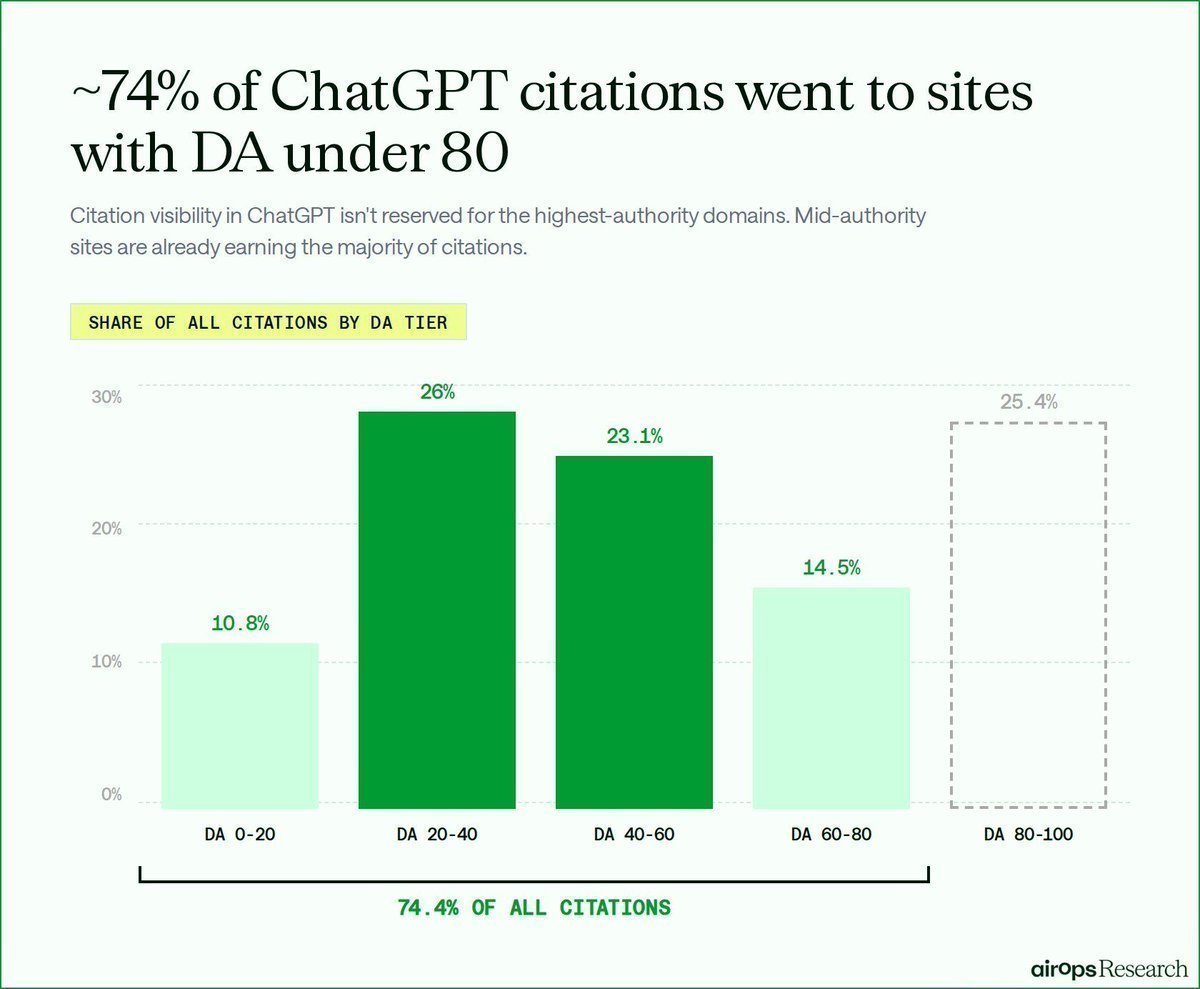
About 50% of ChatGPT citations came from pages ranking #1 on Google.
The citation rate was 3.5x higher than for pages ranking beyond Google’s top 20 results.
This is something businesses need to start taking advantage of.
It works for any real brand, including SaaS, e-commerce, financial services, local businesses and agencies.
And if you want to see where your site stands across ChatGPT, Claude, Gemini and broader AI search, start here (it's free):
https://t.co/Evw8cXXicl
Alright, let’s break it down.
AirOps recently analyzed 548,534 pages retrieved across 15,000 prompts to understand how ChatGPT decides what actually gets cited.
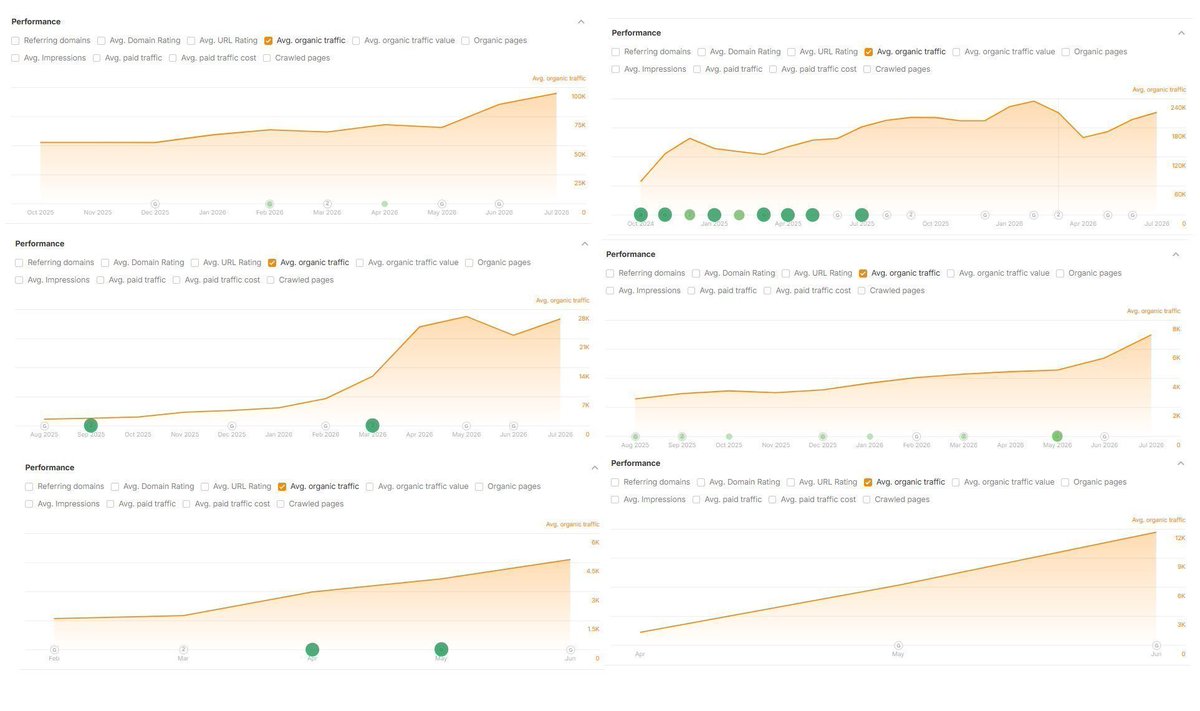
It also helps explain why SEO Stuff (https://t.co/z7CwQrWps7) customers keep getting cited while competitors with stronger domains sometimes do not.
And why more than 80% of SEO Stuff customers come back for multiple purchases.
The biggest finding of this study? 85% of pages ChatGPT discovers during its research process never make it into the final answer.
Your page can rank in Google, get retrieved by ChatGPT and still get dropped before the user ever sees it.
AirOps breaks the process into three stages: discovery, expansion and selection.
First, ChatGPT discovers potentially relevant pages - then it goes and expands the research.
89.6% of prompts triggered two or more follow-up searches, meaning ChatGPT often investigates the same question from several angles before deciding what to include.
AirOps calls this the “second citation surface.”
Then comes selection, where across everything retrieved from those searches, only about 15% of pages actually get cited, while the rest are discarded.
So what separates the pages that get retrieved from the pages that actually survive?
Well, structure matters a lot.
A separate study from Kevin Indig analyzing 1.2 million AI answers and more than 18,000 verified citations found that 44.2% of ChatGPT citations came from the first 30% of the page.
If your actual answer is buried under a long introduction, ChatGPT has a much harder job finding it.
The same research found that 68.7% of cited pages used logical heading hierarchies, 87% had a single H1 and nearly 80% used lists to organize important information.
ChatGPT appears to scan pages much like a researcher skims a document.
The easier the useful information is to identify and extract, the better, but expansion does create another problem.
Because ChatGPT runs follow-up searches, your page is not only competing against results for the keyword you can see - it is also competing against pages surfaced for related questions and subtopics.
That is very similar to Google’s query fan-out model.
A site with strong coverage across the surrounding topic has more opportunities to enter the research process and survive into the final answer.
Authority matters at that stage too.
When ChatGPT has several usable pages saying similar things, signals like site authority, brand mentions, consistent entity information and factual claims that can be independently verified can help separate one source from another.
That is where a page can get retrieved and still lose.
So what should you actually do?
Front-load the answer, use clear H1 and H2 structures, organize useful information into easily extractable sections, cover the surrounding topic instead of one isolated keyword, strengthen backlinks and third-party mentions and keep important pages current.
This is the system SEO Stuff was built around:
https://t.co/wKpf0EILTx
The done-for-you package combines front-loaded, structured content with question-based headings, TLDR sections and DR50+ contextual backlinks:
https://t.co/MMsDTFf4rg
The Premium Content Bundle adds 60 structured pages designed to build coverage across the broader topic and give ChatGPT more ways to find your business during expansion searches:
https://t.co/5osvnSaiGB
And the Premium Backlink Bundle adds authority from DR50+ domains to help strengthen the pages competing at the selection stage:
https://t.co/BMl9QCGGn3
And if you want to see where your site stands across Google and AI search, start here. It’s free:
https://t.co/Evw8cXXicl
Diogo Almeida (Jev creator) on why the same AI models doing frontier math still can't be used for accounting:
"You get Einstein like maybe 95% of the time and Mr. Bean the other 5%. And the problem is that in expected value, it just doesn't work out."
Apoorv Agrawal on big tech's $860B AI capex this year, set against railroads, oil and gas, telco and shale:
"We are already way past what we spent in those booms as a percent of GDP."
Digital products that made millionaires in 2017:
• Stock photos
• Online courses
• Templates on Etsy
Digital product that will make millionaires in 2027:
David Heinemeier Hansson on why he no longer needs a word processor:
"I don't even sign my documents anymore. I just look it over and say that's good to go, sign it and the agent has my signature and it'll put it on the document and then it will mail it out."
Marc Andreessen explained why the idea behind Harvard Business School is collapsing...
Andreessen co-founded Netscape in 1994 and a16z in 2009. He has sat on Meta's board since 2008.
The book he always recommends is James Burnham's The Machiavellians.
Burnham described two modes of running a business.
The first is bourgeois capitalism: the founder runs it, with their name on the door.
"The classic archetype for bourgeois capitalism was Henry Ford, you know, in the 1920s, and today it's Elon Musk."
Then, between the 1880s and the 1920s, a new philosophy arrived: managerialism.
The idea was that a professional manager could replace the founder and run anything.
That one idea gave us:
Harvard and Stanford business schools
Management as a universal skill
The 1970s conglomerate, where it didn't matter what the company did as long as it had a good manager
"The problem with his argument is that assumes that managers are going to do a good job."
Andreessen's view is that for the last 30 years in the West, they generally haven't.
Managers can run something that stays the same. A bank. A power company. "As long as the car is the car."
"But the minute things change, the manager personality type... doesn't know how to deal with change."
His example is space.
For 100 years, every rocket was used once and thrown away.
"And then this, like, crazy guy in California comes up with this thing where the rockets land on their butt, and you can't replicate it. You're like, what good are your management skills at that point?"
"So I think this is where Burnham's thesis collapses... Yes, there's a need to run things at scale, but no, the managers actually can't do it, because they can't adapt. The founder can just learn how to run things at scale."