Today marks #20YearsOfTaylorSwift.
Widely regarded as the biggest star on the planet, Taylor Swift has cultivated an era-defining career spanning 20 years, with her twelve record-shattering albums catapulting her into music history’s Big 5 (joining The Beatles, Michael Jackson, Elvis Presley, and Queen), claiming the honor of being the #1 best-selling female artist of all time (with 270 million album units) and solidifying her place as the de facto leader of the 21st century.
She is the #1 highest-grossing touring artist of all time, the #1 Billboard 200 artist of all time, the #1 most-streamed artist in Spotify history, the #2 most-streamed artist in Apple Music history, the #1 best-selling artist of the 21st century, the #1 most-awarded female artist of all time, the youngest woman to ever be inducted in the Songwriters Hall of Fame, the only musical act to ever be hailed TIME’s Person of the Year, the only artist to ever have eight 1M+ debuts on Billboard 200, and the record holder for the most Album of the Year wins in GRAMMYs’ seven-decade history (with a legendary four AOTY wins).
Among the near-unbreakable records that have cemented and immortalized her legacy, the biggest of them all are her cataclysmic, economy-shifting, earthshaking Eras Tour holding the title as the #1 highest-grossing tour of all time (with an unprecedented $2.077 billion total); her streaming behemoth “THE TORTURED POETS DEPARTMENT” obliterating the record for the biggest album debut in Spotify history (with a whopping 314.5 million first-day streams); her being the only artist in history to ever *completely* sweep the entire Top 10, the entire Top 12, and the entire Top 14 of the Billboard Hot 100 chart; and her sales juggernaut “The Life of a Showgirl” holding the record for the biggest album debut in Billboard 200 history, amassing an astronomical 4.005 million album copies (U.S.) on its first week alone and practically breaking every single sales record in existence.
Her monumental 13th studio album is yet to come.
In Australia, the captain of this football team went into the stands after his team won the championship to get their waterboy, who has Down's Syndrome, so they could celebrate together. 🙌
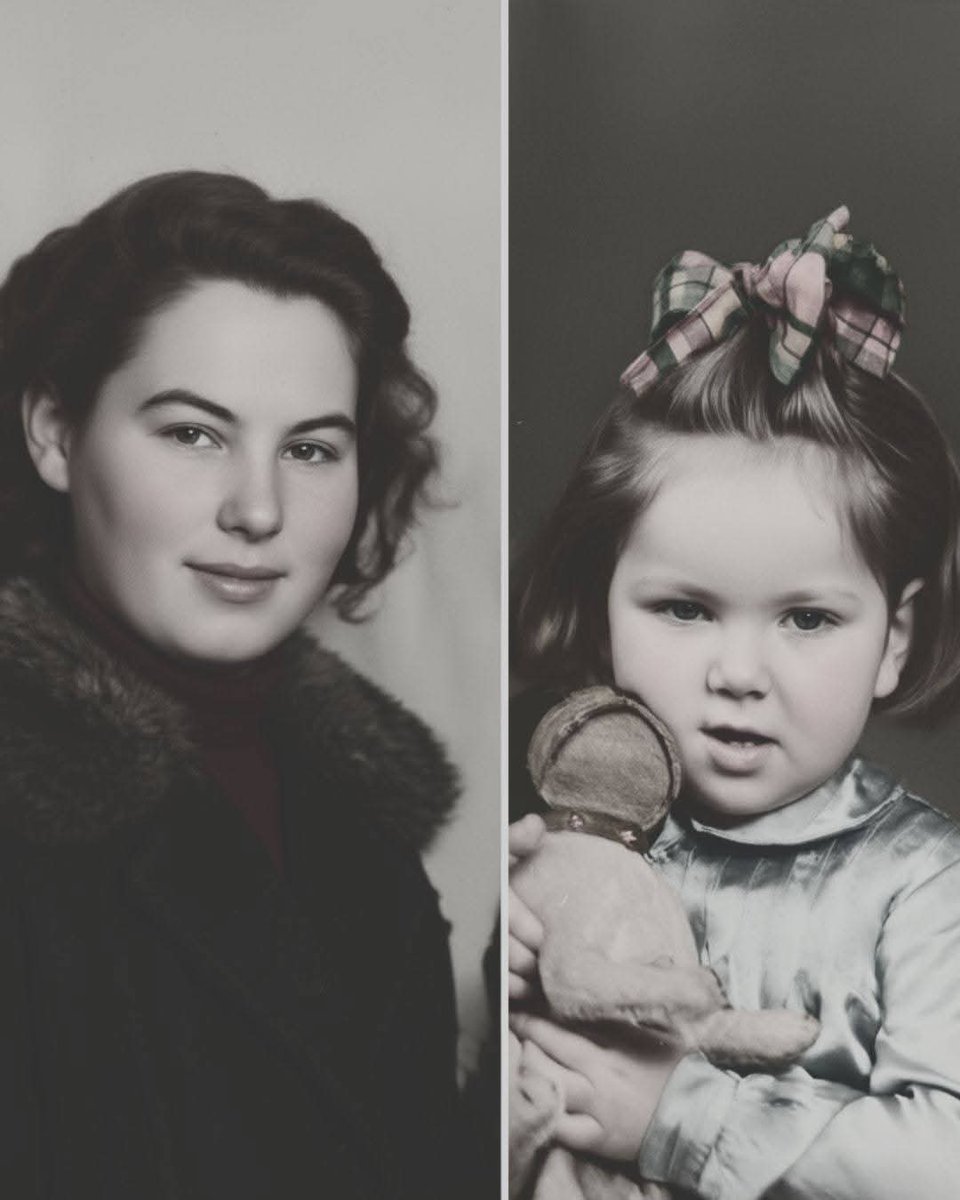
She gave her three-year-old daughter a sedative, wrapped her in a blanket, and placed her in a large leather suitcase. With her heart pounding, she waited in line to leave the Nazi ghetto, watched closely by armed guards. If the little girl made a sound, or if a guard decided to open the heavy bag, they would both be executed on the spot.
When she finally made it outside the gates and her child was safe, she did something completely unthinkable. She went back inside.
And then she saved another child. And another. She did this dozens of times, risking her life with every single step she took.
For most of her life, that little girl, Henia Lewin, believed her mother, Gita Wisgardisky, had performed a single, desperate miracle just for her. It was not until her mother’s funeral many years later that the shattering truth finally emerged.
An elderly survivor approached Henia at the cemetery, looked into her eyes, and revealed a secret kept for decades.
"Your mother saved so many," the survivor told her. "No one knows how many. Maybe she didn’t even know herself. She didn’t count them."
Gita had smuggled countless children out of the Kovno Ghetto in Lithuania, hidden deep inside suitcases or carried through secret passages, right under the noses of the oppressors.
Henia was born in 1940 into a normal, loving Jewish family. That normalcy completely vanished when the Nazis invaded and forced the Jewish population into a cramped, disease-ridden ghetto. Hunger and sudden deportations became the daily reality.
Gita saw through the lies early on. While some people hoped for the best, she understood the dark truth. She knew that when the Nazis spoke of relocating children, they actually meant killing them. Gita refused to wait for the end.
Working secretly with a brave Lithuanian Catholic priest, she found kind families willing to hide Jewish children in the countryside. But getting the children out of the heavily guarded gates was a suicide mission.
The children had to be perfectly still and silent. This was why Gita used sedatives. She put her own daughter into a deep, heavy sleep, placed her in that suitcase, and walked toward the guards.
When a soldier stopped her, Gita did not panic. She calmly offered her watch and her best pair of leather boots as a bribe. The guard took them, looked away, and she passed through the gates.
Little Henia was taken in by a Christian family. She was taught to call strangers mom and dad, and she learned to never mention her real name. Though she was only three, she understood the danger and kept the secret for two long years.
Meanwhile, Gita went right back into the nightmare. She returned to the ghetto to find more children. Each trip involved a new suitcase, more sedatives, and a fresh set of bribes. She never asked for recognition. She simply acted.
Miraculously, Gita, her husband Jonas, and Henia all survived the war. They eventually moved to the United States, where Henia grew up to become a school teacher and a passionate voice for Holocaust education.
Today, Henia shares this story because memory is a torch that must be passed from hand to hand. It reminds us that even in the darkest corners of human history, love can conquer the greatest fears.
Gita went to her grave without ever boasting about her heroism, but her legacy lives on in the generations of children who got to grow up, laugh, and have families of their own because one mother refused to leave anyone behind.
Some stories are not meant to be closed—they are meant to be carried forward.
Grant Hill shares what his mother taught him about living with purpose and why values are verbs.
"Number 7 on her set of principles reads: 'Don't be a passenger in life.'"
"She knew that values aren't ideas. Values are verbs."
Character comes from what you do and what you do consistently.
Then he broke it down:
1. "To respect means that we give others grace even if we disagree."
2. "To include means that we pull more chairs up to the table. We don't fear different voices."
3. "To excel means doing the work not just talking about the standards."
Values without action are just words on a wall.
It doesn't matter what you say, it matters what you do and how you live.
Choose to take ownership of what you do and don't just watch by as a passenger.
(🎥 Duke)